


My name is Elisabeth (with an S) and I live in the West end of Glasgow, not in a small holding or a croft (I am in Scotland) and not in a large farm building in the South of France. That has a lot of advantages but just sometimes my activities as a natural dyer and grower of colour can push the boundaries of urban living.
I am a Botanical Printer and a Natural dyer. I don’t have a dye house, I don’t “Make things” I am interested in the process and forever learning and passing on this knowledge via workshops and classes. You can find a list of my current online workshops HERE
In 2020 the Covid crisis put a hold on my extensive travelling to find the colour blue and I started growing Japanese Indigo and Woad in my urban garden. I felt that I was ready to take my learning as far as processing the plants from scratch.
In 2021 I wanted to share this with the public and The Glasgow Botanical Garden gave me the loan of a small plot which with a group of volunteers I prepared and planted with some “Grand Teint” dyes I started with Persicaria Tinctoria (Japanese Indigo 4 varieties) Isatis Tinctoria (Woad two varieties) Weld, Dyers Greenweed, Madder and coaxed by friend artist Christine Borland some Flax. The first year was very challenging as the plot was unprepared and a lot of digging and soil enriching had to be done by hand in a short period of time but the harvest was so rewarding.
I was surprised that any moments I spent at the plot which is located in the old physics garden location at the Botanics I was approached by the public eager to know what we were doing there and loved seeing the dye plants. I loved seeing young students taking a break to seat in the sun reading their course book and eating their lunch two feet from the plot. I loved watering the garden in the evening in the peace of the garden… and not to forget the resident robin who came to join me everything we were digging… looking for a feed.
My aim is always to educate at grass roots level. Just like I want small children to understand where their potatoes and meat come from, I like adults and children alike to fully understand where natural colour comes from and how long it takes to grow and process them. I LOVE Indigo, the dye, the pigment, the plant… there is so much to learn about it and it gives amazing results… If you want to learn how to grow Indigo with me and process it in 2024 you could join my online group… together we germinate, plant, grow and extract colour in many ways using Japanese Indigo. There is a link to register for my 2024 class that will start in March/April. HERE
Growing dye plants can be done in pots in your yard or in beds in your garden. If you have an allotment the plants will do well if you keep the slugs at bay. I grow in my Urban garden in the West end of Glasgow in a raised bed Japanese Indigo and around the garden Woad, Weld and a lot of Madder. In the Botanics this year 1800 Indigo plants were planted and the growth was amazing. We had so much fun with visitors, workshops and our exhibition in September…
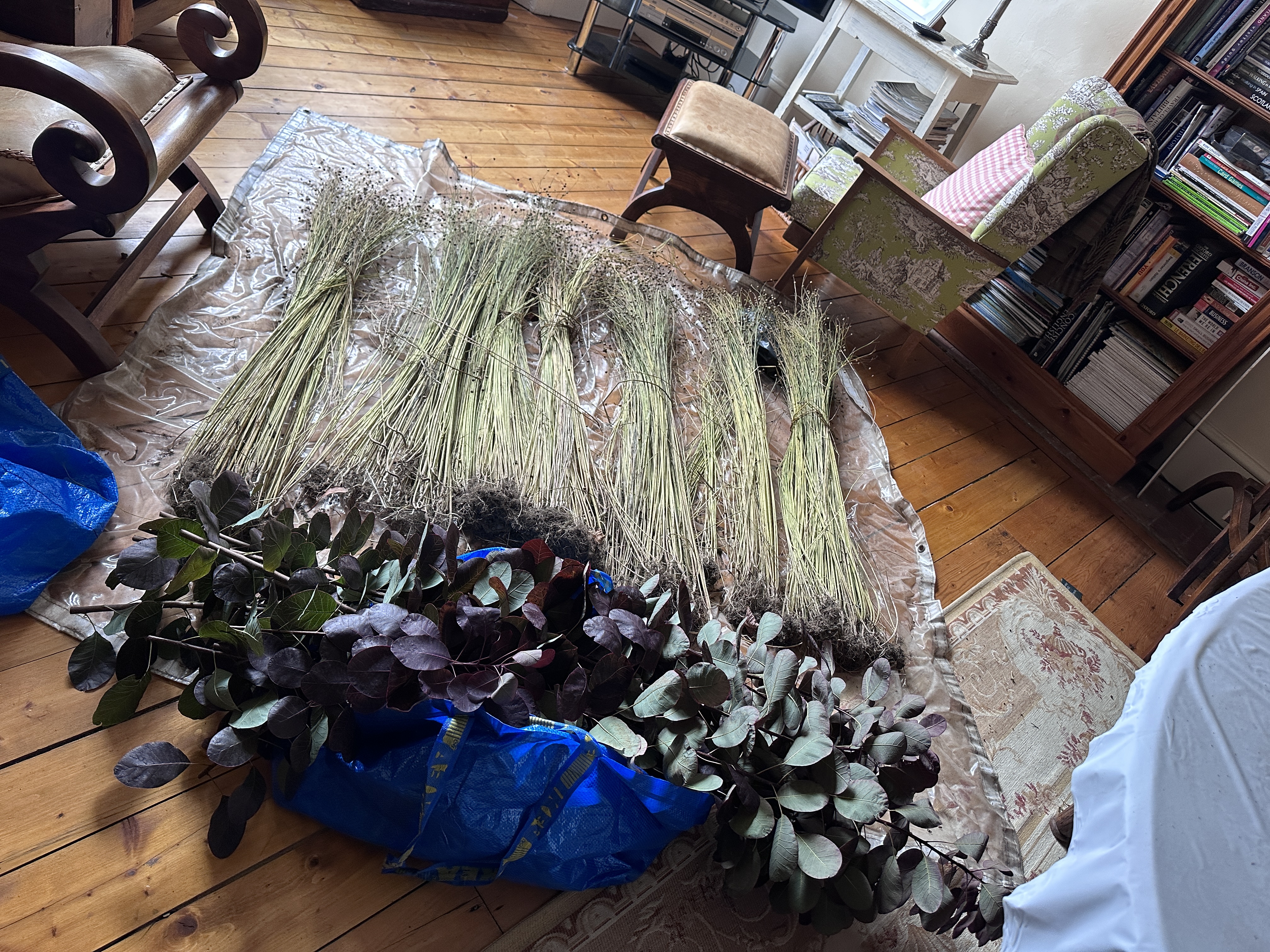
October as usual came as a surprise. The weather in Glasgow turned to very cold rain and there is the restriction about growing in and Urban location without loads of outbuildings to give a home to your plants when they need harvested. My dining room (which we hardly use as a dining room I may say) is currently the home to two large tubs of stemps of Japanese Indigo waiting to be processed. Every single vase I own is full of Indigo flowes on their stems waiting for the seeds to pop out. I had Flax on a large tarpaulin drying as the weather was so wet, and a huge harvest of Cotinus leaves waiting to be printed next week.
It is not for everyone but I love my dye plants and I remember being a child visiting a farm in Britanny where the farmers at harvest time litterally became one with their farm. We lived, slept, drank and ate grain… for a while when the harvest called, real life disapeared and the plant was the new master calling the shots.
This is how seasons work you are not supposed to eat strawberries in December and your week end away may have to wait if the frost arrives and you need to cut the Indigo plants for fear of loosing them.
I would not have it another way and although it is hard work at times I feel in total connection with my dye plants and in return they give me their best dyes…
There are big talks just now about global warming and sustainability but few of the specialist who hold forum and exchange in geeky words about the new fashion revolution fully understand about growing and seasons about the world would be so much better if we slowed down a bit and accepted that we do not call all the shots. If you want Indigo in Scotland, you have to germinate inside, you have to plant in June and you have to make provision for watering… if you want seeds you have to take the plants inside… whatever your inside is. I have decided not to set up some green house space because this project is for me temporary and I am not one to create more waste by building something I don’t need long term. Actually my kitchen love having the pink flowers in for a bit and it works just as well.
When you next buy a packet of dye from the dye merchant think again about the effort someone had to put in to produce and don’t you dare wasting any. It takes real energy to produce colour, and love and all. If you want to be part of my 2024 journey into Indigo… use the link HERE to book yourself on my course. It is so very interesting and promised you wont have to bring your leaves indoors… I will make sure you only grow a small amount of plants…
Have a great blue day…
Betty x
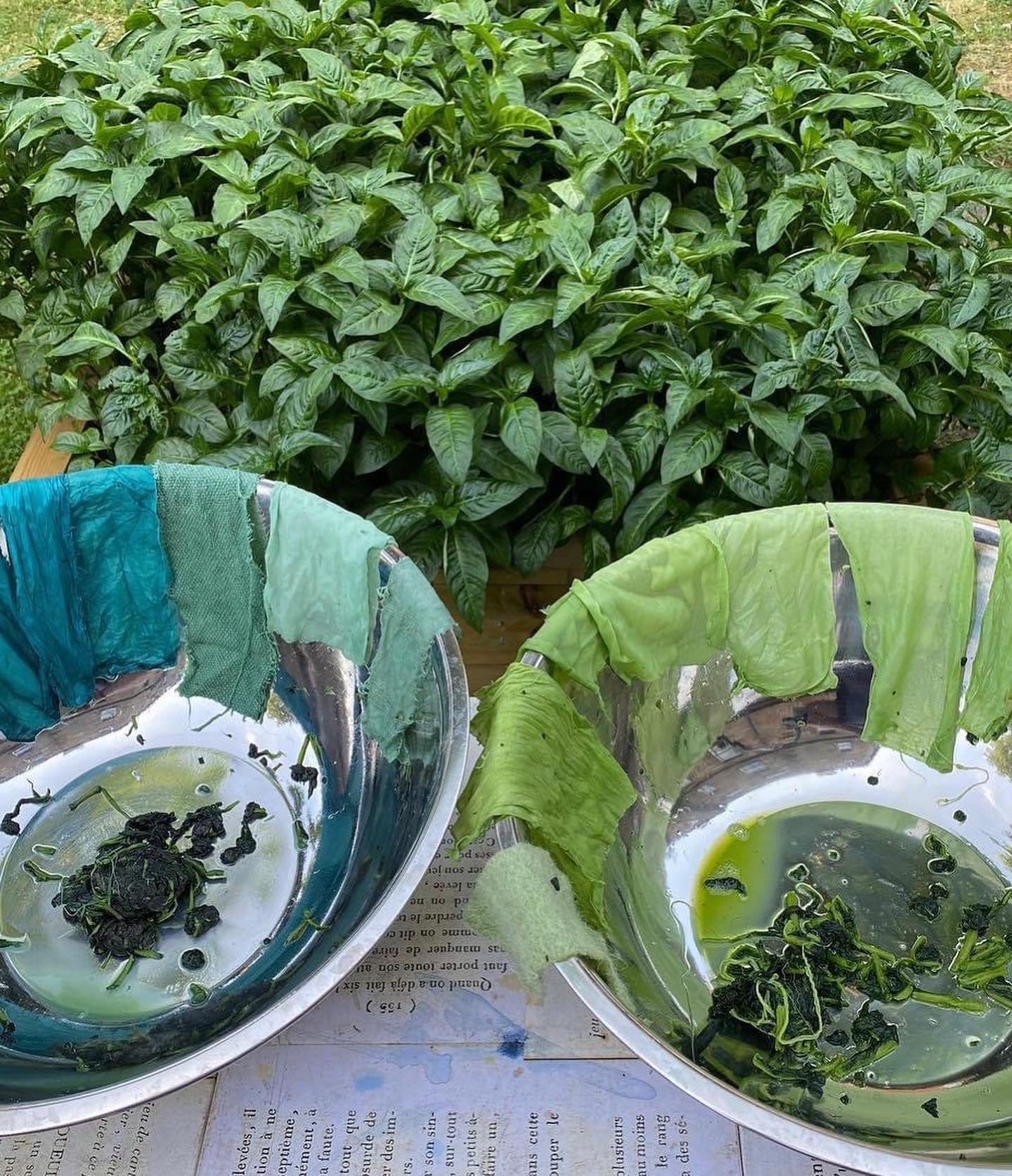
INDIGO AND WOAD GROWING AND PROCESSING ONLINE COURSE 2024
Join my groupe of home growers and grow Japanese Indigo and Woad in 2024 and learn to process it for colour. This program is aimed at Scottish and North of England growers because of geographical seasonality but anyone can join in. You will get 50 seeds of JI and some of Woad and information about planting. We will have several catch up on zoom during the season and comes harvesting time we will be able to experiment with pigment extraction as well as using the colour on yarn and fibre. Perfect for beginners.
£110.00
Discover more from THE LANSDOWNE HOUSE
Subscribe to get the latest posts sent to your email.
 THE LANSDOWNE HOUSE