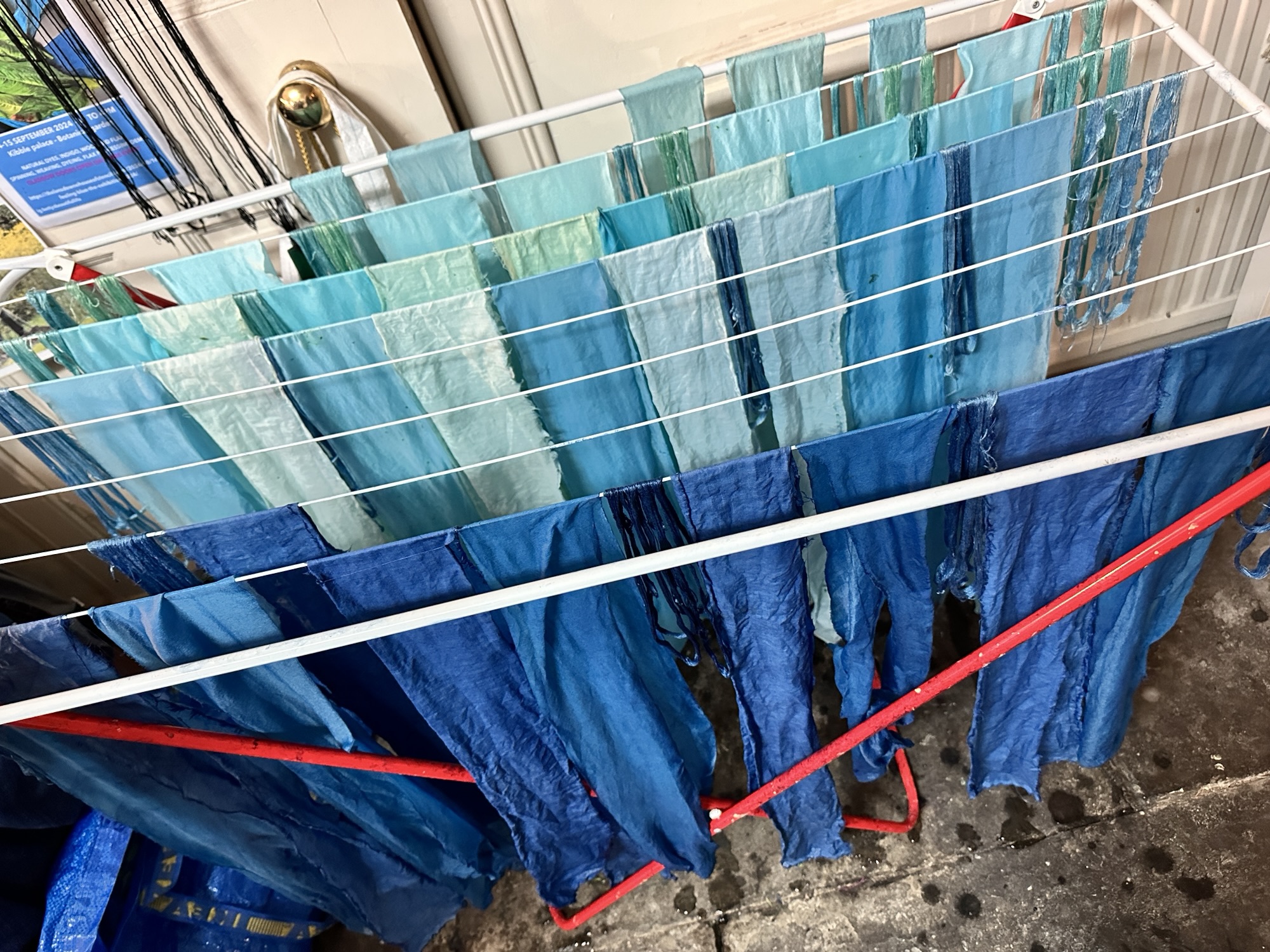
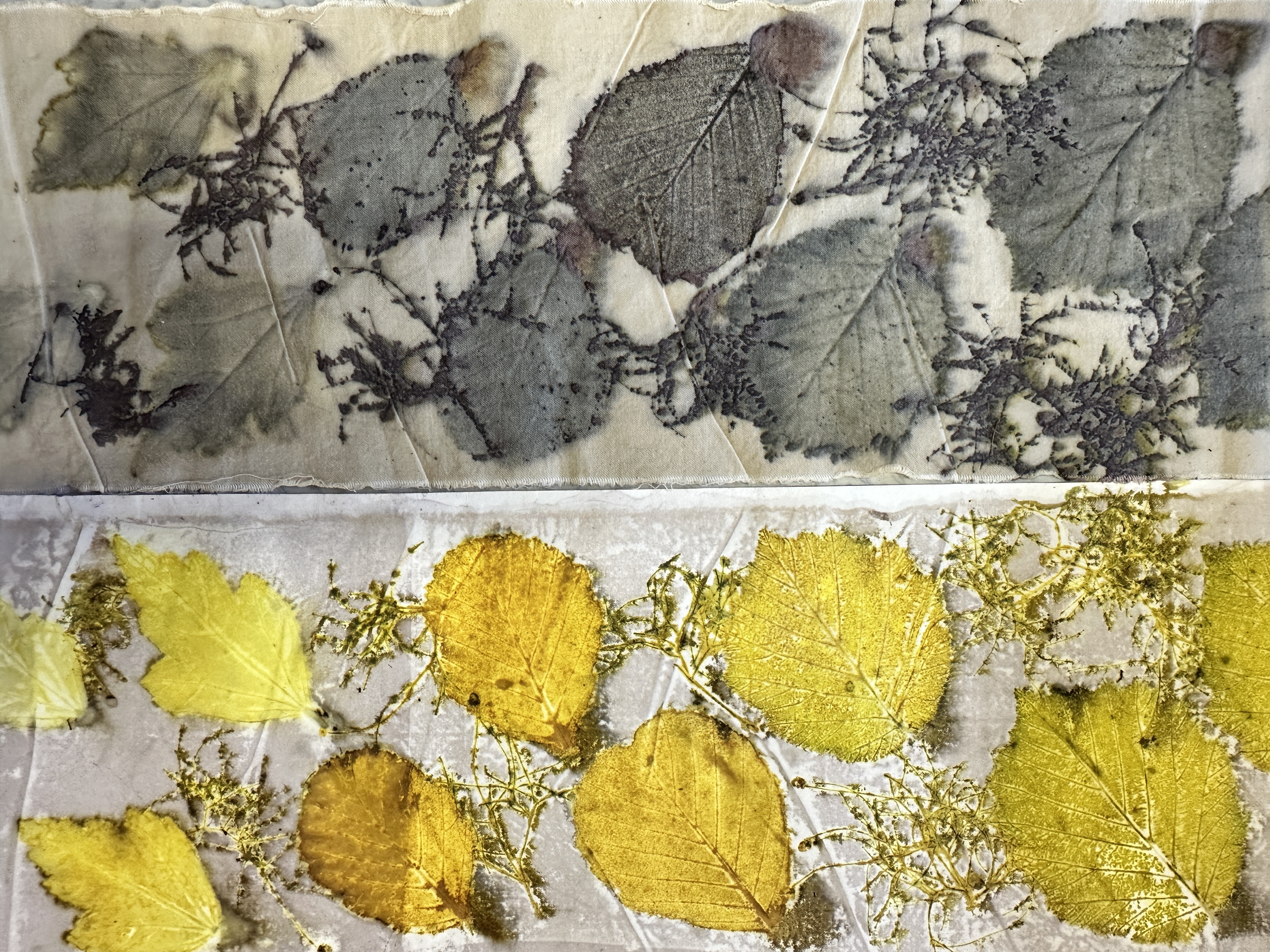
Featured

About Elisabeth, The Lansdowne House, and the colour blue

TO READ ABOUT THE WORKSHOPS AND COURSES PROGRAM LOOK HERE

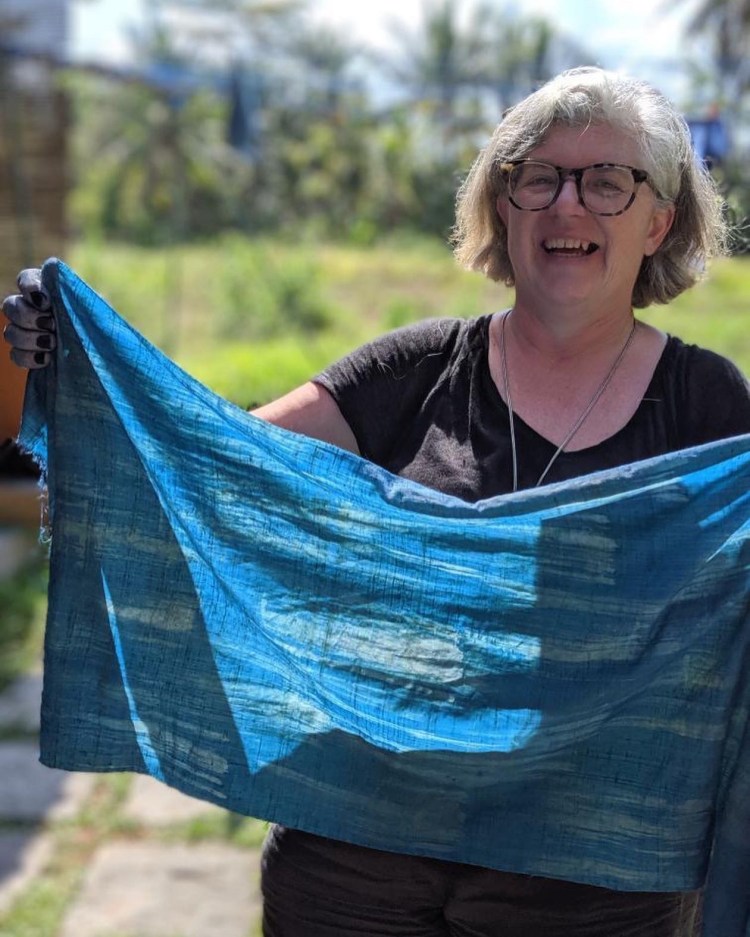
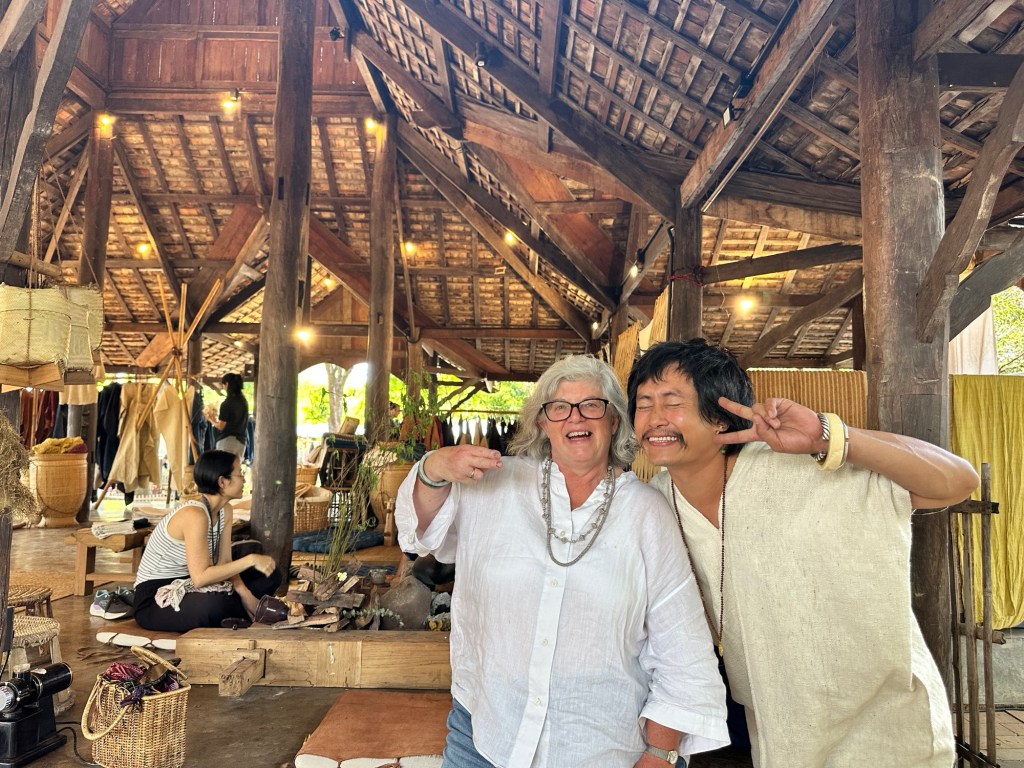
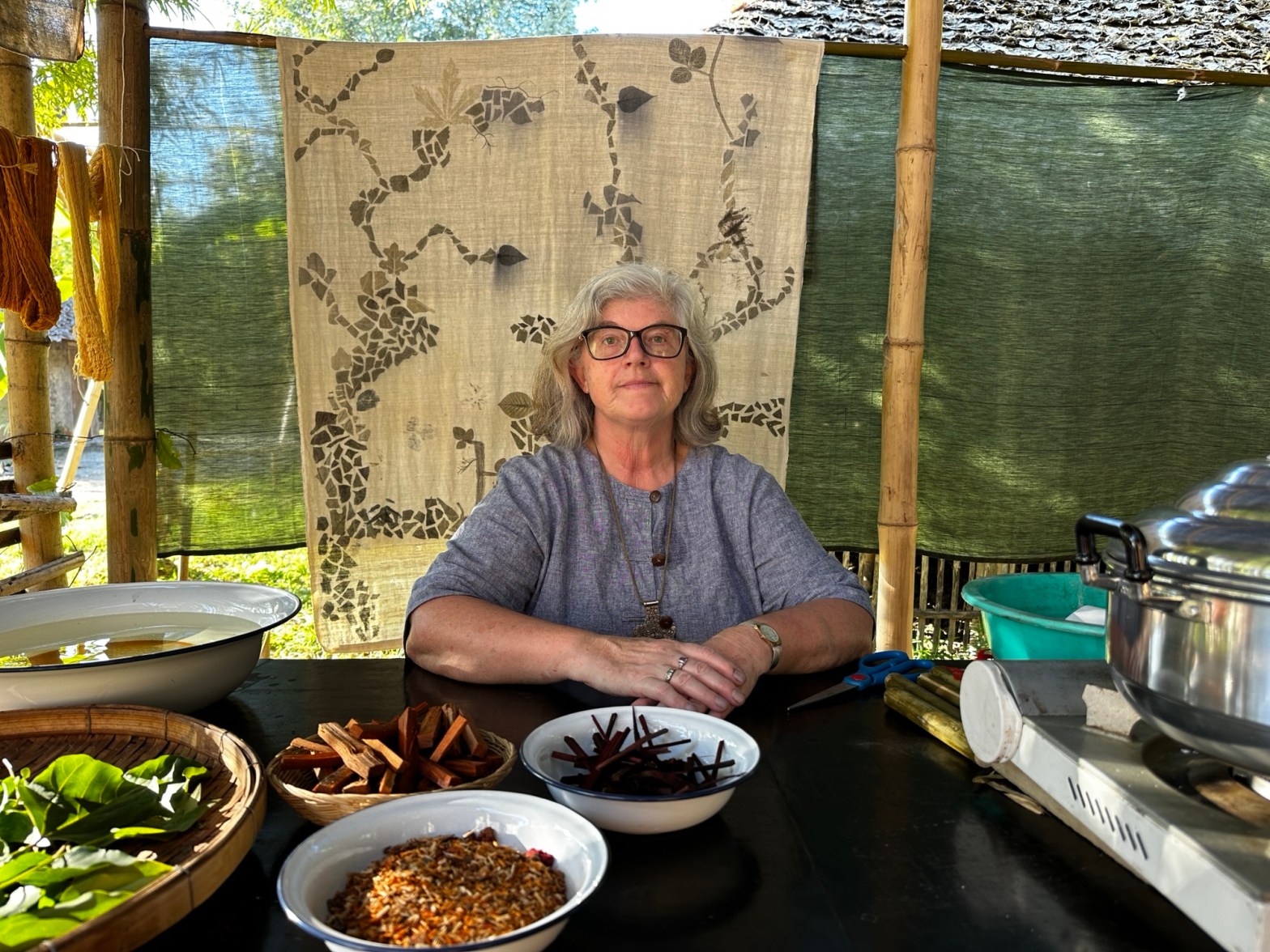
Elisabeth is a French born artist who lives and works in Glasgow Scotland. She runs a sustainable studio in the West end half way between the Glasgow Botanic garden and the Kelvingrove park.

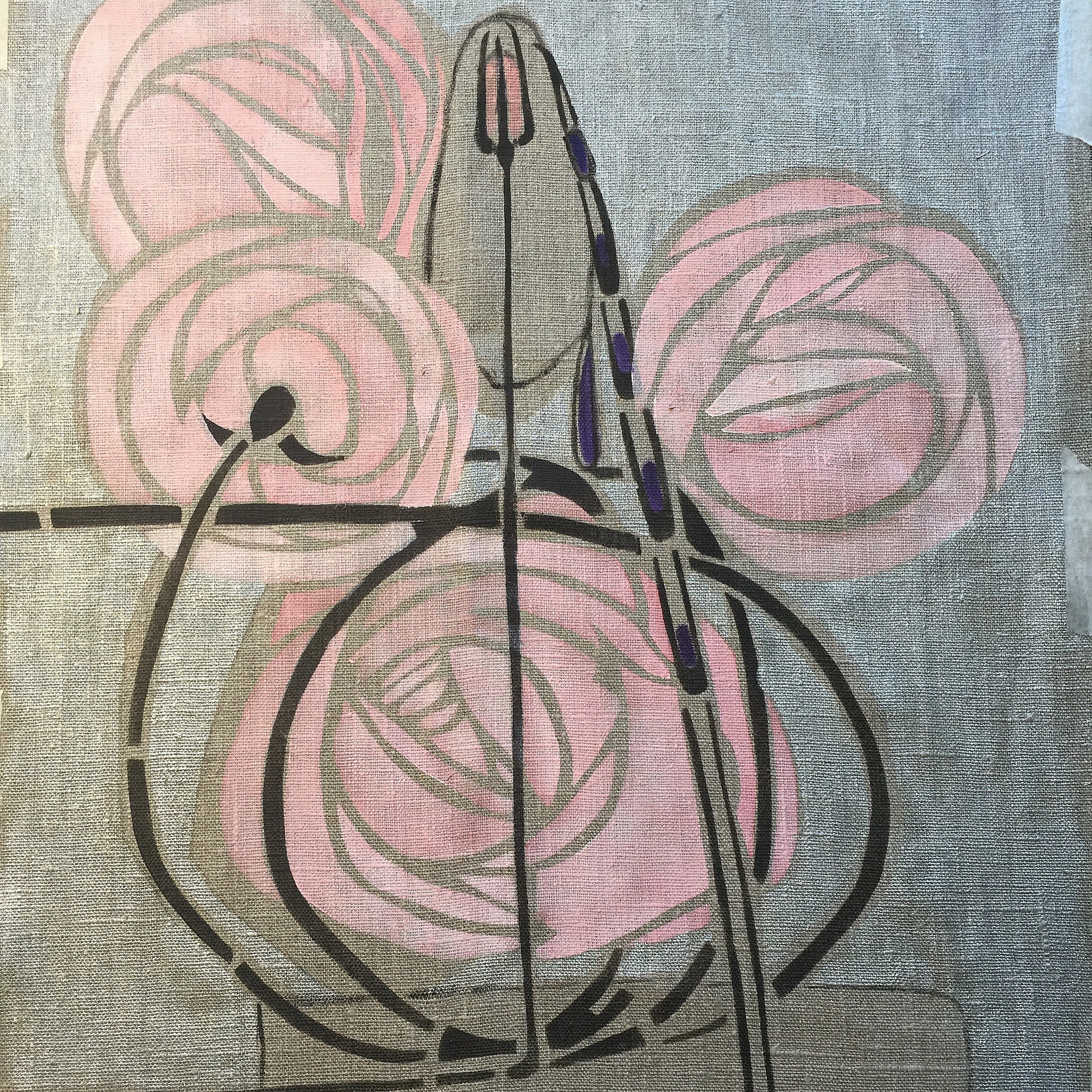
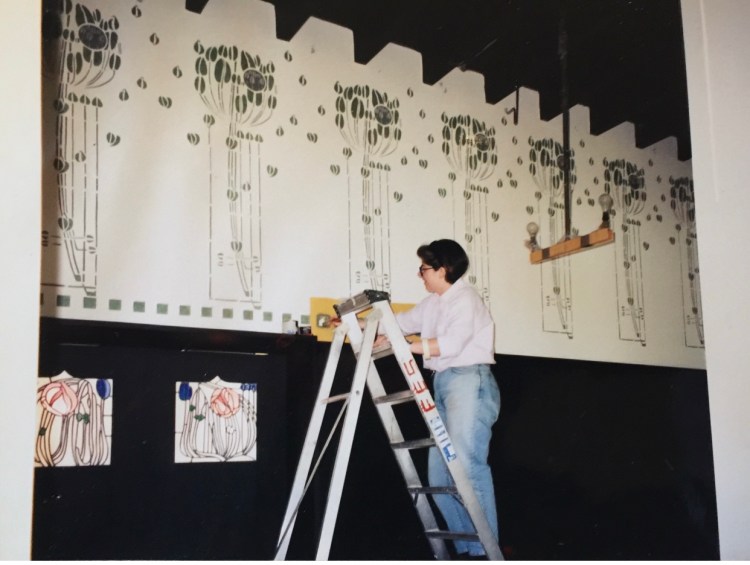
Her original training was in Decorative arts with Christie’s and the University of Glasgow. After graduating stencilling Mackintosh became her career. For 20 years she was involved in commissions with the Mackintosh community and was responsible for the recreation of The House for an Art Lover, the renovation of the Willow Tea rooms and some museum commissions.
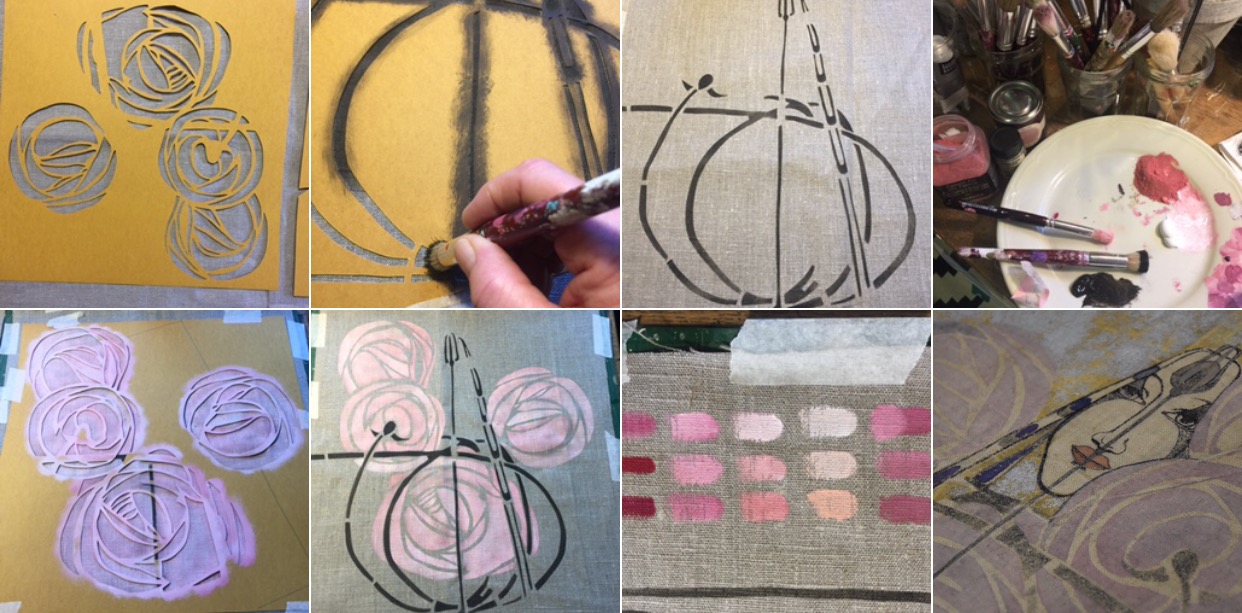
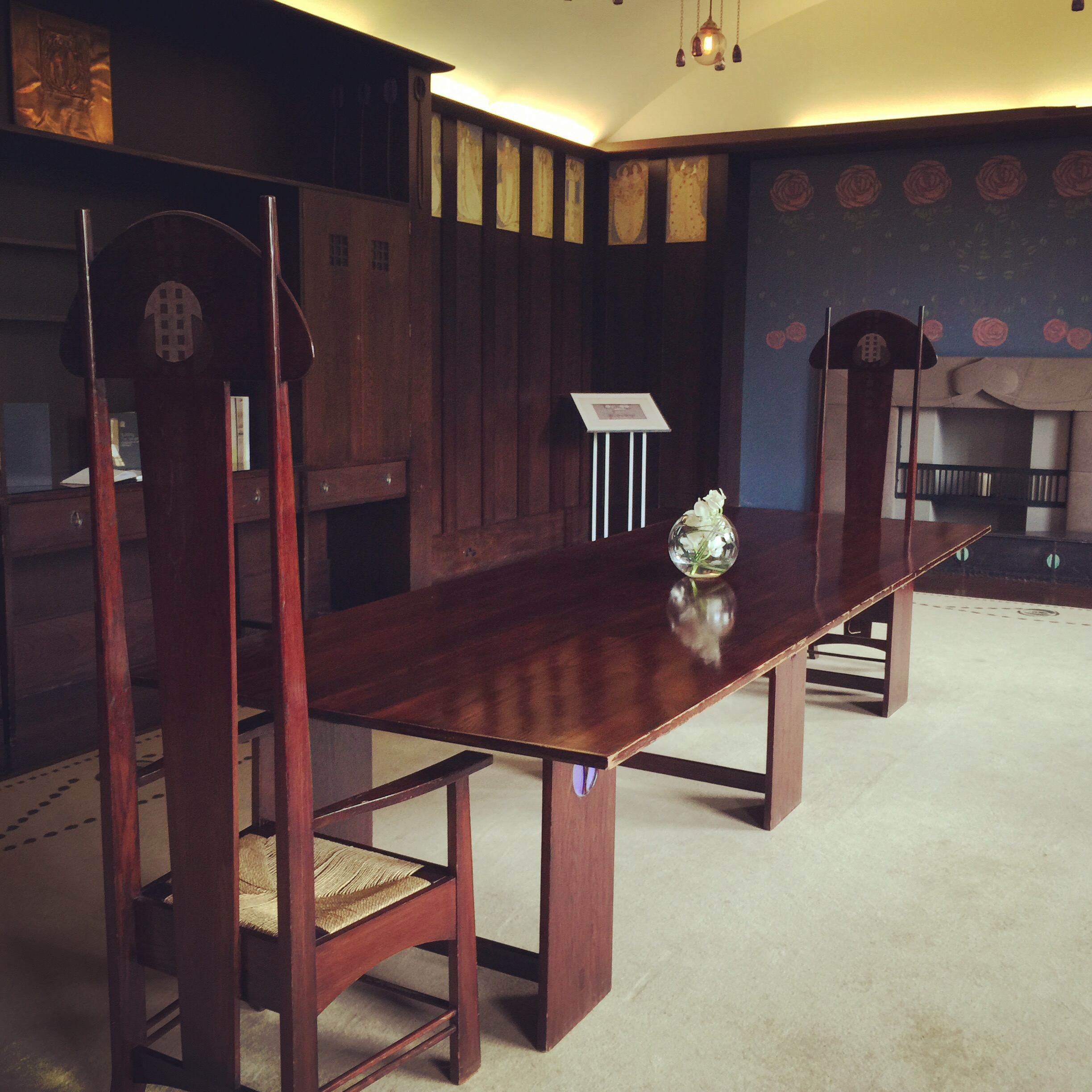
Elisabeth has always been attracted by natural colour but it was only in 2015 that she moved from stencilling to more eco techniques.

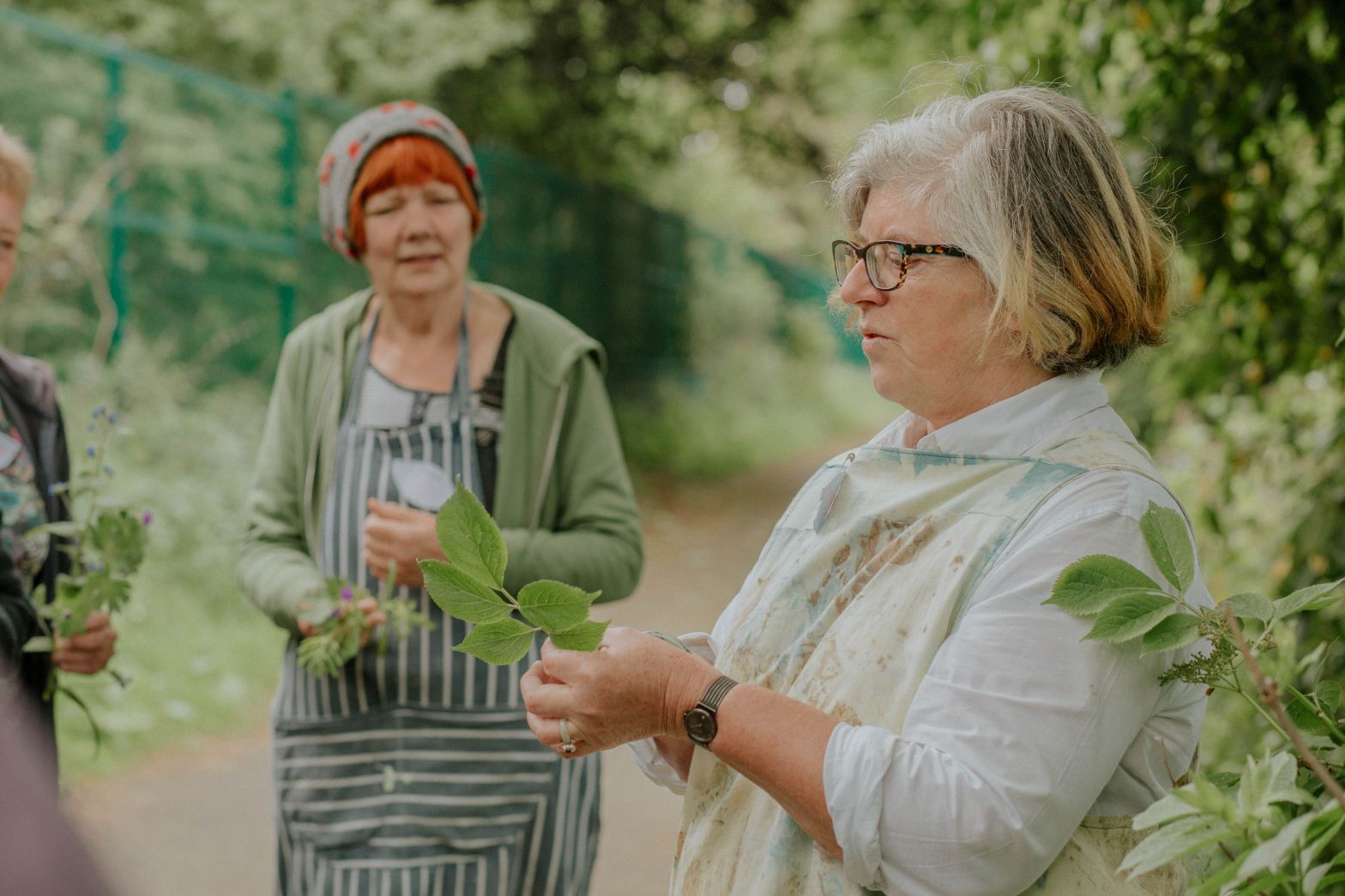
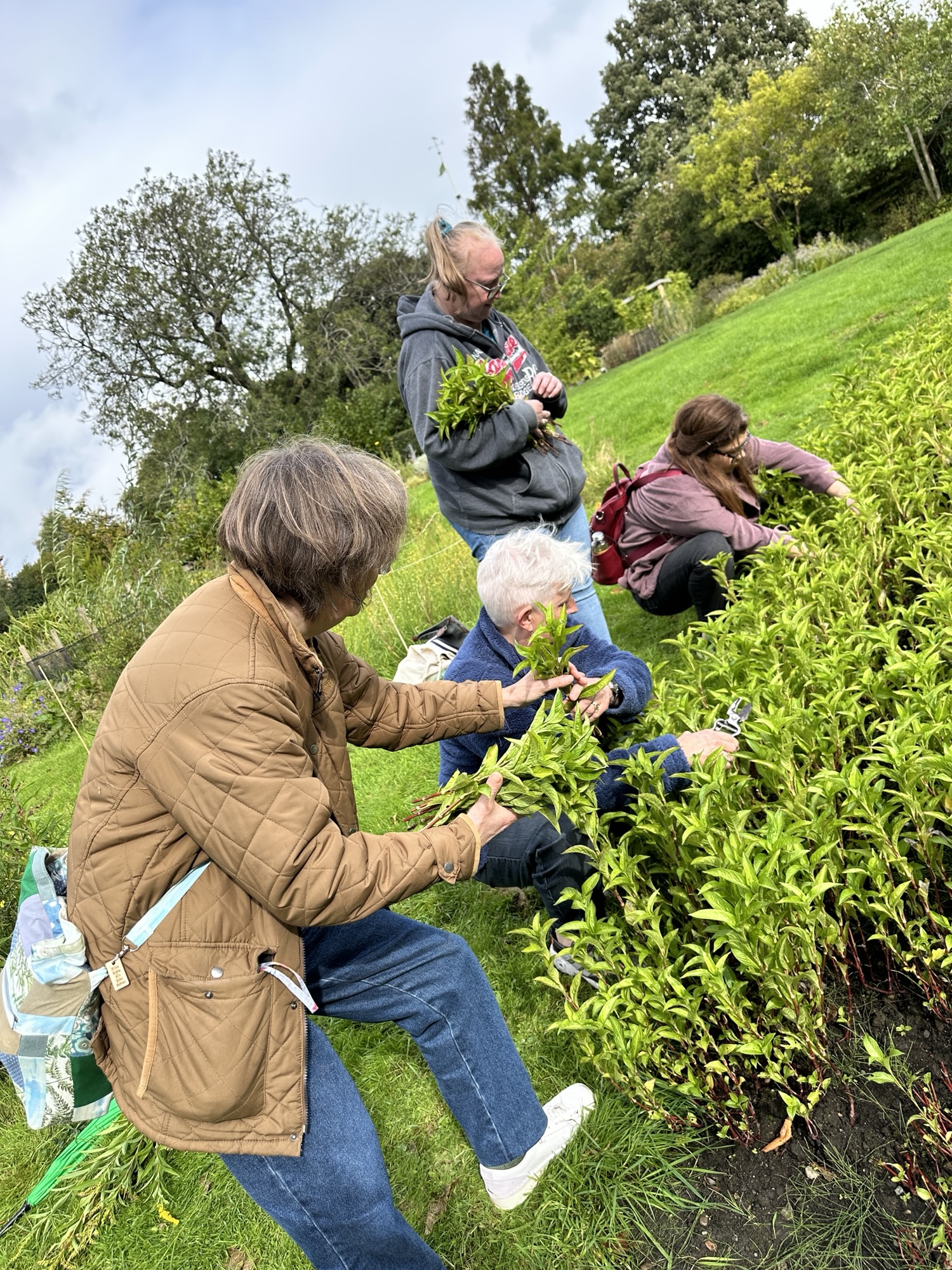
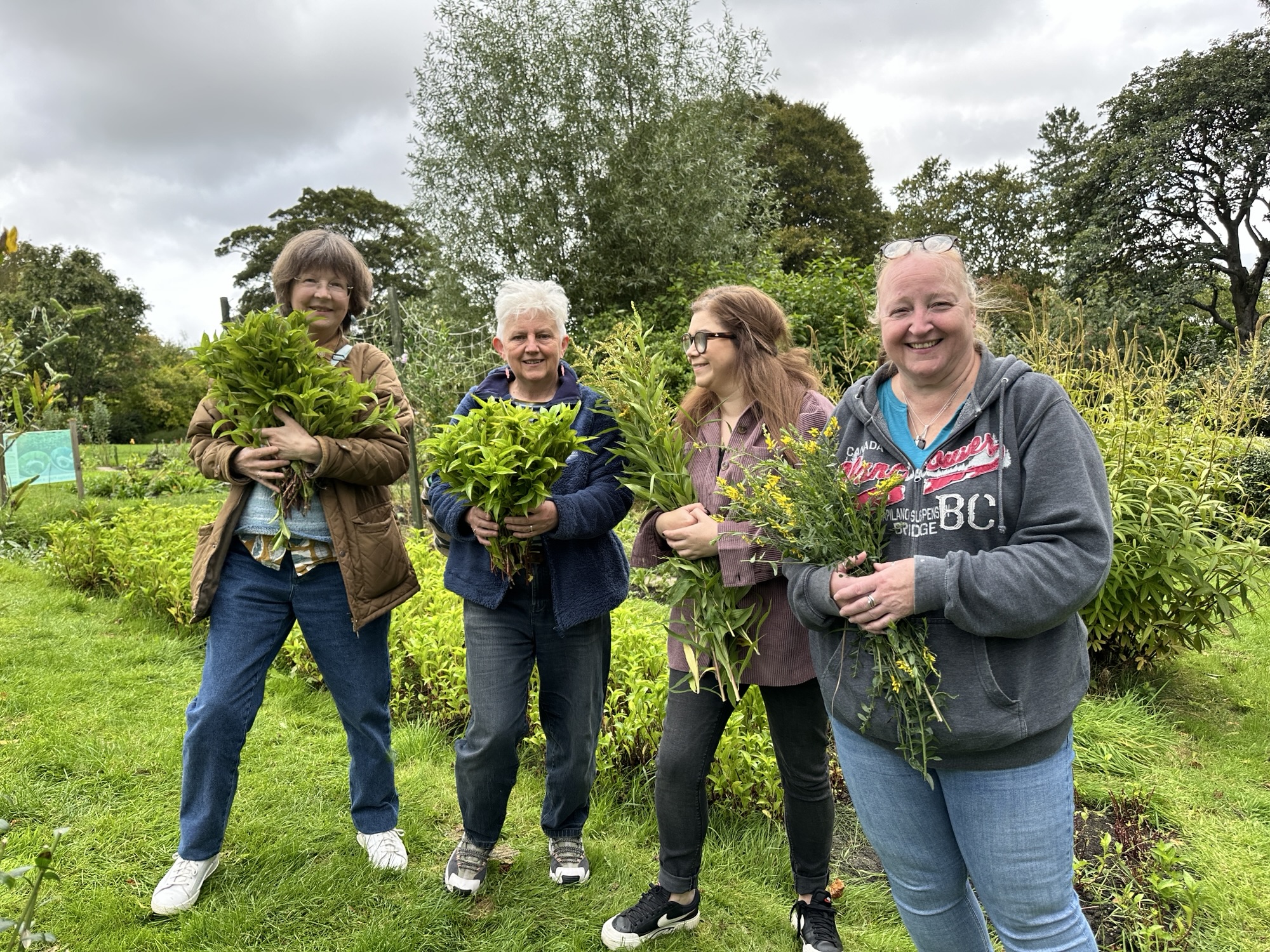
Today Elisabeth grows a dye garden in the grounds of the Glasgow Garden Botanical garden, she travels to study Natural dyes and shares her knowledge in workshops both in person and online. She is a member of the Weavers guild and the Quilting guild, and writes regular articles in their Journals.

In 2025 she will offer you to share her sustainable journey:

THE TRUE COLOUR OF THE COTINUS

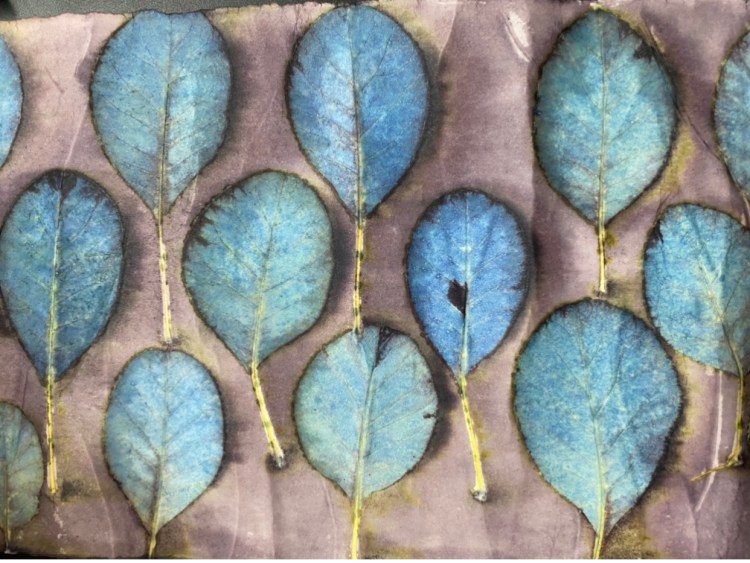
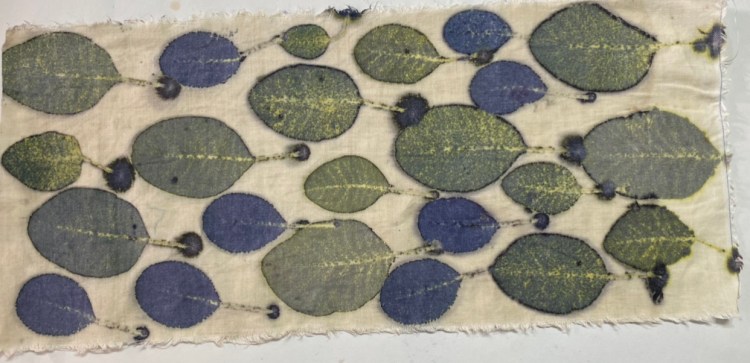
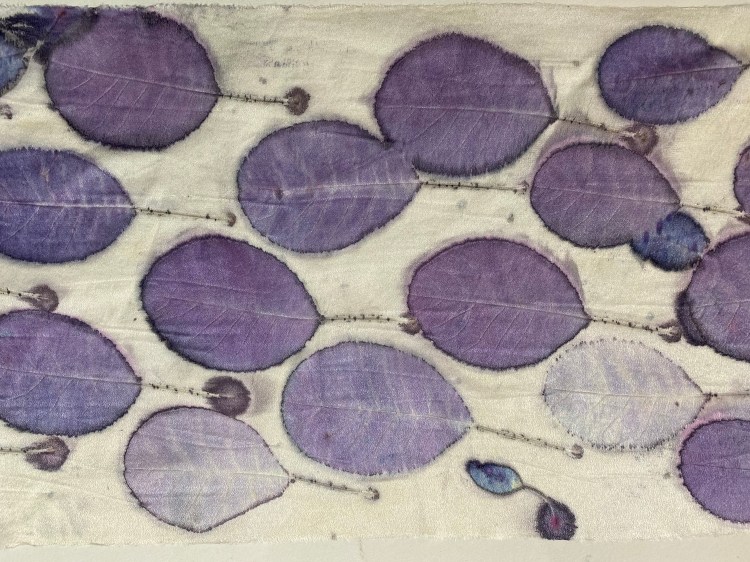
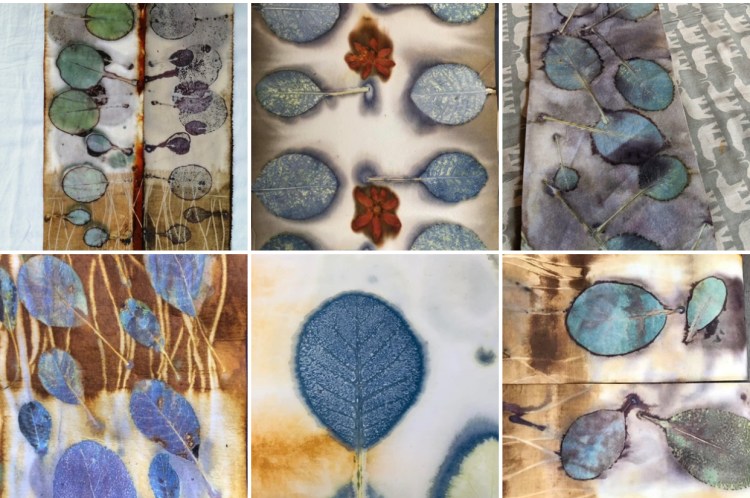
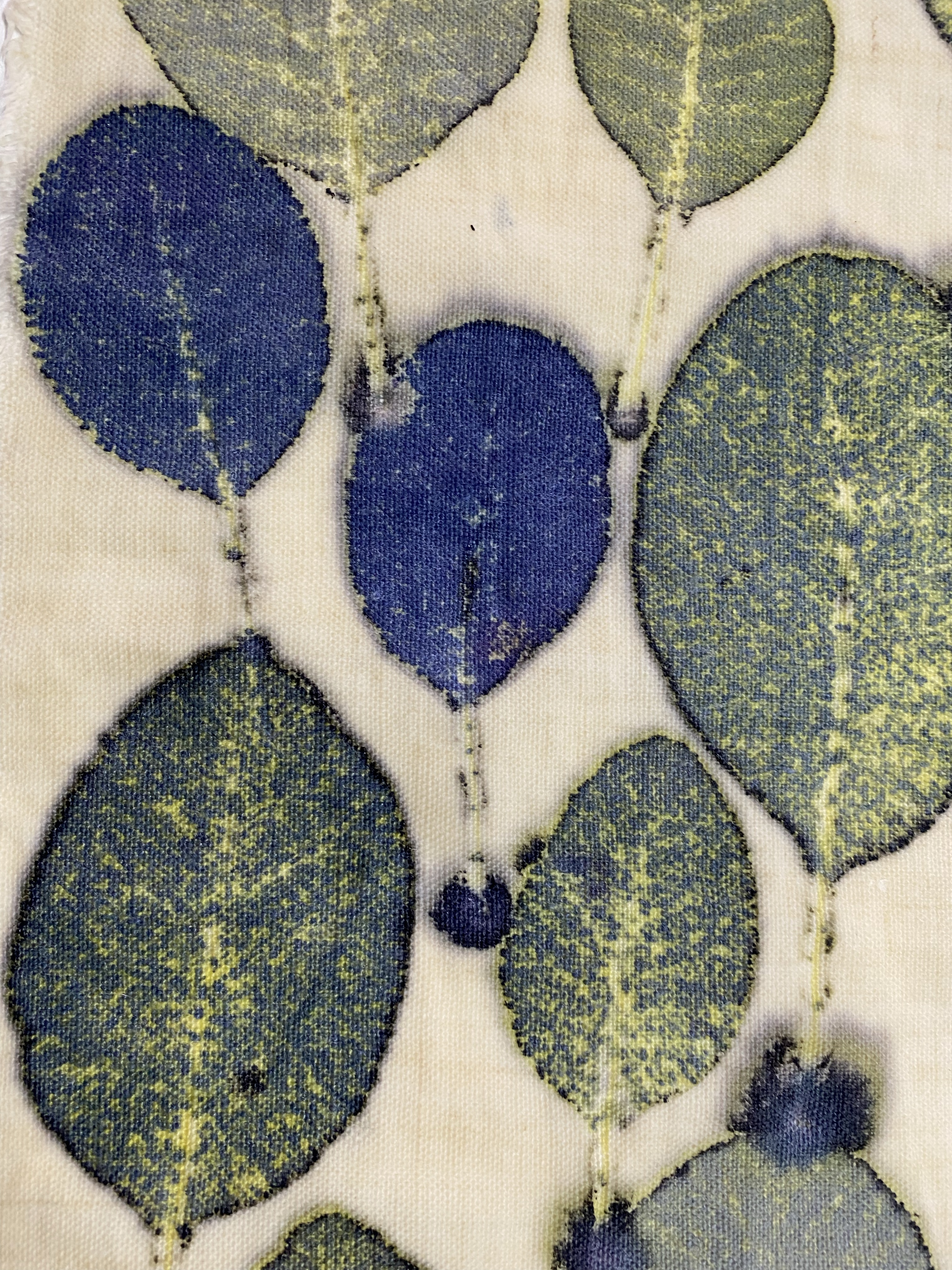
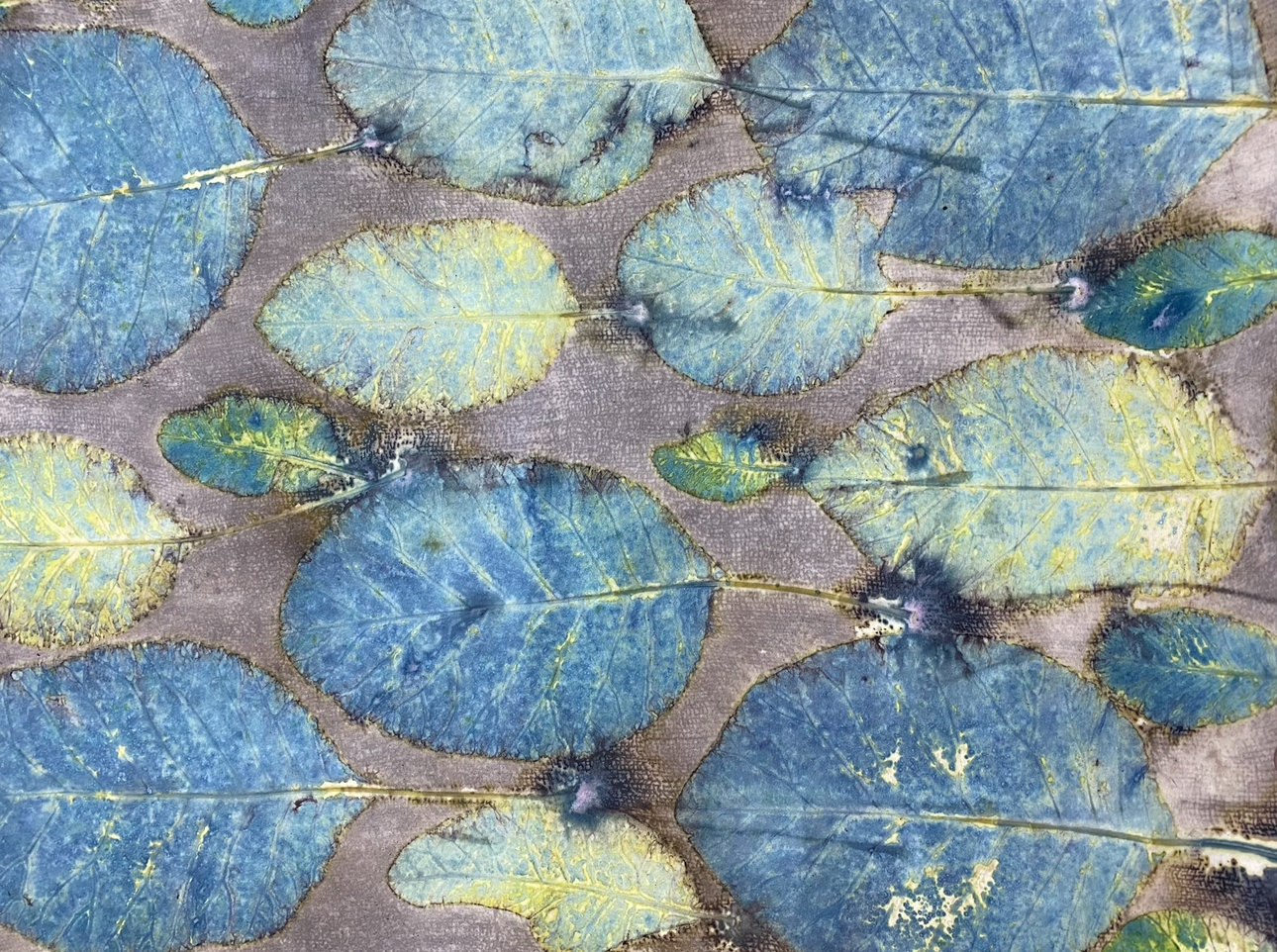
“The True Colour of the Cotinus” is a global Eco-printing project created by French artist Elisabeth Viguie Culshaw in 2020 during the Covid crisis from her Glasgow studio.

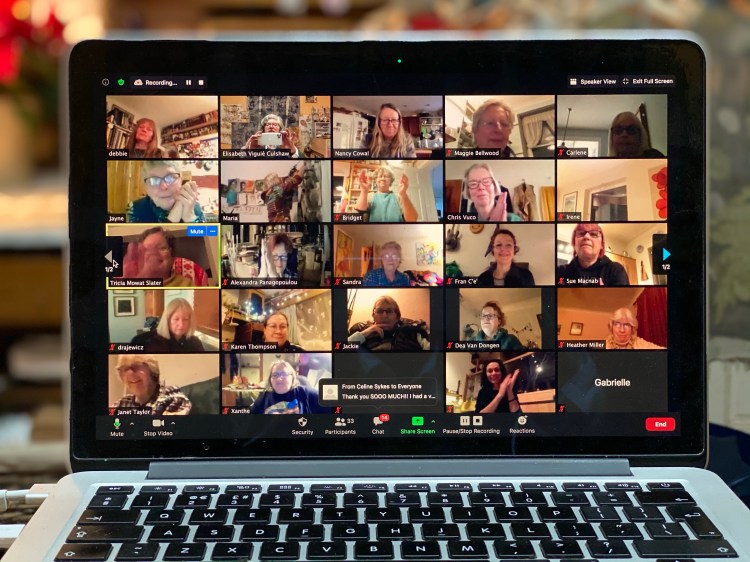
Using the online platform Zoom and a dedicated Facebook group, she wanted to provide isolated Eco-printers and creative individuals from all over the world with a communal simple technique to follow.

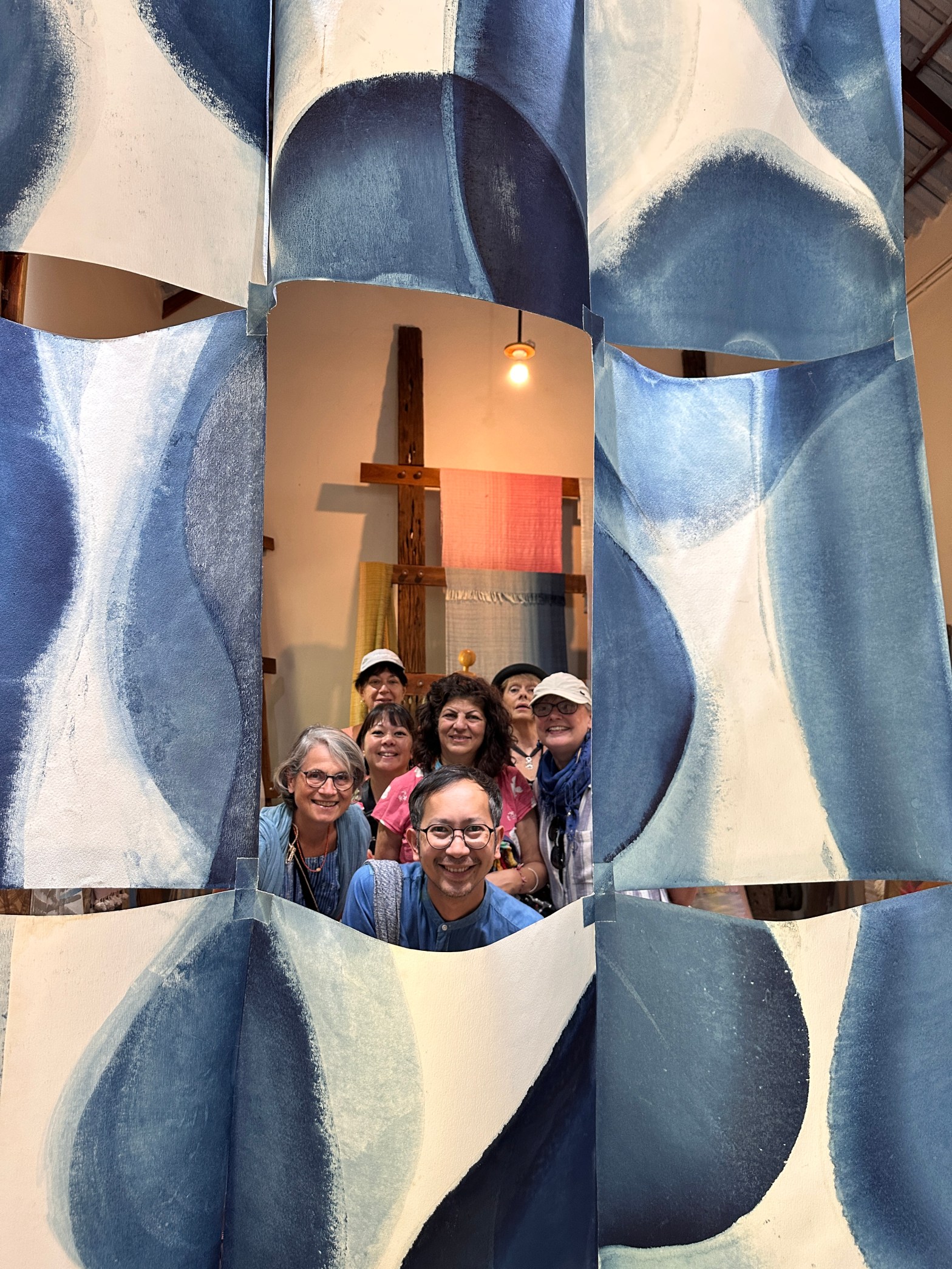
By summer 2021 over 700 participants have taken part virtually and created blue prints from the Cotinus plant. In 2022 we learn to extract pigment and we had an exhibition in the Glasgow Botanical garden as well as a printalong Masterclass where 30 Botanical printers printed together while online.

Resilience and creativity were the project key focus, friendship and beautiful prints are the result.

If you want to take part in the project look here for future workshops or PDF methods for fabric and paper printing. Taking one workshop or obtaining one method will allow you in the group. https://thelansdownehouseofstencils.com/2021/09/01/the-true-colour-of-the-cotinus-how-to-make-blue-eco-prints-from-cotinus-leaves/

THE INDIGO PLOT in the Glasgow Botanic Garden and Growing your own Indigo at home in 2025:

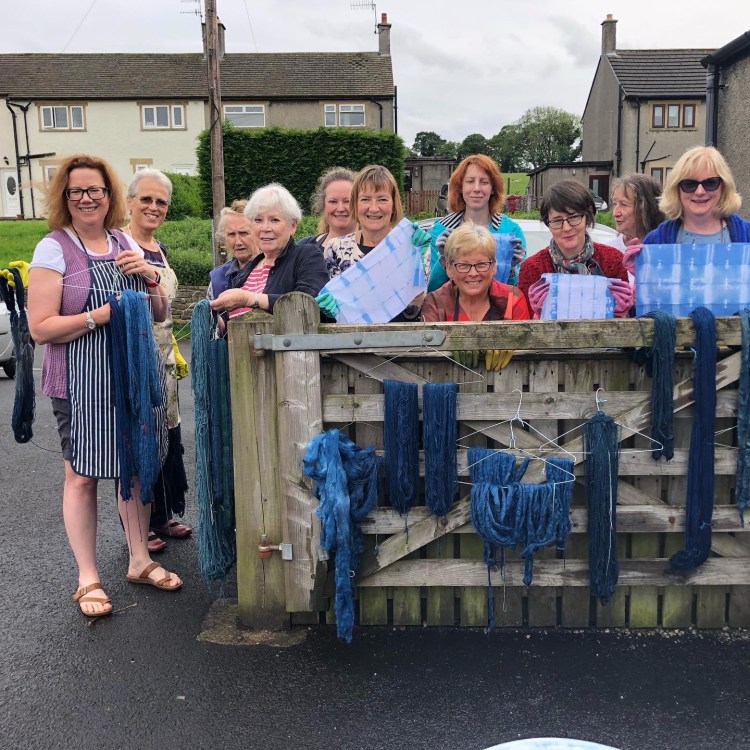
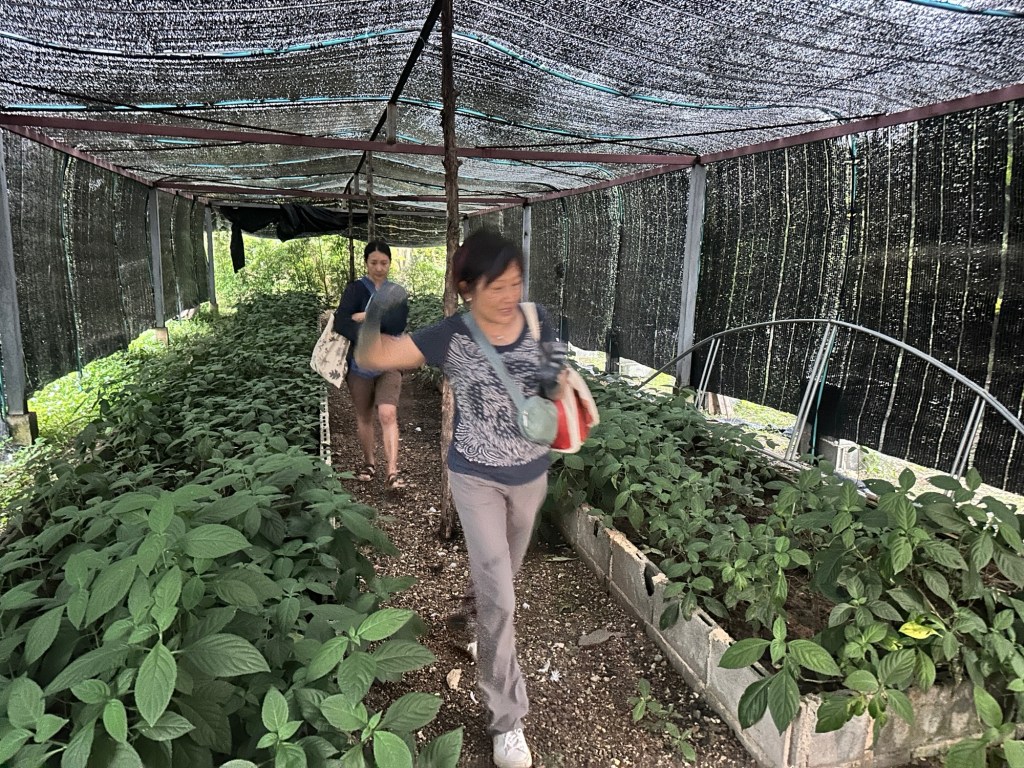
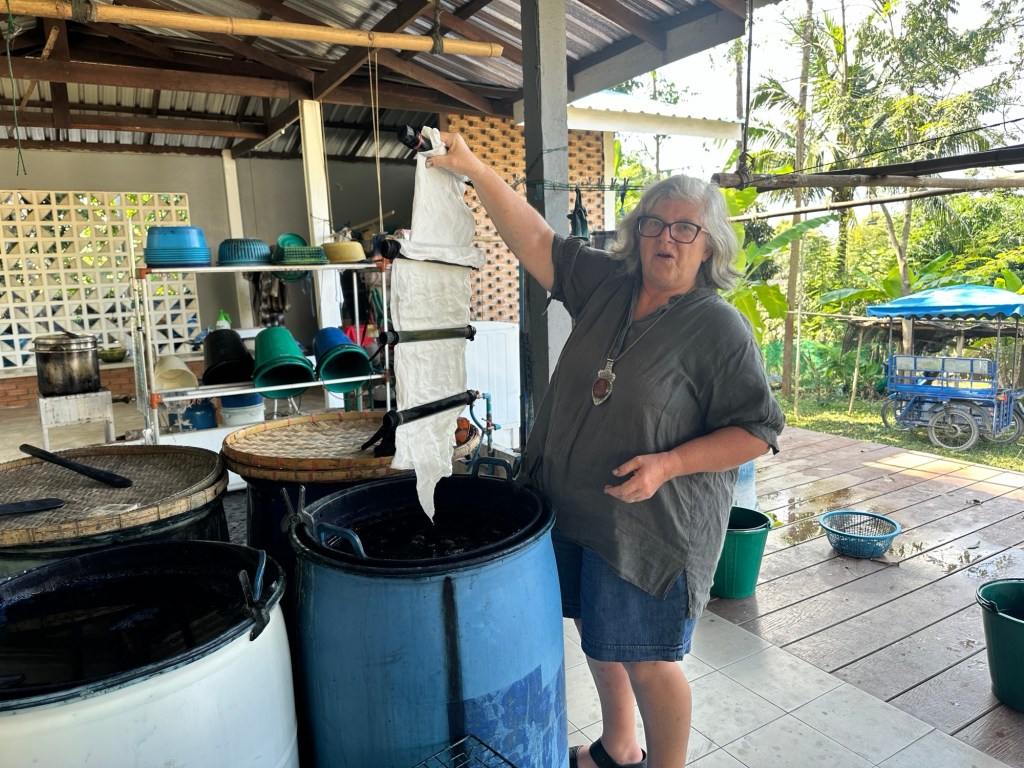
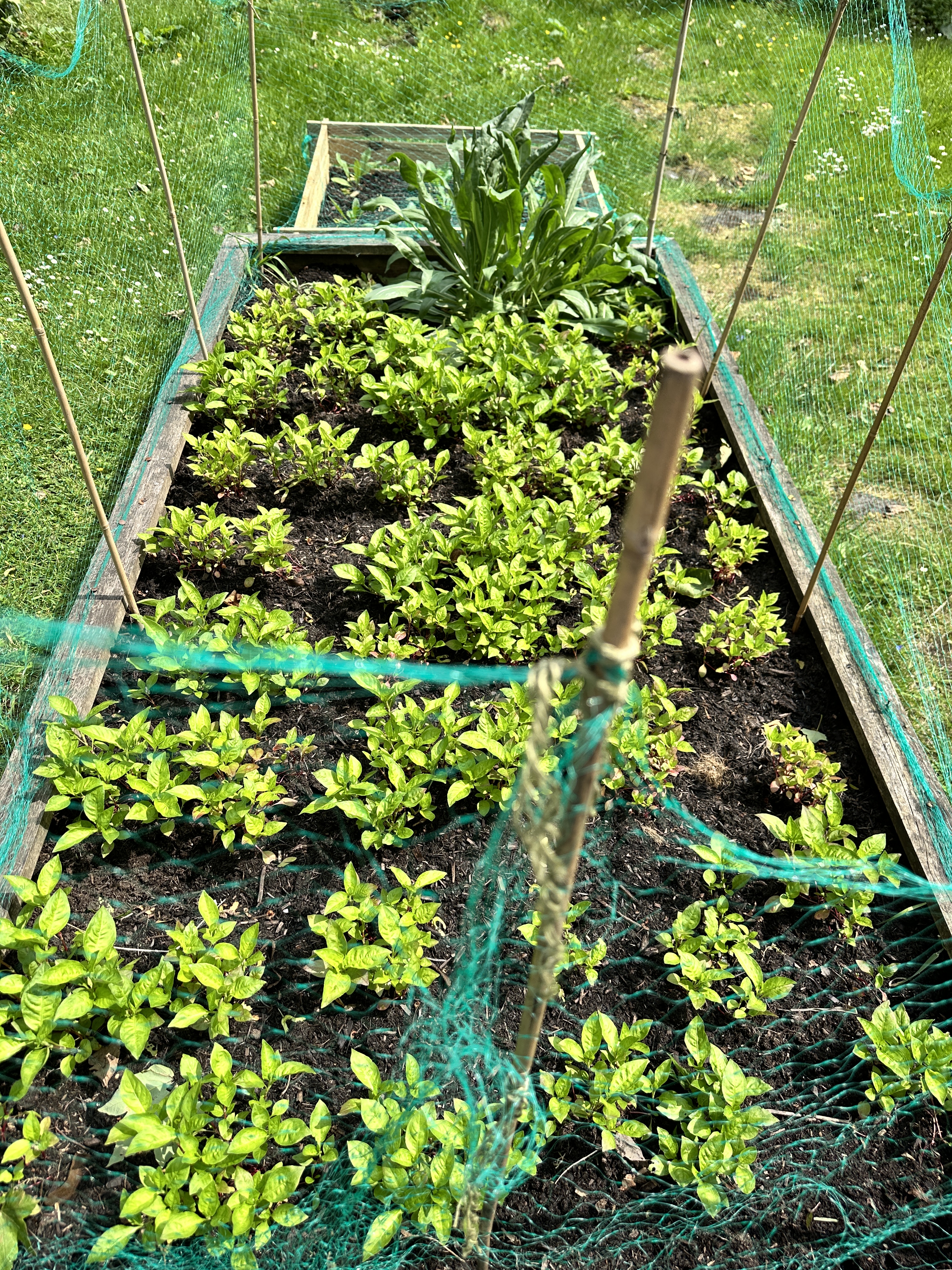
In 2022 I started a Natural Dye Garden in the Glasgow Botanic Garden “The Indigo Plot” https://thelansdownehouseofstencils.com/2022/05/30/theindigoplot-at-the-botanics/ I love the idea of helping people making the connection between plants and colour. As a natural dyer I care for the environment and I aim at working in a sustainable way. The quality of my process and the ingredients I use are important to me and I want to pass this on. In the first year in the dye garden I grew with the help of some volunteers some Woad, Indigo for blue, Madder for red, Genista and Weld for yellow, some dye flowers and a lot of Flax. I shared during workshops and an exhibition in Septembre. I also curated a project with some home growers in Scotland. Together we grew Japanese Indigo and experimented with it.

I am planning in 2023 a Natural Dye Exhibition in the Glasgow Botanical Garden on September 15 – 17. That will include a Masterclass in Natural dyeing using the dye plants grown in “The Indigo Plot”.

But where did I start?

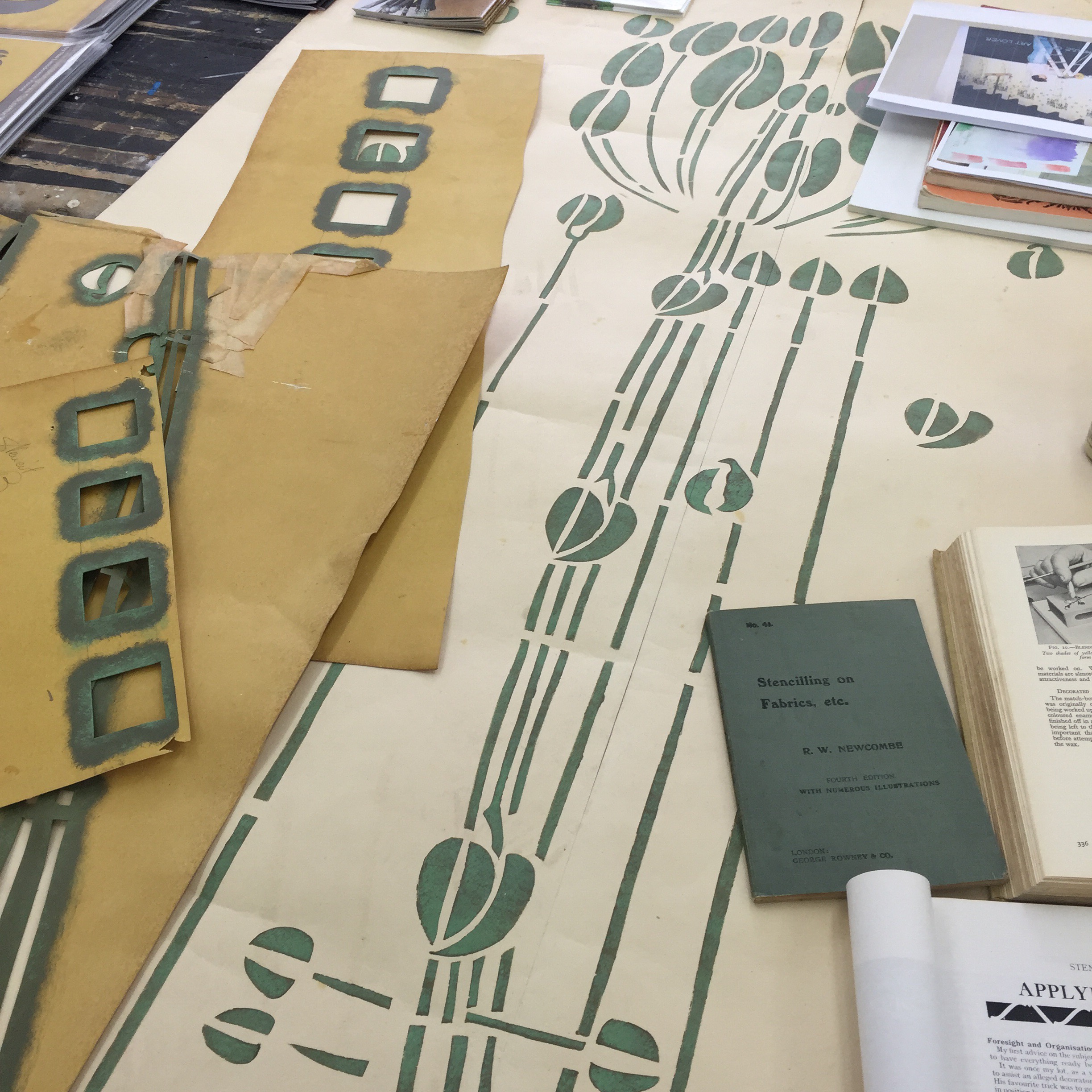
Elisabeth was trained in Decorative Arts by Christie’s and The University of Glasgow in the 1990’s. With strong connections to the Mackintosh Heritage, She pursued a career in the recreation of historic wall treatment and specialised in stencilling with a special emphasis on the Art Nouveau period. She is well known for her interpretation of Mackintosh’s The House for an Art Lover and her most recent recreation work of the Glasgow “Willows tea rooms” from 1903.

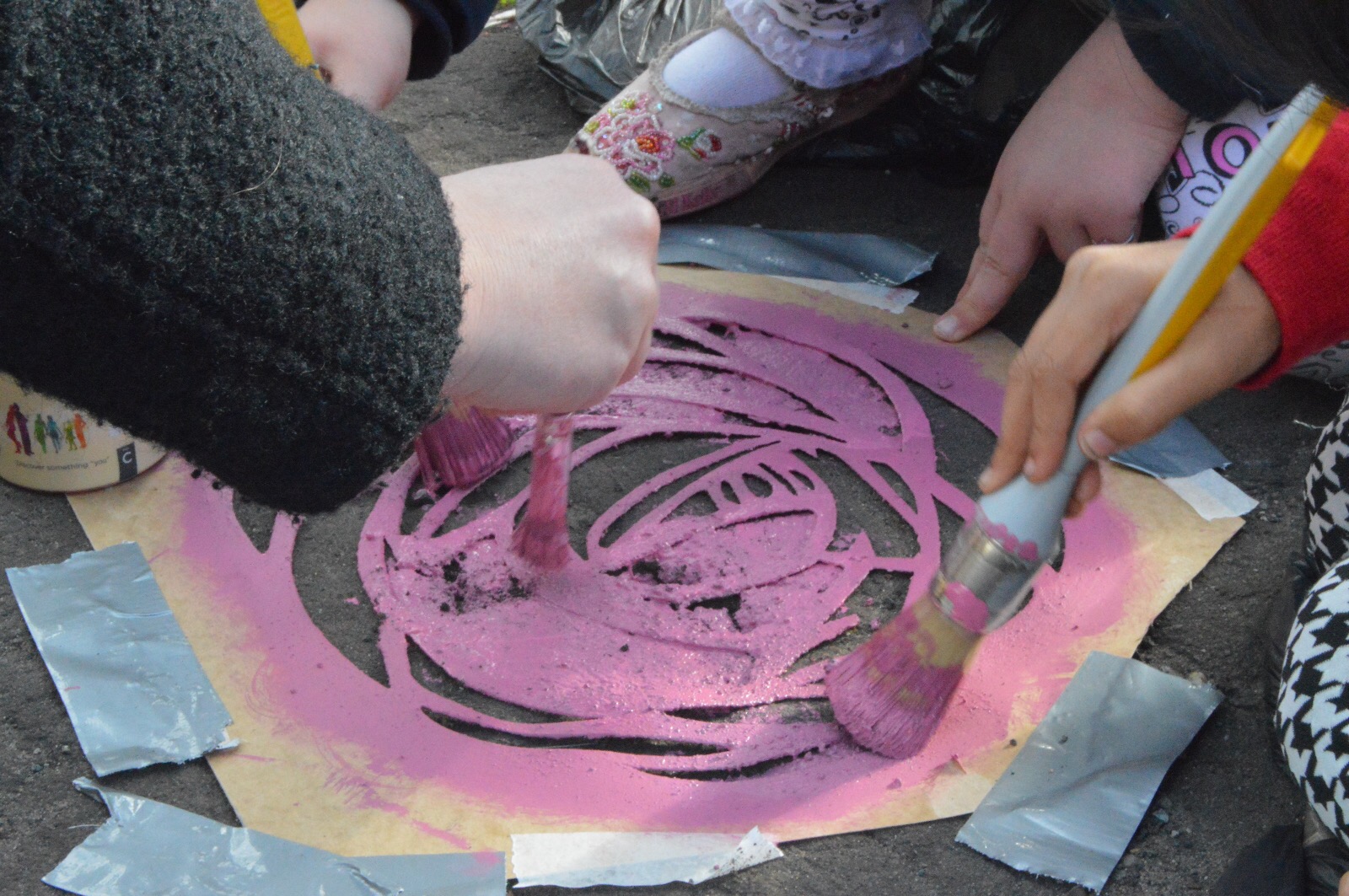
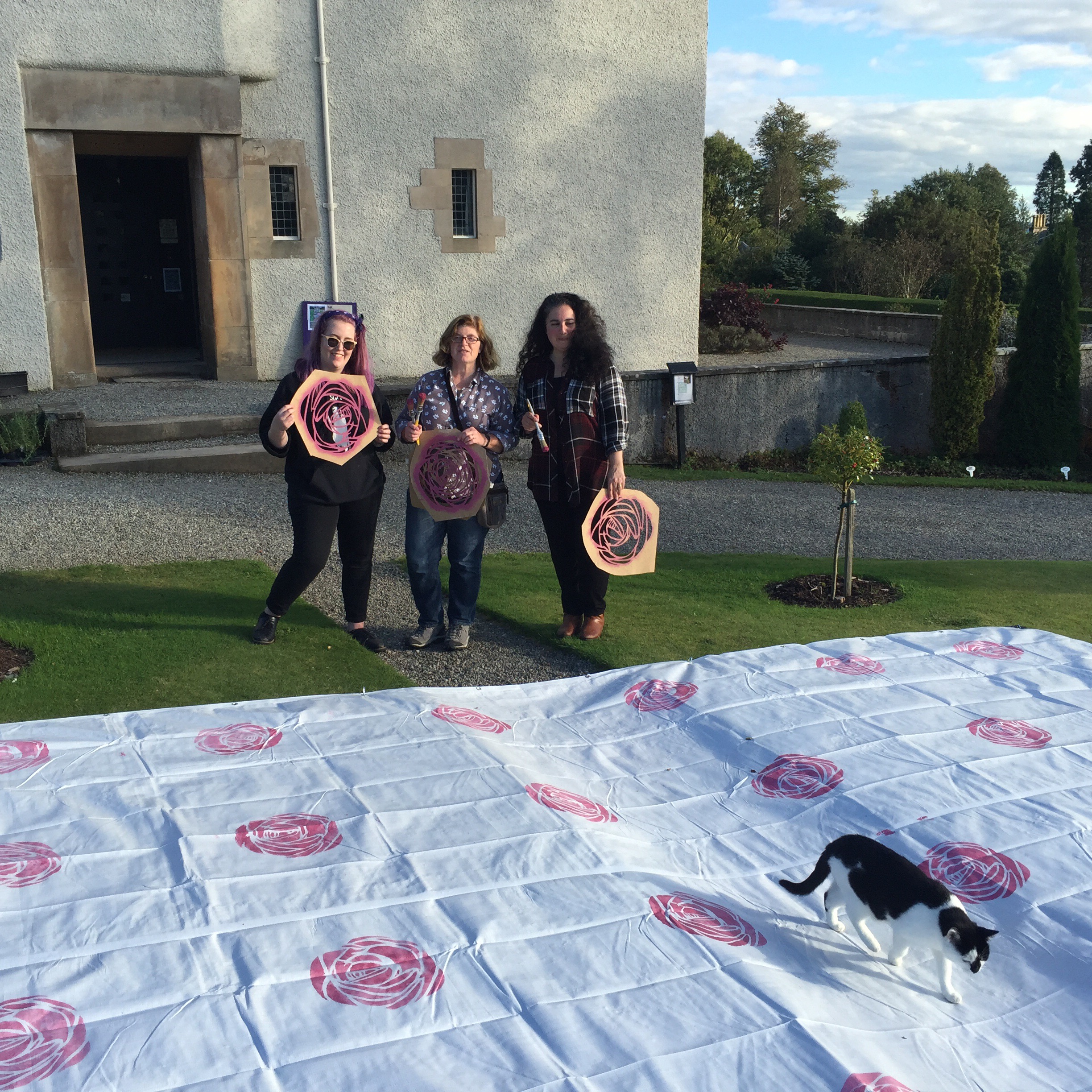
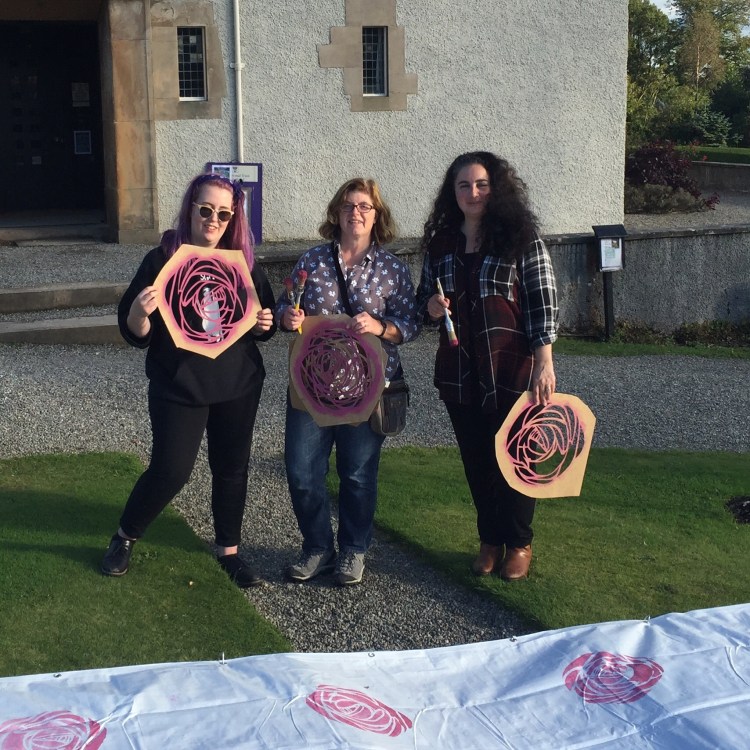
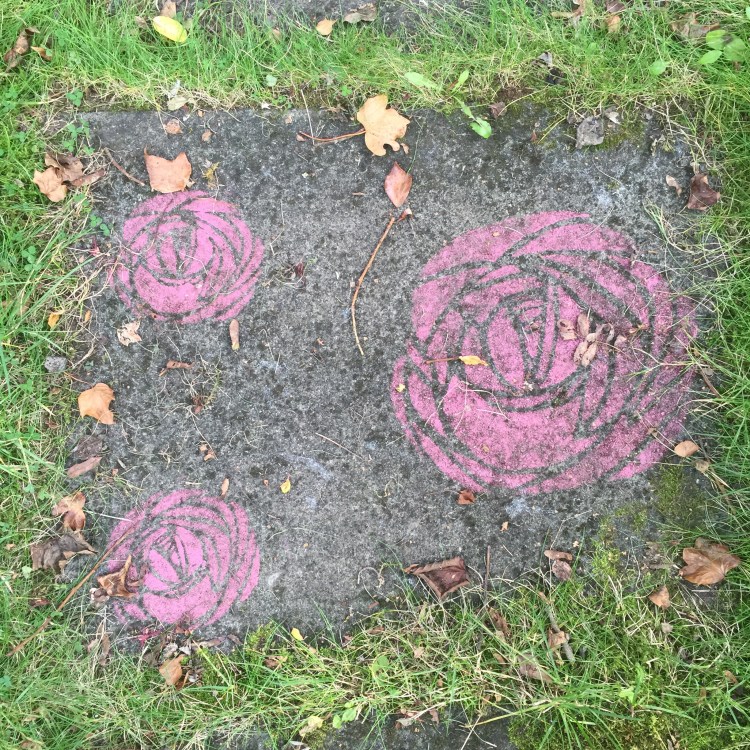
She has a strong interest in Community art and she has been running almost yearly programs involving the Community in Art projects, such as The Big Rose, (West of Scotland, Mackintosh Festival 2016) involving over 500 participants across 13 venues. The public was involved in stencilling large Mackintosh roses outdoors creating communal carpets outside Mackintosh buildings.

She was commissioned in 2015 to recreate some interior stencilling first designed in 1903 by designer and architect George Walton in Dunblane in Scotland.

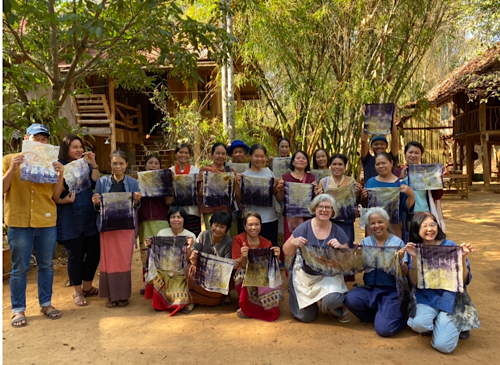
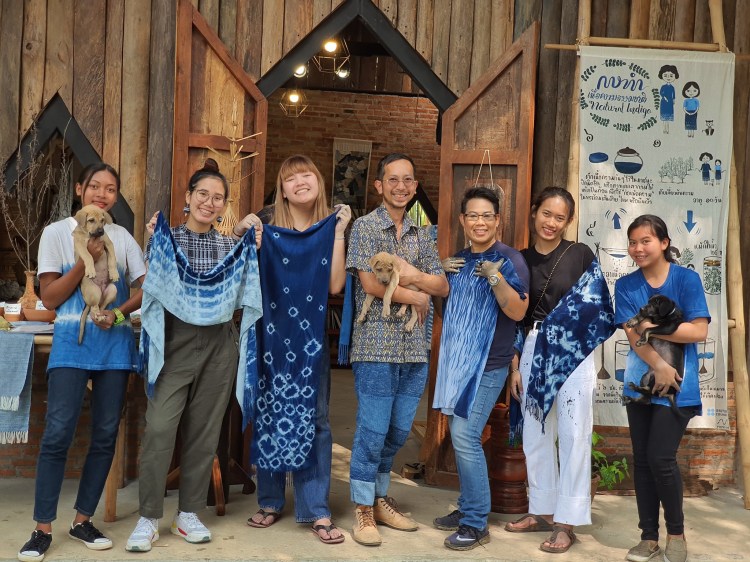
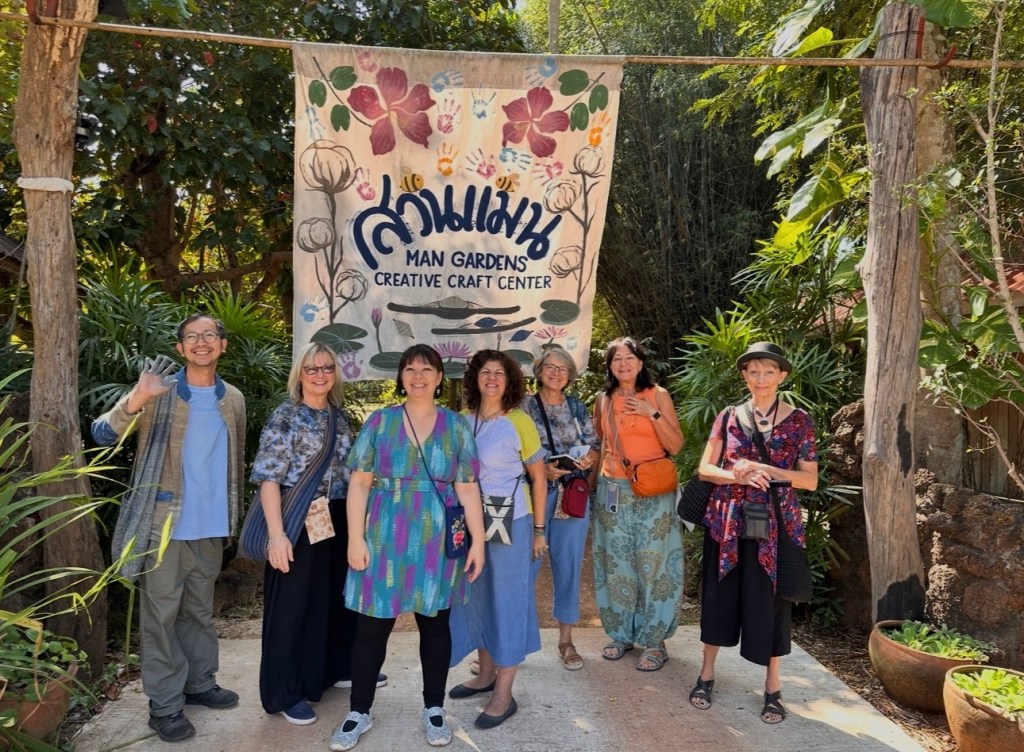
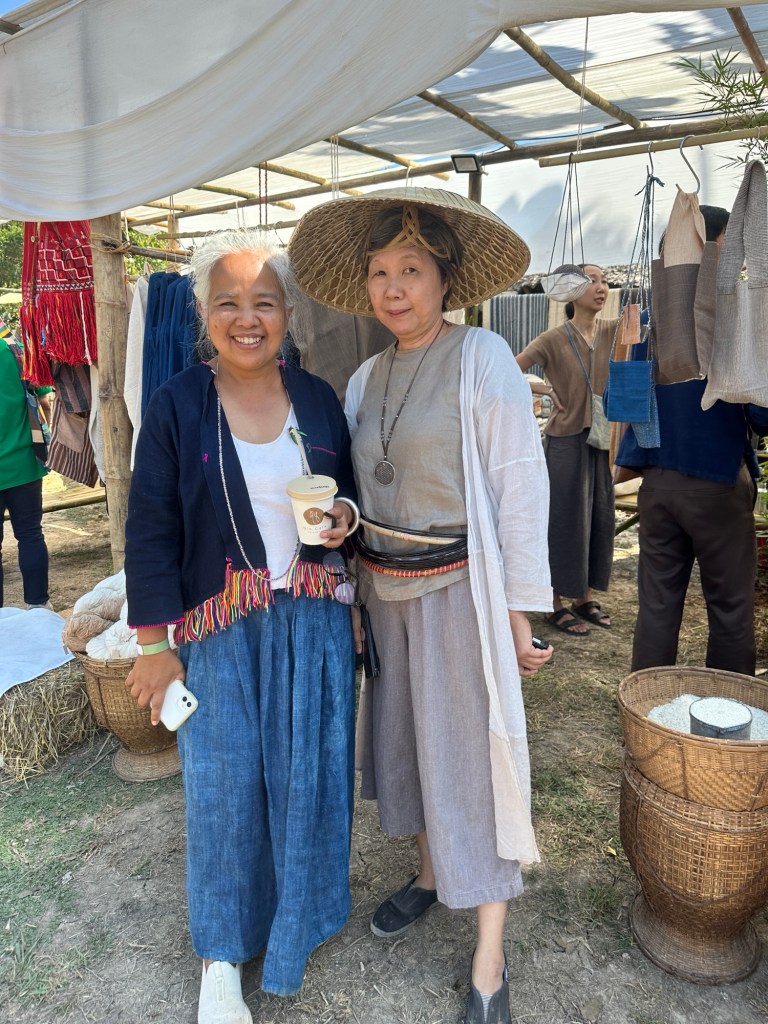
Inspired by her regular travelling in South East Asia since 1995 she gradually moved into the use of more Eco techniques like Indigo, natural dyes and Ecoprinting. She is self trained but also catches specialised workshops with specialist artists such as Aboubakar Fofana for Indigo, Irit Dullman for Ecoprinting as well as learning from local wisdom she finds around her. She organises skill swaps with other artist as she believe we only learn well from teachers we feel passionate about. In 2020 she organised a skill swap in Thailand sharing her Eco-printing methods with some community of dyers and textile artists agains some of their local knowledge.

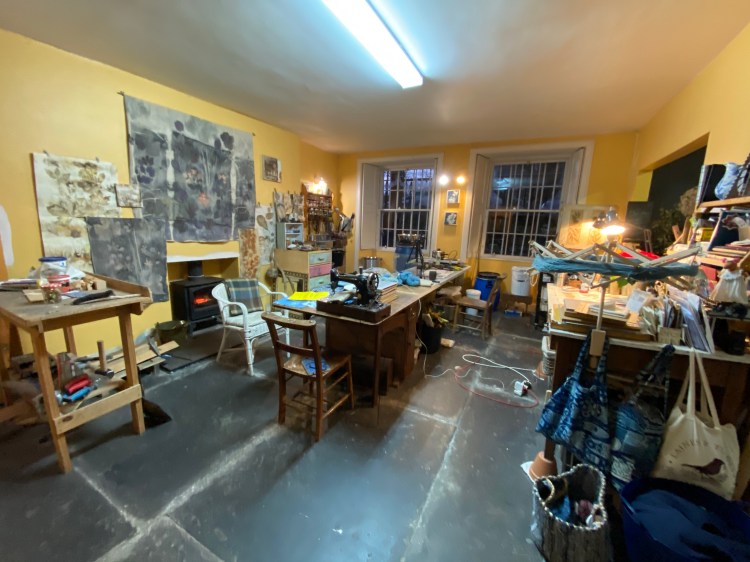
She runs The Lansdowne House her home based studio since 1990 and in turn has been using it as a private studio, as a school of stencilling and up-cycling and more recently as the online studio for her online live classes. She entertains a long term relationship with her pupils and regularly organises “get together” wether online live or in person.

2017 The Big Banner project saw 13 “Hand stencilled Roses banners” by groups of participants in public locations before an exhibition of those at The Lighthouse design center in Glasgow during the Mackintosh Festival

2019/2020 in Printing in Woodlands, she gathers the public an gardeners in the Woodlands Community garden to learn the art of Ecoprinting working outdoors. An exhibition of communal pieces takes place in the Glasgow Botanical garden in February 2020 with an open day of free crafts workshops.
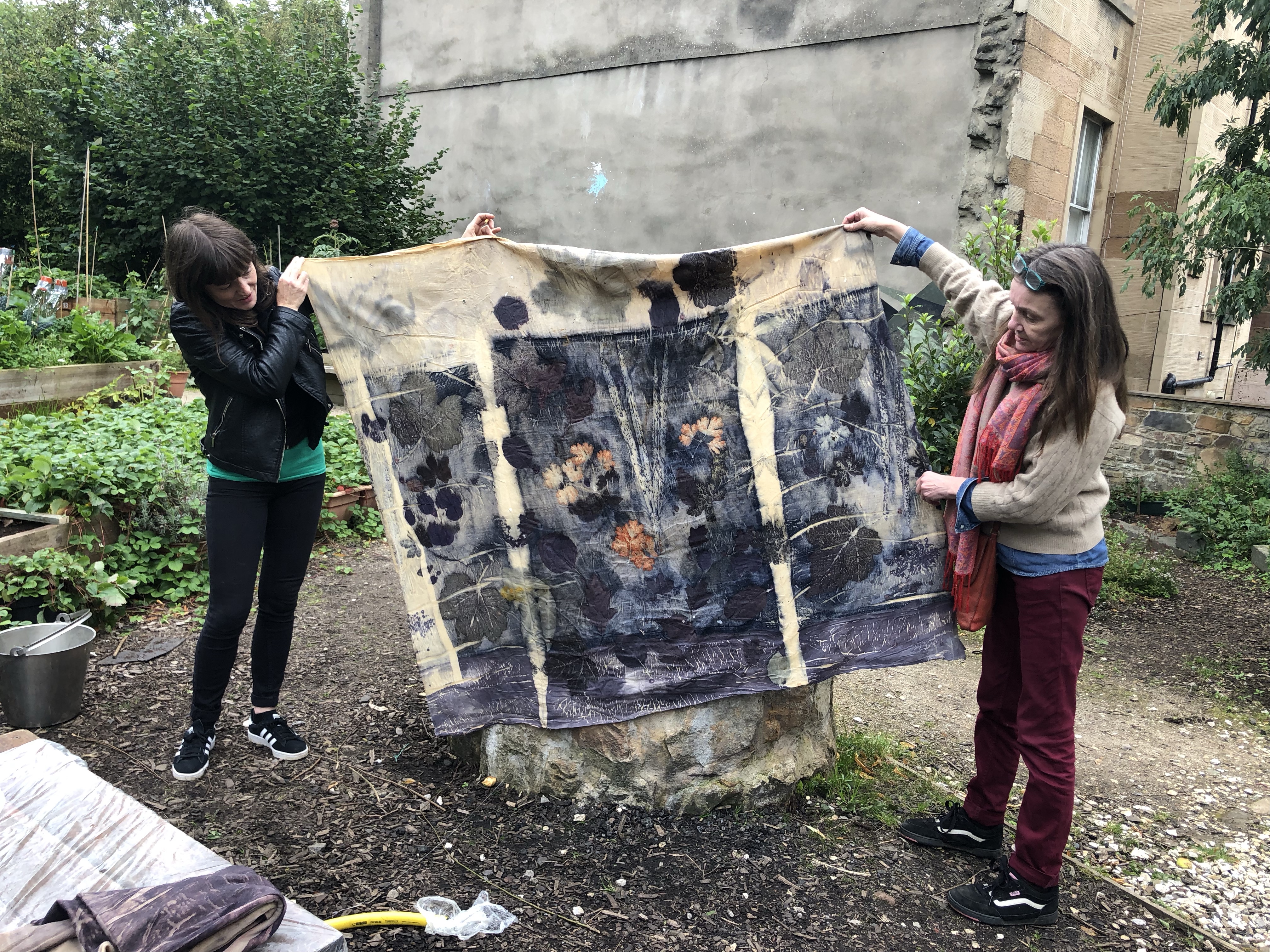
In the summer of 2020, in the peak of the Covid crisis she launched “The True Colour of the Cotinus” a global Eco-printing project to test the colours you can obtain from the Cotinus (Smoke Bush) leaves. Set to test the prints on paper, in 2021 the emphasis has moved to fabric with another two online workshops. By mid 2021 over 400 participants are involved in sampling leaves on various target materials. Elisabeth comments “the emphasis is not the leaves, nor the prints… its about creating a focus for participants to connect with. The Cotinus is a great leaf to print and the colour blue obtained gives everyone a focus for attention. The creativity involved and the connection it has created is tremendous. The buzz among the group is well worth the hard work I ended up putting in the project. I hope this will culminate in a physical exhibition at some point.

When at home, Elisabeth works in a sustainable manner in the circular economy, recycling cloth gathered from the local BnB and using leaves from her local park. When purchasing cloth and dyes she invest in community of weavers/dye producers who can benefit from her orders.

She lives in Glasgow with her husband but her circle of friends, family and pupils is international… she says… “The World is my Village”.
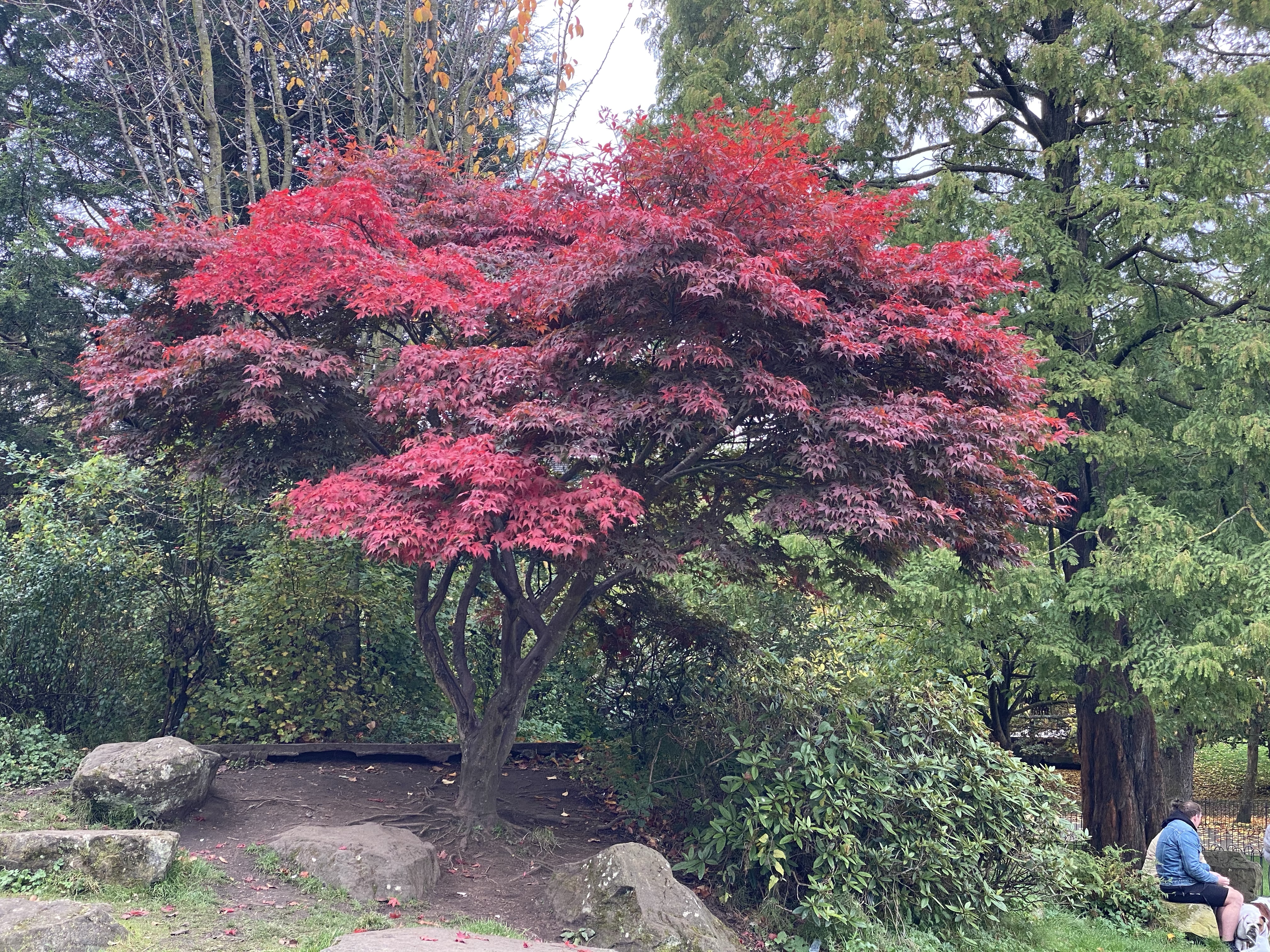
She likes… travelling, cooking, gardening, and spending quiet times in her studio.

Featured

LEARNING WITH ME IN 2025

(IF YOU HAVE ANY ISSUES USING PAYPAL EMAIL ME bettysbeautifullife@gmail.com)

I love sharing my knowlege and I believe the best way of progressing for a tutor is to share and discover new questions, avenues for experiments and learning opportunities. For that reason I have set up a number of workshop in my Studio in Glasgow but also online both using Live sessions on Zoom or Self paced for those who prefer working at their own pace.

Scroll down to find the information and if you have questions email me bettysbeautifullife@gmail.com

FaQ:

What if I miss an online session:

All my sessions are recorded and shared for review for several months.

What if I can’t attend a workshop:

All bookings are final but I will try as much as I can to offer you a space in the next session.

What if I want to work in my own pace:

I offer some self paced workshops and some with live options. You have to decide if you want to conform for a time for the live sessions or just plod along at your own pace… The price reflects the lack of live sessions.

How long can I keep the tuition:

Usually for “ever” as long as you keep the accessing details,

How do I speak to you if I am stuck:

I set up a FB page for all queries and we interact in it together with all the other pupils.

To book a space select your workshop and make a payment. You will receive a receipt and within a day or so a confirmation of your space. I am afraid that I am not able to offer refunds on online workshops but I will always try and offer you a space at an alternative date if your circumstances prevent you to complete a workshop on have committed to.

NOW SCROLL DOWN AND DISCOVER WHAT I HAVE TO OFFER YOU:

To visit The Indigo plot, my dye garden at the Glasgow Botanics please check on this event on Eventbrite: VISIT THE GARDEN HERE

The True Colour of the Cotinus on fabric self paced 2025 online method book anytime

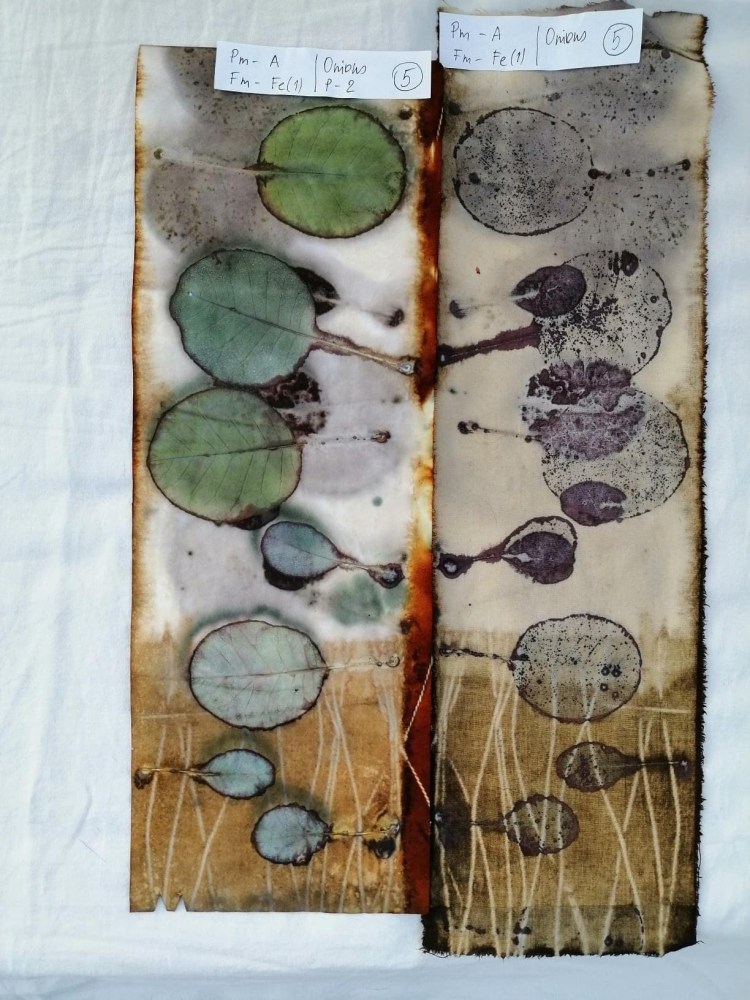
The self paced workshop will teach you about The True Colour of the Cotinus technique to Botanical print blue monoprints with Cotinus leaves on Cellulose and protein material (including paper) You will learn how to select, prepare fabric and dyes and print them. This method was finalised in May 2025 in a online live workshop on zoom and you will get the replay video of the live session as well as the instructions related to the method. With this tuition you get access to the FB group “The True Colour of the Cotinus” where you can find results for hundreds of participants since the beginning of the project. This method is perfect for the new printers but offers a lot of insight to experienced printers

£50.00

Black and White, 4 weeks Mark Making with Tannin and Iron Online live workshop starts 5 October

From 5th October 4pm UK (London time) for 4 weeks, on live on zoom online sessions once a week a 3 hours session recorded for replay and delivered with instructions for you to keep. In this workshop part of a long term project about Tannins and ink, We will study tannins and how we can use them to make ink, dye, discharge and print. We will make an manipulate the colour of inks, We will botanical print on fabric and paper creating tannin backgrounds. We will discharge the tannin in a mark making attempt to create patterns on paper or cellulose fabric. We will look at bought tannins and those you can forage in the outdoors as well as in your kitchen to create a colour pallet. Tannins are substantive dyes which means they are colour fast and don’t require a mordant so they are the perfect dyes to use for art project and for work due to stand the test of time. We will create a number of samples small scale (20 x 30 cms max) but I will address upscaling but not demonstrate it. You will leave with a number of new skills and some great samples. In this workshop I do not teach creativity, I teach dyes and you will be able to use your own creativity for designs. I do not provide any kits but I will provide you with some basic suppliers lists and off course a list of ingredients you need. This is suitable for beginners.

£150.00

From Blue to Green, Natural dye residency at The Indigo Plot Glasgow, 13 September 10am to 14th Septembre 4pm

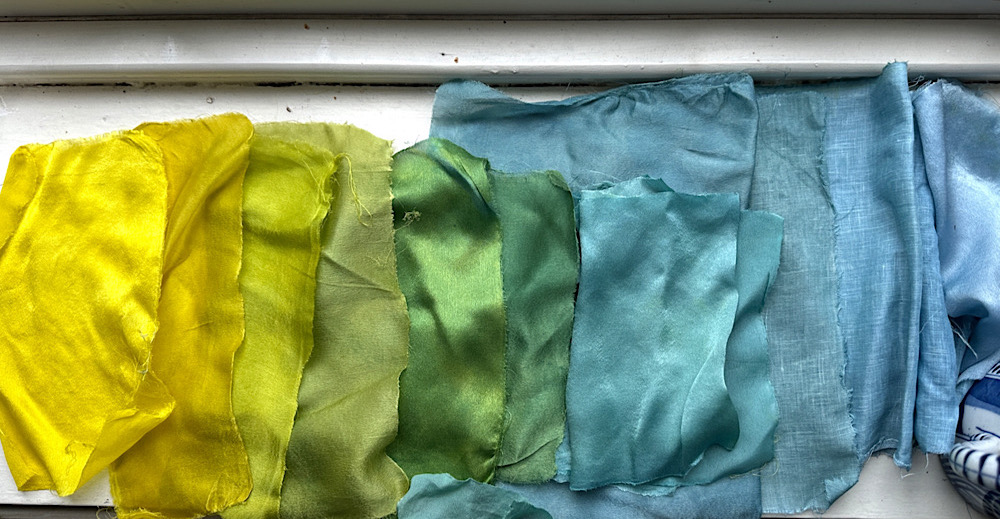
This is a workshop for 6 participants maximum. I only run this once a year at harvest time. If you want to understand how plant to colour works in a truly sustainable way this is the workshop for you. If you are an Art student and are thinking about creating sustainable dyed work this will give you an insight into true sustainability. It will give you back a sense of the seasons and the sense of the real labour involved in sustainability. I will share with you the time line about my plant production used for the workshop. If you are studying for a degree and need to study the behind you will access a lot of information during the week end. We will spend a week end in my studio creating natural colours grown in the Indigo Plot, my dye garden at the Glasgow Botanical garden. We will collect dye plants at the plot (weather depending) and use them to create, blue, yellow and green shades on yarn and cloth (silk, linen, cotton). I will address alternative option to home grown dyes but using my home grown will root you in the true relationship between plant and colour in a sustainable way. We will look at how a variety of yellow yielding plants affect the green and how the blue pigment extraction can also motivate the density of the blue/green. We may if lucky achieve a purple with Indirubin, The great majority of blues will be dyed from my fresh leaves Japanese Indigo and Woad from that season. We will be learning about mordants and dyes and how to secure dye on fibre. This is suitable for beginners or more advance participants. You will have access to my small shop of home grown dyes for participants if you want to take home a small amount of dyes to test further. I will also share with you the basic dye instructions on the basis of a blog post online.

£200.00

Indigo ferrous vat building and printing resists online live (recorded) workshop (4th October for 4 weeks)

This workshop is about creating marks or patterns on cellulose material using a resist paste from China based on soya flour and a Ferrous Indigo vat. It is perfect for beginners if you are ready to allocate some time to your work. We will create a sampler of multi shades of blue to allow to print multi blue shades. I will not teach the creativity here but the methodology and your input will be to create the designs and apply them. With a first session on the 4th October 2025 at 4pm for 4 weeks London time this is a 4 weeks online live workshop about setting up a Ferrous Indigo vat and maintaining it. We will then print with Indigo using resist techniques. Each week will see us going deeper in the process and it will be an advantage if you can follow me along during the same week. You will receive a list of ingredients about one month before the workshop to allow you to gather all you need. The minimum size of vat to use is 25 L but you could upscale to 100 L if you want to work in a good scale (a large bin). It is an advantage to have a space to work in but you can practise the technique small scale in a kitchen or cellar, you need access to water and electricity near by. During the 4 weeks we will set up the vat and learn to keep it alive but also to revive it if you loose the reduction. The pieces produces should be around 20 x 30 cm wide for samples but I will discuss (but not practise) upscaling. This is suitable for cloth not garments at a beginner’s level. Sessions are online live, recorded and shared for 2 years with instructions

£150.00

THE TRUE COLOUR OF THE COTINUS ON LEATHER –

This workshop is being reviewed and will be available for booking in January 2025

MASTERING BOTANICAL PRINTING ON CELLULOSE MATERIAL WITH NATURAL DYES – 8 weeks online with some live in collaboration with The Natural dyers and growers Academy in Ireland. CLICK THE IMAGE BELOW FOR DETAILS

THE TRUE COLOUR OF THE COTINUS ON PAPER – SELF PACED METHOD (NO LIVE SESSIONS)

The True Colour of the Cotinus is a global online project I launched in 2020, it is about Ecoprinting the Cotinus leaves to obtain blue. The PAPER method was finalised in 2020 after two global online testing with 100 participants each. We use facebook to share results. This method gives you the final result and how to get Blue out of your own leaves/paper. It is suitable for beginners … by buying this method you are in the project and will be able to access the Private Facebook group of over 500 participants to post your results and interact.

£40.00

THE TRUE COLOUR OF THE COTINUS SELF PACED ONLINE METHOD FOR FABRIC PRINTING

The True Colour of the Cotinus is a global online project I launched in 2020, it is about Eco-printing the Cotinus leaves to obtain blue. The FABRIC METHOD was finalised in 2021 after two global online testing with 100 participants each. We use facebook to share results. This method gives you the final result and how to get Blue out of your own leaves/fabric. It is best for silk and linen but will work for cotton and other material. It is suitable for beginners … by buying this method you are in the project and will be able to access the Private Facebook group of over 500 participants to post your results and interact.

£40.00

LEAVES ON PAPER – START ANY TIME SELF PACED ONLINE COURSE IN BOTANICAL CONTACT PRINTING ON PAPER 12 LESSONS NO LIVE

This is an online course in Botanical Contact Printing on paper. It is perfect for beginners as it teaches step by step. It is based on written instructions, photos and video material, a FB for support and from time to time a live session. 12 lessons, 2 printing ways, several mordanted ways, one bookbinding make. Once the course is online it is yours to keep for two years.

£120.00

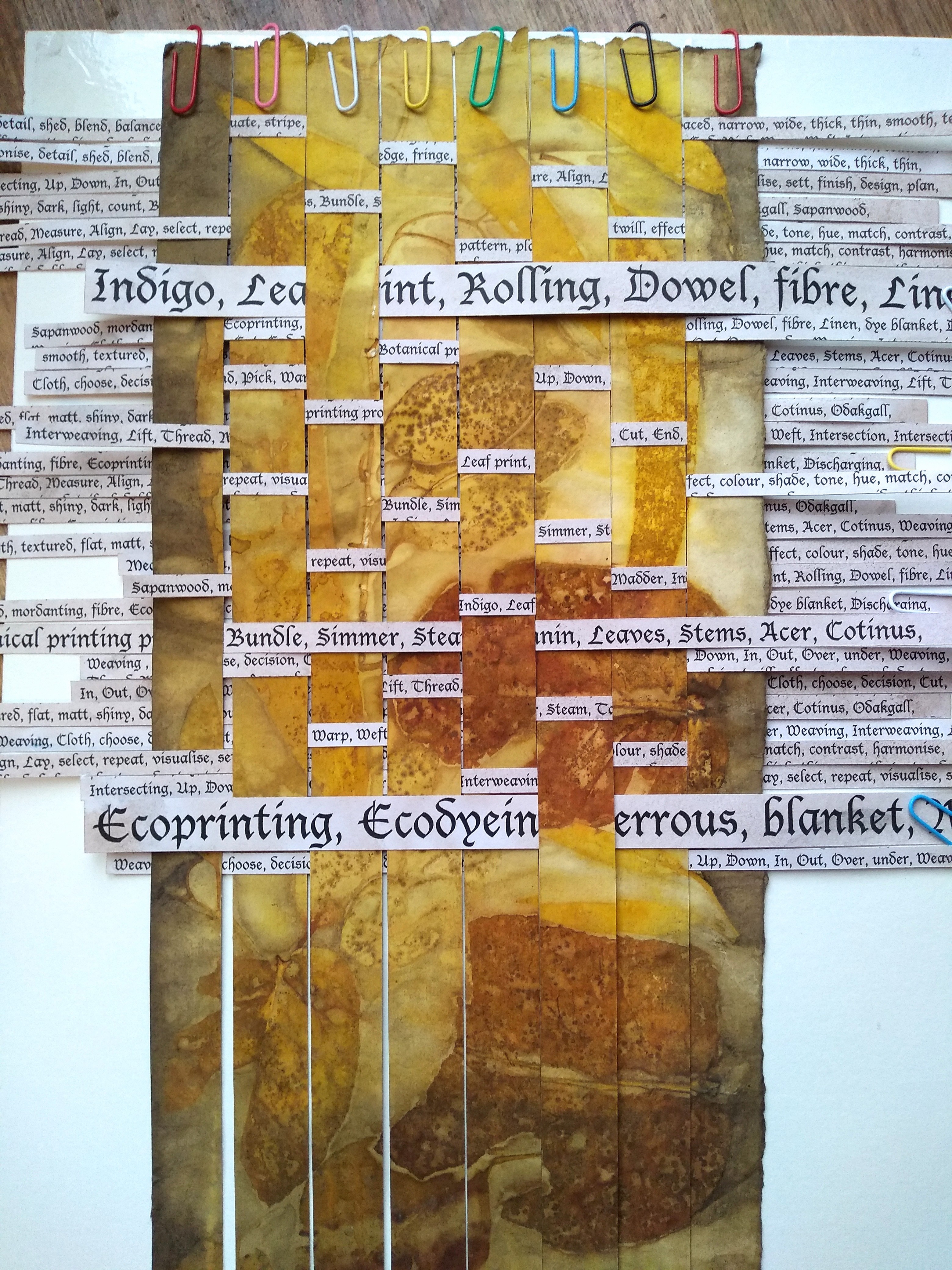
PRINT AND WEAVE, AN ONLINE SELF PACED WORKSHOP ABOUT BOTANICALLY PRINTING PAPER AND WEAVING

THIS WORKSHOP IS BEING REVIEWED AND WILL BE AVAILABLE FROM THE MIDDLE OF APRIL 2025 Print and Weave is an online workshop self paced with no live sessions but video content. It runs in collaboration with Katherine Cowtan, Scottish weaver. It was launched in conjonction with my “Printing in Woodlands” exhibition. Together we will botanical print some paper with two of my techniques and your local leaves and Katherine will guide us in the weaving of it to make paper Art.

£99.00

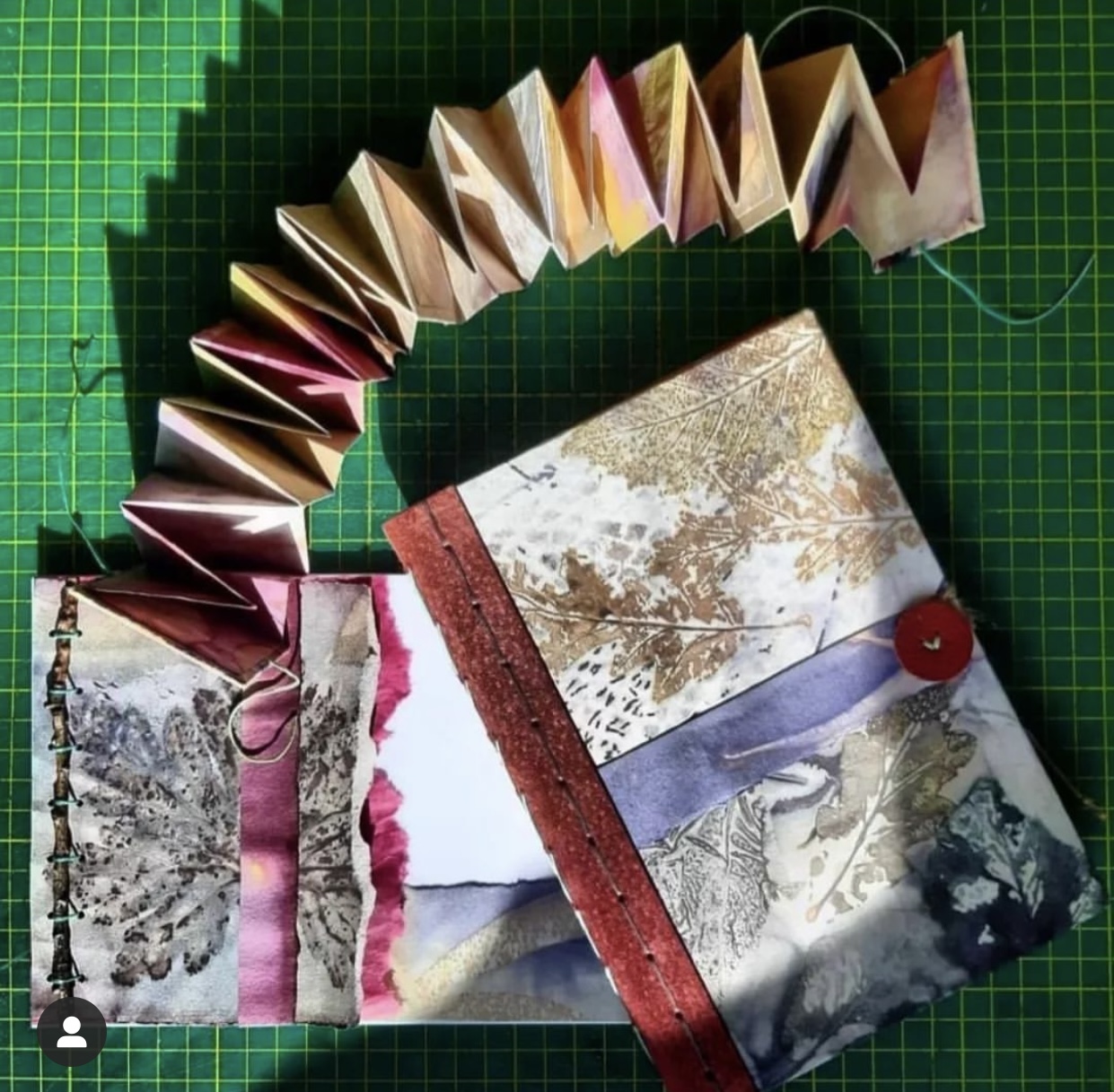
PRINT DYE AND STITCH, AN ONLINE SELF PACED WORKSHOP ABOUT BOTANICAL PRINTING AND BOOKBINDING

THIS WORKSHOP IS BEING REVIEWED AND WILL BE AVAILABLE FROM THE MIDDLE OF APRIL 2025 In collaboration with Cassandra Barron this workshop will take place on my Teachable platform. It is completely self paced. With me you will learn two techniques of Botanical printing on paper, Cassandra will then guide you in making 3 different hand stitched books using your prints. This workshop is launched in conjonction with “Printing in Woodlands” the exhibition in Kirkintilloch in the Spring of 2023

£120.00

ECOPRINTING ON PAPER FOR ART – THE PDF METHOD (SELF PACED WORKSHOP NO LIVE)

In this PDF instruction I will share with you my technique developed over several years of Ecoprinting on paper to get clear and colourful prints using Botanical material and Natural dyes. We will explore via the PDF text and a number of videos 3 methods (simmering in dyes, dyes and tannin blankets, Iron blanket, steaming with blankets, texture blankets) on a variety of paper using several natural dyes or tannins. You will learn to: – Select paper – Understand your leaves fresh and dried. – Understand mordants and dyes and extract your dyes from nature – Put together your equipment – Print your paper – Learning to discharge text or designs from your prints – Finish and seal your paper so you can use it for making books, putting on a frame, using for greeting cards… Will be delivered by email link in 24 hours of purchasing

£49.00

Featured

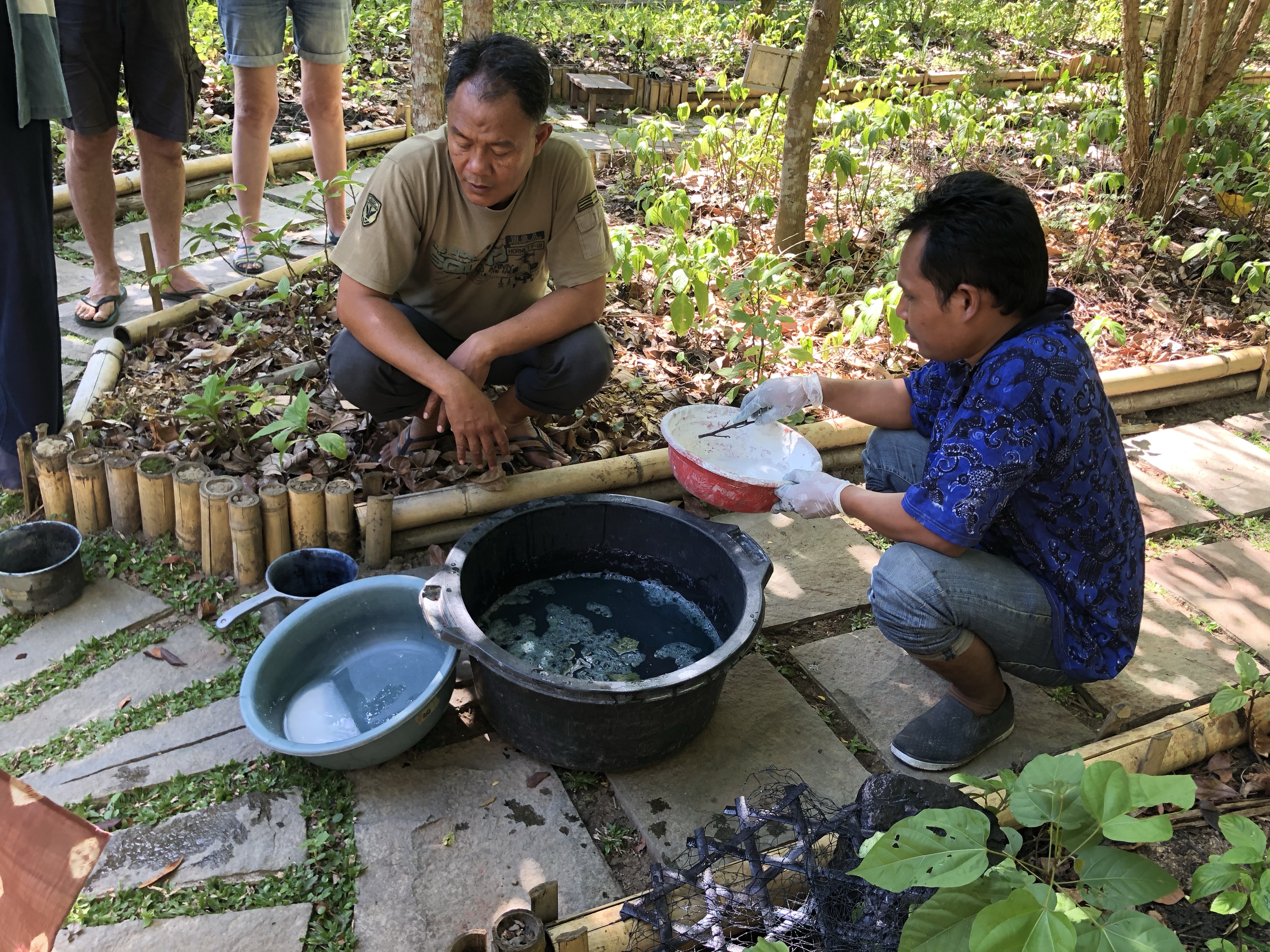
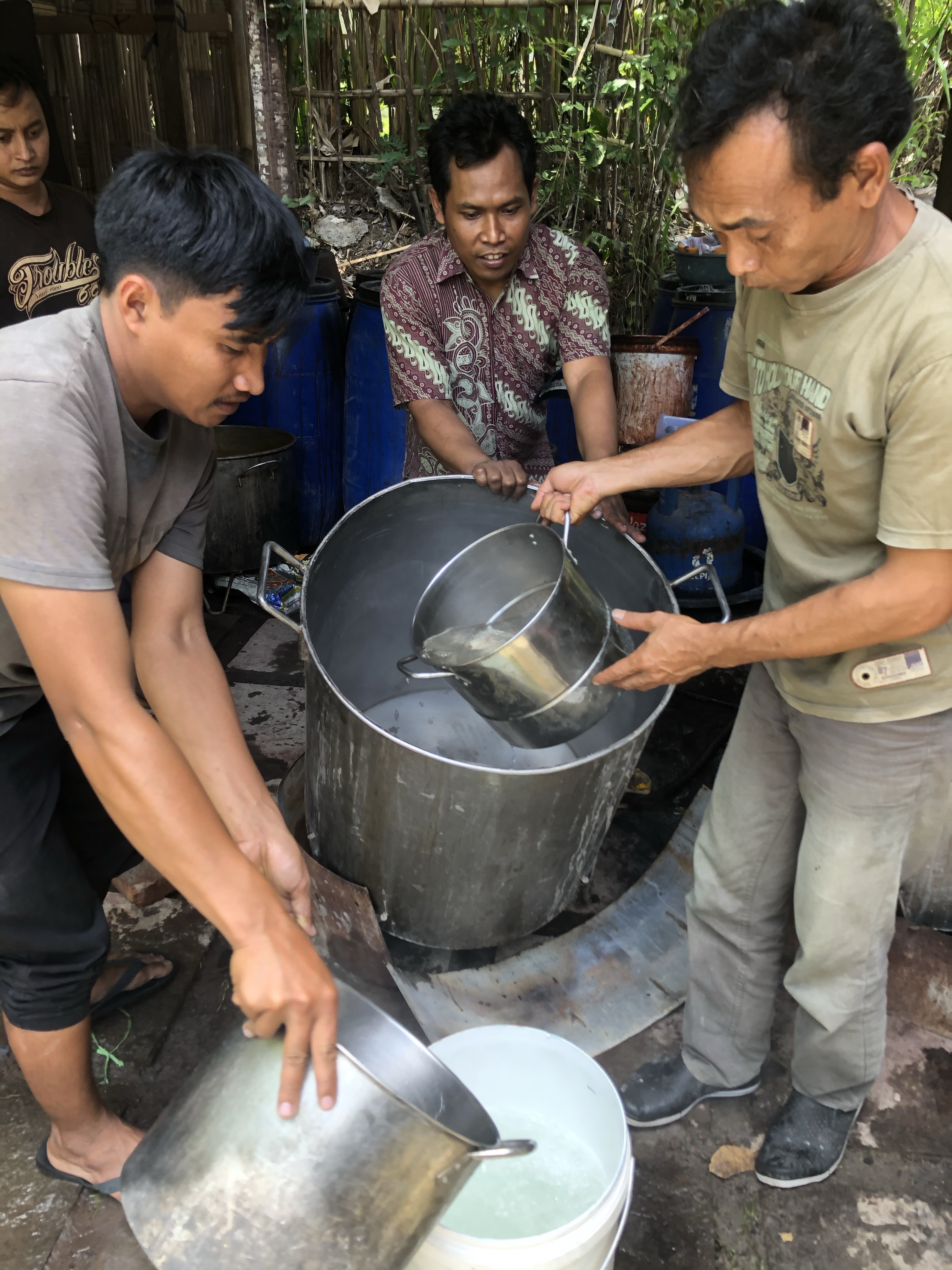
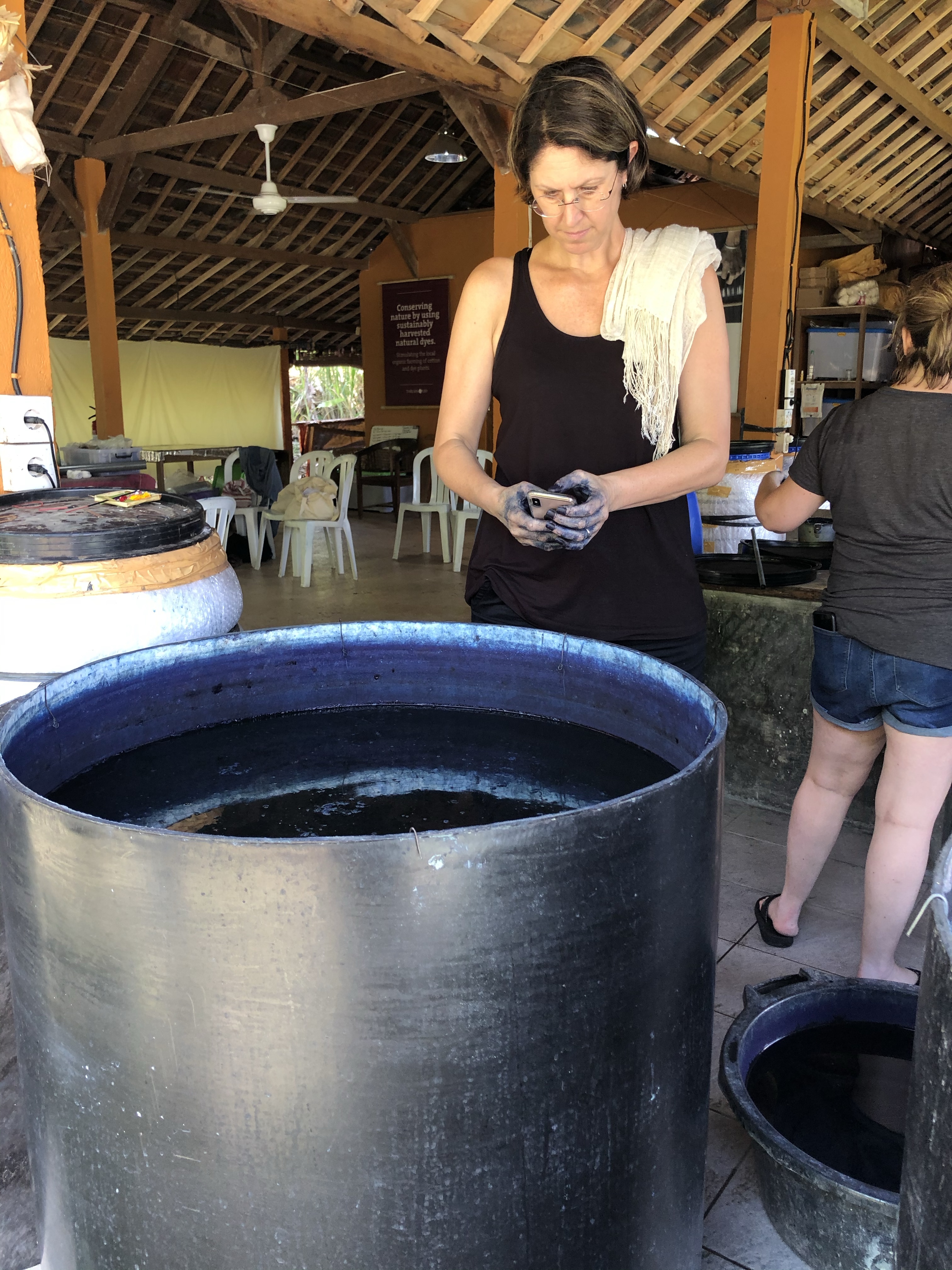
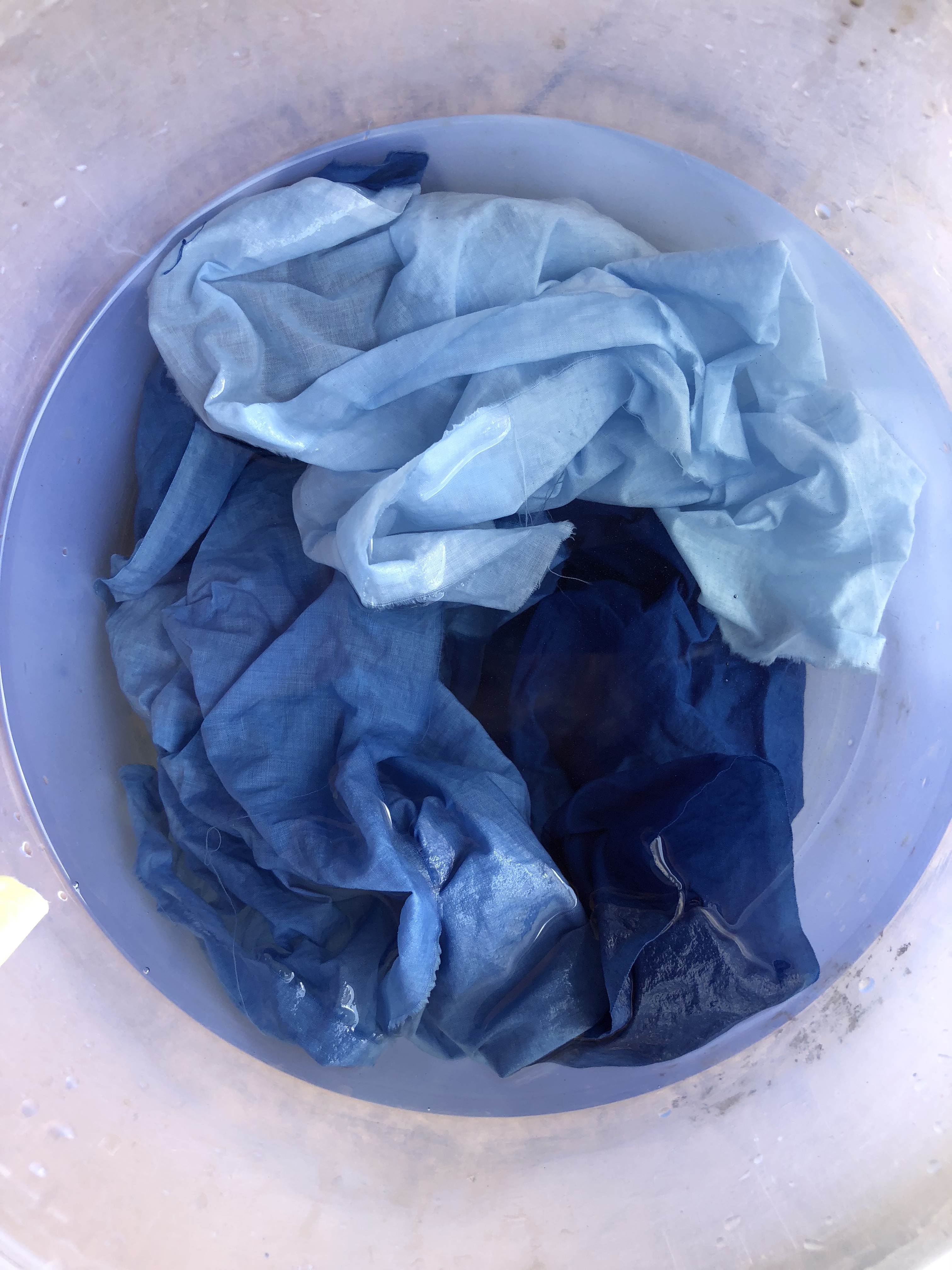
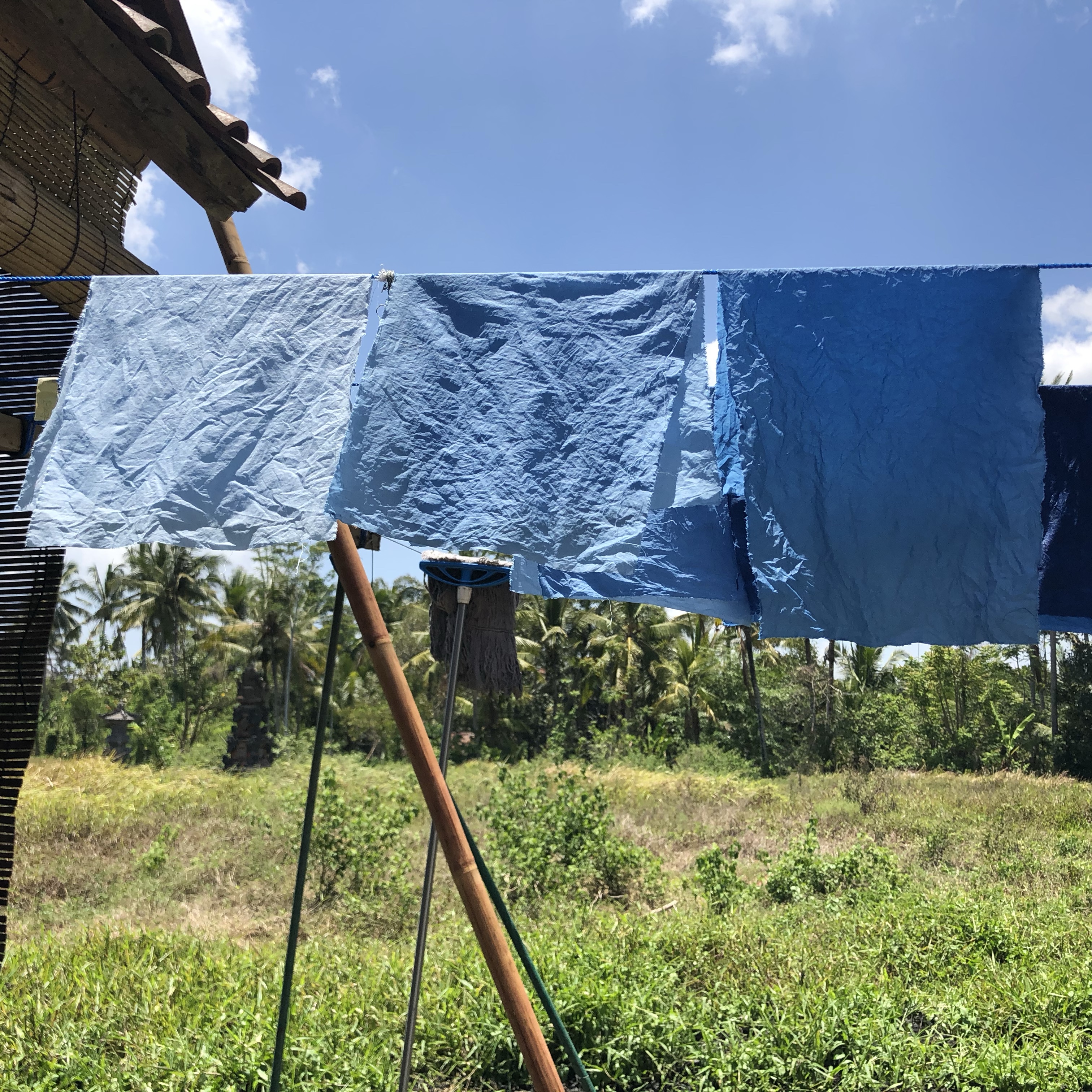
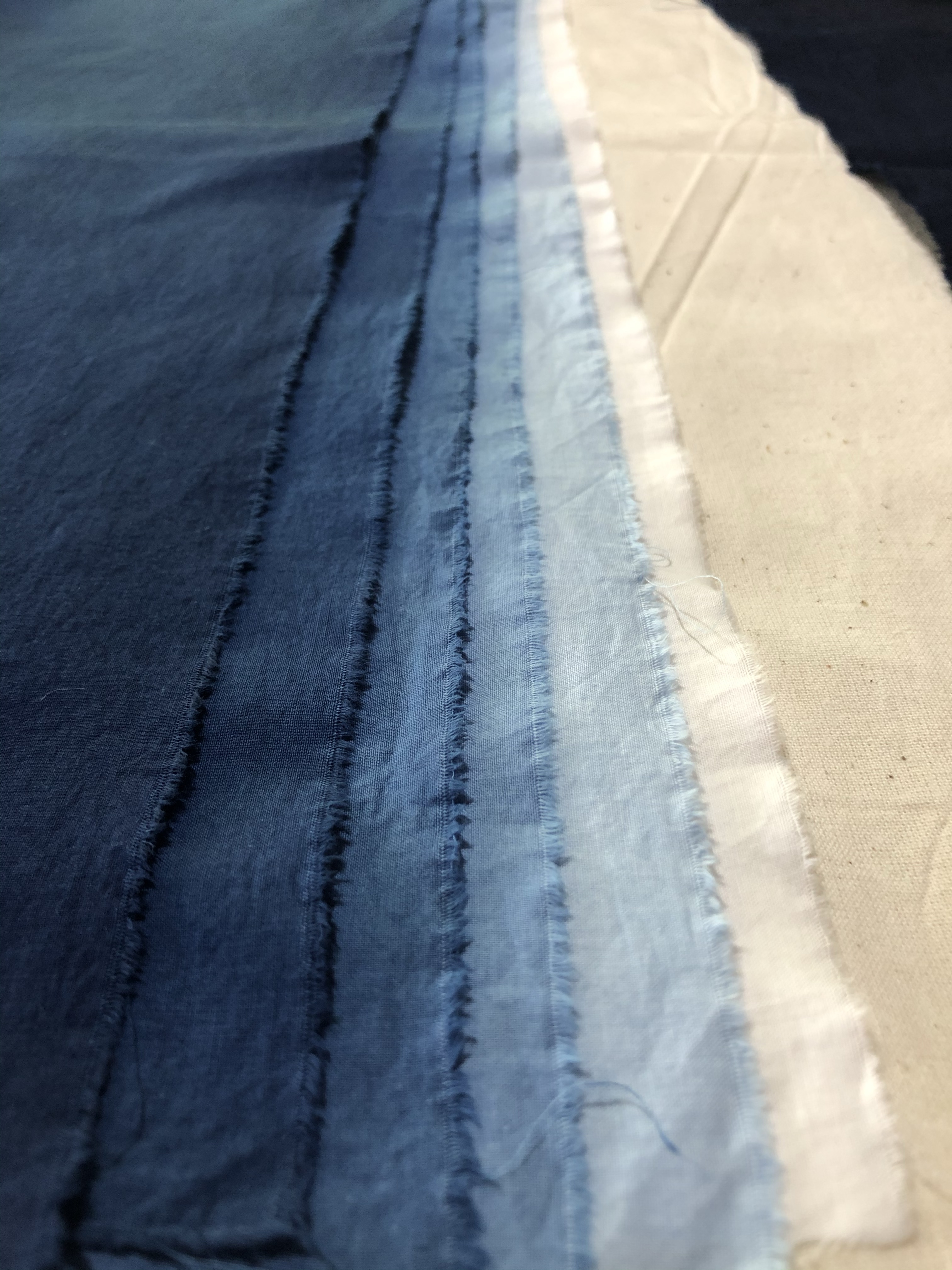
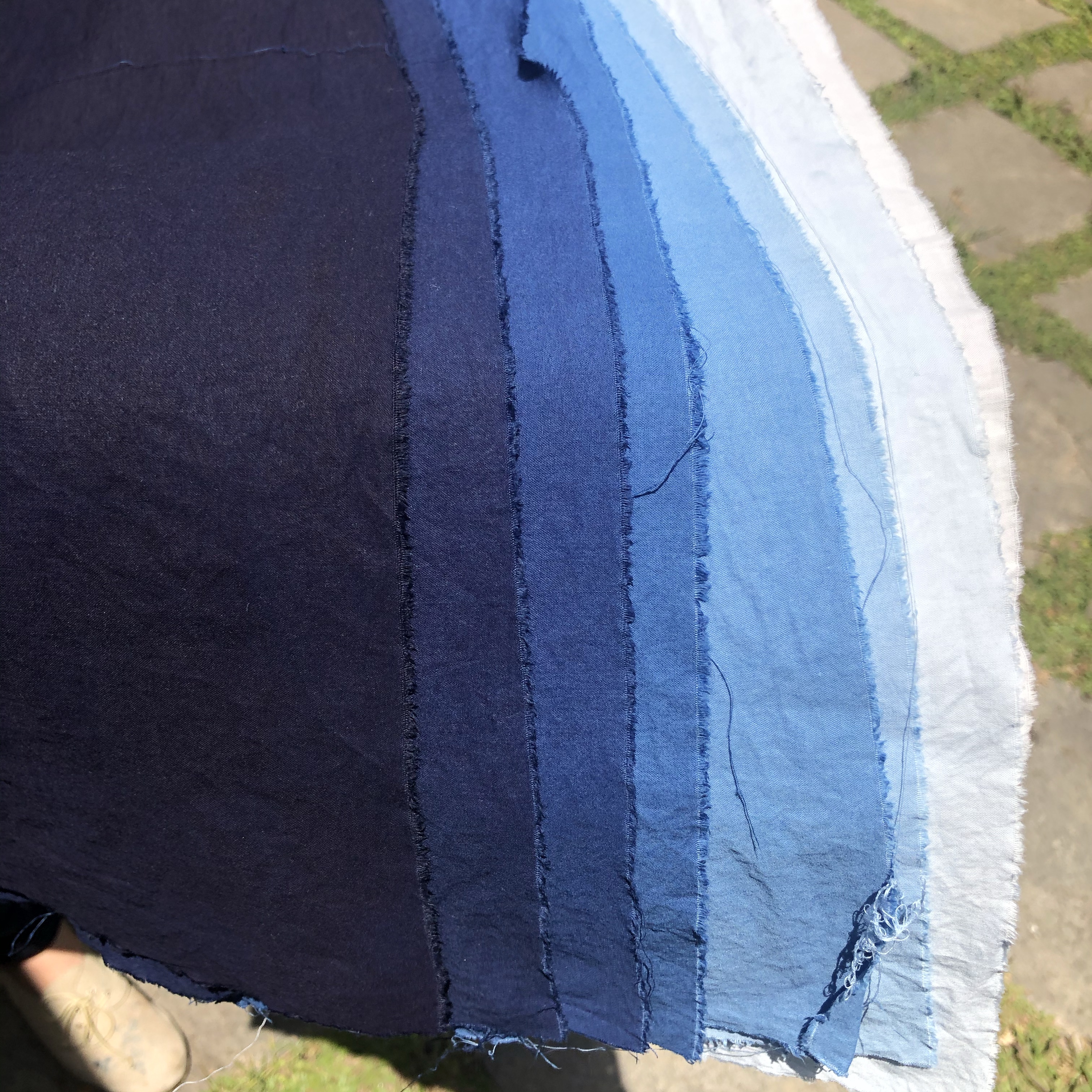
From nothingness to nearly black … 7 shades of blue, Fermenting Indigo with Aboubakar Fofana… I came home in Bali !

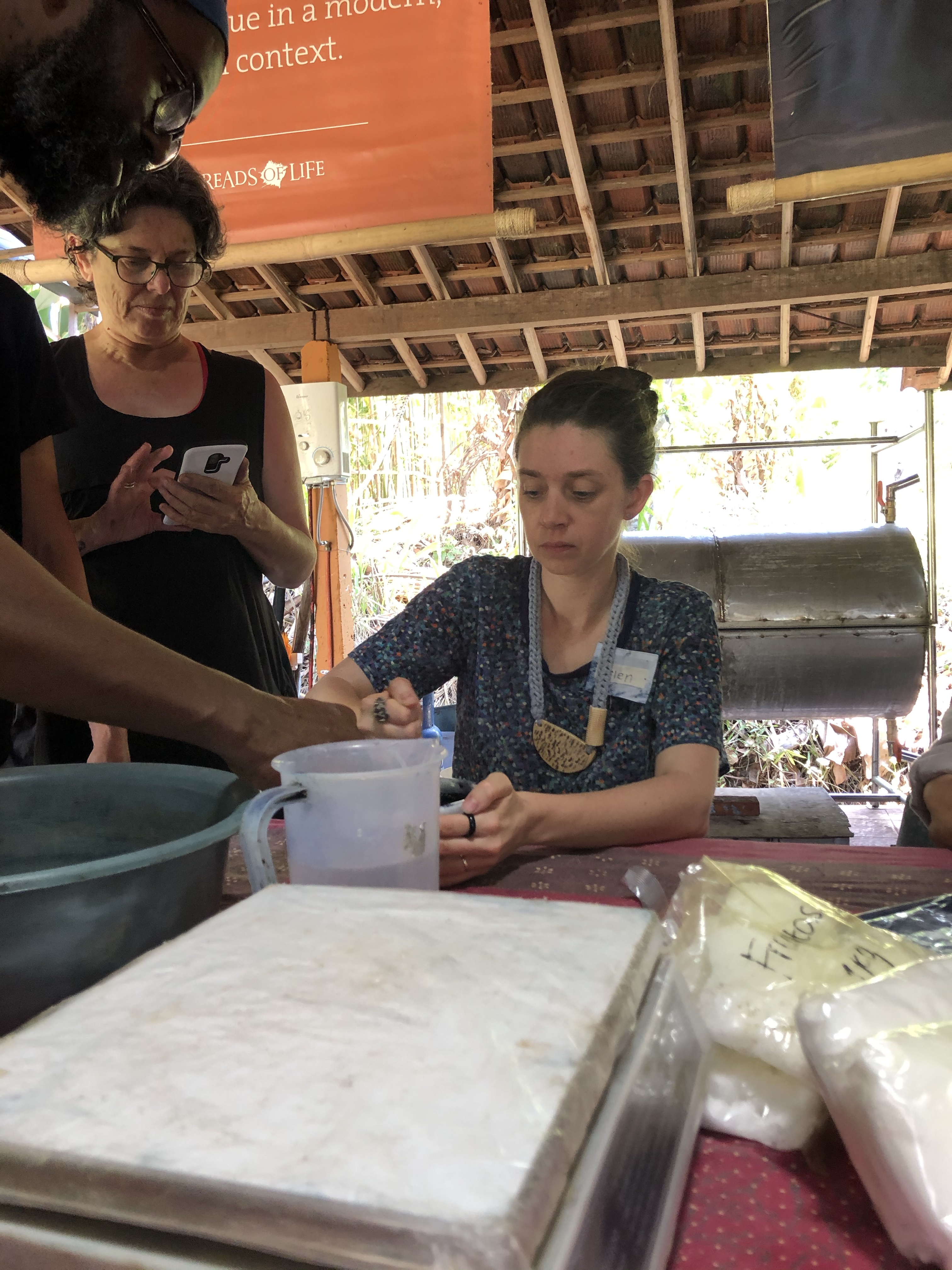
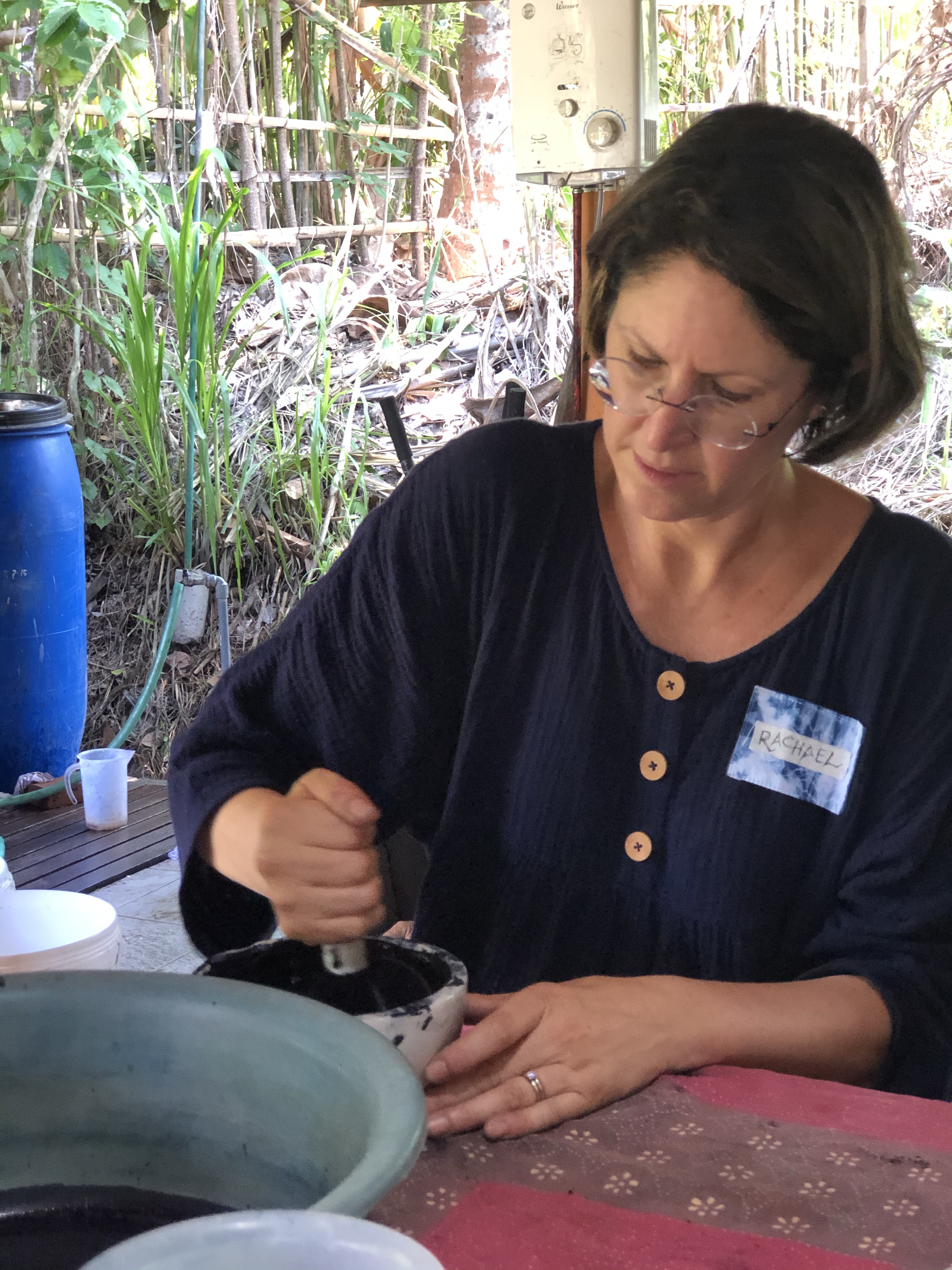
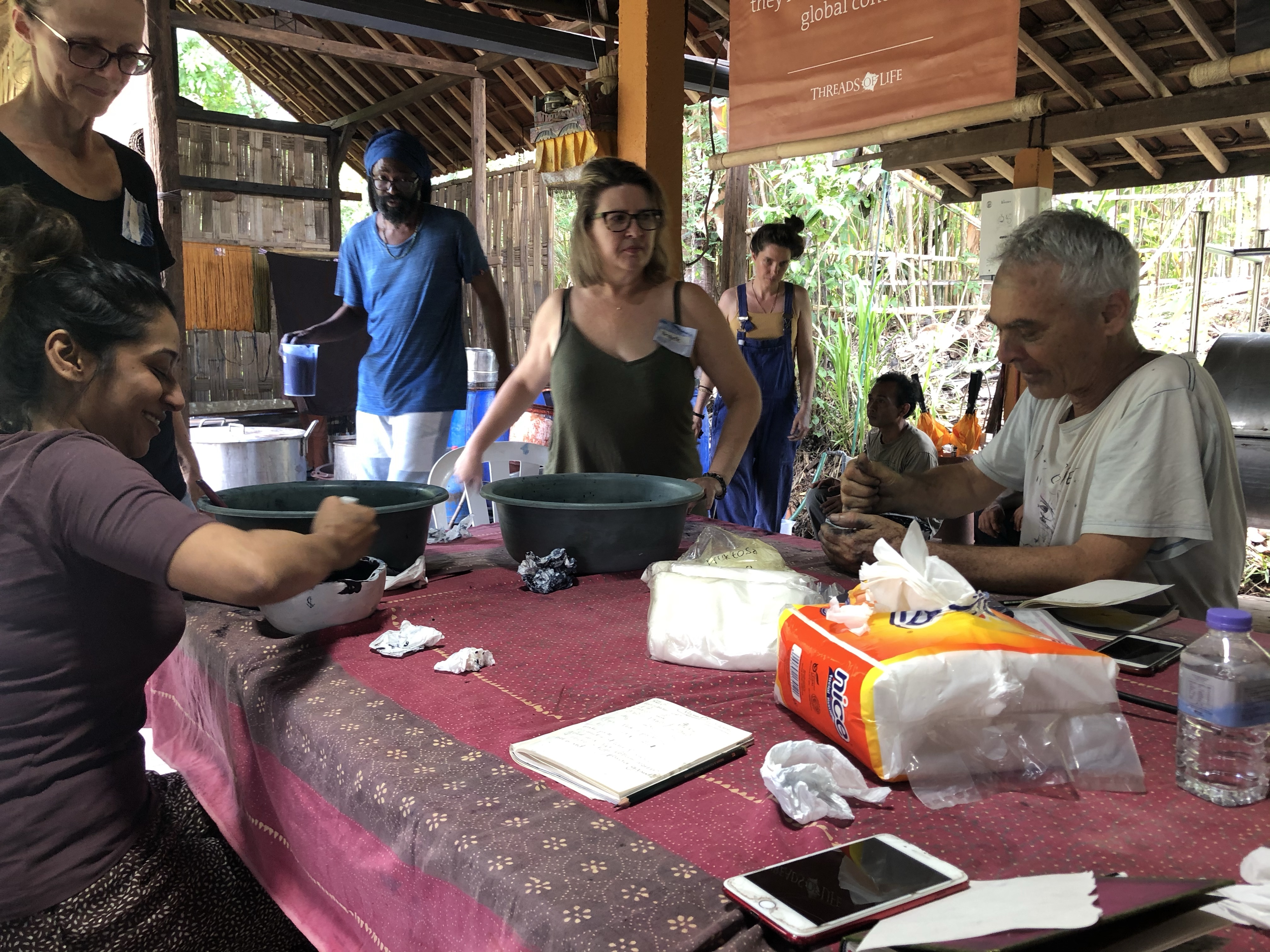
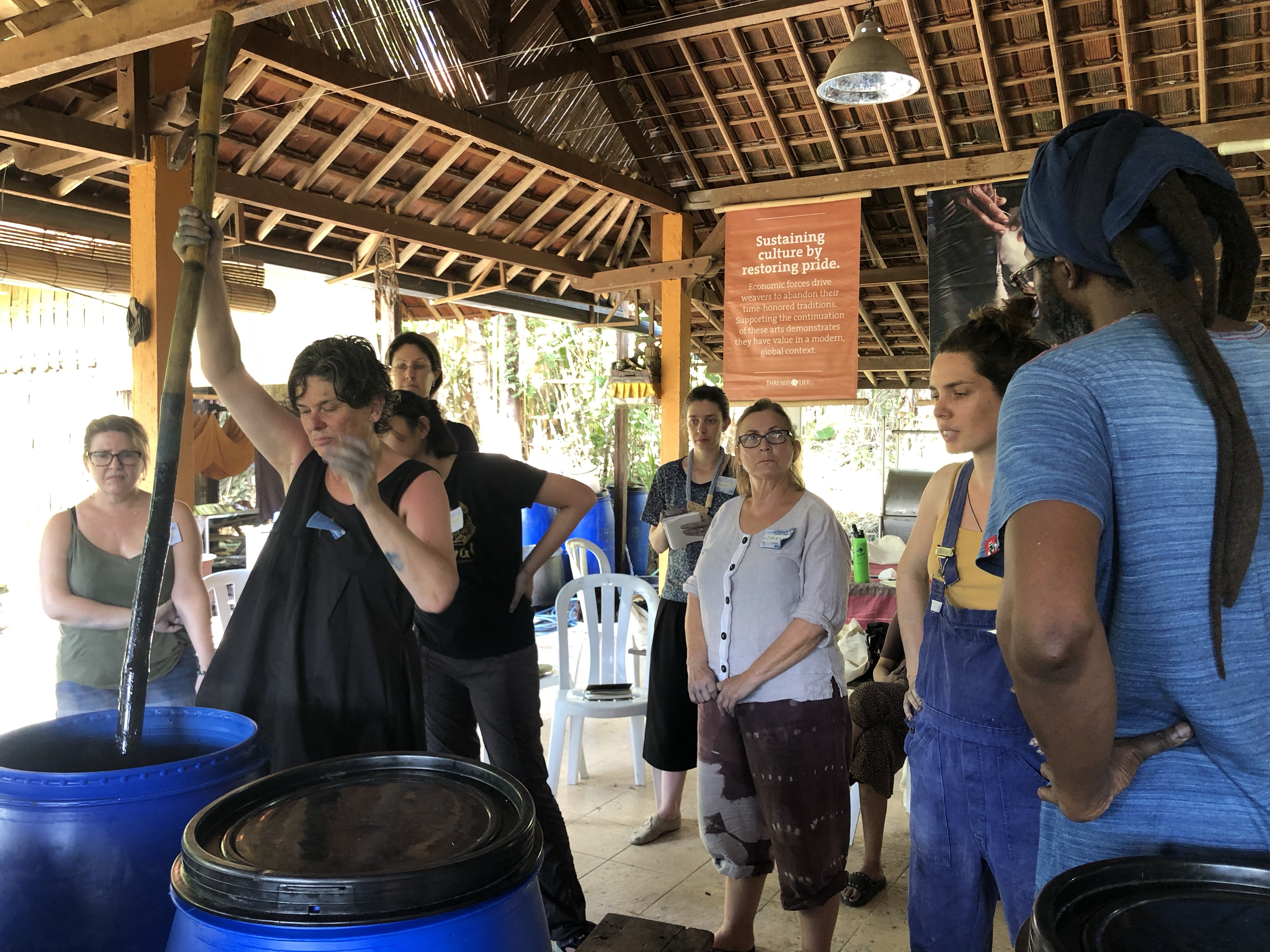
I am a textile artist and a lover of blue and I teach Indigo dyeing in Scotland (my next Indigo event) on a regular basis, but I love learning myself and I believe I know so little compared with Master Indigo dyer Aboubakar Fofana so I went all the way to Bali last November to attend one of his workshops on Fermentation Indigo organised by Threads of Life Bali Its a very long way to go for a weeks workshop but The Threads of Life’s premises set in the Bebali dye garden are so well suited to Indigo dyeing that it was very well worth the effort.

I did think it would be interesting but I did not realise I would get this exceptional feeling of  “coming home” … I though it would be about blue… but it was about a beautiful process, mainly about a communion with nature and how you can understanding it by looking at it, smelling it, mixing it, waiting, recording it and off course accepting the result a beautiful vat dye called Indigo, blessing it, maintaining it and finally getting blue from it.

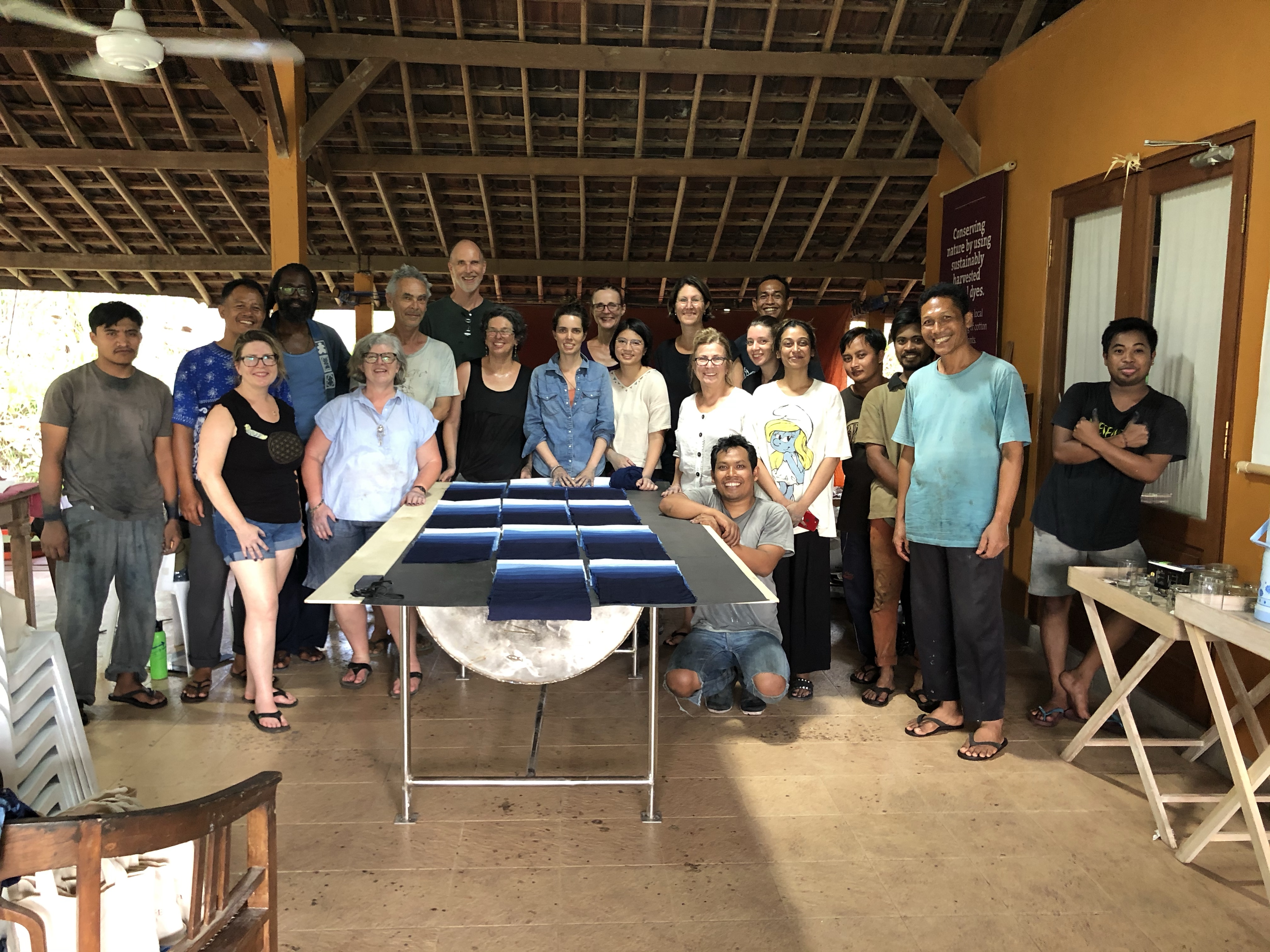
We were a small group of about 12 meeting on the first day of the workshop, such an international group, Rachel, Margot… from somewhere in Australia, Prairie from Thailand, someone from Bengladesh, two ladies from the US … many different expectations, many different expertise, one aim… learning from Aboubakar.

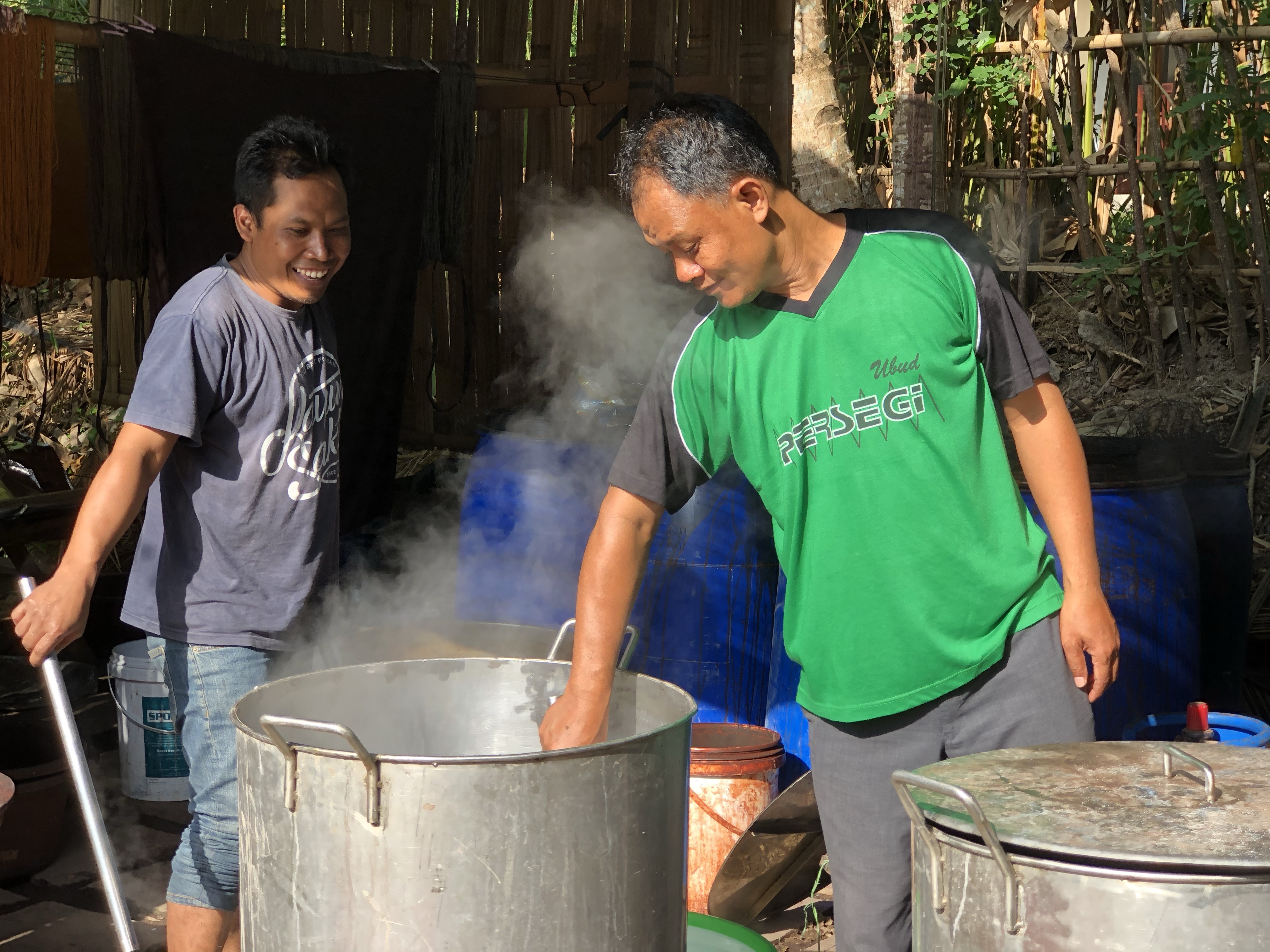
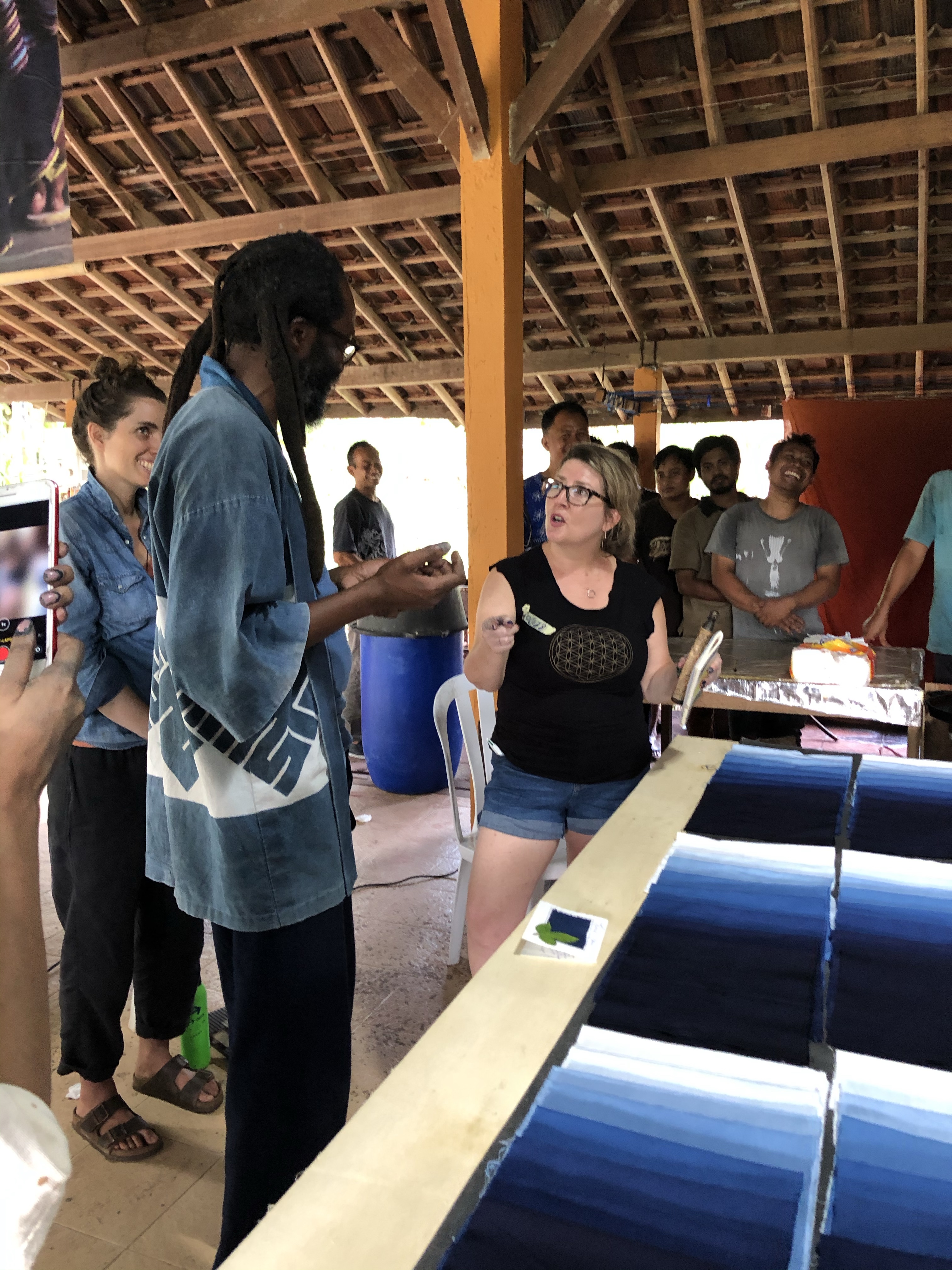
Him, a master of his Art in complete communion with the huge fermentation vats he creates out of African Indigo,  but also a tired traveller that morning, Bali customs had held him for many hours the night before to test the dried mud and the Indigo fermented balls he had brought in his travel bag as a true Alchemist style… may be they were looking for the secret potion they did not find… William Ingram who runs The Threads of Life would be our father and our scientist for the week. I though him as a “frustrated teacher” wanting to find the science behind each process… he makes my day every time he can explain the chemistry behind the magic. I did not get the chance to join a chemistry class in my young days and I am still trying to find out how things work in a recurring manner… Pung the chief dyer of the Bebali garden but also the director of the Bebali foundation  which supports artisans through Indonesia in keeping their techniques and their traditions. Pung is a constant source of information, a smiling source of information, profoundly involved in the local community and so proud of his team.

And we start… Aboubakar is very straight with us… don’t you think this is about Blue… its about you understanding the process… you will grind, mix, smell, stir, understand… make it happen, and if you are lucky you will get to see the fermented vat active… we did not… one week was not enough for the little fermented balls to get their magic going… but I have recorded the smell of African fermented indigo in my head for any future tries… and we went back to the grinding mill… Lets work with paste now, lets reduce… two reduced vats using the Fructose method… one with fructose, one with sugar cane, lets learn from the eruption of our slake lime… lets measure Ph, and temperature, let it happen… by tomorrow surely there will be some blue… one can hope…

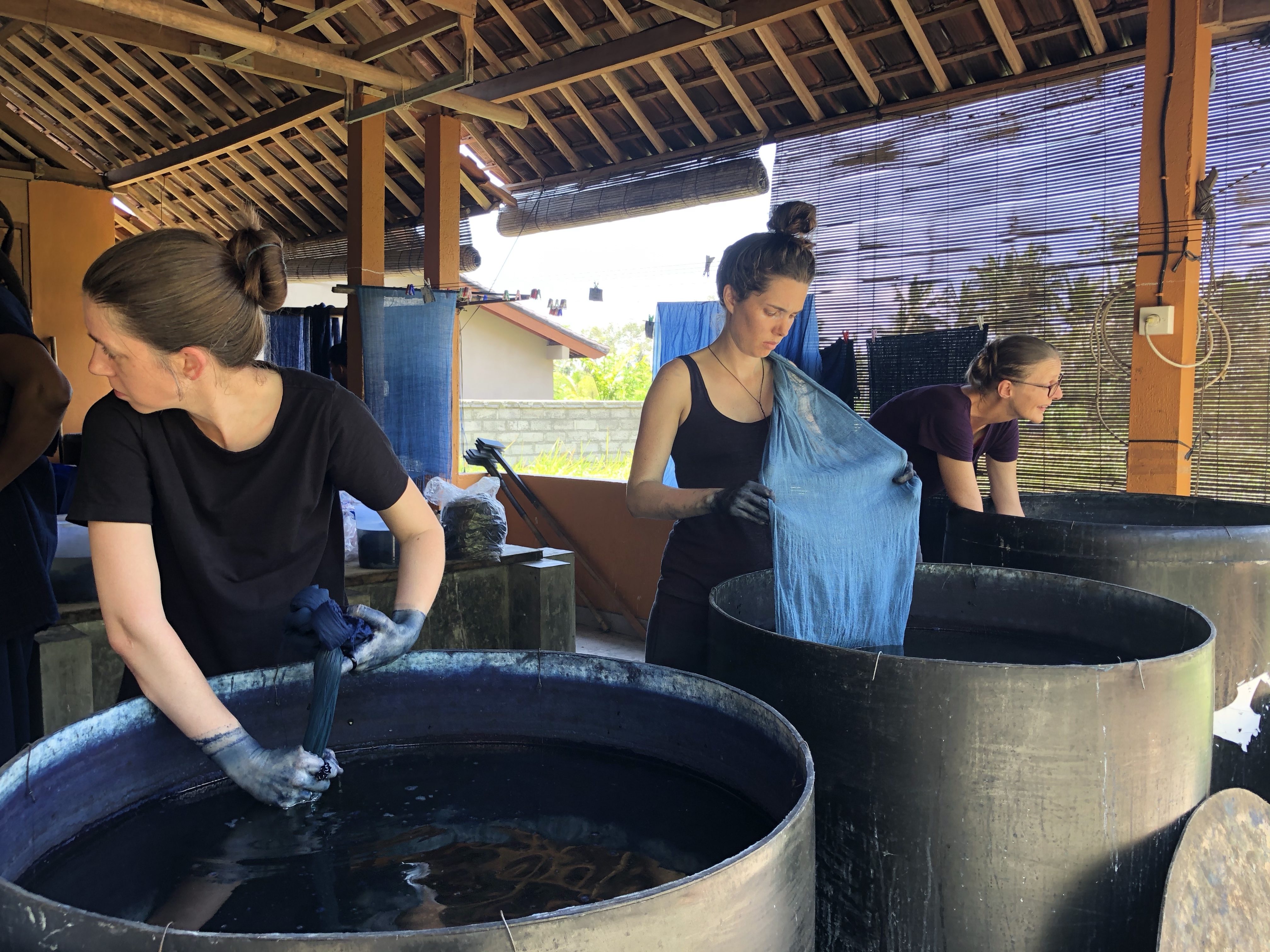
But if there is not… the Bebali garden’s vats will do nicely (3 huge vats of 300 liters… yes yes monstrous huge vats…) !!!

Can we dye please… I have crossed half of the world to come and make some blue cloth… please can I dye now????  No yet says the Master… now you have to learn to clean and prepare your cloth… May be tomorrow… OHHH ! Sheer frustration…. 7 small squares of cloth are getting boiled and stirred in Ash water… May be tomorrow.

And today… we open the lids, and we stir, and we smell, and we take the temperature and the Ph… not yet says the Master…. but you can start with the Bebali vats… Pung said yes you can… but wait though… you have to first fit some nets at the bottom… you don’t want to disturb the bottom of the vats…

Please can we dye sir? My hands are aching to be blue and my nails are still so clean… I want to make pretty patterns on a scarf and take it home to show off…

Not yet first you have to master your shades… its not about the pretty pattern its not about the blue… you still don’t understand you silly children its about the process… you must learn the process…

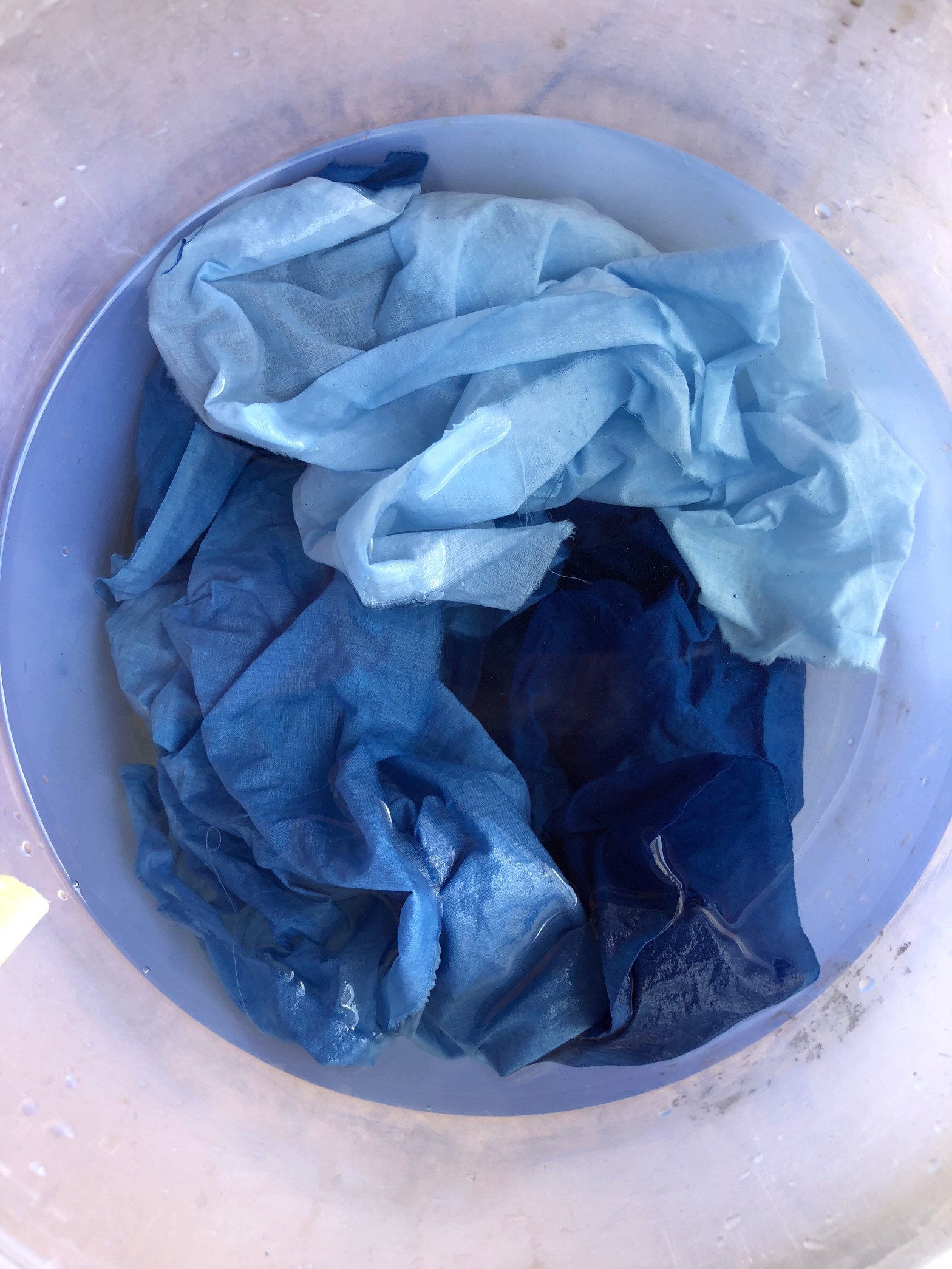
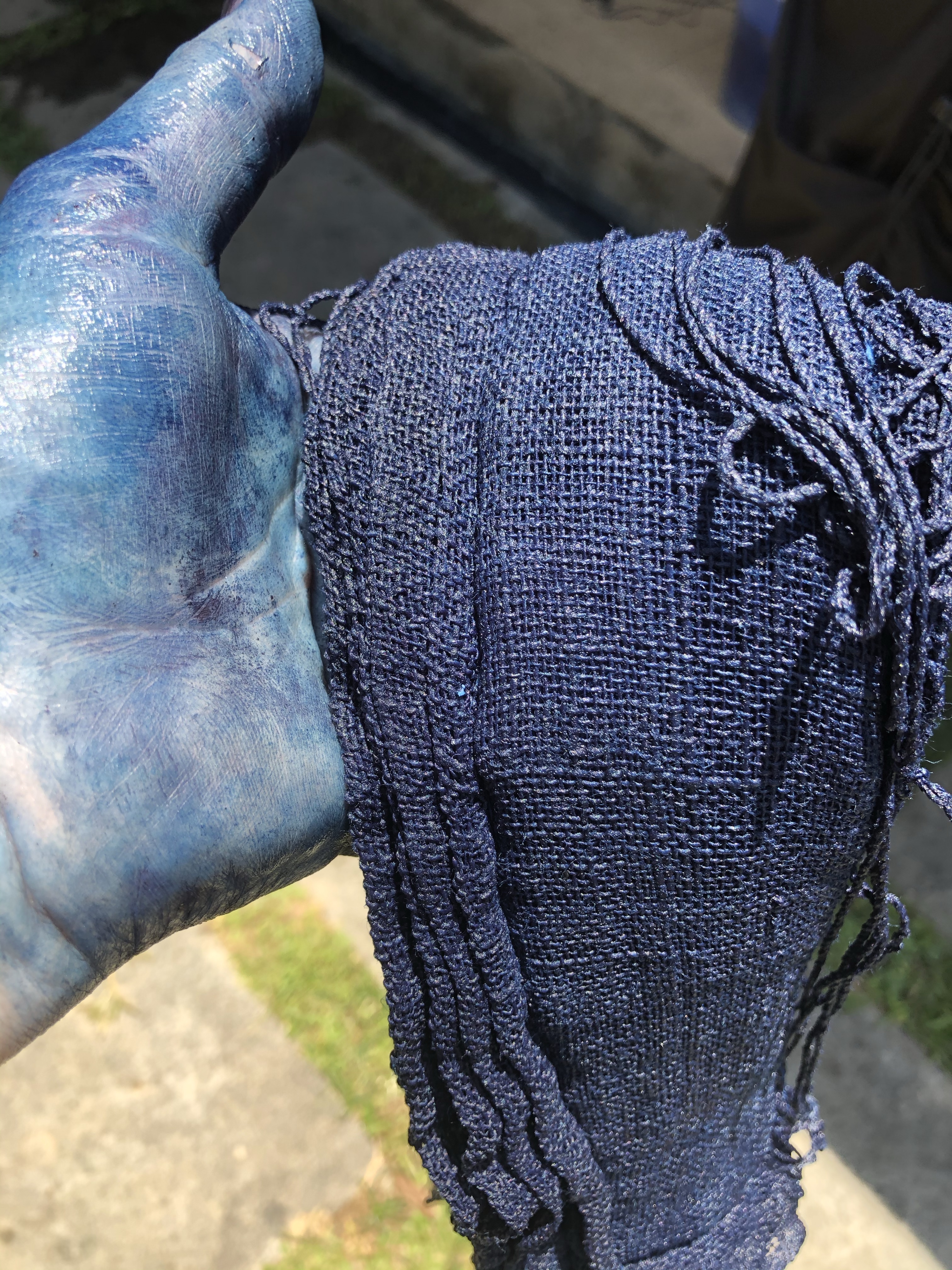
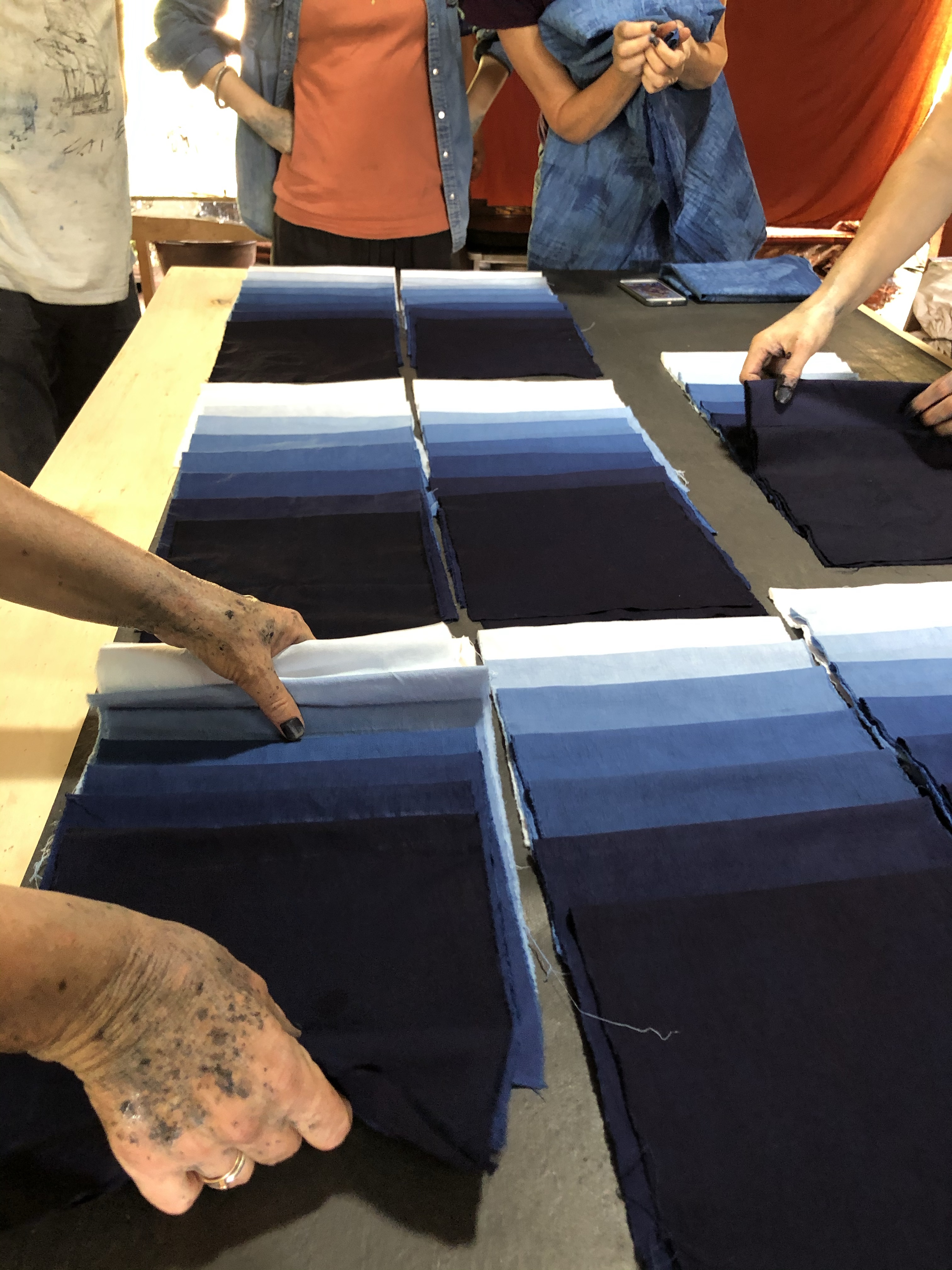
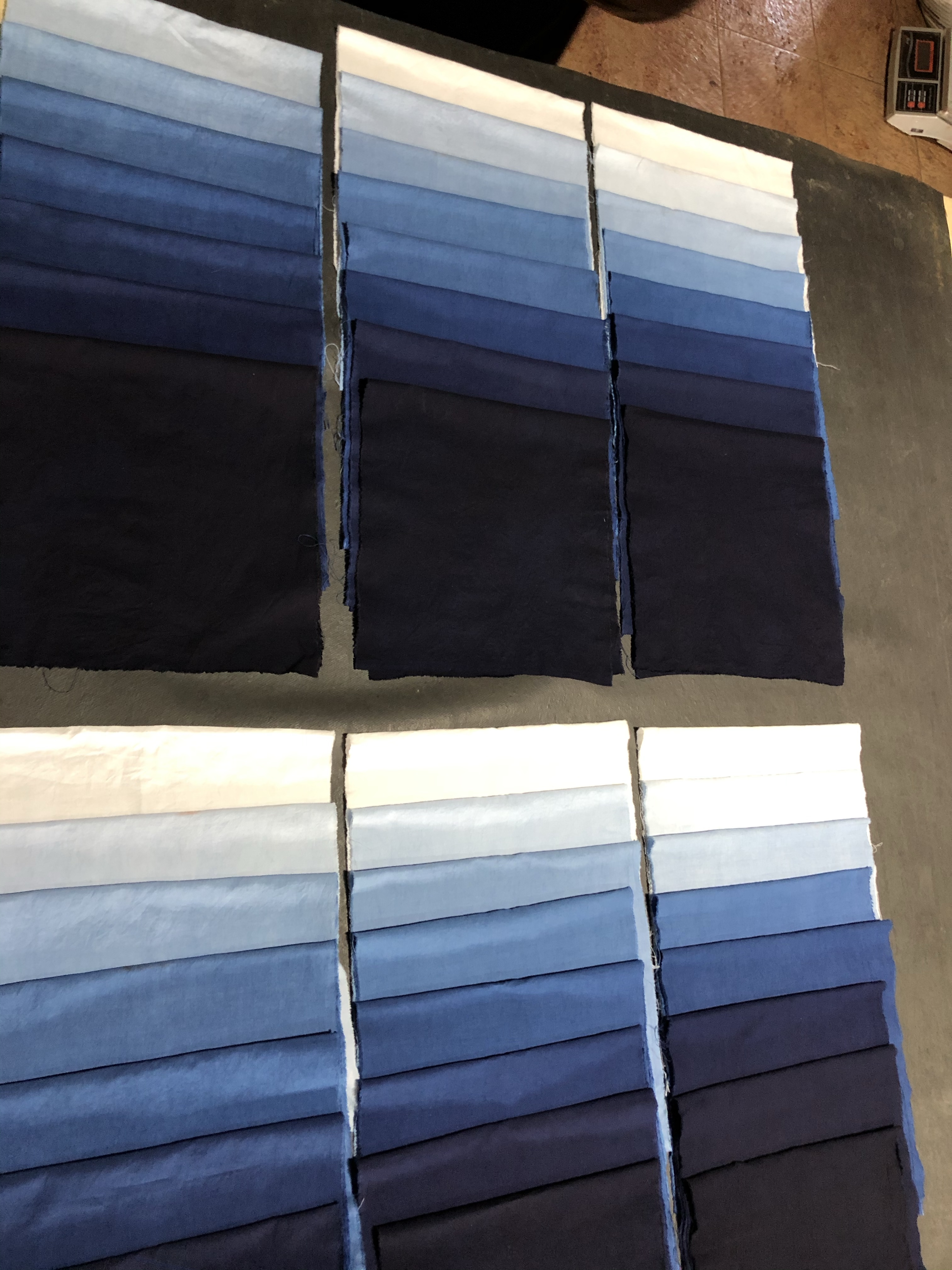
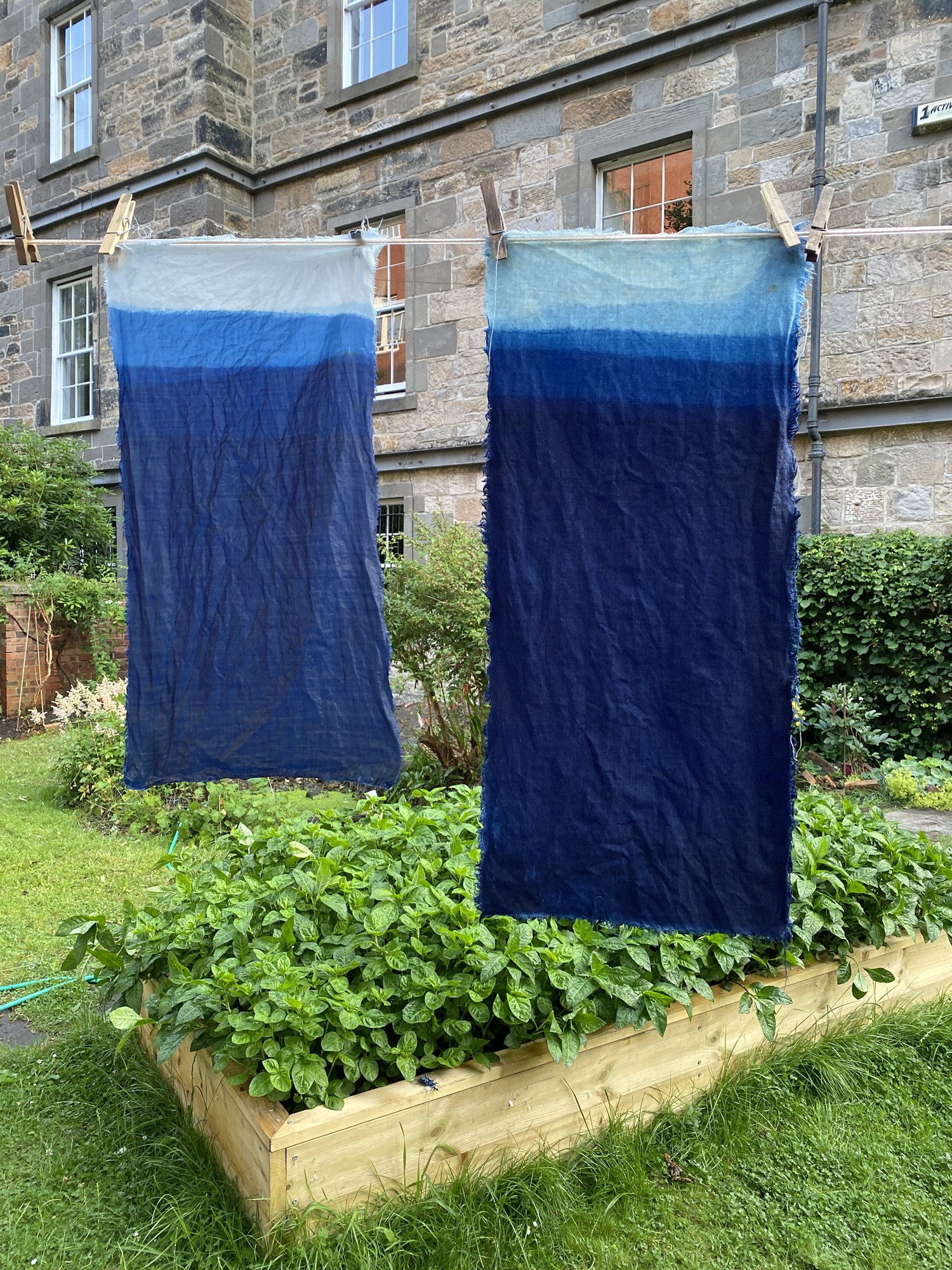
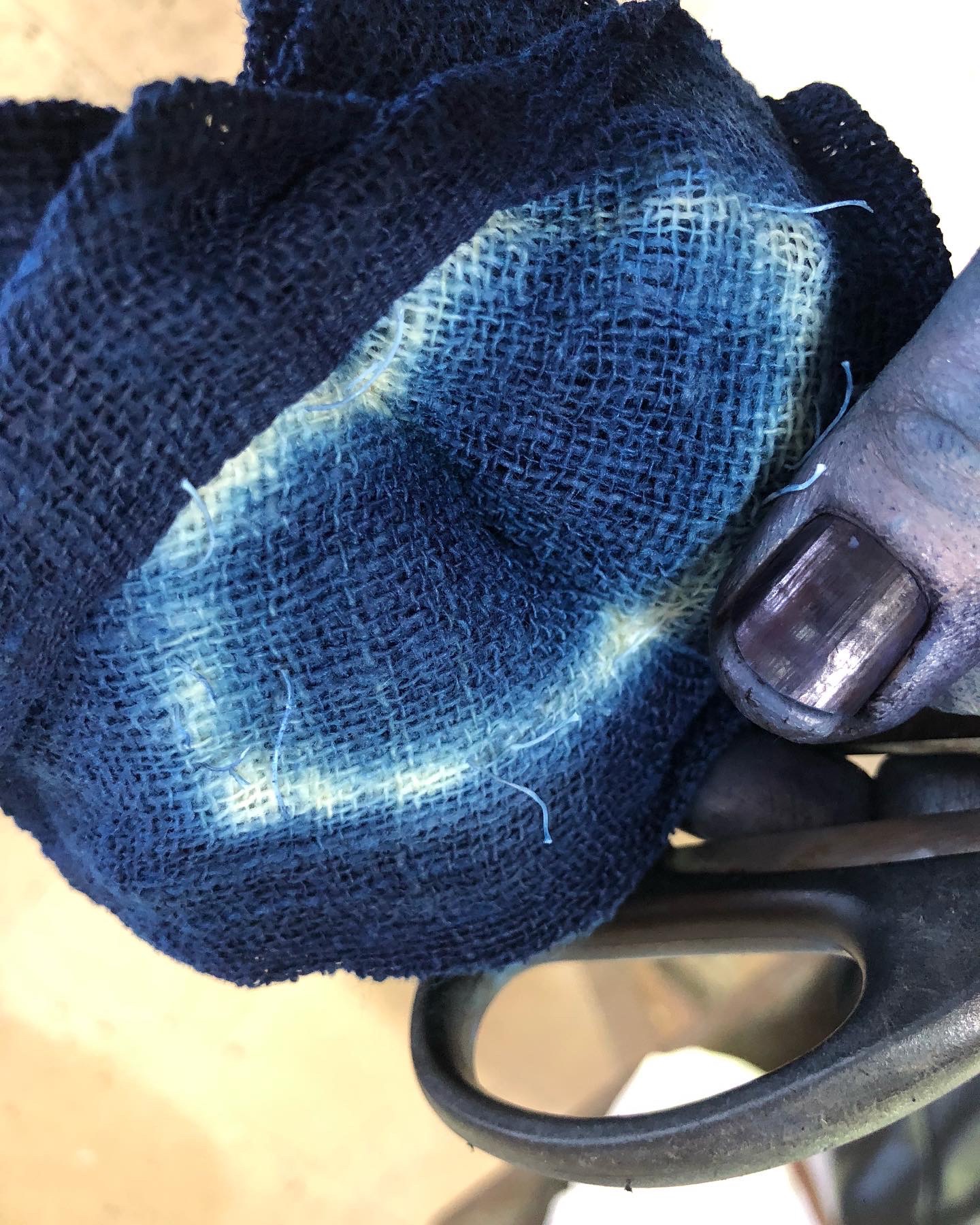
Look now this is what I want you to do… you must dip your squares of purest cotton (now ever so clean) in this vat once, twice, three times as many times as it takes but you must have 7 shades… starting with white and then the colour of nothingness (somewhere between white and blue… almost nothing but still something on this cloth… its beautiful )  … and finish at almost black… its still blue not quite black but so dark the uneducated eye would think it is black…

How many times please sir? As many times as you need to… you will have to stop talking now, you will have to concentrate, you will have to slow down and breathe gently and listen to the water floating in the vats while counting, you have to take turn and learn to wait, you have to learn to observe, your 7 shades will gradually be born, you have to follow a gentle pattern, they have to play blue like a melody, no discordance no big jumps, the right progression…

Will this not take forever sir? I have dipped this cloth at least 15 times, my mind is so tired… please Master am I there yet?

Well you tell me … it is your cloth after all and you have to learn to play your own music… Do you like this tune ? Are you happy with your own result… I cant tell you it is about you liking your own work !

Ohhhh! Master I don’t want to make a pretty pattern any more now I want to play the most delicate melody with my blue cloth… please can I have more time?

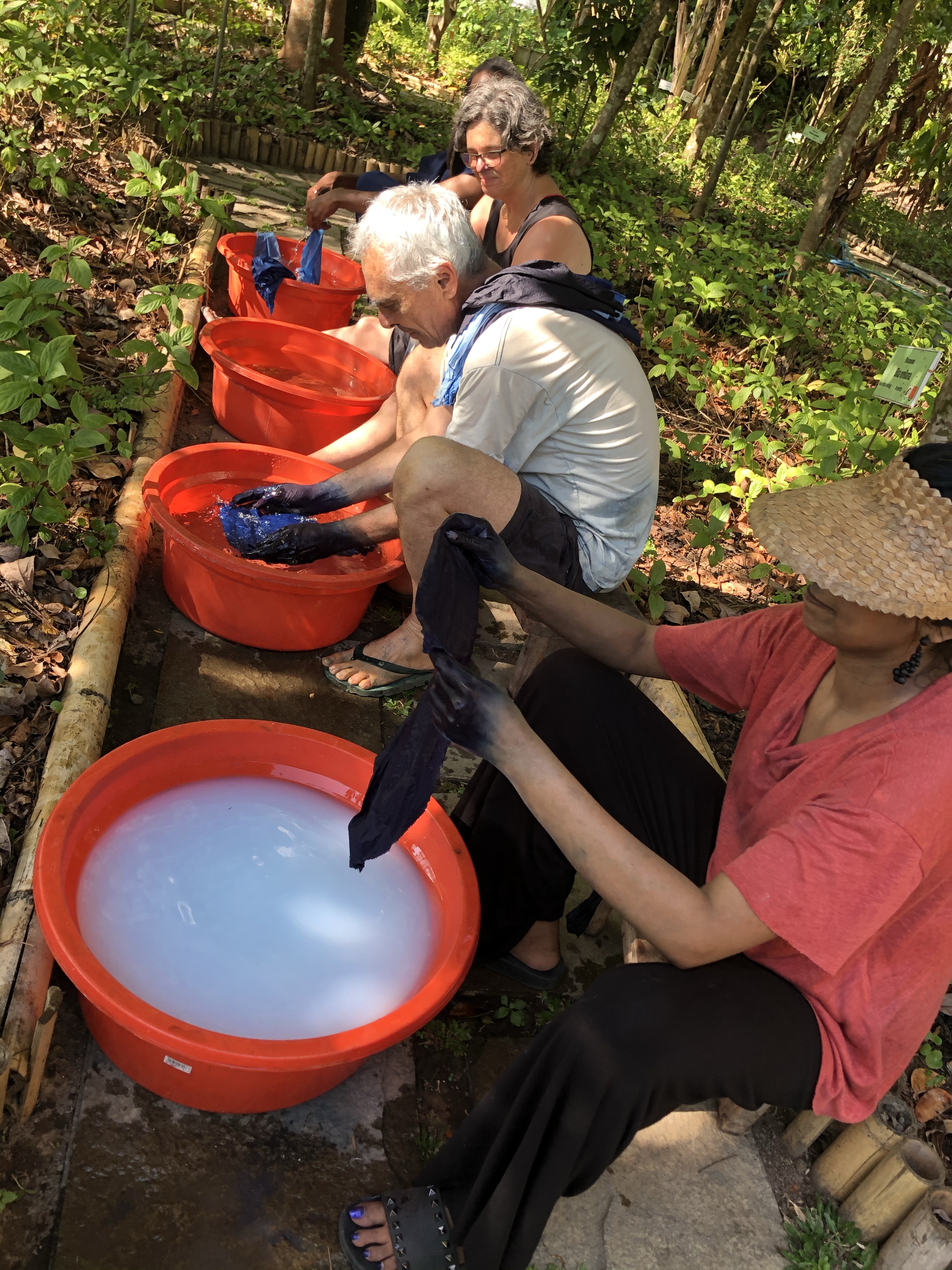
Well I am afraid a great melody is only as good as the paper it is written on … if your cloth is not “finished” properly it will not last… you need to rinse, rinse, and rinse again… until your hands are aching from it. And then only you will be able to say if you love your Melody…. And then you can make pretty patterns… Lets rinse more…

Now you can make pretty patterns… When we are all done we will listen to every one’s melody… Look is it not so beautiful????

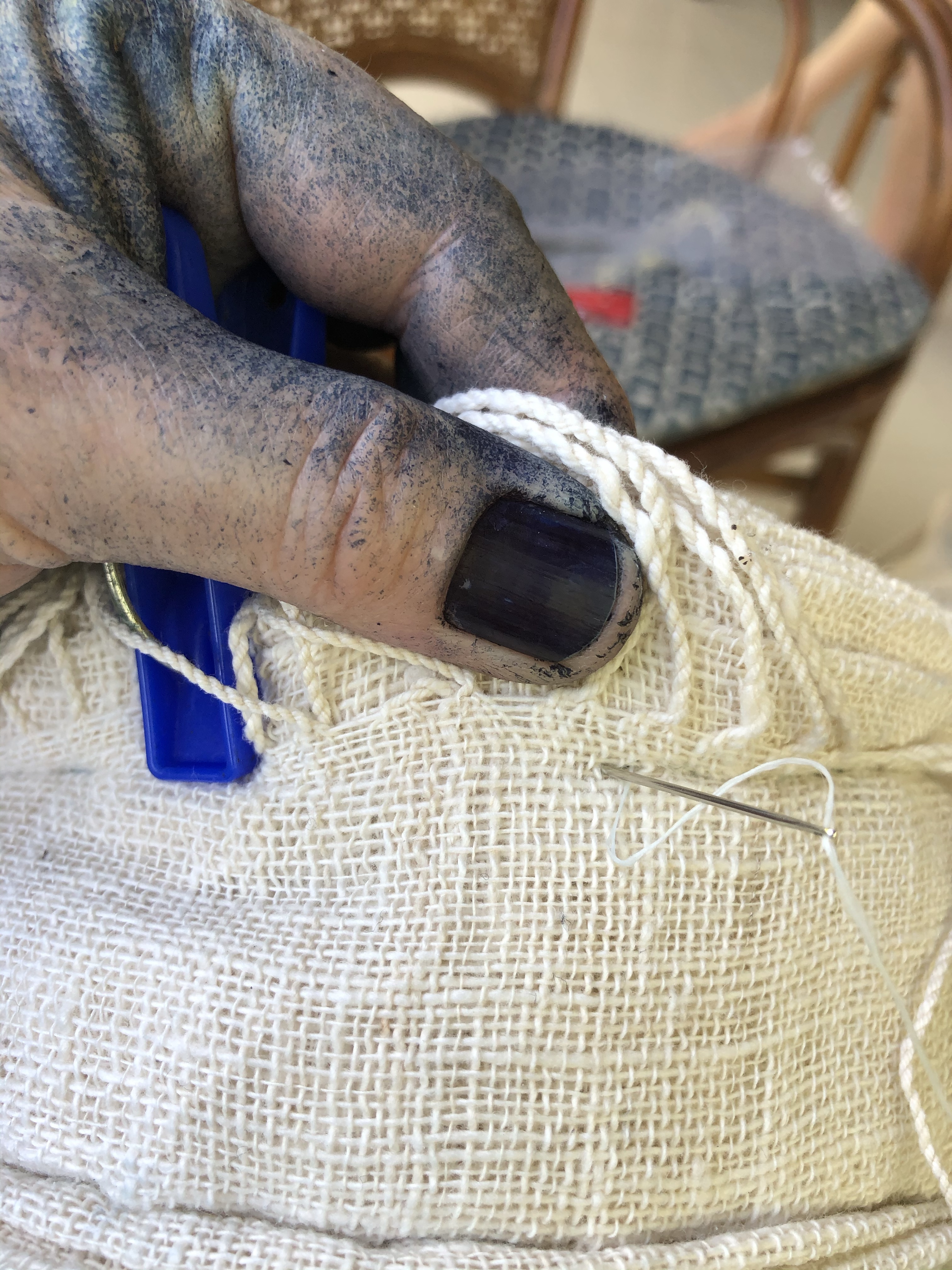
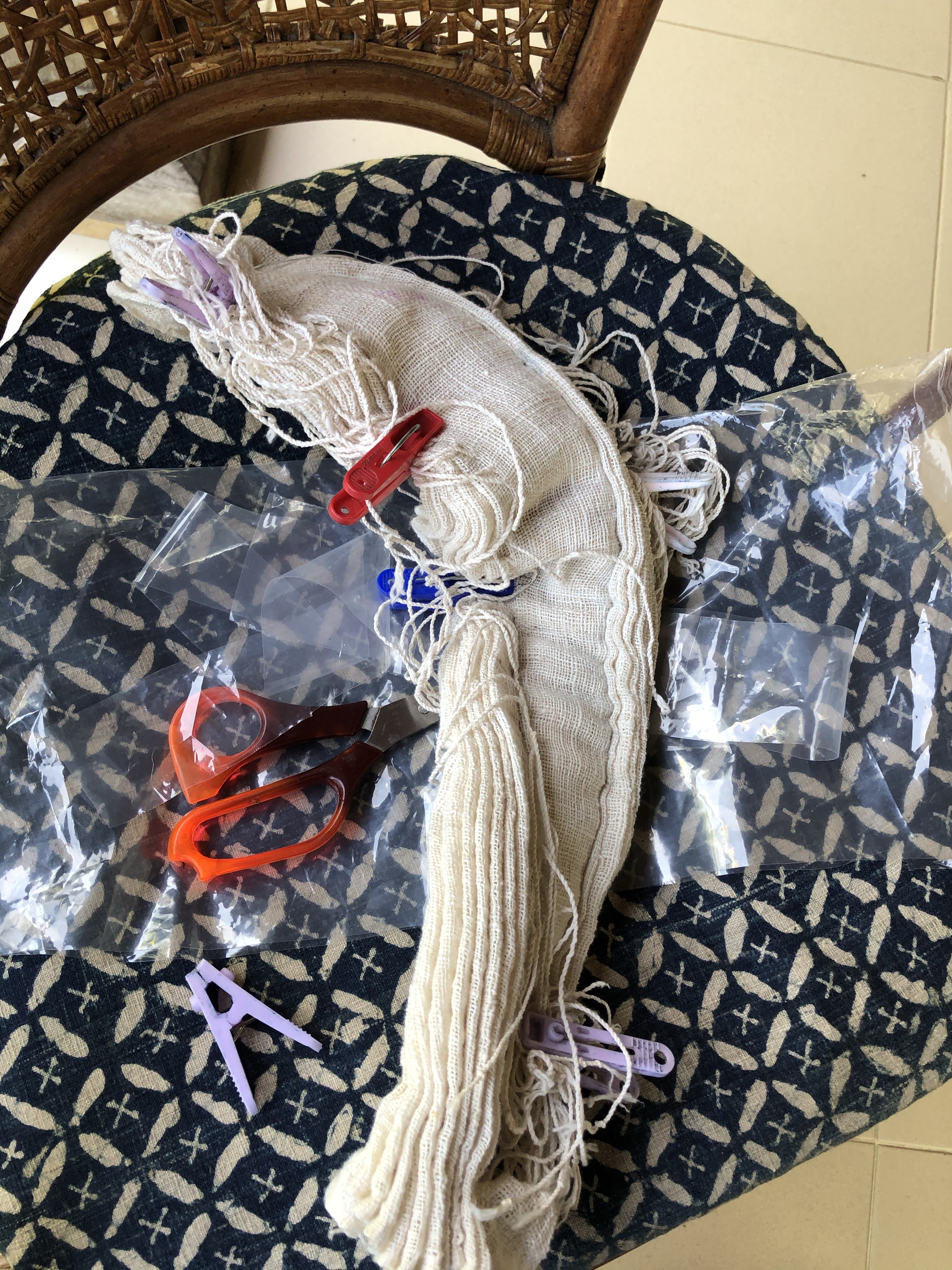
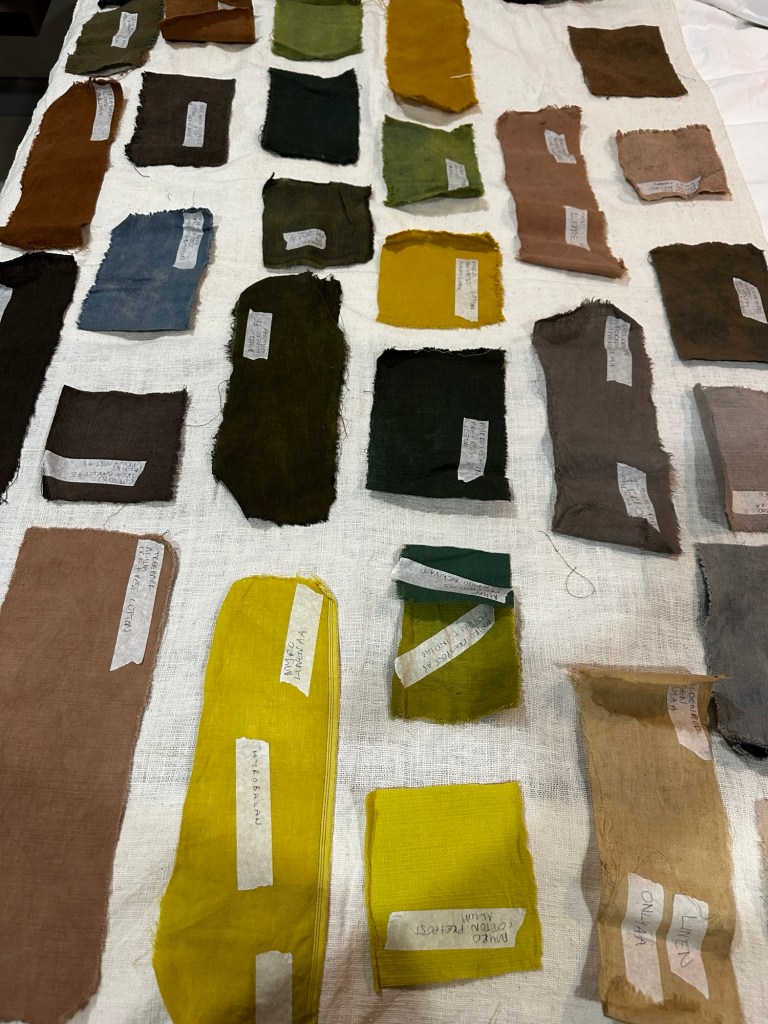
Never have I achieved so much and so little at a workshop, this time no suitcase full of Artwork, one beautiful scarf stitched and dipped in an interesting Shibori pattern… a beautiful loose weave cotton woven in Bali and part of the From Farmer to Fabric program  of the Threads of Life… I know now every time I will wear my scarf someone in Bali will benefit from my purchase. But more importantly 7 little squares of beautifully dyed Blue cloth… perfect record of my progression on a process taught to me by Aboubakar…. I feel so proud of them, they are the proof of my understanding of the process… I am so very happy…

On the last day we displayed all our melodies on a table and surprise… all melodies are perfect but still they are different ever so slightly they are all so stunning… see for yourself.

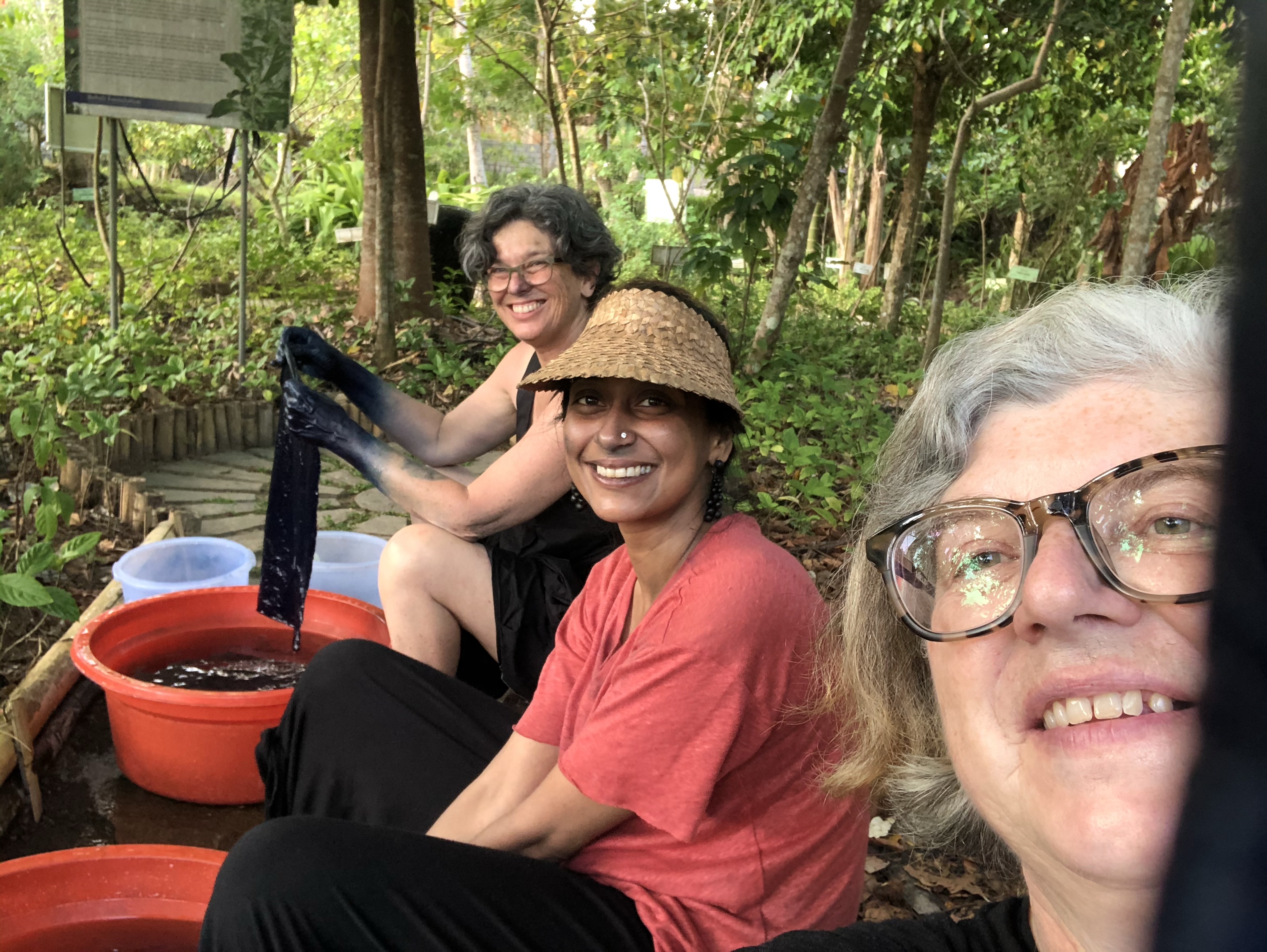
This was such a long way to go but I have learned so much, a new technique, playing music with blue, an infinite patience… I feel in complete communion with a group of dyers, with a community, with even a Master dyer.

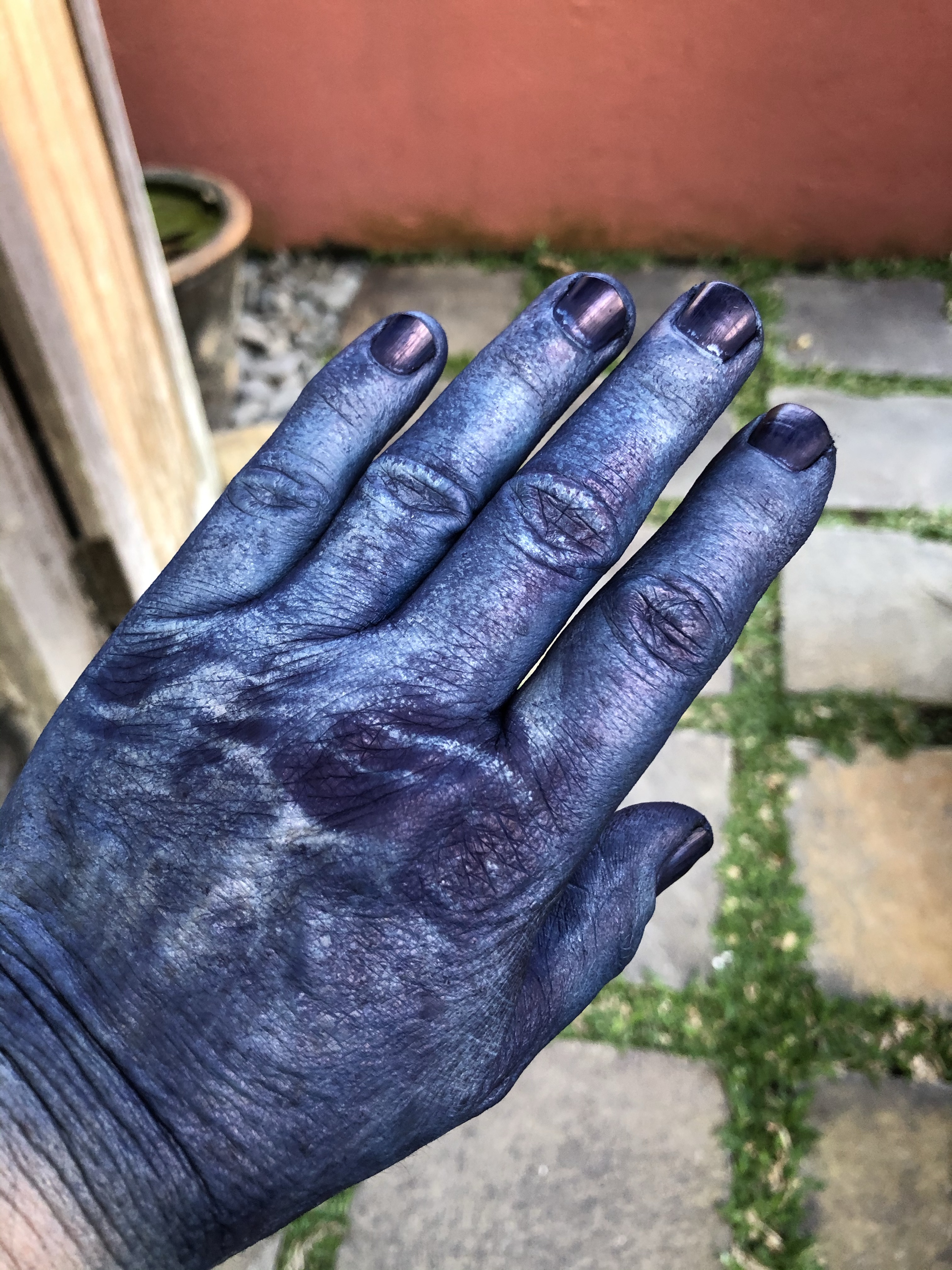
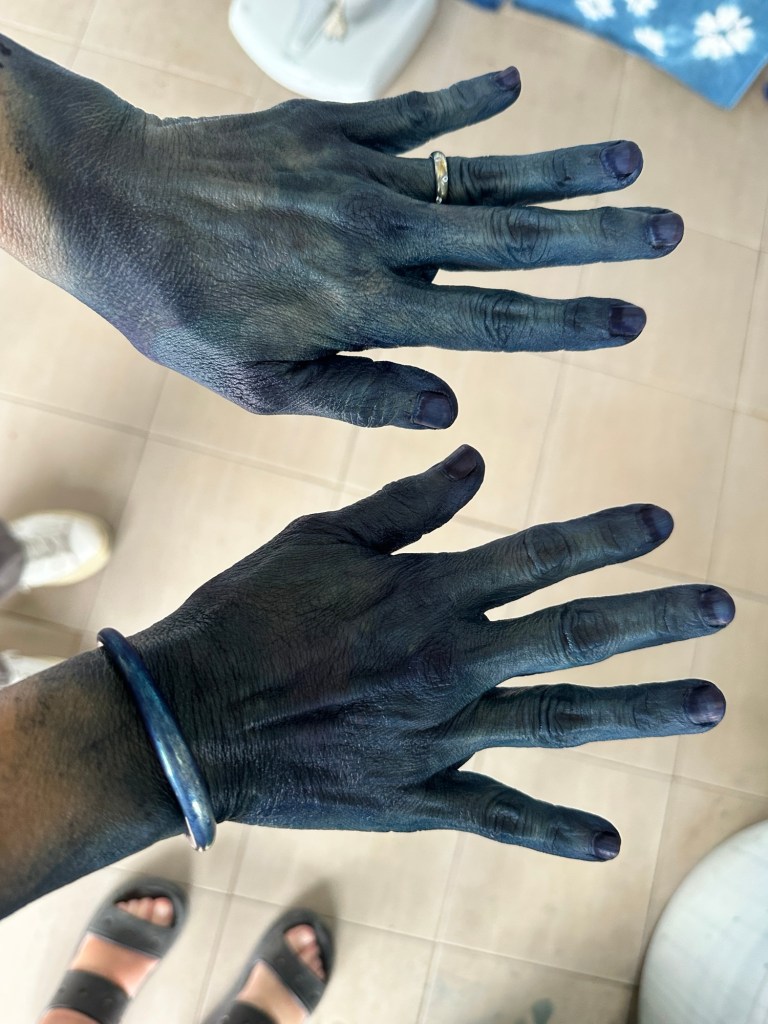
My hands did get so blue at the end… it took several weeks for my nails to be fully clean… I will cherish my squares of blue for ever they are by far my most difficult piece of work and I am so proud of them.

Aboubakar Fofana teaches Indigo at The Thread of Life every year. I highly recommend it…. but not if you want to make many pretty things… only join in if you want to be in true communion with the Blue Stuff.

Love

Betty xx


Featured

Why I love my Journey as an Eco Artist !

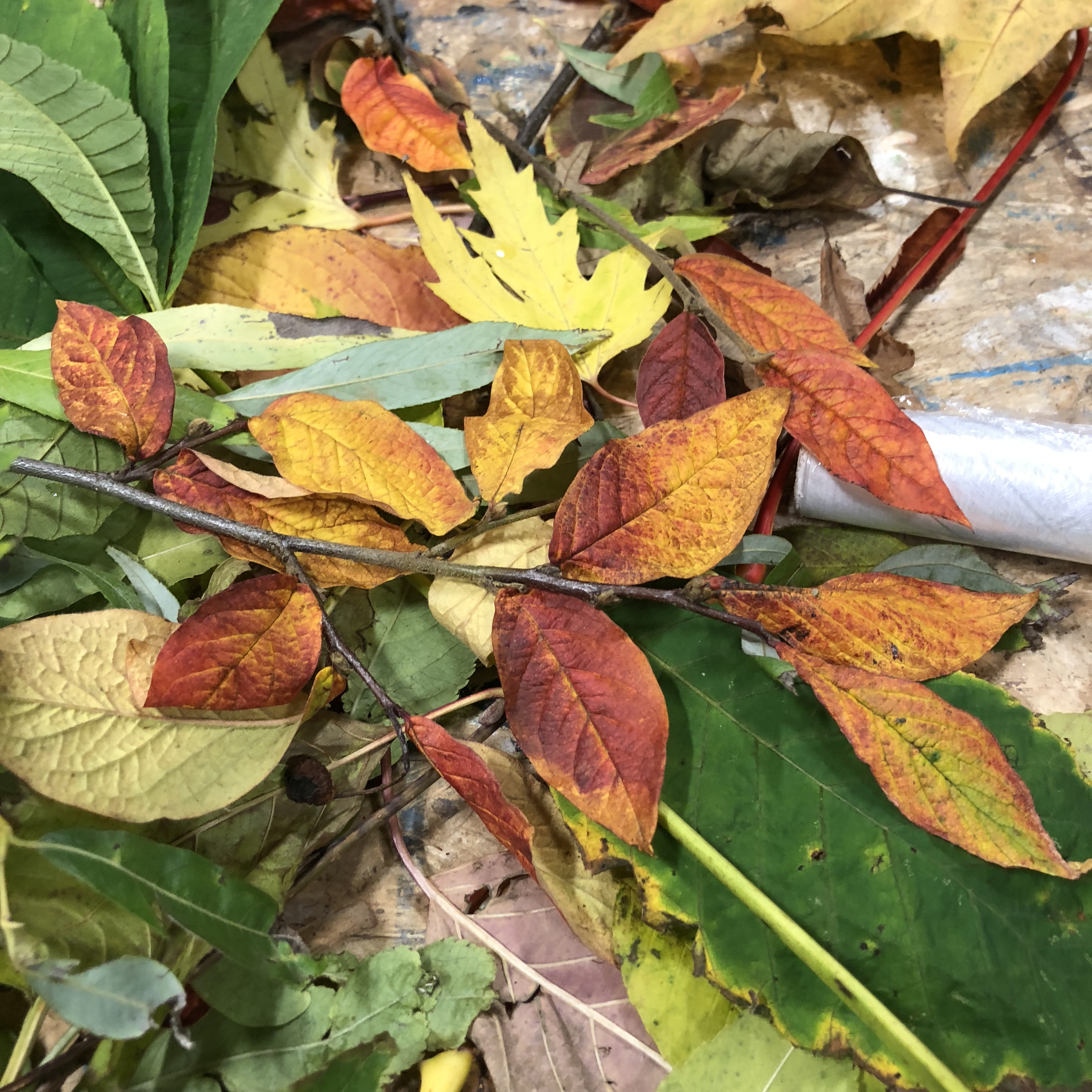
The other morning I checked my art supplies, I though they were a bit low before the next day workshop and so… time to replenish… on my way to … The Kelvingrove Park…. in the West end of Glasgow, walking distance from my studio, it is lovely and a little hub of nature in the centre of the city. I took a lovely morning walk, I had a chat with the dog walkers, found some lovely autumn leaves, horse chestnut, some oak, some dried maples all in my large bag. I even stopped by An Clachan the friendly coffee shop by the children’s play park. They make a wonderful coffee and a great flap jack. After that… I went home and Eco Printed.

How about that for work life balance !

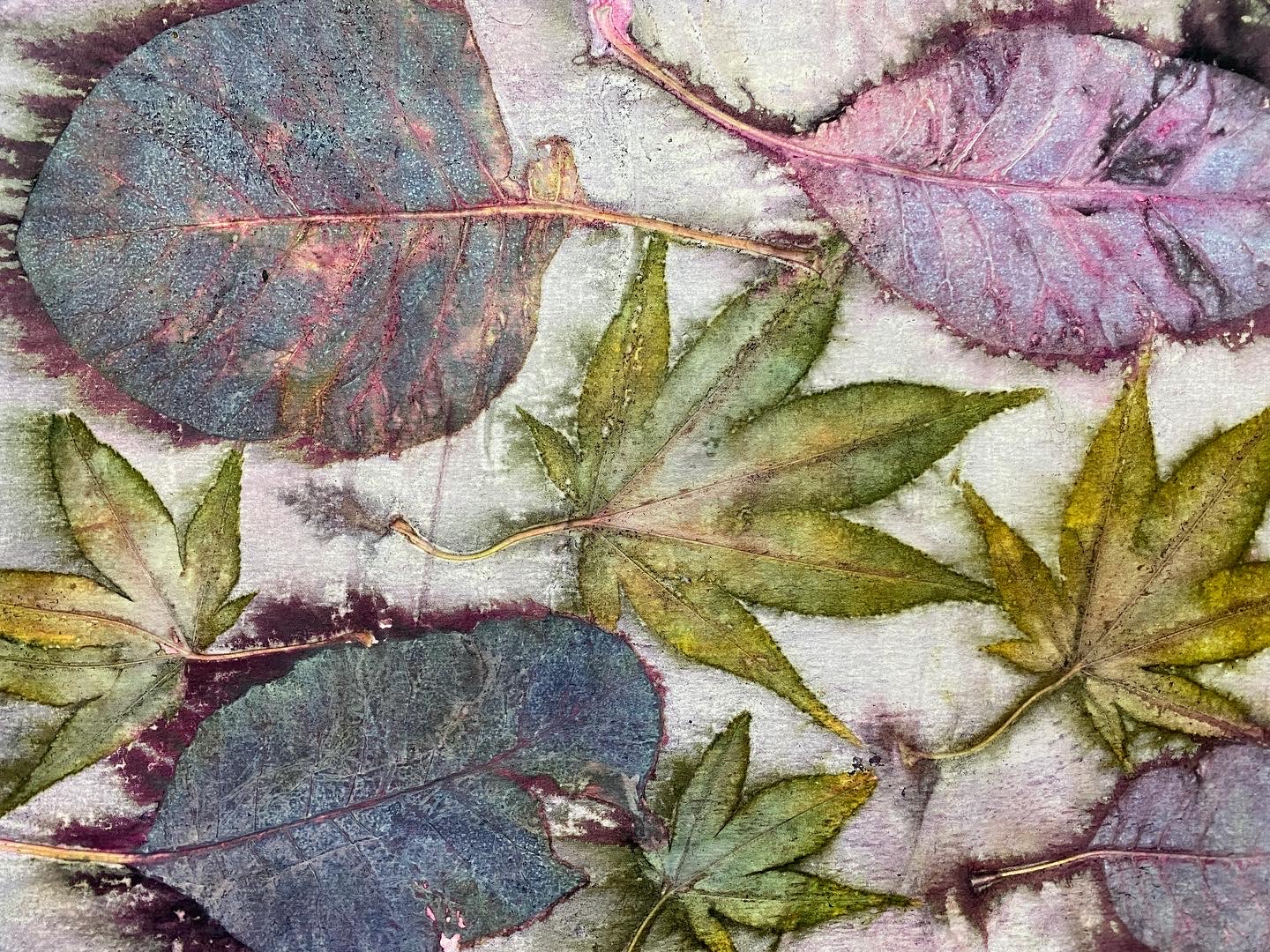
Eco Printing is a wonderful creative technique at every level.  Beginners to my workshops can produce beautiful pieces from early days, and I love how versatile the technique can be wether you are an artist, you love textile, or work with mix media, the prints you make help you mapping your creativity. Different seasons, different colours, different leaves or printing surfaces, different colours… Some call it magical but really it is chemistry !

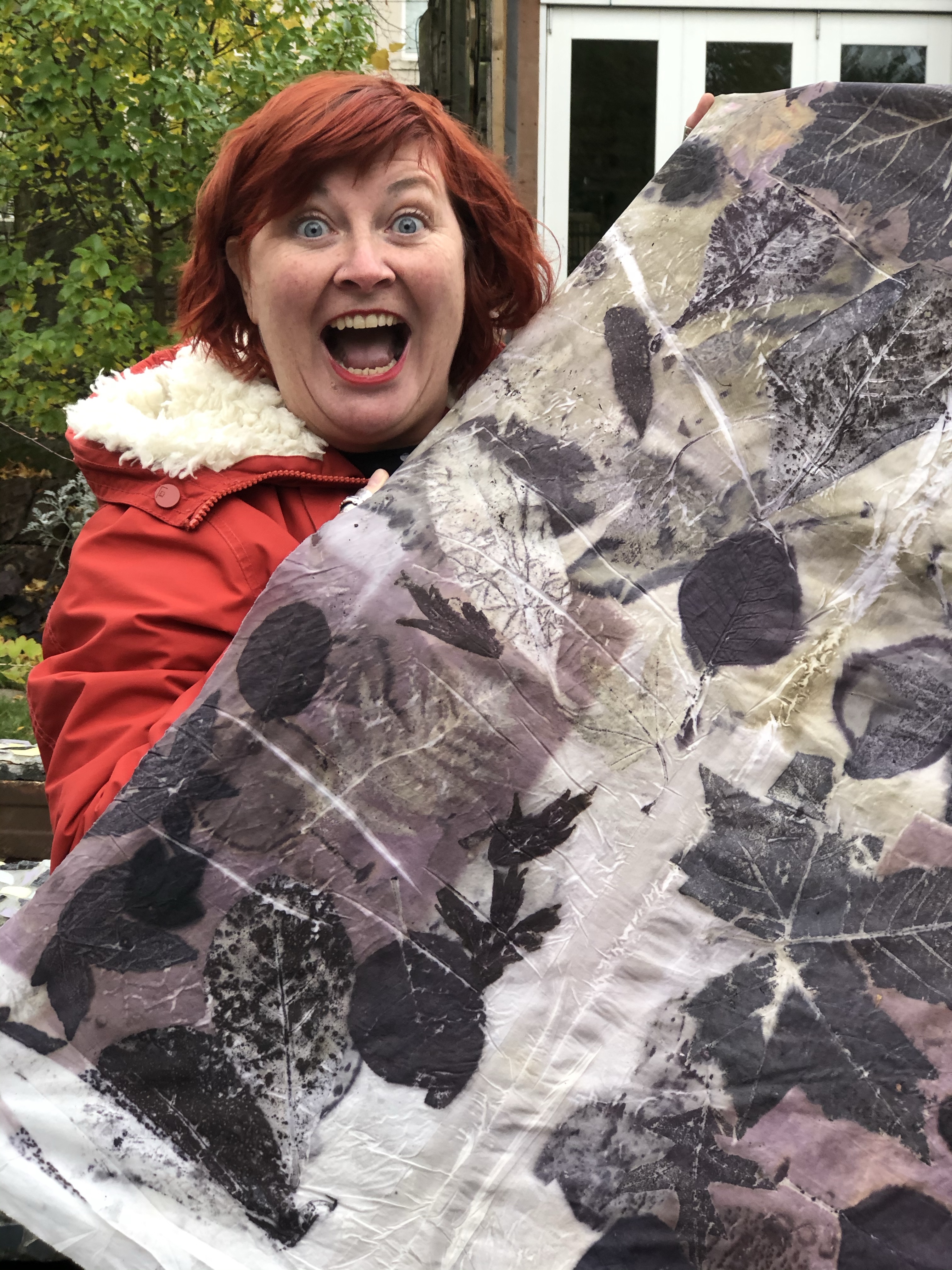
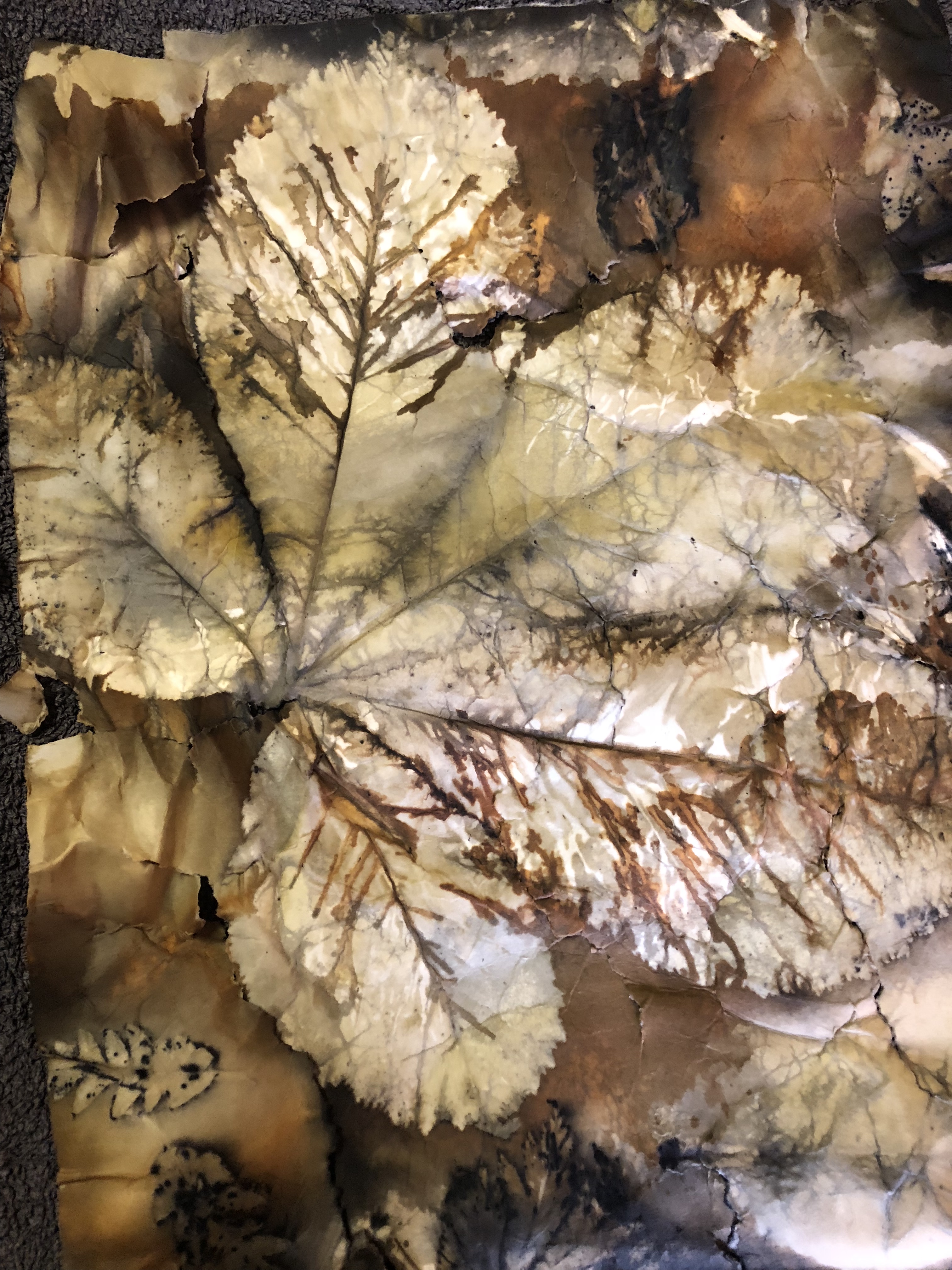
For myself I love the resist papers I get, the negative prints so to speak… the paper blankets which give me beautiful rusty images. They are unpredictable but always beautiful.

I am an Eco Artist and I love my journey, no online shopping for me, no fighting the motorway traffic to the local Craft shops, no huge bill for specialist paint… My main ingredient… Scottish leaves  ! so when I need some… I just take a walk in the park. How amazing is that !

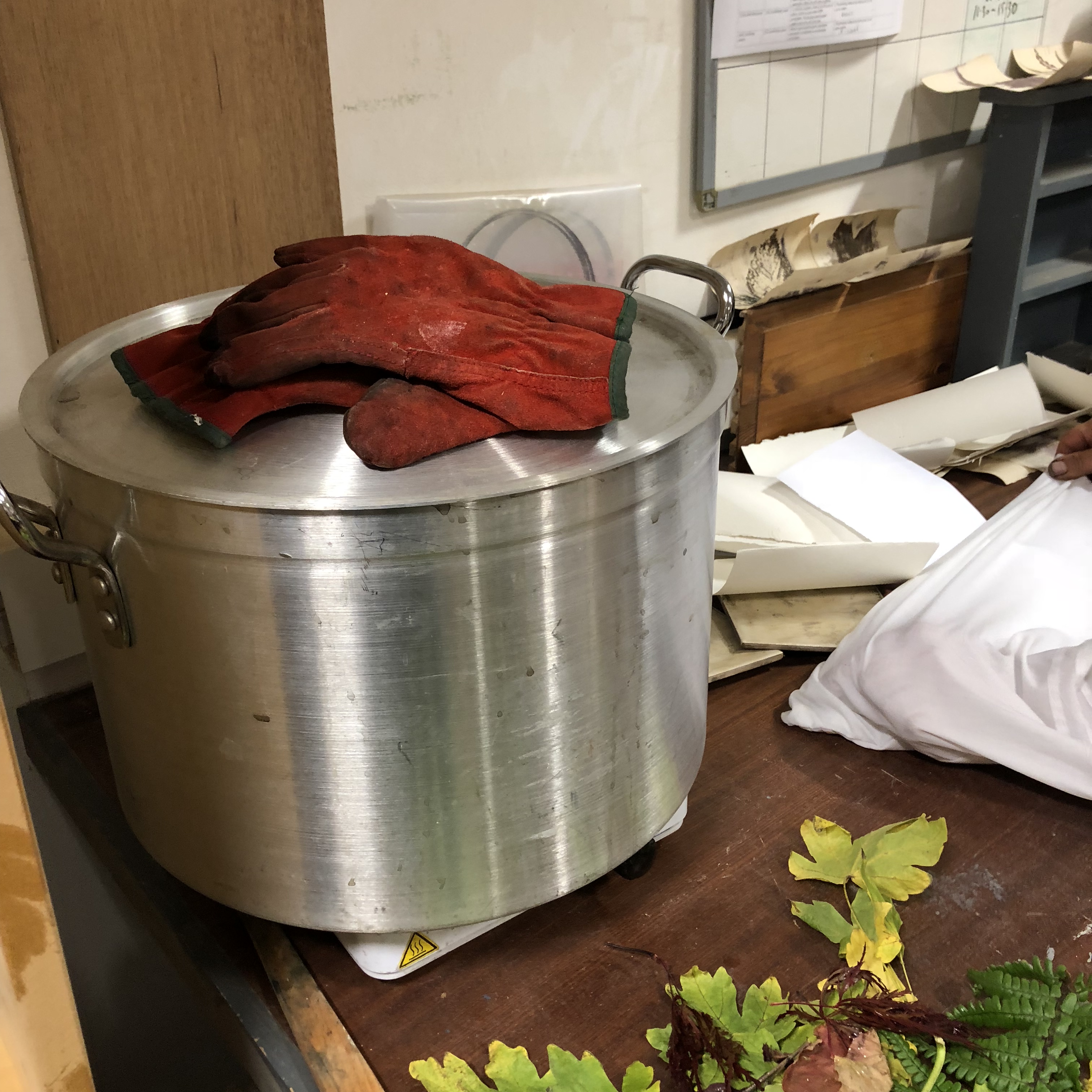
I will be running my next week end Eco Printing next October in my own Studio in Glasgow details https://www.eventbrite.co.uk/e/eco-print-your-scottish-leaves-week-end-tickets-63310032010 We will be drinking great coffee and printing Scottish leaves in my Big Aluminium Pot, we will keep cosy by the fire and make amazing and unique prints. If you are a beginner you will be blown away by the result, if you have printed before… join me for more creative fun.

I hope to see you there.

Love

Betty x

“Blue Prints”, Scottish residential retreat week of Pattern making and Indigo dyeing

It is my great pleasure to invite you to my 2026 “Blue print” a residential week of Indigo dyeing and print making using resists. If you have been looking for an opportunity to spend a week learning to dye with Indigo and work with resists methods to create patterns this residential time is for you.

It will take place in my Glasgow studio between the 17th and 24th of May 2026.

Wether you have experience in Indigo dyeing or are a complete beginner you will be at ease as we will start with the very beginning.

In my lovely dye studio located in the West end of Glasgow, a small group of students will spend a week learning :

  • How to set up a ferrous natural Indigo vat, dye with it and maintain it.
  • Creating prints using two resists methods from South East Asia, Batik with wax and a Chinese Soya/lime resist.
  • Working on sample size pieces but be advised on how to upscale.
  • We will essentially work with cellulose.

The size of the group will be limited to 4 students to make allow plenty of personal attention.

The week is residential and accommodation will be within a few minutes walk in single rooms with ensuite facility. Breakfast and buffet salad lunch is provided. (special diets can be accommodated). as well as a welcome diner to meet the rest of your team.

The West end of Glasgow is located near the University of Glasgow and features wonderful Victorian architecture, green parks and a great variety of cafes and restaurants with interesting cuisine at walking distance from our area. From French cafe to Moroccan local restaurant you will find there great diner experiences for the other nights of your stay.

During the week we will take a few hours off to visit the grounds of Glasgow University and the local park and you will have the last day off to allow a visit of the local area. Glasgow has plenty to offer and is only 45 minutes by train to the Scottish Capital of Edinburgh.

Typical week:

Arrival on Sunday with check in after 3pm, welcome diner at 6pm with introduction to the group.

Day 1: About the chemistry of Indigo , setting up a ferrous vat, making the paste resist of Soya lime.

Day 2: Testing the vat, applying the paste resist, dyeing tests of a range of blues.

Day 3: Starting dyeing your pieces and testing the range of blues

Day 4: Applying more paste, testing different pieces.

Day 5: Removing and neutralising. During the week… neutralising our prints in vinegar water.

Day 6: Batik, introduction, application and dyeing, removing the wax and neutralising.

Organising an exhibition of our work and offering to view from participants to those who had a link.

Day 7: Day off to allow you to visit Glasgow or take a trip to Edinburgh. Accommodation is provided for the Sunday night and check out is on Monday after breakfast before 10am.

Unfortunately this retreat is not for you if you have mobility difficulties, my studio space in at the bottom of stairs and we will spend a good deal of time standing up. Apologies if that is your case, There will be other opportunities in the future that are more appropriate.

If you are interested and you have questions please email me bettysbeautifullife@gmail.com If you are clear and want to book a space please see below.

BLUE PRINT – A WEEK’S SCOTTISH RETREAT IN INDIGO DYEING AND PATTERN MAKING

This is the booking page for the May 2026, “Blue Prints” a Scottish retreat week of Pattern Making with resist methods of Southeast Asia and a Ferrous Indigo vat. This deposit payment will secure you a space, the balance will be payable in two transfers £675 in January 2026 and £675 en March 2026. Upon payment you will receive a confirmation by email with an invoice and the due dates. Please do not book transport before the retreat has been confirmed.

£150.00

The French Retreat 2026 is live !

THE FRENCH RETREAT IS NOW FULLY BOOKED BUT DONT BE SAD, I AM ACTIVELY WORKING WITH OUR HOST TO SET UP A SECOND WEEK FROM THE 27TH OF JUNE TO THE 4TH OF JULY 2026 IF YOU ARE INTERESTED PLEASE EMAIL ME AND I WILL LET YOU KNOW WHEN THE BOOKINGS ARE OPENED. PLEASE EMAIL ME ON bettysbeautifullife@gmail.com

Bookings to the Botanical printing French retreat in July 2026 are now opened.

The retreat runs from the 10th July 10am till the 17th July 5pm and is residential. For those travelling from far I have organised accommodation on the 9th July evening and your evening meal is included. The pick up time from the local station (surrounding of Toulouse) is 5pm on the 9th July. I have also organised for a last night together on the 17th with included evening meal and we drop you off at the same station on the 18th at 9am. Further information is communicated after bookings are confirmed.

The French retreat is a one week residential workshop in Botanical printing on paper, leather and linen using local botanicals. It is taking place in the South West of France near Toulouse in an historical Farm house in the small town of Montbrun Bocage. A small group of 8 participants are hosted by our French host in their beautiful studio and dye studio. Together we learn about mordants and botanical to create botanical art.
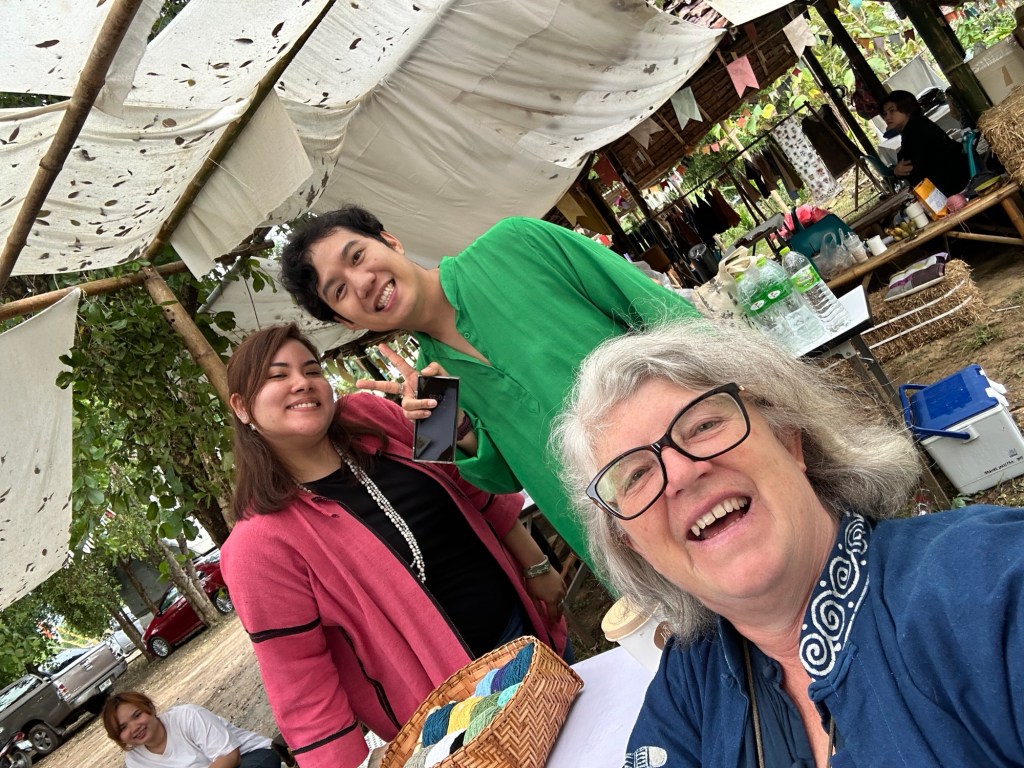
Please read on if you are interested.
Botanical printing on paper is one of my very favorite sustainable technique to create wonderful prints on Art paper. Paper is a cellulose material and it takes the dye very well if mordanted like linen/cotton/hemp. It is a very versitile material and once printed you can transform it in many different items or simply display it as a mono print.

Over the years I have been teaching printing paper online and in person and during the Covid period I have developed an online course in 12 lessons which allows you to create a number of effects from a flat background to some more moody effects when boiled in a pot.

Once we resumed meeting in person I put together a 7 day in person retreat which I run yearly in the South West of France. It is a residential course perfect for beginners or more advance printers. During that week we take time to study via sampling how mordanting and dyeing affect the prints and we create a large body of work on paper, cellulose fiber such as linen and leather to take home as well as some good robust notes for the future.

The retreat is off course residential and we are hosted by JF and his wife Krystel in their farmhouse not far from Toulouse but in the countryside. I only welcome a small group and the experience is very immersive but also very creative.

In the past years the groups of 8 participants have bonded very well and often they still speak in the whasap group after months in a really friendly manner.

The course is ran in a beautiful studio in the middle of the garden and the residence is in a family house (old farmhouse) with the rooms of an open gallery and a large dining room where we meet 3 times a day for meals. JF cooks for us in a true French style using only fresh products from the market. Gradually we just become one family and normal life gradually vanishes as no tv or news are brodcasted there.

We forage the local flora for our prints and on the sunday off we visit the local market to test the home made pizza and ice cream as well as mingle with the locals. It is the event of the are and a very fine event. On Sunday afternoon I usually set up an Indigo vat and those who want to do something creative can dye while others might rest.

This is not the type of retreat where we visit the area for some local shopping although I might introduce a trip to a local market this year if I can find the transport.

The accommodation is shared rooms but as the building is an old farmhouse the rooms are huge and comfortable leaving enough space to everyone for me time. There is an outside gallery with comfi chairs to allow you to relax mornings and evenings, a large seating room where you can catch the Wifi and seat in the cool when outside is too hot and a reading room gallery where you can enjoy JF collection of classic books. Krystel is an artist herself and their home is full of beautiful textiles and books ready to be explored.

We have a pick up point at the local train station on the 2nd of July 5pm for everyone arriving by public transport as the drive to the farm is still around 20 minutes but it is possible to commute directly by taxi from Toulouse Blagnac airport. The course runs until the 9th July evening. On the 10th after breakfast we will drop you off at the same station back into normal life. Often I will take that train back to Toulouse myself.

During the week of the course we will cover:

  • 3 Mordanting methods to suit cellulose and protein fiber
  • Dye extraction from plant based matter
  • Selection of leaves from the local ressources and some information to allow you to adapt to your area
  • Substantive and adjective dyes
  • Botanical printing on paper, cellulose and leather both steamed and by immersion
  • On our day off (Sunday) we will visit the local market and Indigo dyeing is optional in the afternoon (dye your own fabric/cloth).
  • Finishing your pieces and neutralising.
  • A book structure will be shared for you to learn although often we don’t have time to make it there and then.
  • You will be given information on a web-based support to take home.
  • A debrief at the end of each day.
  • A hands on sustainable approach and collaboration between participants is encouraged.
  • On the final day we will be setting up our work as a mini exhibition to share with the host and to review our learning.

You will leave with samples on fabric, paper, leather and some great new knowledge.

I have calculated a fully inclusive price of £1500 for the 7 days (deposit is £150 to secure the space, then two payments £675 end of March and end of May) , it even includes the odd glass of local red wine that JF serves to compliment the meals. Accommodation and 3 meals a day, the commute included above, the workshop, the material and dyes are all included. What you will have to fund yourself is :

  • Your sunday lunch.
  • your costs till you arrive either at the train station and when you leave or your own commuting costs if you come in a different way.
  • Your costs if you would like additional food or drinks. The menu is European and is ok for vegetarians. For strictly Gluten free contact me as there might be an extra cost due to the high cost or food such as “bread” “pasta” etc… For any special diet please contact me there will be a small added cost to help our host.
  • Any dye kit you might want to order from me or any additional material you might choose to bring in.

Below I have added a selection of photos from last year’s retreat to inspire you.

During the week our group becomes closer and as we focus on our technique the work we produce gets better and better but also we form friendship that will last and our vocabulary moves from everyday things to dye terms, names of leaves, effects, we simply meditate on our techniques. It is such a refreshing moment in this crazy world.

On our day off we walk down to the local market to buy picnic food, and other local reaches, potteries, ice cream, hand made knifes… before spending the afternoon playing with some Indigo Shibori in a most informal manner.

My retreat does not accept partners because i want our group to feel the immersion and the closeness of a retreat but partners can find something to do in the close by Toulouse and meet you at the end.

We share rooms and there are two tents to share…. Our retreat is fully immersive and from the moment you meet us the day before we start to the moment you leave after breakfast the day after we finish you can live cash free. All is included including the local glass of wine.

If you want to find out more about the program and cost scroll below… If you want to reserve one of the 8 spaces please click the link below and make the deposit payment but … Watch out it is not refundable should you change your mind so think it through.

The deposit will secure a space, balance of the payments will be made between March and May 2026. The total cost is £1500 and the deposit is 10%. The balance will be payable in two amounts of £675 end of March and end of May.

Payments are non refundable but I will accept a replacement for your space if you cant make it. Please contract a travel insurance in case you have an event to forces you to cancel.

Dates:

9 nd July 2026 – Arrival at 17 h

10th to 17th July inclusive Retreat

18th July departure after breakfast

Location:

Toulouse area.

Accomodation:

Shared rooms full board.

Food type (standard european, if you have a special diet please contact me to discuss at bettysbeautifullife@gmail.com )

Secure a space in the French retreat 2026 with a deposit

This payment will secure a space in the French retreat 2026 in shared accomodatin. All meals included. The balance is £1350 payable end of March and May 2026

£150.00