
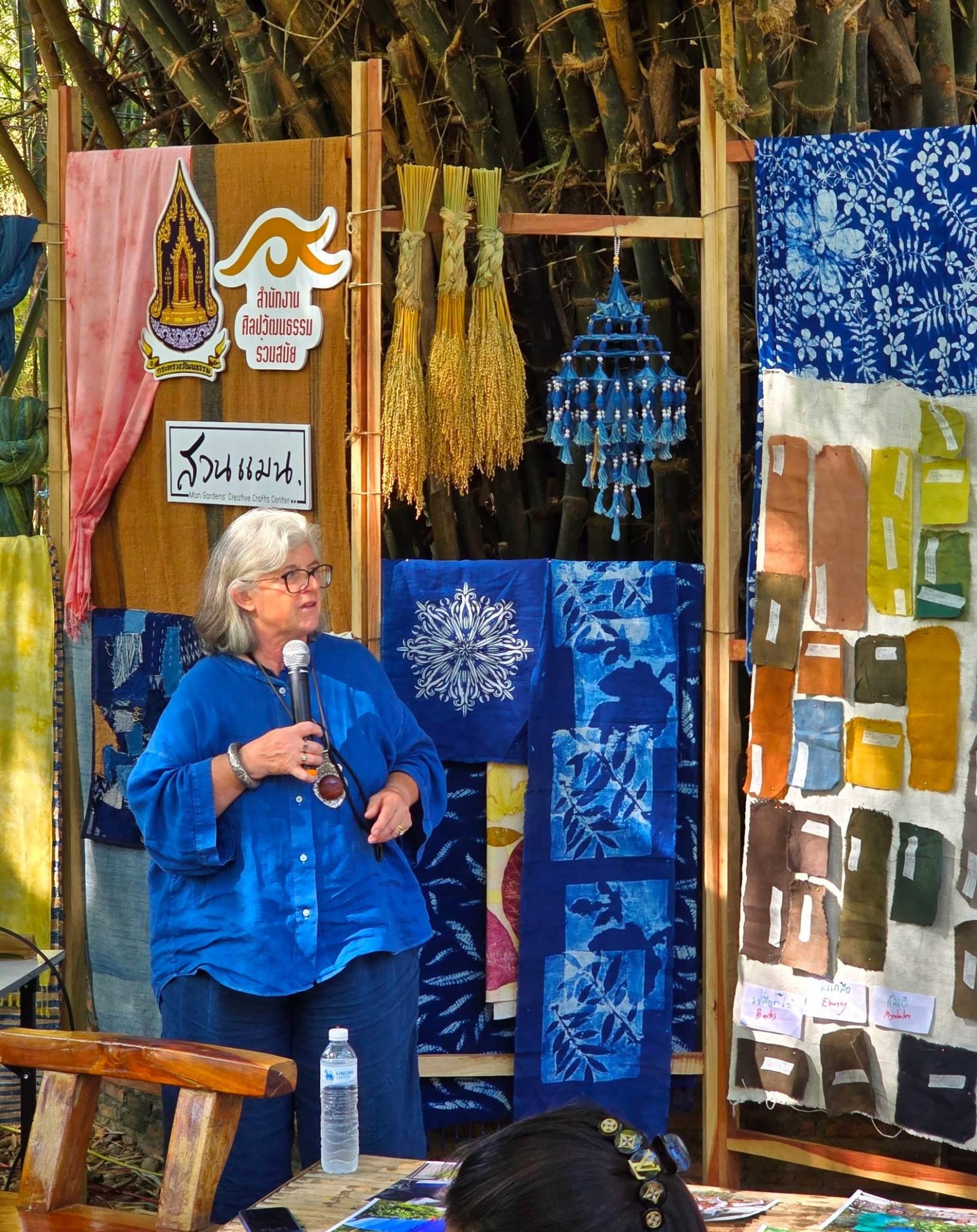
Sustainable Natural dyeing is such a topical expression of today but I never find that that description follows what I see happening in books and social media. For years I have been travelling to South East Asia to capture true “Sustainable Natural dyeing. Thailand is my favorite place.
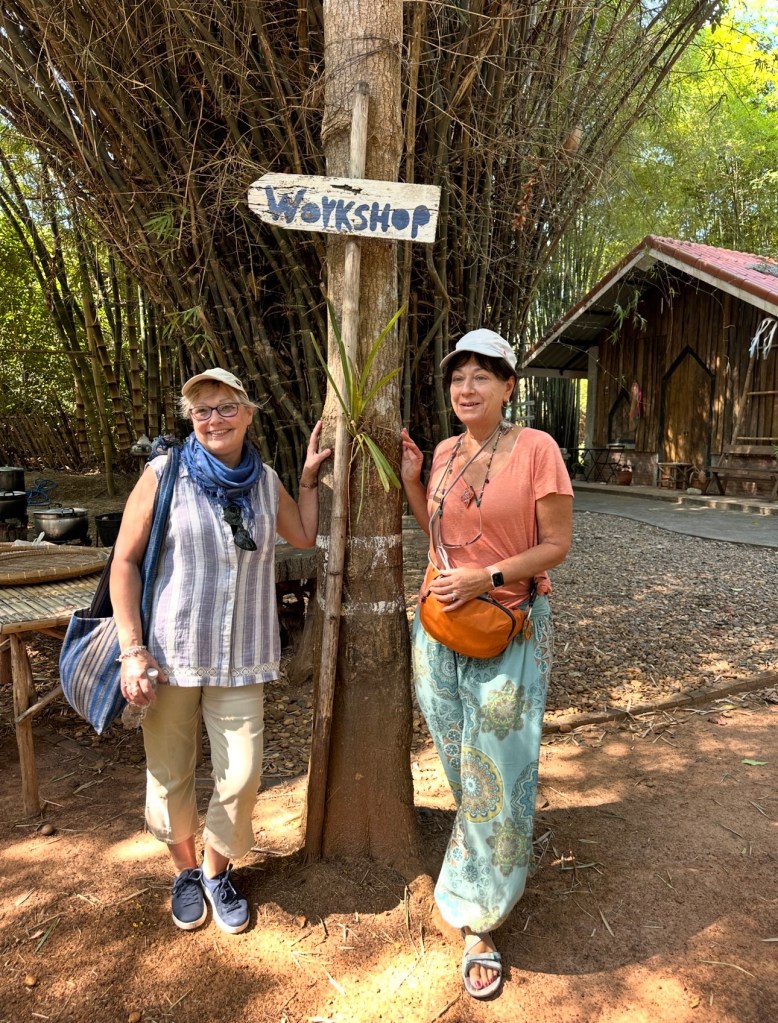
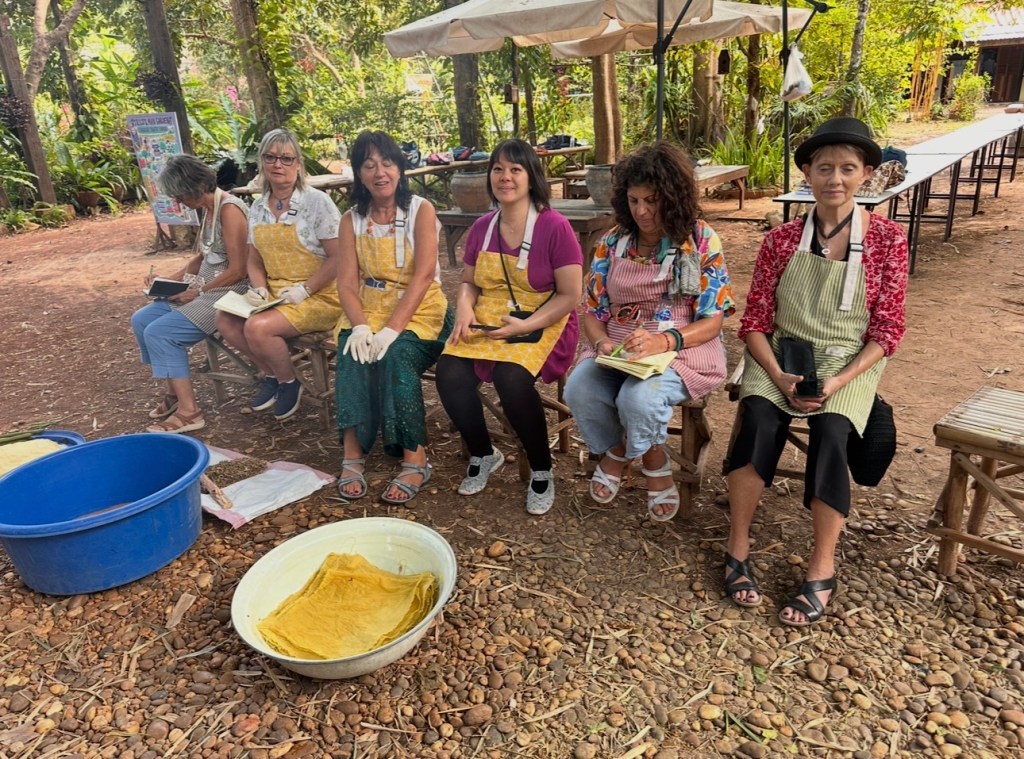
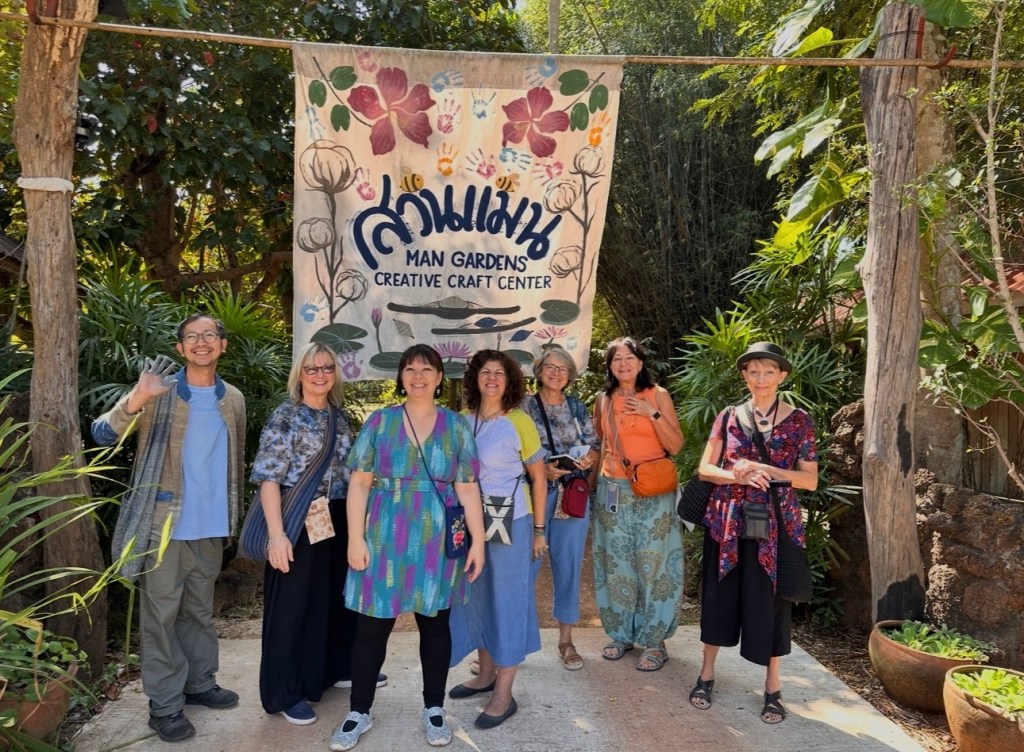
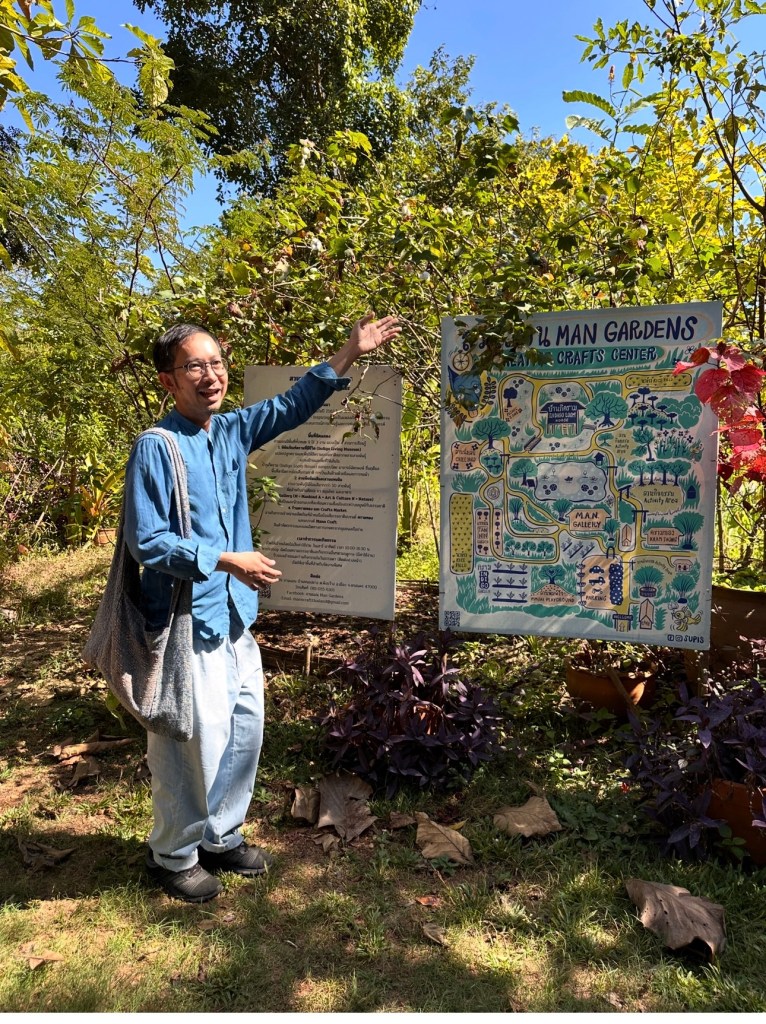
Last November during my “Colours of Thailand” retreat I took a small group of keen textile artists to my favorite places to experience Sustainable Natural dyeing. We visited Sakhon Nakon and spent 4 days in Mann Craft garden working with plants to create a Natural colour pallet.
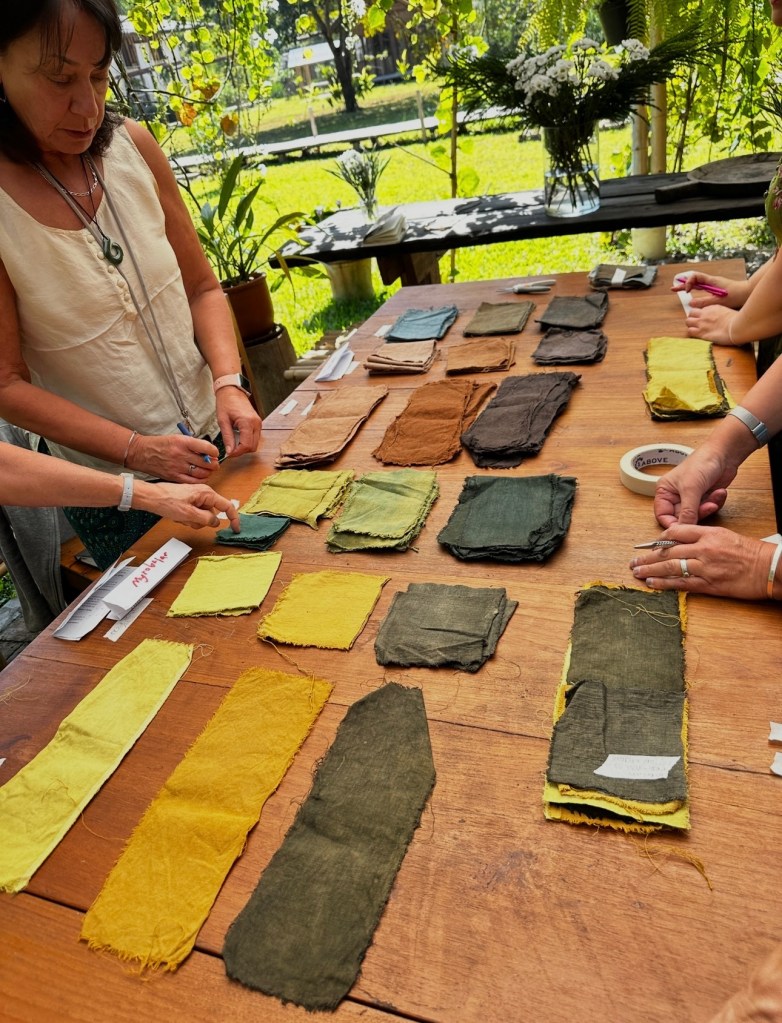
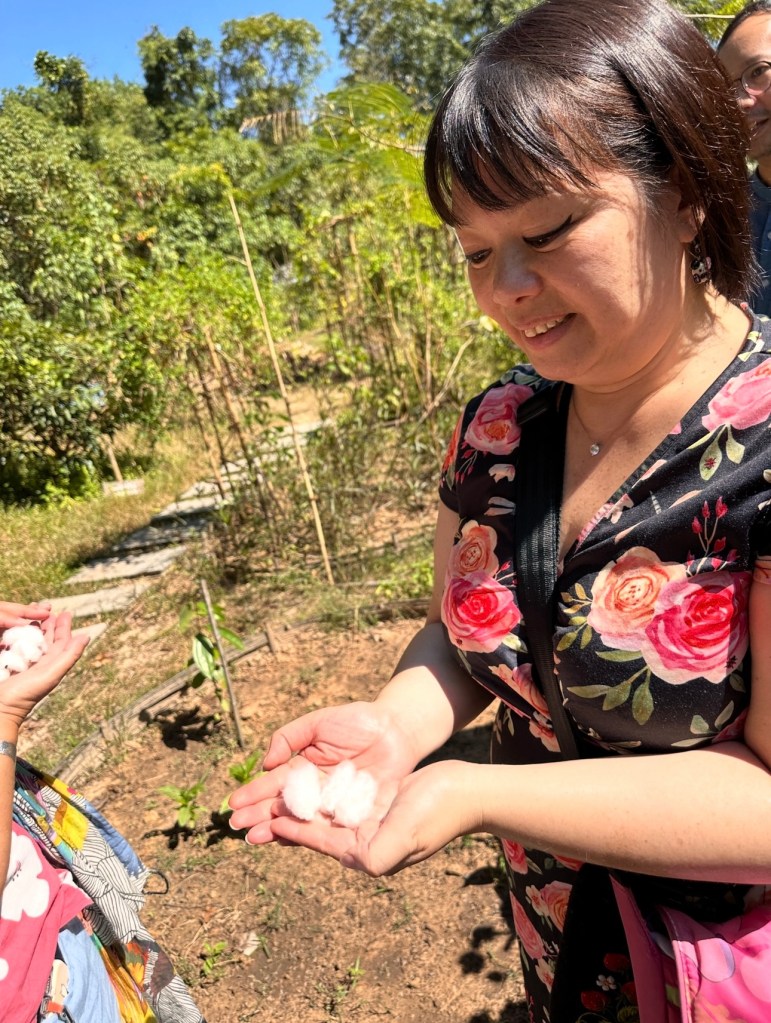
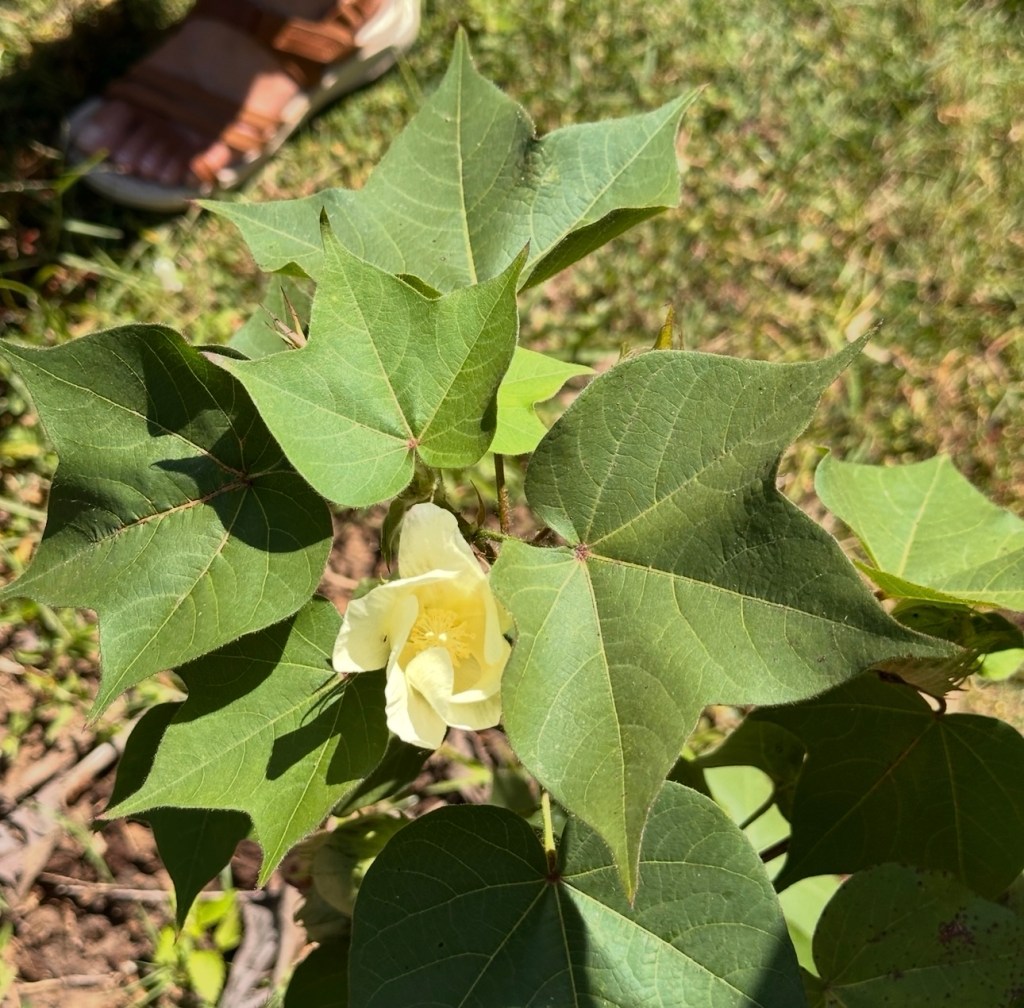
Working in Mann Garden was a treat and we enjoyed so much working from local plants and natural cotton.
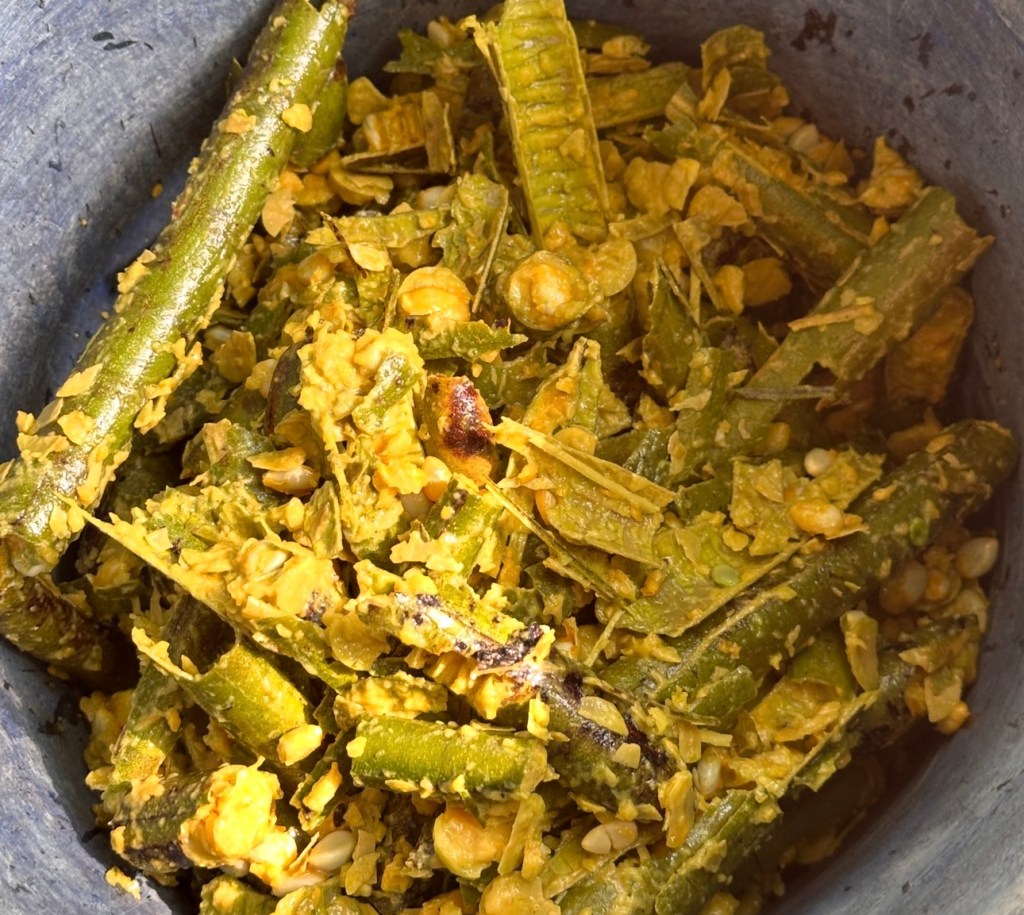
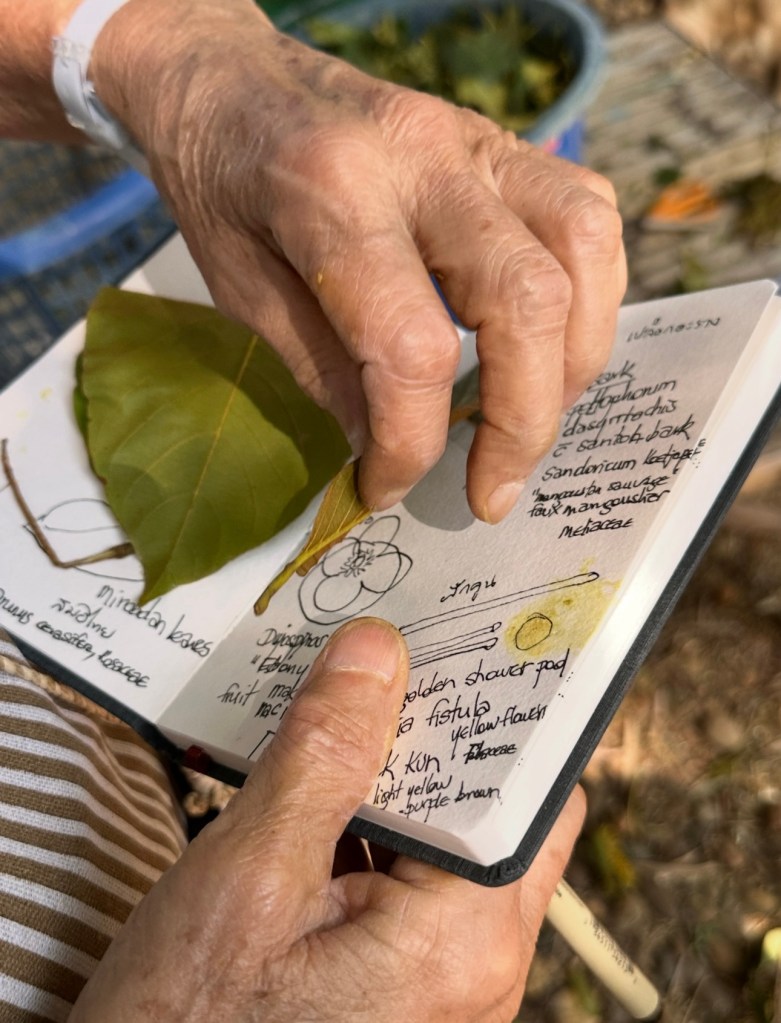
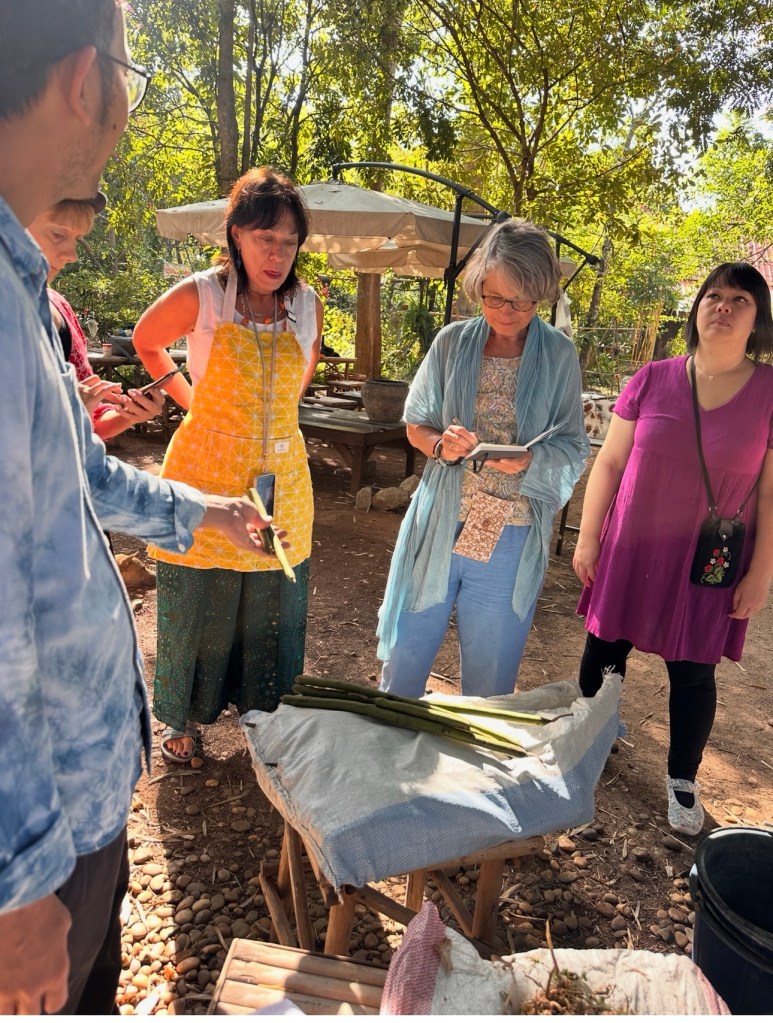
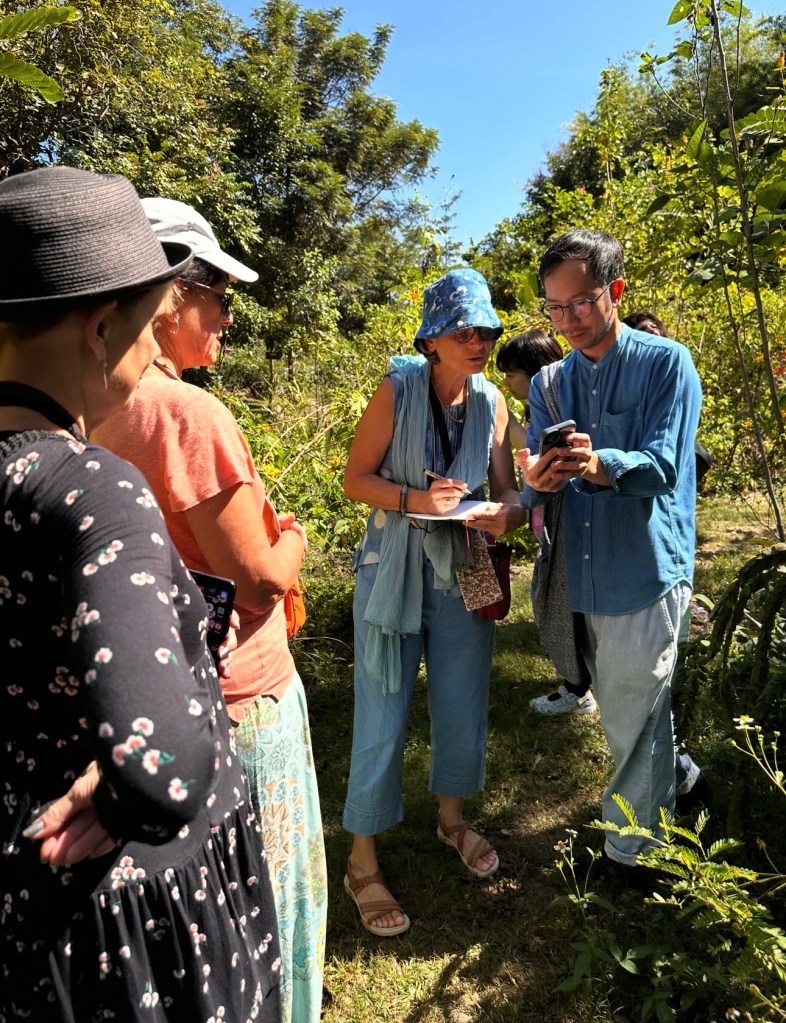
We started by harvesting and preparing the plants with the help of the local gardeners. The plants we used :
- Ebony seeds (Grey to Black)
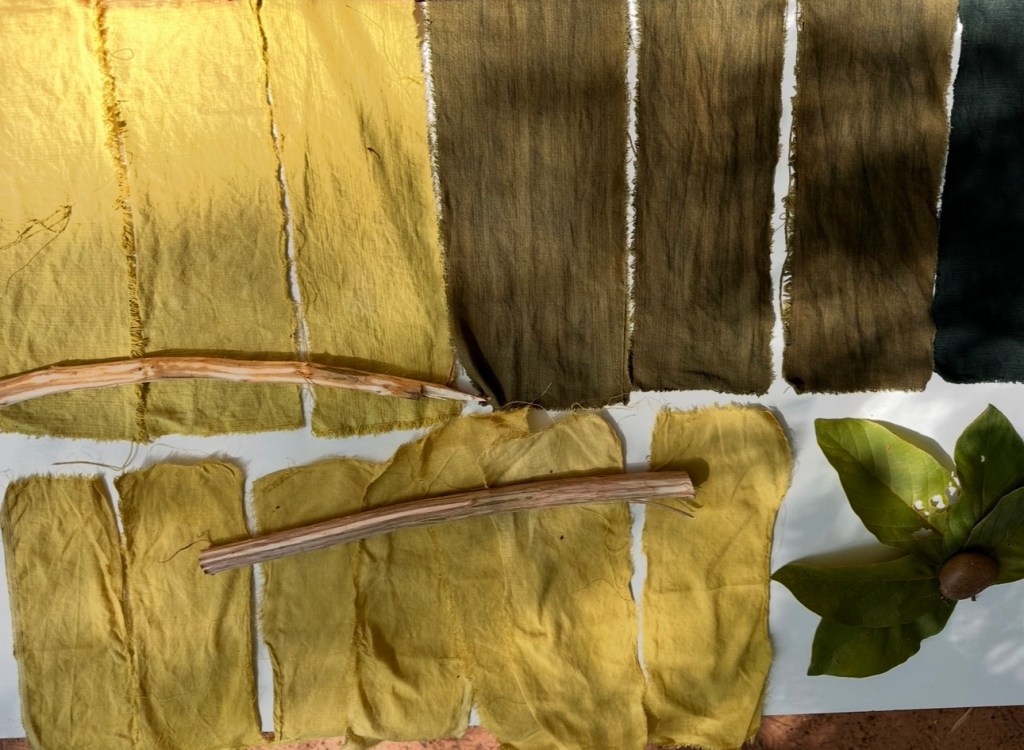
- Myrobolan leave s (Yellow to Green)
- Tree bark for brown to reddish
- Accacia fruit/seeds (grey)
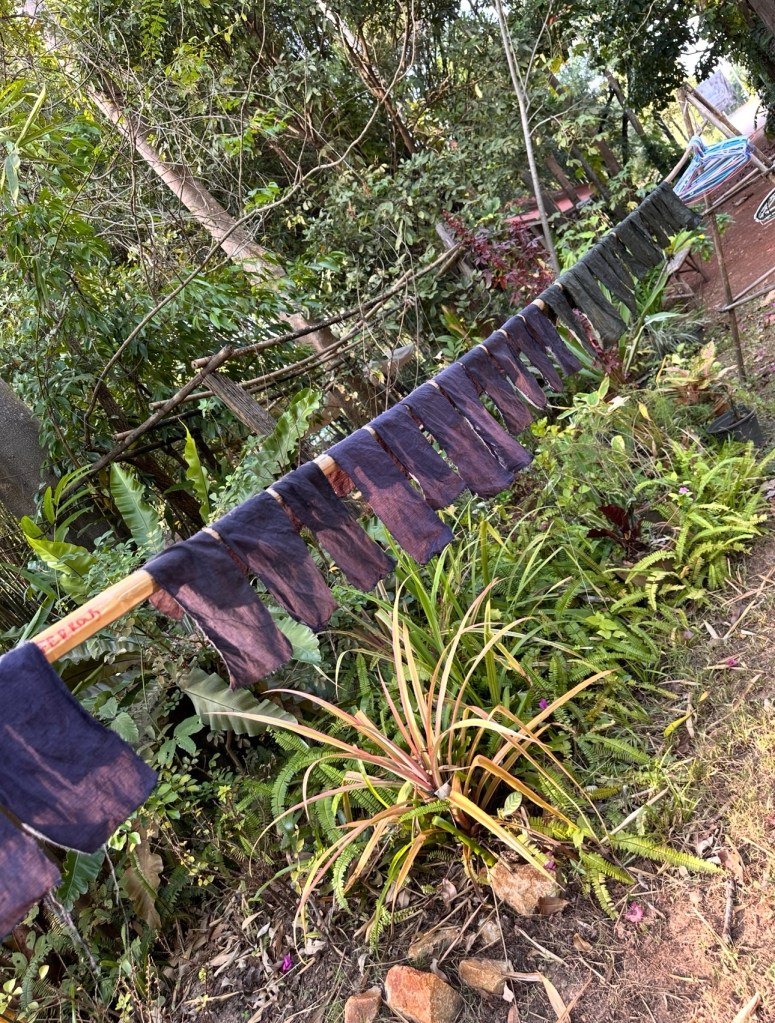
- and off course Indigo (we made a tamarind vat from scratch).
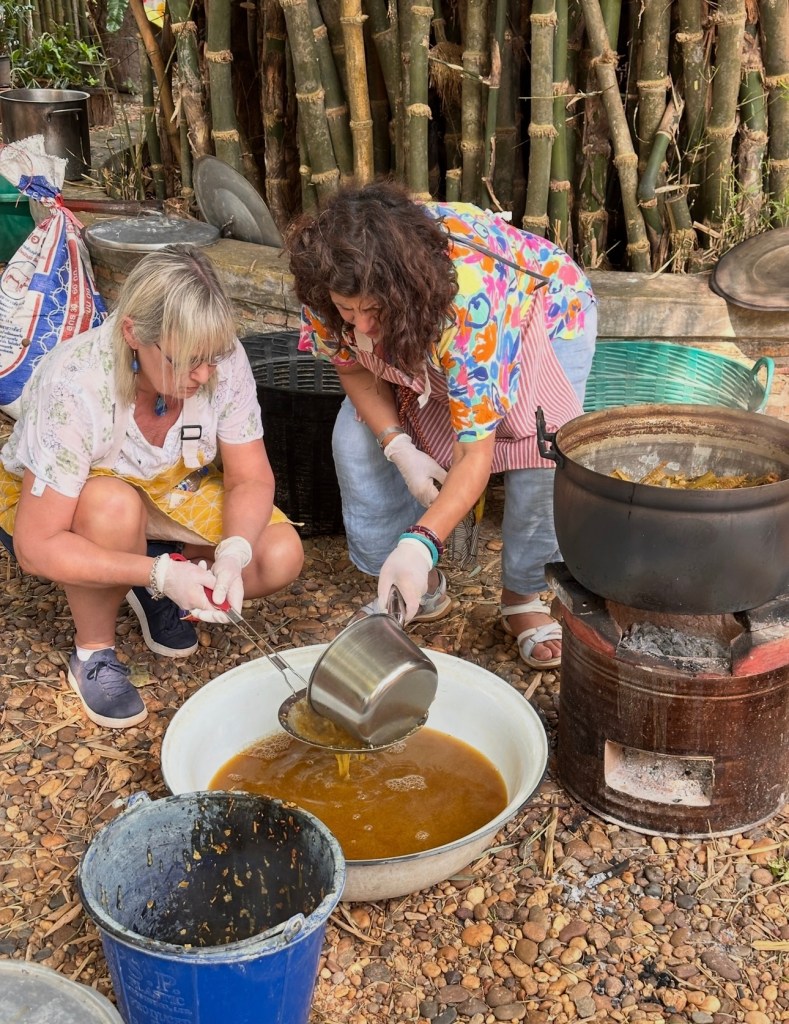
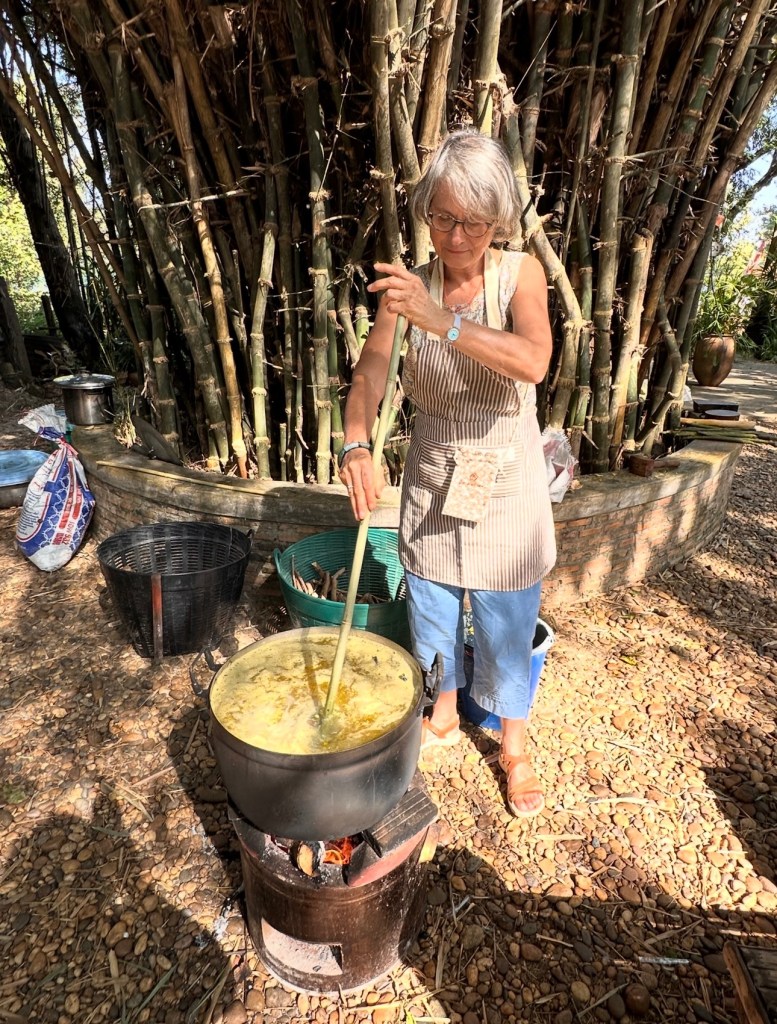
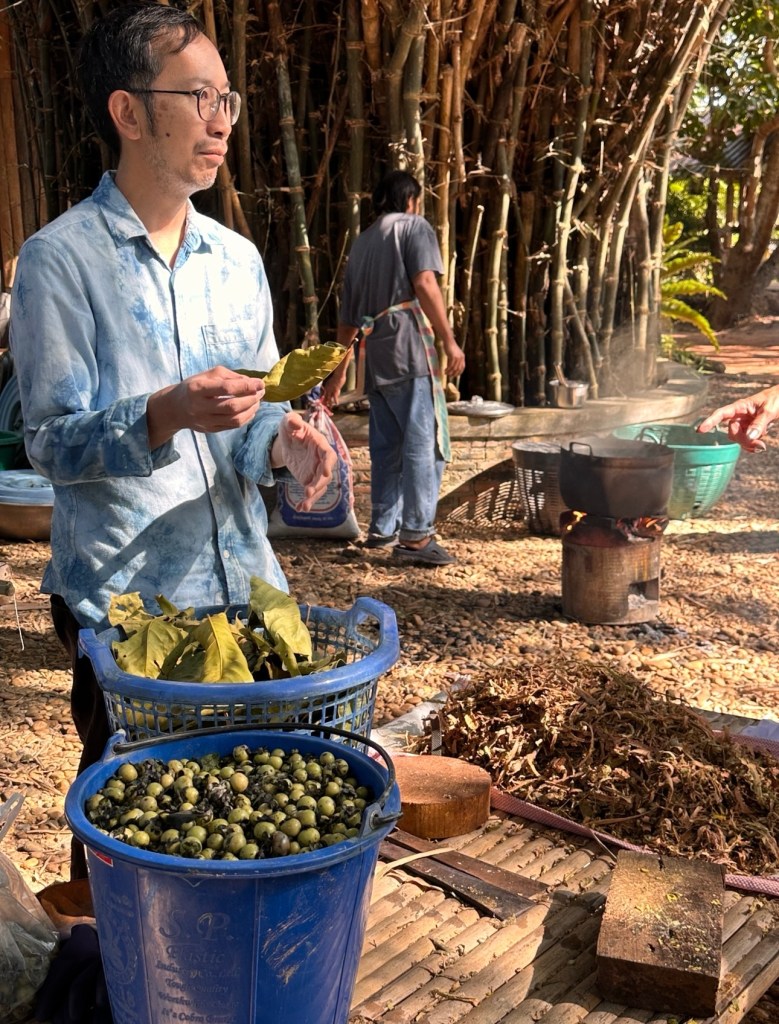
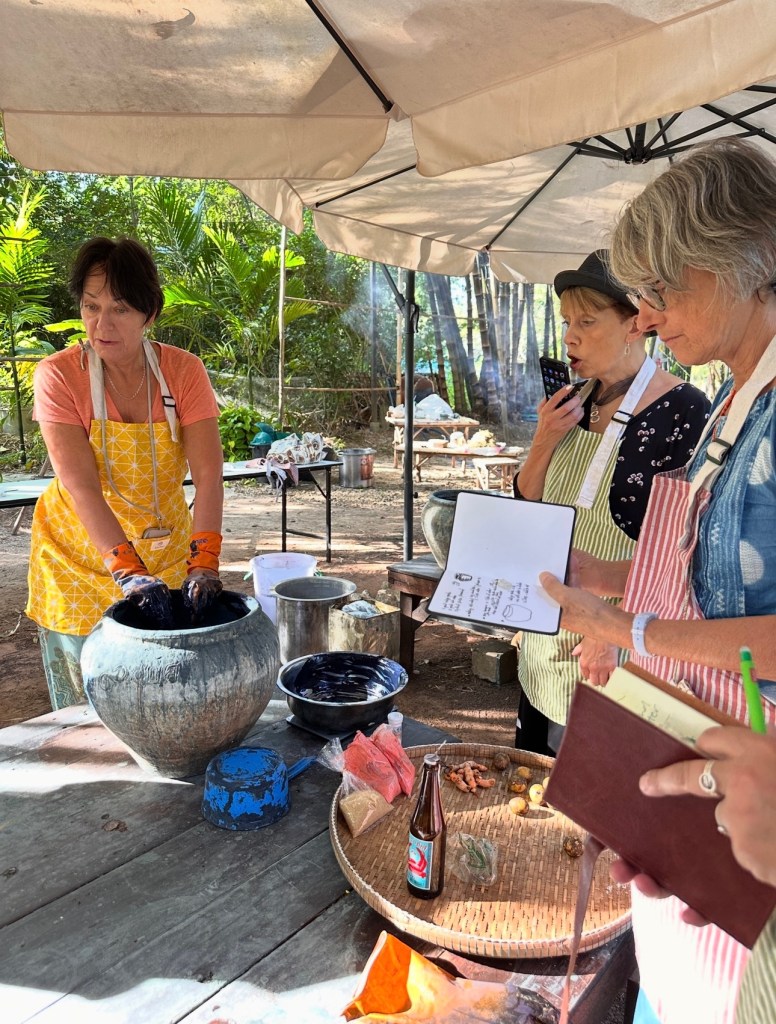
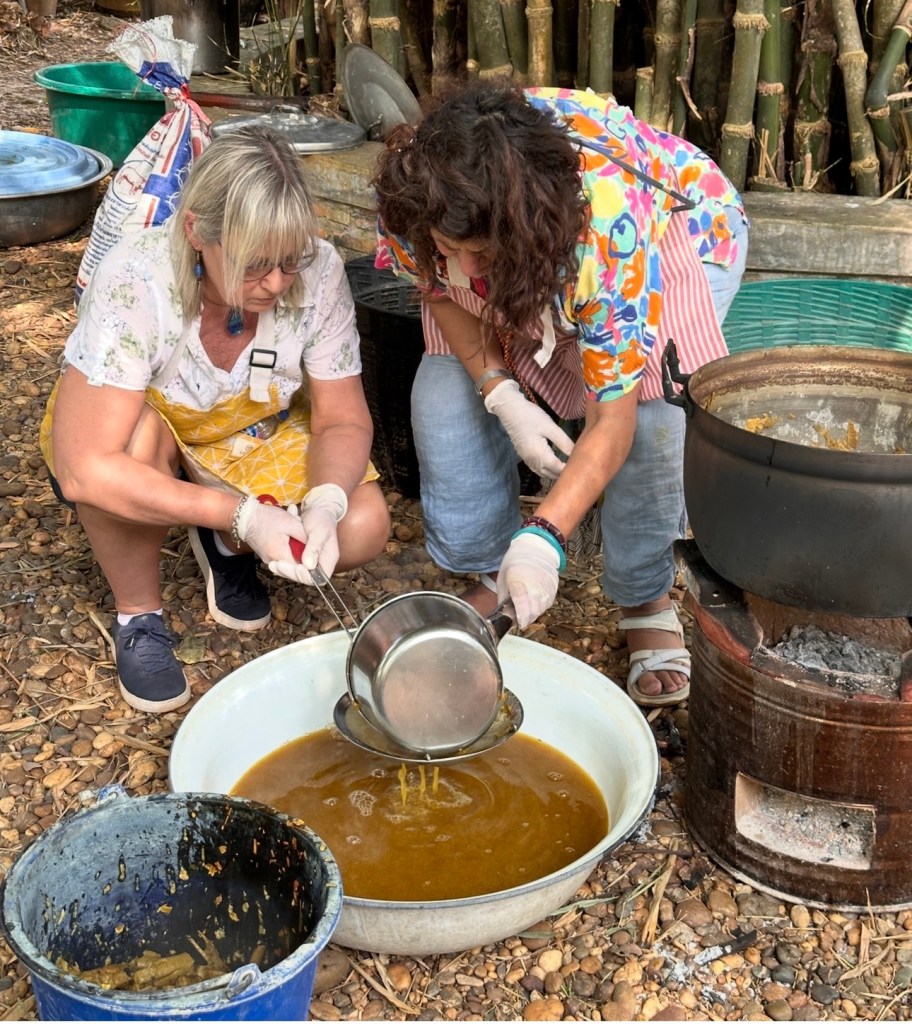
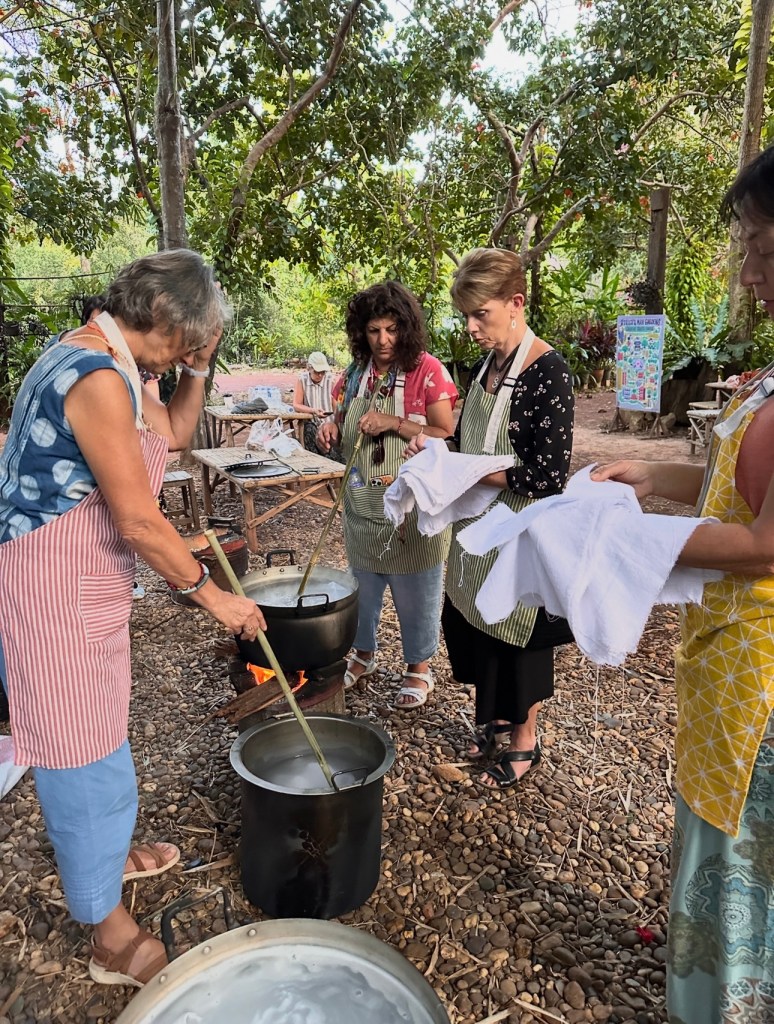
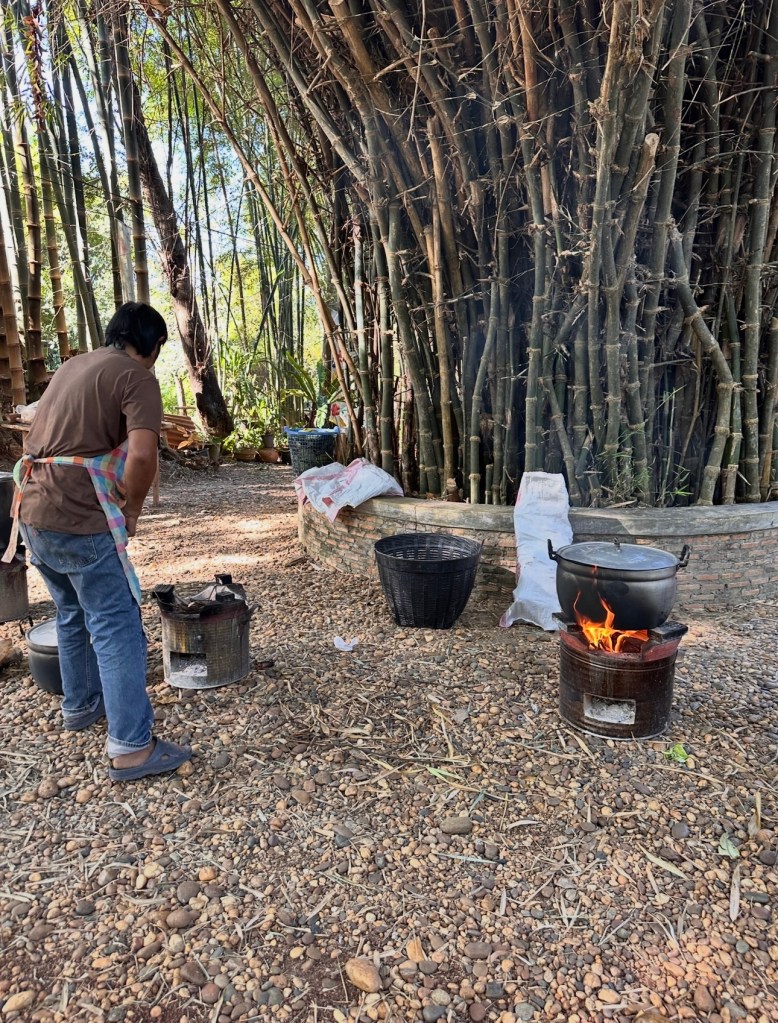
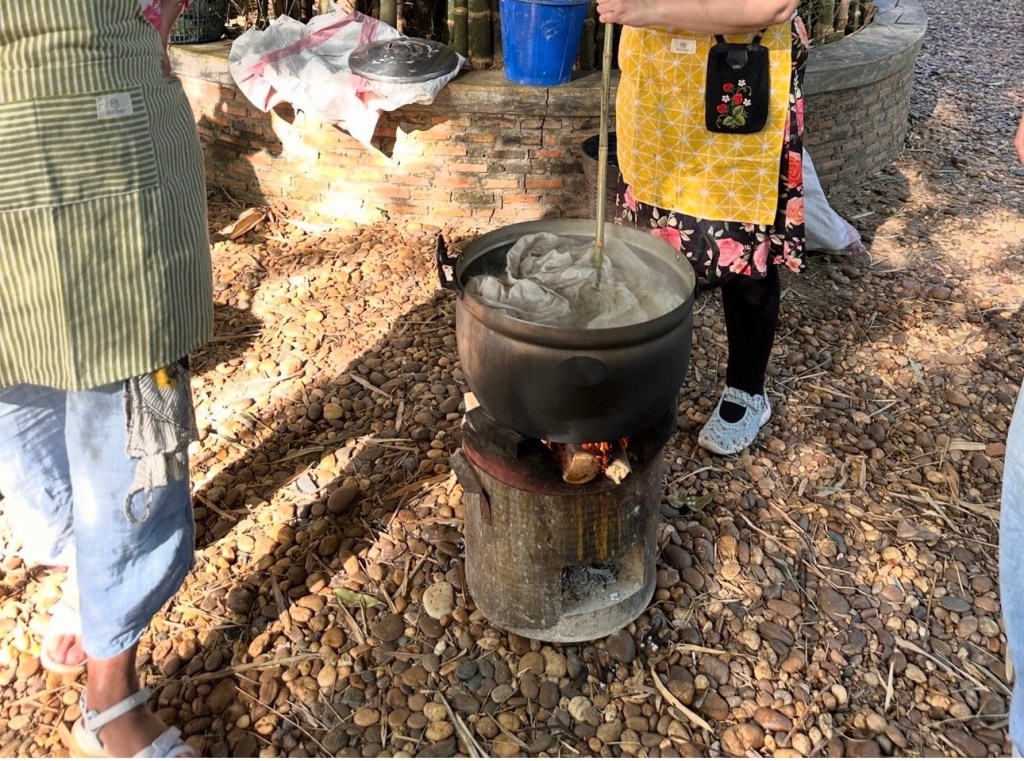
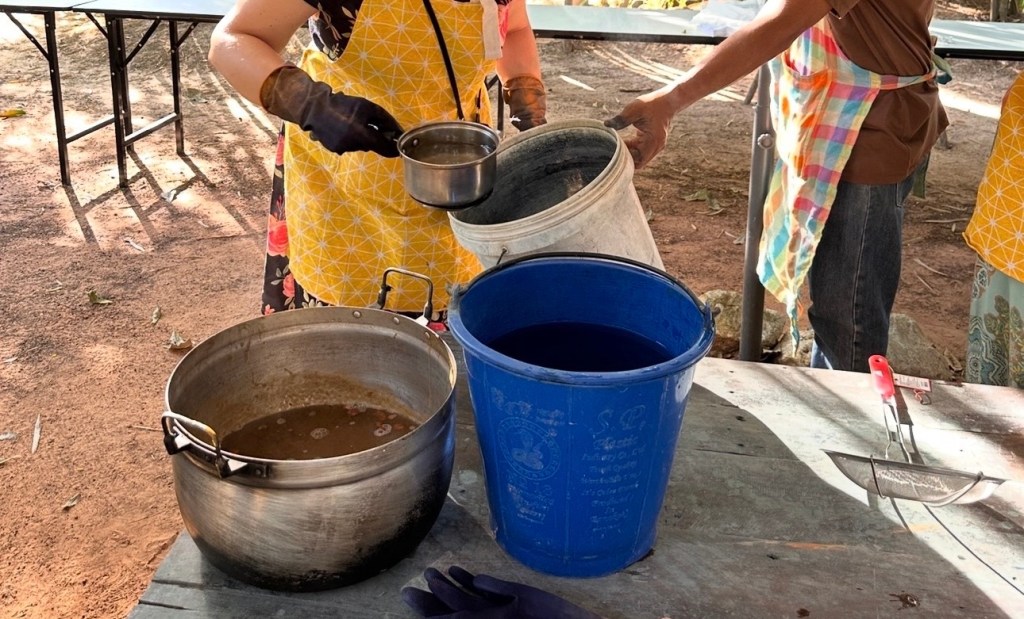
We started by scouring and mordanting all the material before using it we also made the dye bath in very large pots over the wood fire. In Mann’s garden in an attempt to work in a sustainable way, wood is collected from the ground and used for fire, ashes are collected and will be used to make ash water a source of alkaline water. Every element collected, grown and harvested are used and recycled.
In a second step we immersed the mordanted fabric in the dye bath and constantly stirring we dyed it to our basic shades.
But how to create a complete colour pallet… modifying is a technique used in the West to create a range of shades from one original dye bath. Ferrous sulphate is a traditional modifier and can shift yellow into green, or greys. I found in South East asia we use lime water as an alkaline with many dyes, Raising the Ph of some dyes will change some dull brown to gorgeous reddish ones.
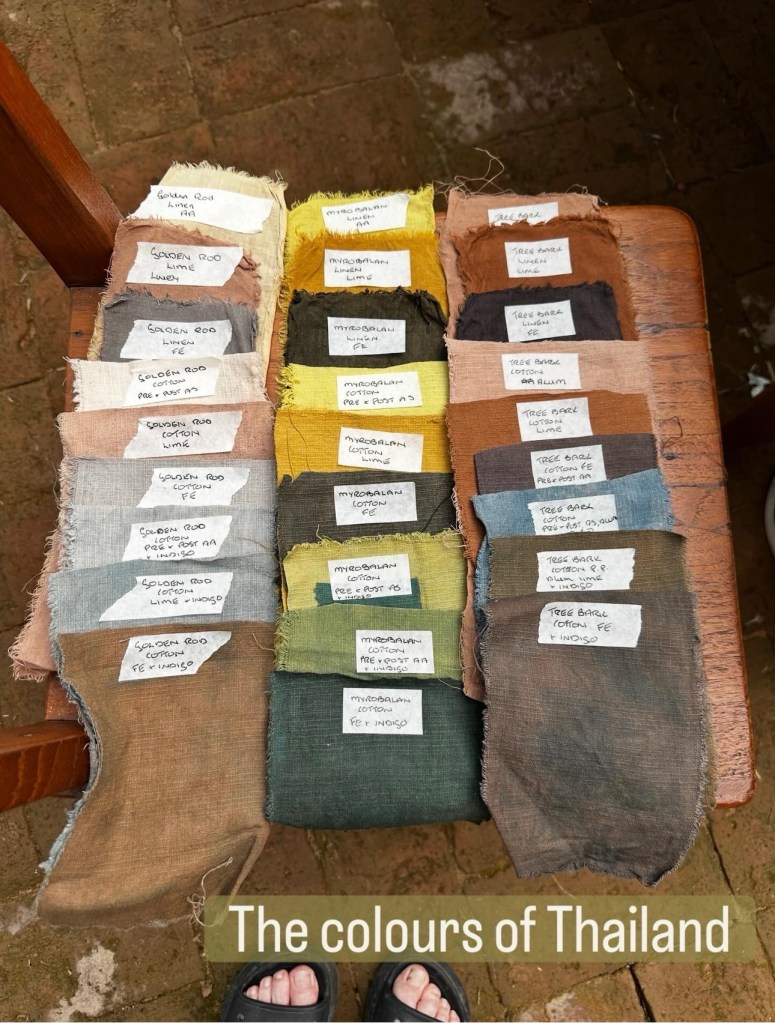
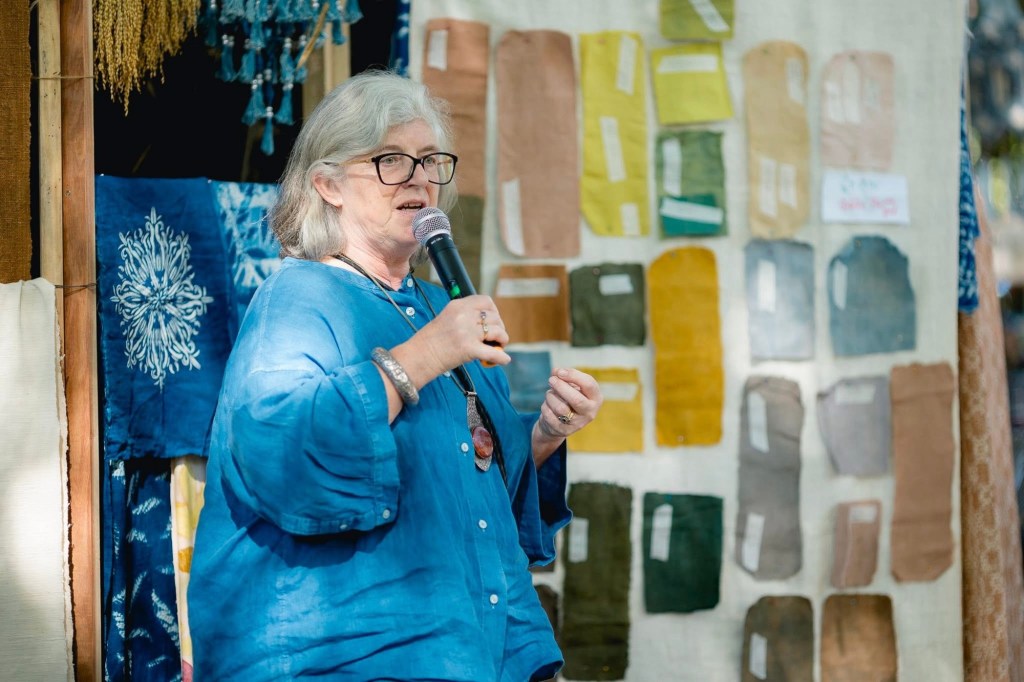
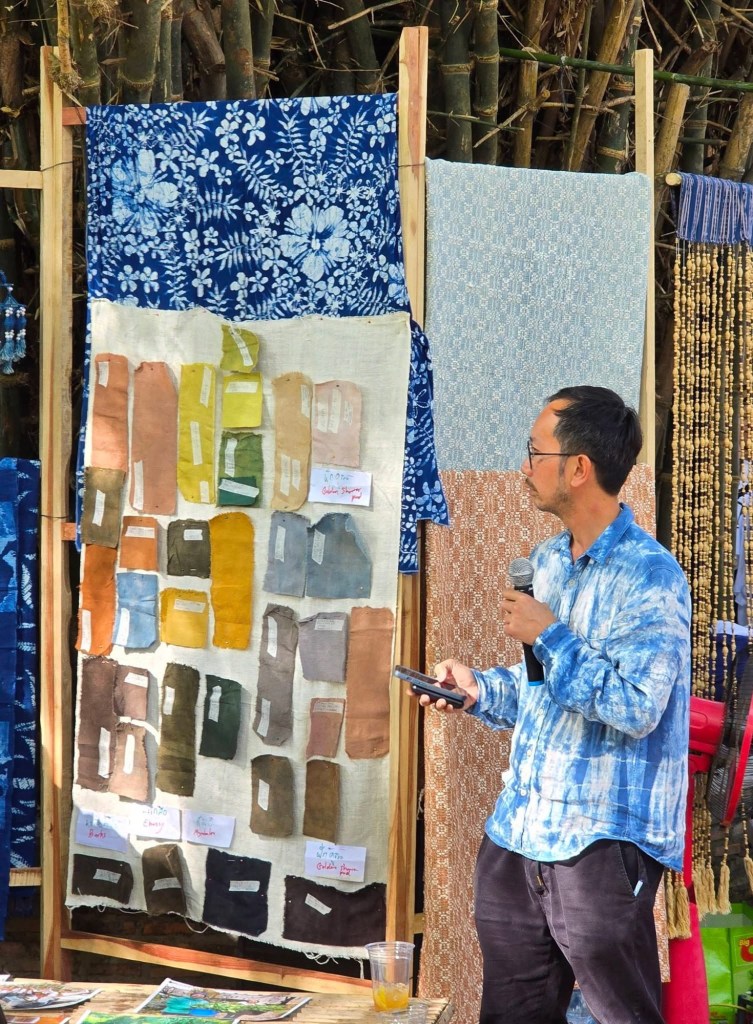
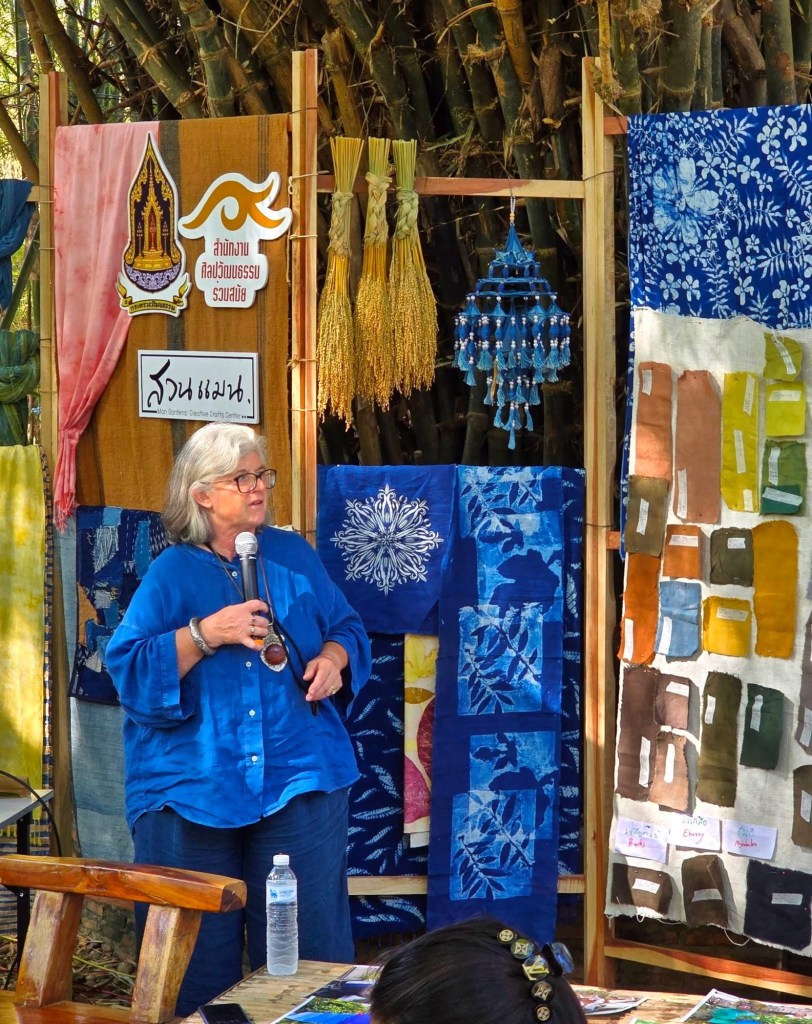
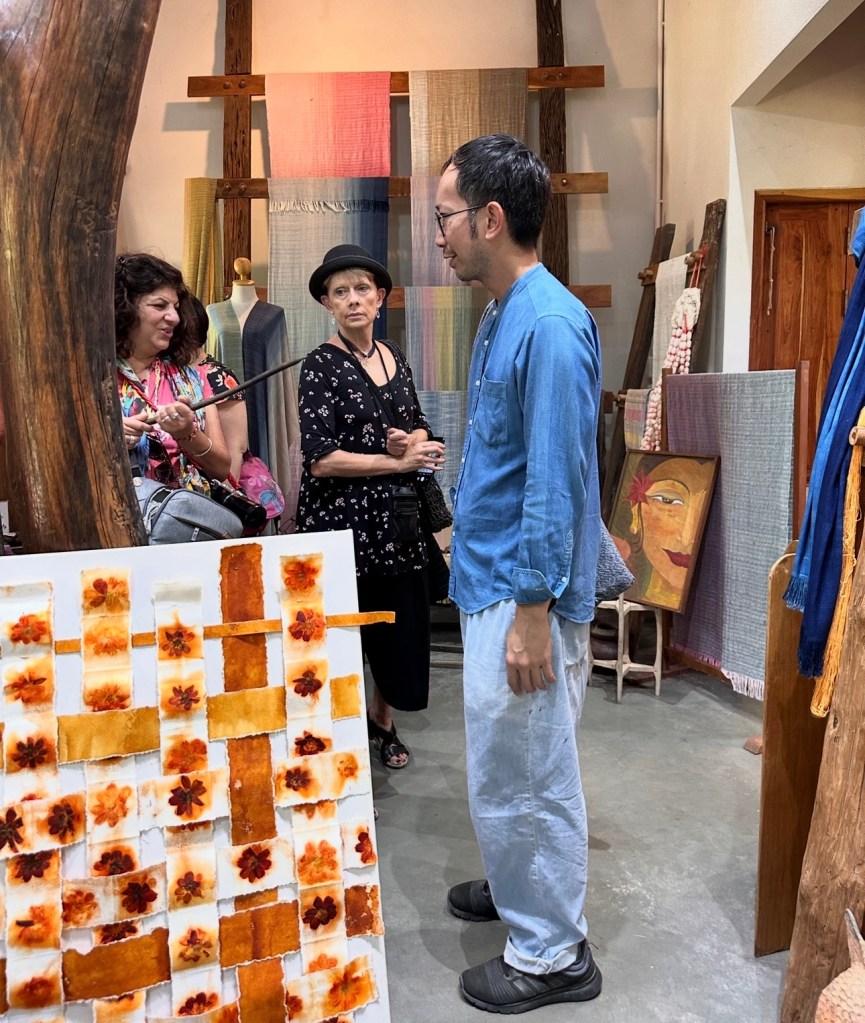
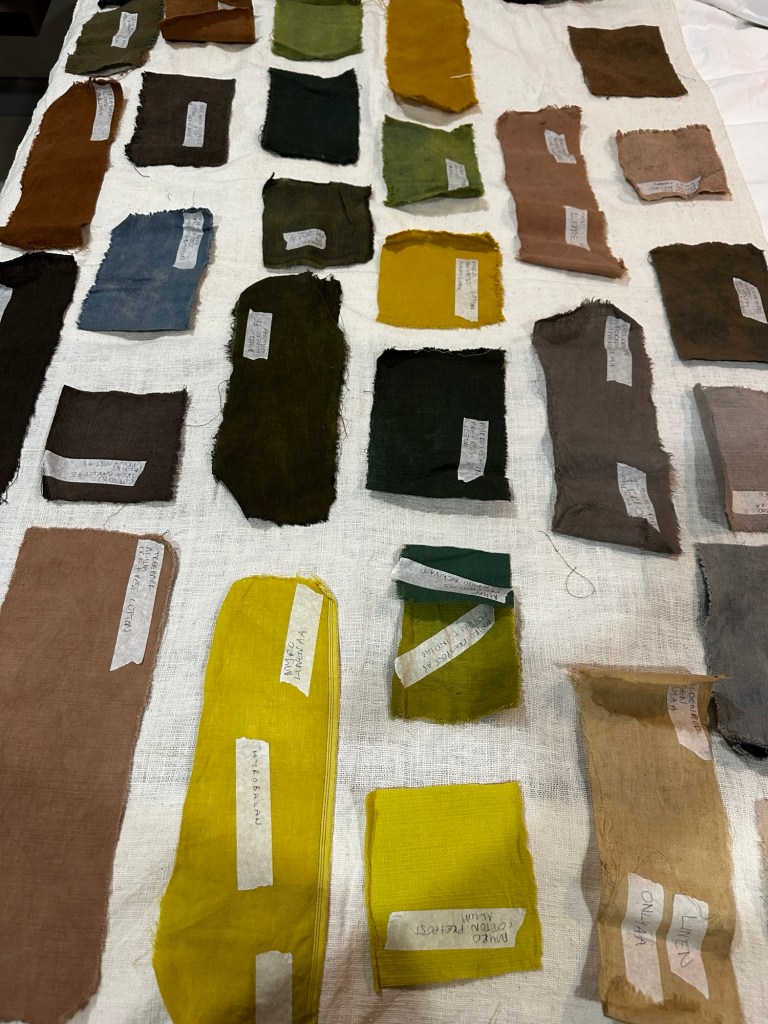
In the garden we rinsed dyed fabric, split it into sections and dipped them into the modifiers Ferrous and lime water, for each shade dyed we ended up with several colours, below is a photo of our final shades.
I like this approach very much, we did not try and create a rainbow … we did not aim at some result, we dyed and observed with gratitude what we obtained. The result was very satisfying. Working large scale and being able to make a connection between plants and colour was so much fun.
These were done during our trip to Sakhon Nakhon. The retreat was organised for 6 travellers from the 20th of November to the 2nd of December. We stopped in Bangkok, Sakhon Nakhon and Chiangmai interacting with artisans and artists on the way. I will be running this again in 2026 between the 19th of November till the 3rd December and information can be found on
Discover more from THE LANSDOWNE HOUSE
Subscribe to get the latest posts sent to your email.
 THE LANSDOWNE HOUSE