
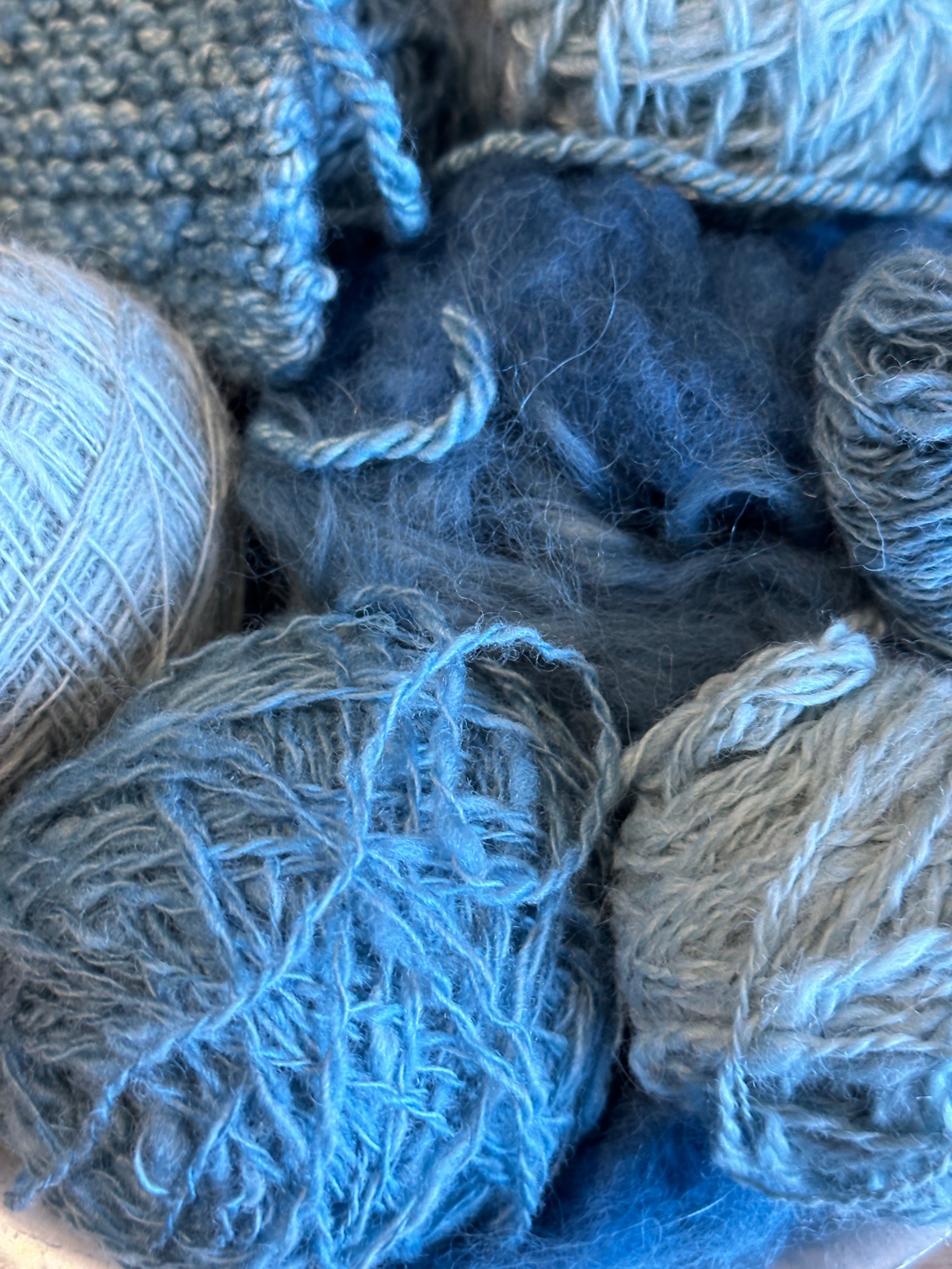
Using Natural dyes for colours seems to be on the agenda of many nowadays. It seems that boiling a few plants from our back garden into hot water and stir while adding some recycled bed linen to make new curtains is going to save the world. It is more sustainable and better than using a sachet of Dylon dye in the washing machine….
I love the idea of using Natural dyes for my needs but not the idea of creating new needs to be able to use Natural dyes and I like when my Natural dyes come from the growing or the foraging I do when I am teaching or demonstrating. One of my aims is always to help the public making the connection between plants/tree/roots with the colours they generate, making sure they leave me knowing the difference between a dye and a colour (I really dislike Red cabbage water being used as a dye) and understanding how to use a thorough process.
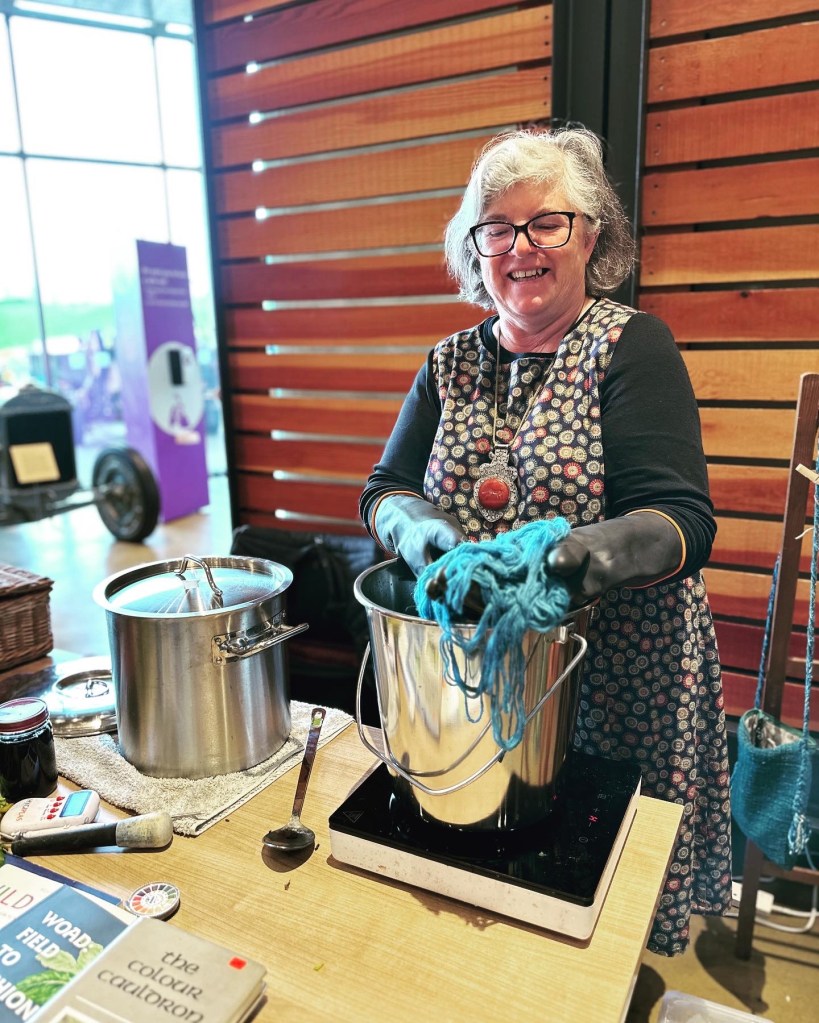
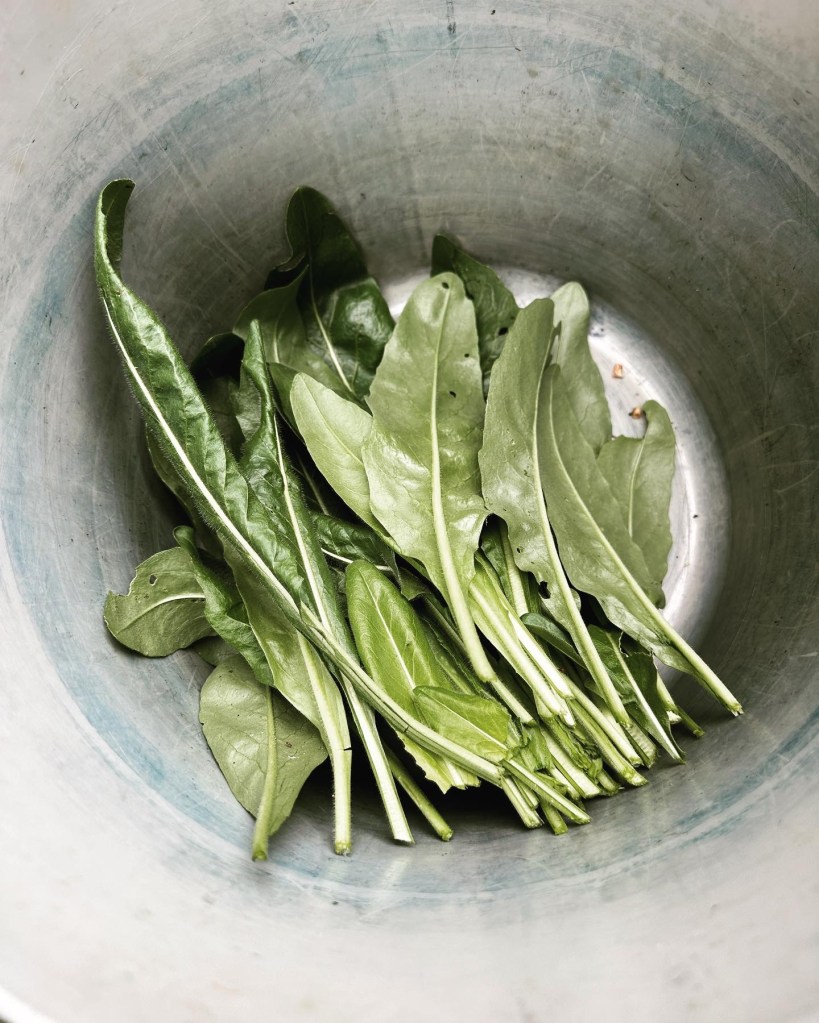
So today when demonstrating at The National Museum for Rural Life in Scotland using Natural dyes I only used dyes I had grown and/or foraged… that would be Woad leaves for blue and Dyers’s broom and Gorse for yellow. It was very exciting as the Woad was grown from my own seeds and it was the first time I was dyeing from Woad leaves very early in the season.
The Woolly festival is held at The National Museum of Rural life once a year over a whole week end. It features all animals producing wool and some related activities. For the second year I have been sharing some Natural dyes practises. It is very exciting. I am only using plants that can be grown or foraged locally. I make a point at talking about traditions and going through the whole process.
Today I demonstrated how to create a quick vat (Hydrosulphate reducing agent) using the extracted pigment from the Woad leaves, and use it for dyeing wool.

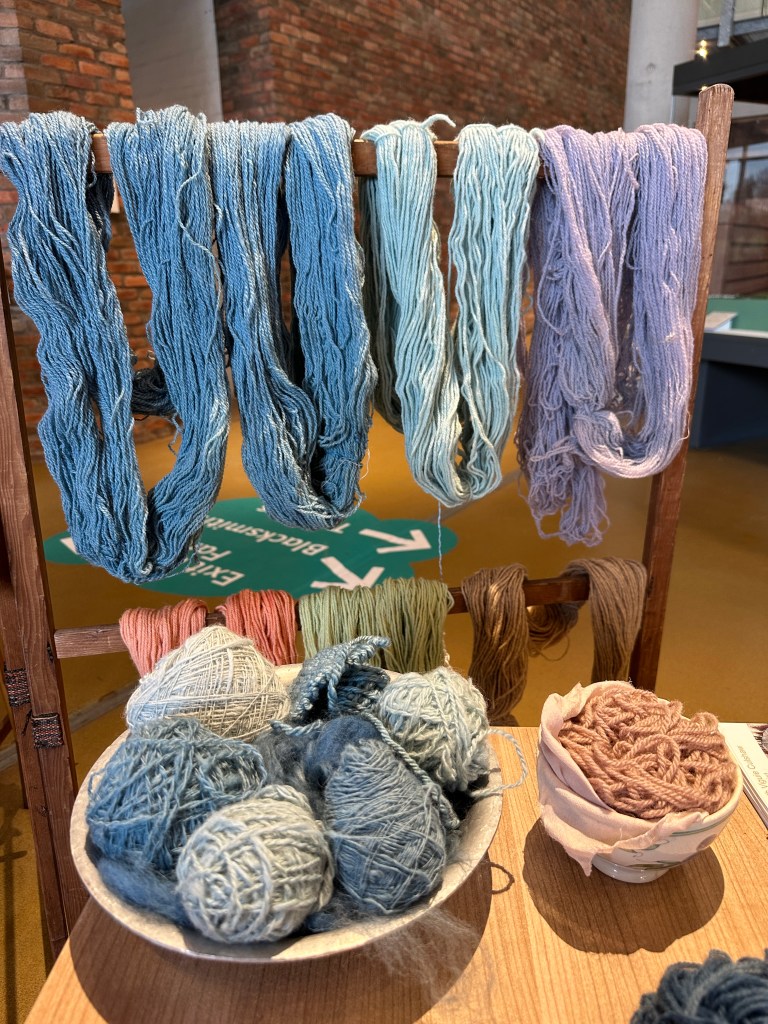
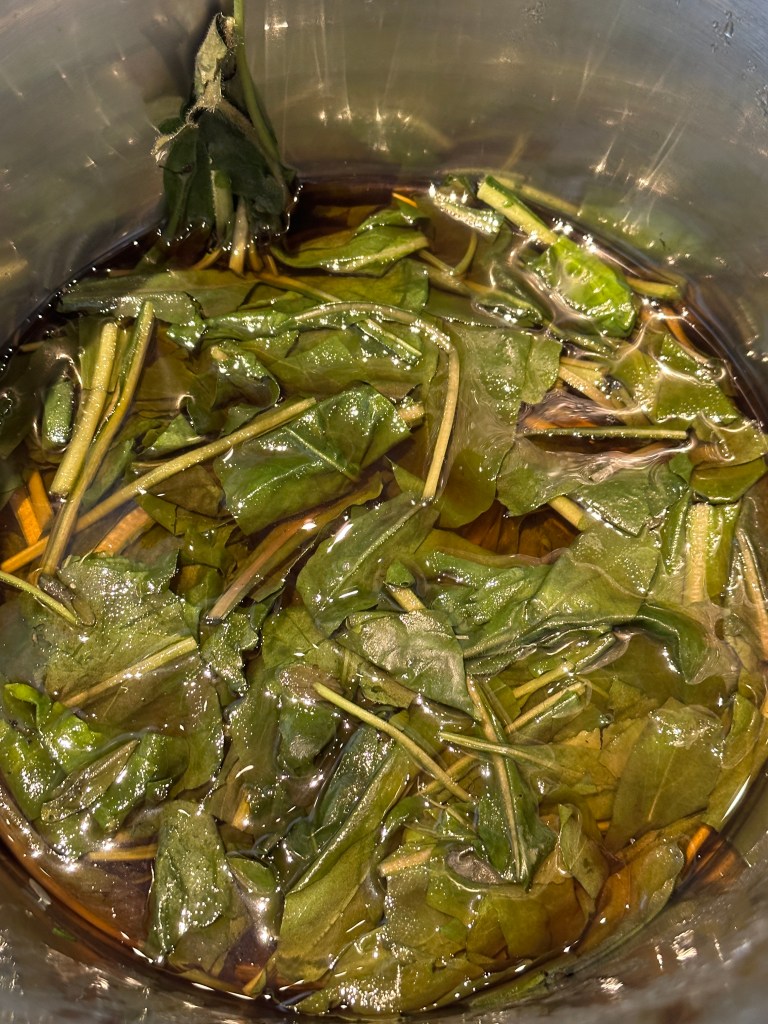
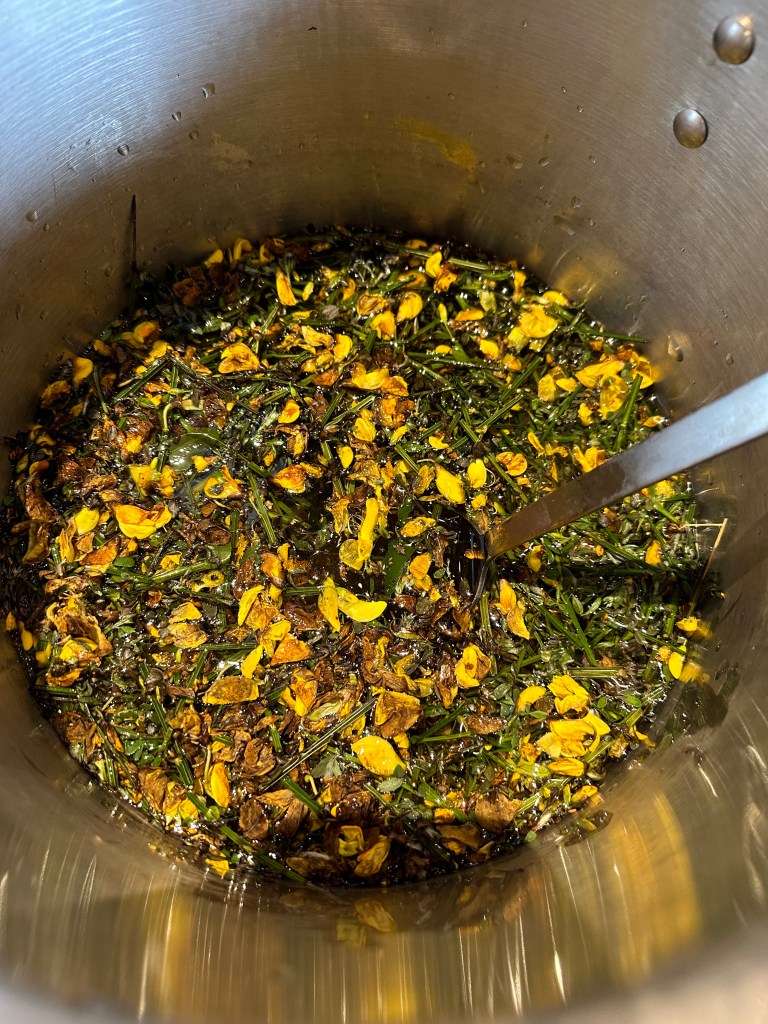
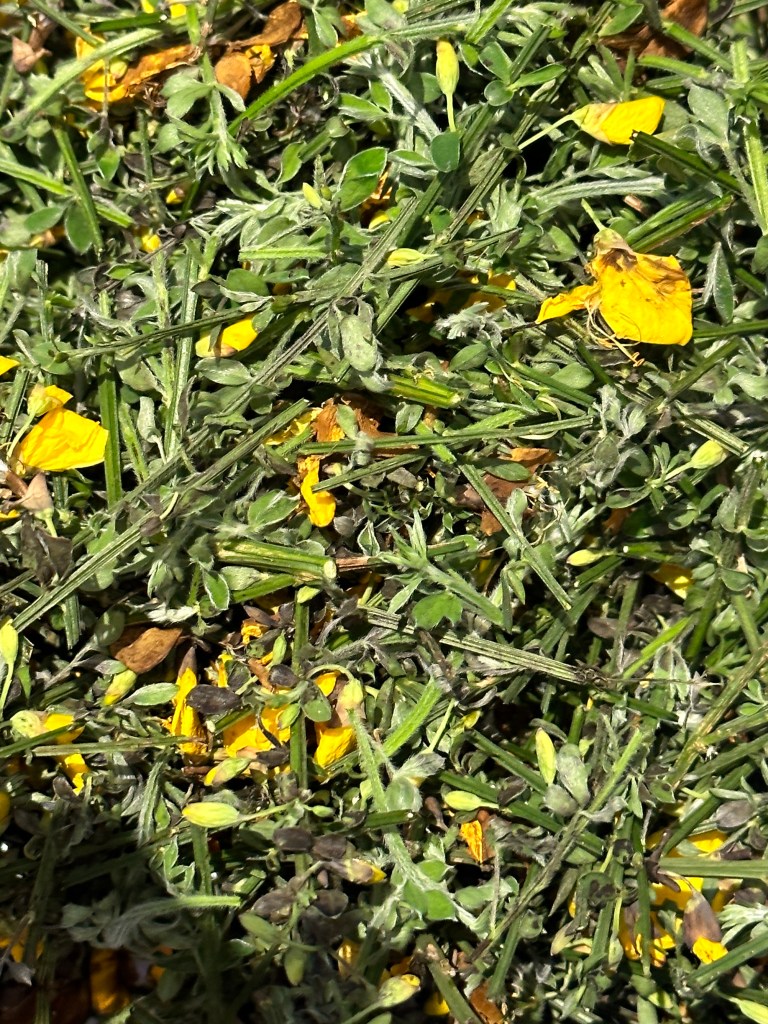
In my studio I very often prefer more “Natural” modes of reduction but those vats dont travel well and they take time to reduce so hydrosulphate is a good compromise as it reduces really fast. Specially where the pigment available is quite low.
I set up the vat first thing and used it beginning of the afternoon. I dyed a skein of wool and some silk pieces, I only had a few small plants and I made sure that all the pigment had been used up before discarding the vat.
If you are curious about the process this is what i did, the method is my adaptation from Jenny Dean’s tried and tested dyeing with fresh Woad.
You will need:
- A stainless steel dye pot
- Water
- A heat source
- Spoons/scales etc.
- A ph measuring tool
- A thermometre
- Some Soda ash
- Sodium Hydrosulphate
- Some woad leaves (3/4 plants ready to be harvested).
Process:
1 – Wash your leaves and break them in small pieces
2 – Place them in the dye pot and pour over them a full kettle of hot water.
3 – Cover and leave to steep for 1 hour. The liquid should take a reddish brown colour.
4 – After the hour has passed I would take the leaves out.
5 – Add a small quantity of soda ash until the mix has got a ph of at least 9/10
6 – Aerate the liquid by pouring quite strongly the liquid in another container and keep transferring it between that new dish and your existing one. A least 10 times to create a lot of bubbles. By adding oxygène Into thé extraction you will create the blue pigment. But that is not all … now you need to reduce it to make a vat.
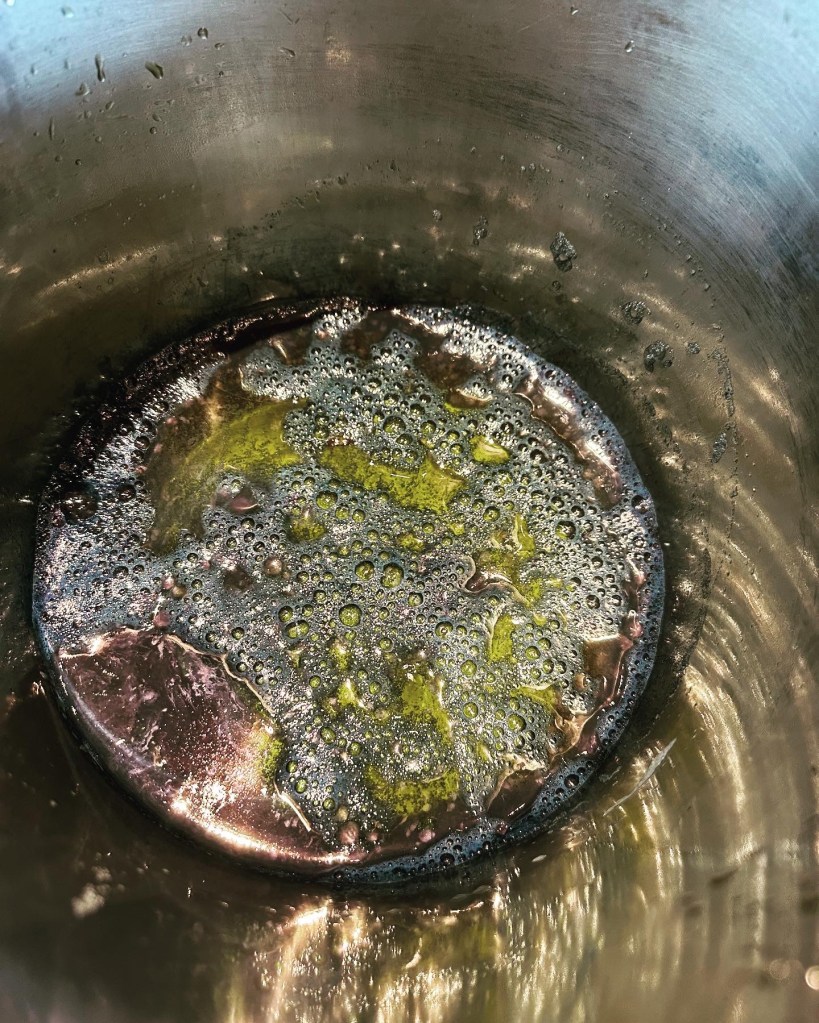
7 – Add about 20 g of Sodium hydrosulphate. Stir slowly in concentric mouvments. Some blue bubbles should start appearing in the middle of this container. Cover and wait for at least 30 minutes. You will see an opalescent film appearing on the surface of the vat
8 – The vat should be ready to use and the dye water will look yellow/greenish but when you take an item out it will look yellow until it oxisises. Then it will turn blue as oxygen hits it and that is your item dyed and colour fast.
9 – Always wet your wool first before plunging into your vat. Do not drip, and work slowly… and when your dyeing is completed rinse your wool slowly in lukewarm water to avoid felting it. Add a vinegar rinse just before the end to neutralise the high alkaline environment created by the vat.
10 Have fun dyeing with your vat.
If you would like to know more about this technique and other Indigo vats processing email me bettysbeautifullife@gmail.com to find out about my online and in person learning opportunities.
Best wishes.
Elisabeth x

 THE LANSDOWNE HOUSE