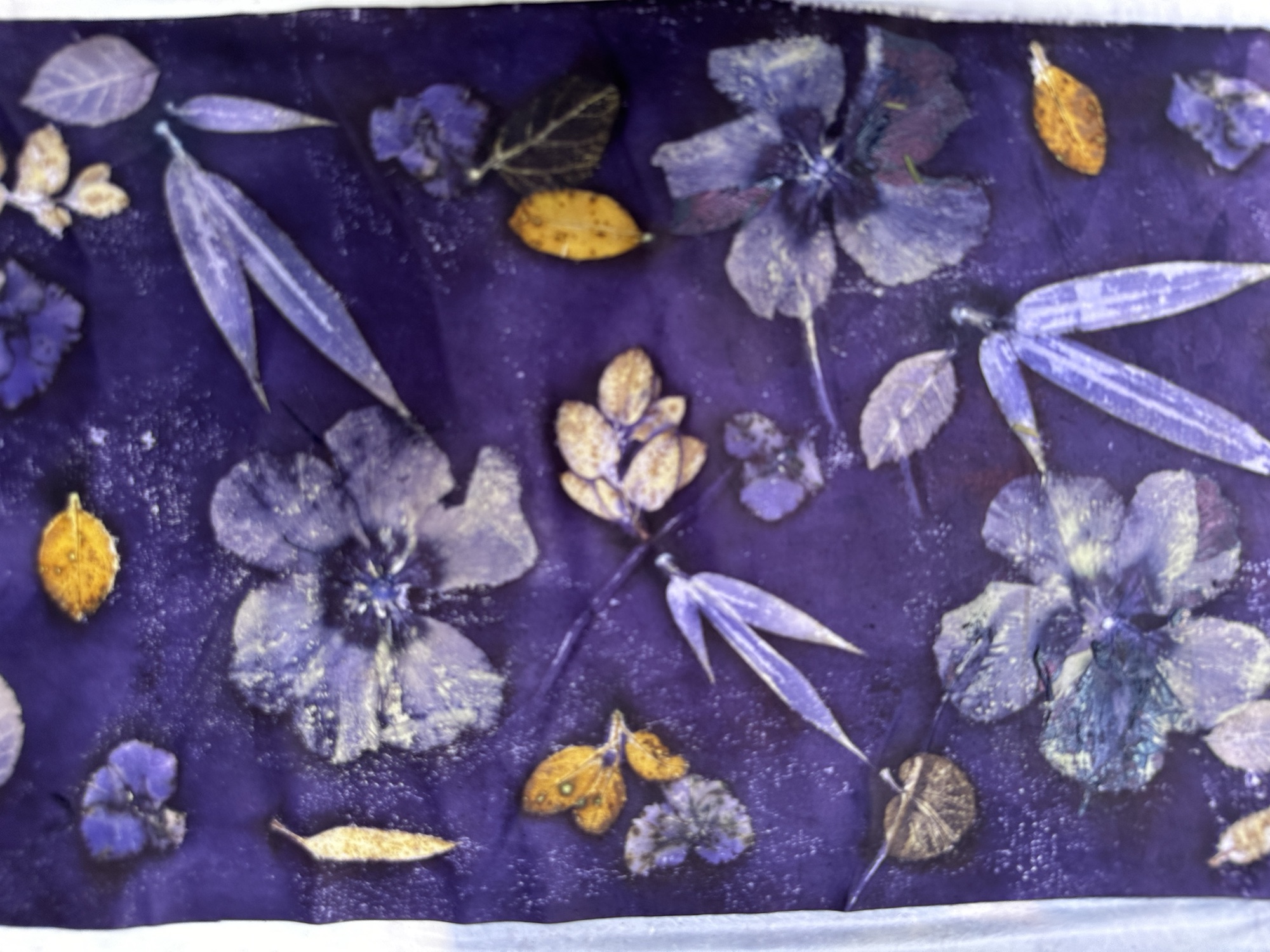
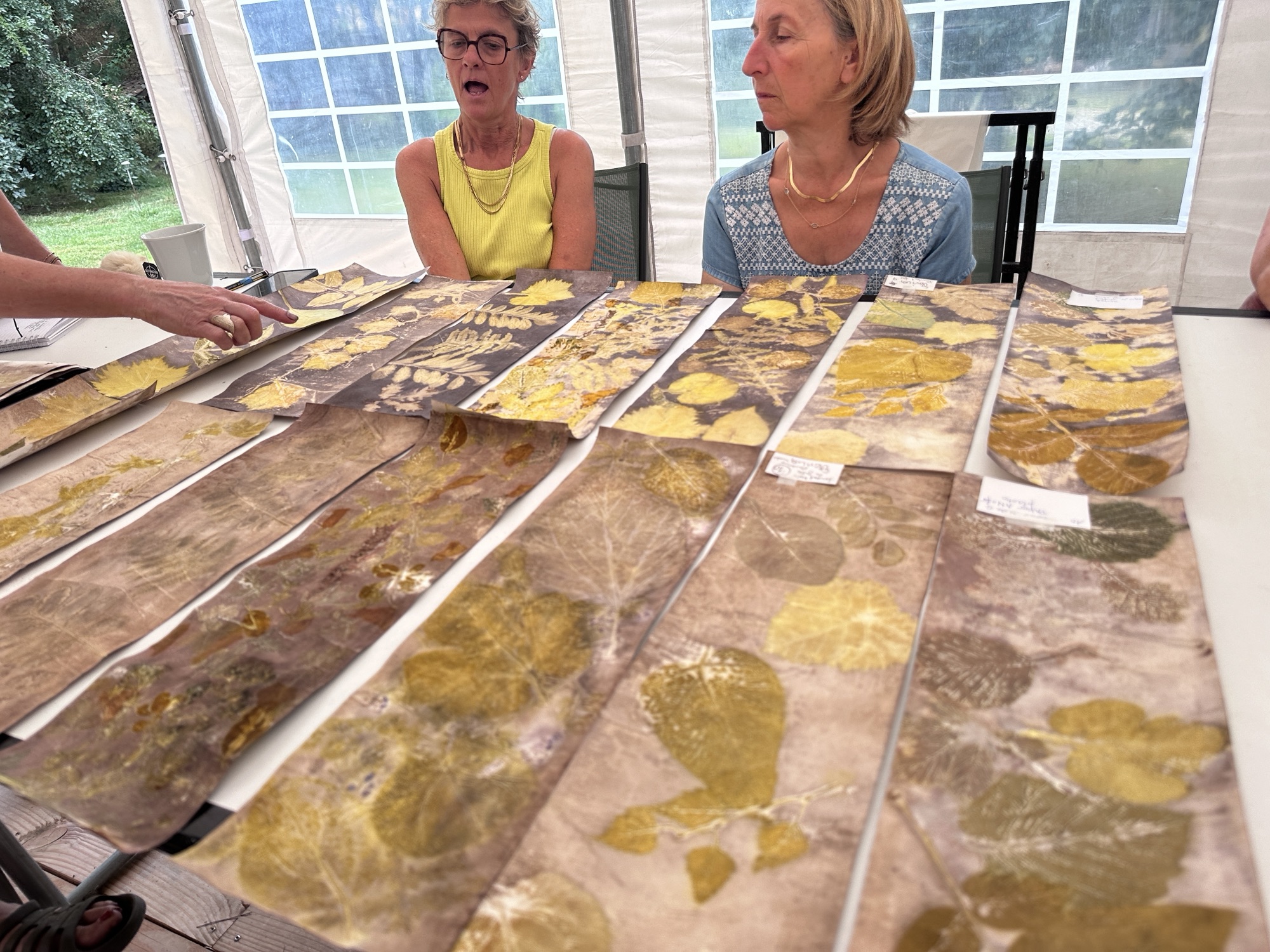
L’impression Botanique sur papier est ma passion, J’utilise la magie des pigments et teintures trouvees dans les plantes qui m’entourent pour creer de belles images qui pourront etres utilisees en montages ou exposees.
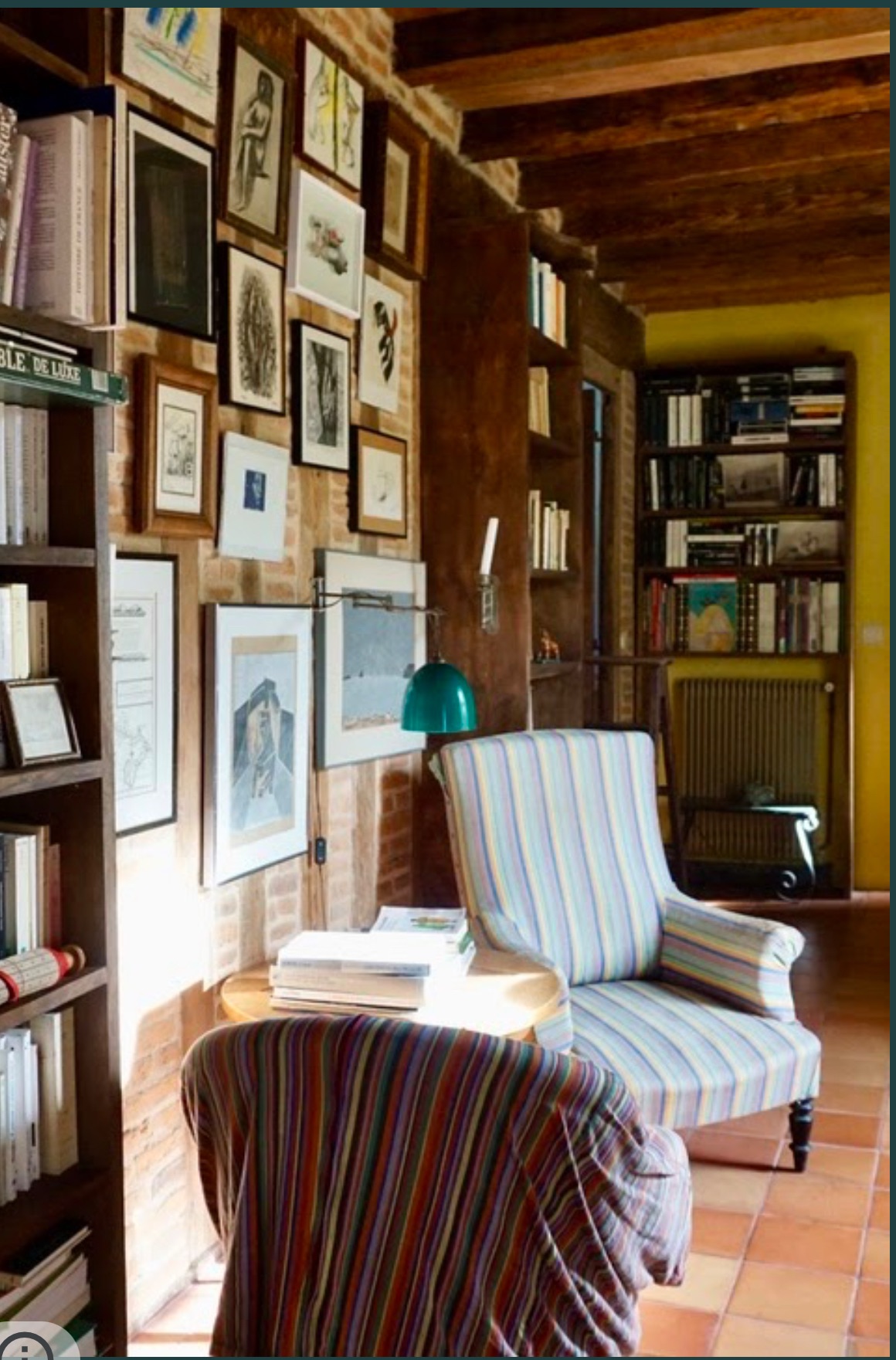
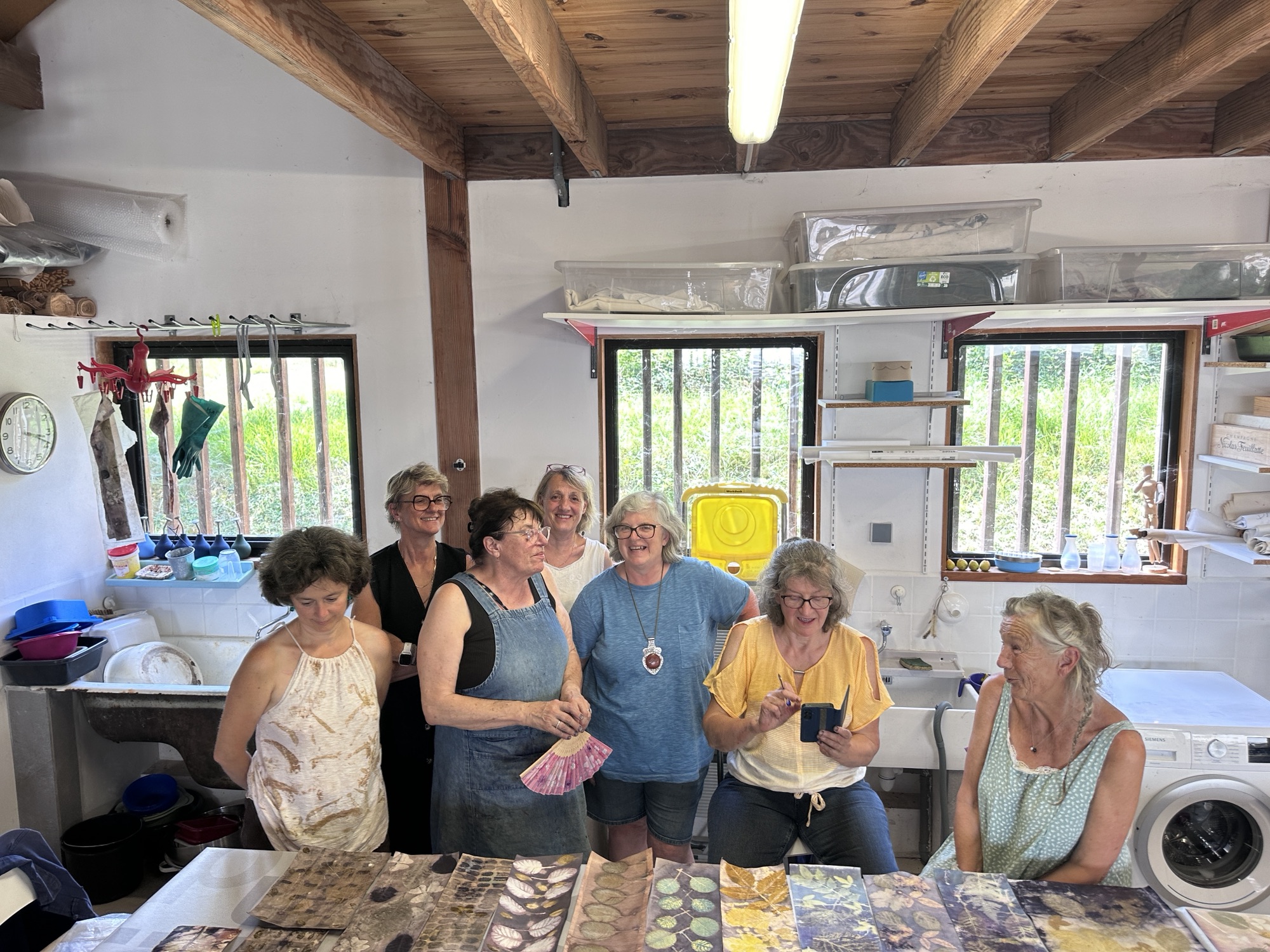
Le Jardin de la Couetch est un lieu magnifique ou l’on trouve des noyers anciens dans le jardin, de la vigne sauvage sur les murs de la maison ancienne, mais aussi des fleurs, feuilles de figuiers, des rosiers dans le village et des feuilles d’arbres fruitiers. L’inspiration est trouvee au cours des balades faites le matin apres le petit dejeuner avant de se retrouver dans l’atelier pour la lecon du jour. Apres le dejeuner sous les tonnelles on se retrouvera dans la cuisine de teinture pour mettre on route la cuisson a l’etuvee et les marmites de teintures de fond…. on travaille tout l’apres midi, finissant juste avant l’aperitif sur la terrasse, heureux des resultats merveilleux de la journee.
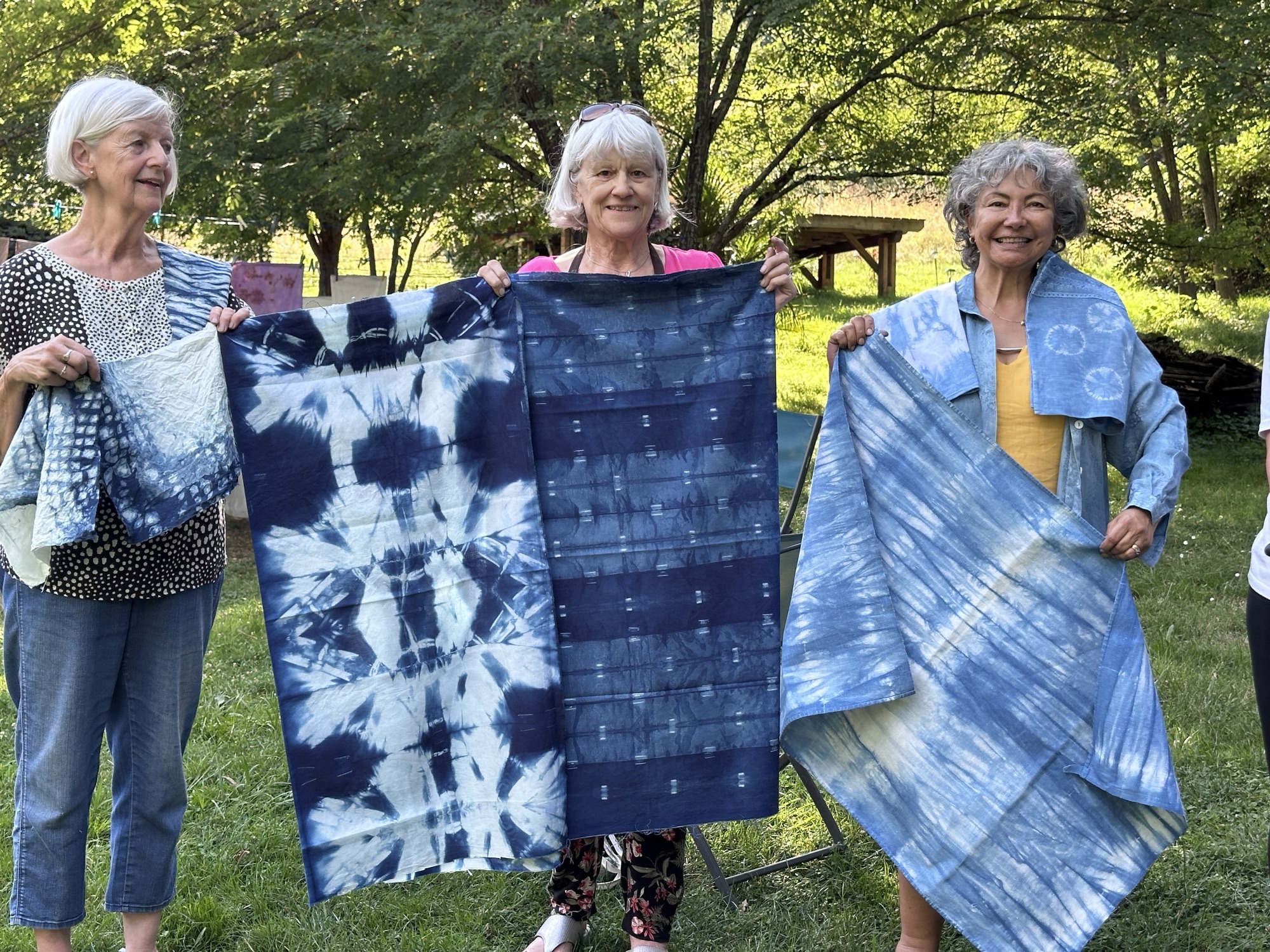
Le dimanche c’est conge mais une cuve d’Indigo au fer nous permets de nous relaxer l’apres midi apres avoir fait un tour au marche local. On fait du shibori en papotant… on se relaxe et on boit le cafe.
Sur la semaine on apprends:
3 mordants
2 teintures de bois
des preparations de blanquettes
des impressions petit et grand format
finallement on met en place une exposition du travail de la semaine qui est attendu par tous avec impatience.
Je fournis l’ensemble des papiers, teintures et mordants, pour les elements botanique il n’y a qu’a aller glaner…
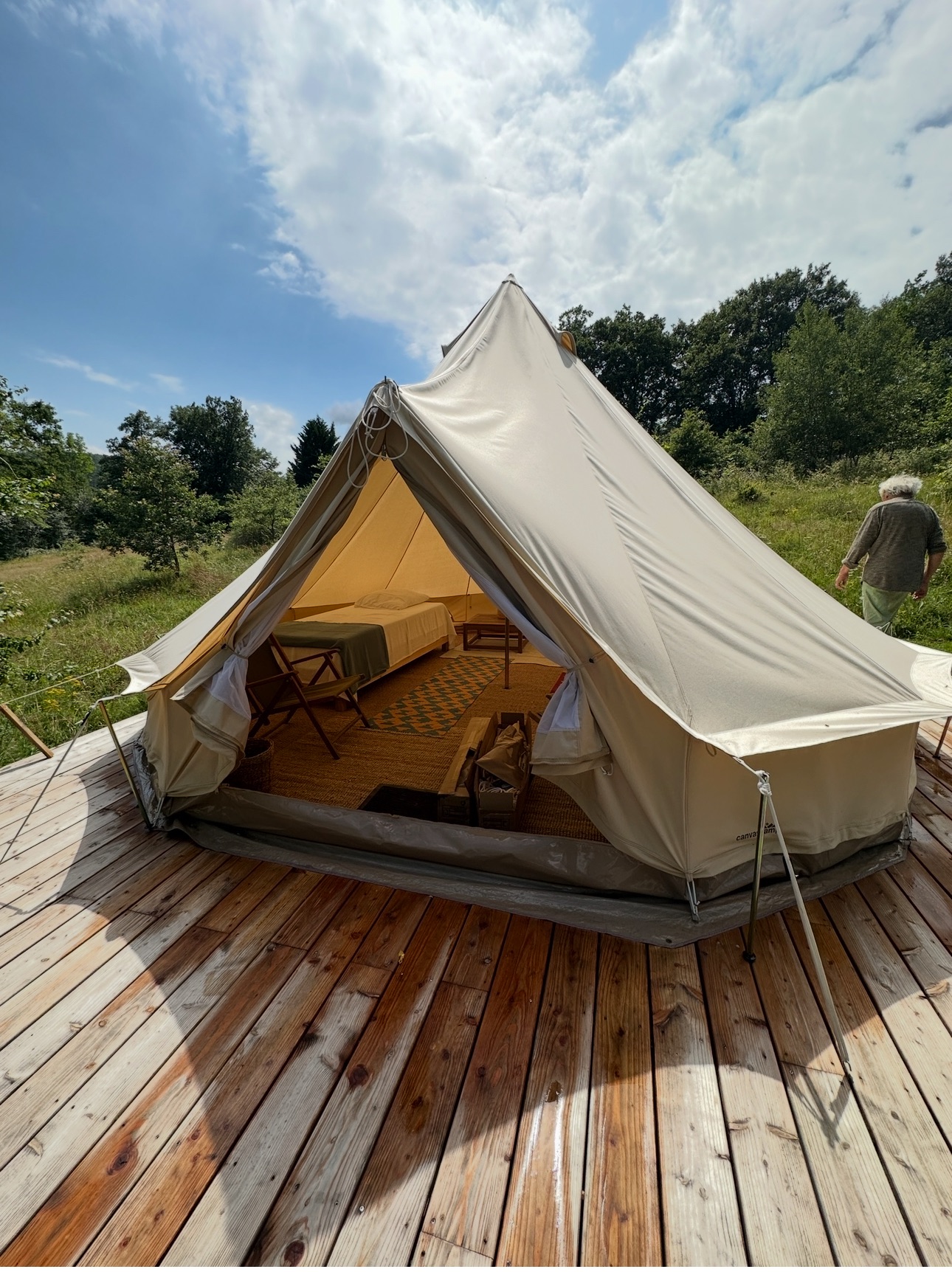
Feutre Formation offre un devis logement et repas qui est tres apprecie, Il nous permets de rester en semaine immersive… on en sort detoxe du monde exterieur avec la tete pleine de couleur et d’inspiration pour le futur…
Pour en savoir plus sur le programme detaillé et pour reserver un espace…
This article is long overdue and concerns the Muicle plant I first came accross when travelling for dyes in Mexico’s Teotitlan del Valle in October 2024.
I am a natural dyer and I specialise in learning and teaching about Indigo, Always on the look out for more information about Indigo baring plants, Indigo processes or resources I became very excited when discovering it. At first I mistook it as a form of wild Indigo. It has been a long journey of discovery and finally I think I am clear about what this plant is… read on if you want to know wether it is a dye plant for blue or an Indigo yielding plant. Many are very confused by it including in the academic and dyeing communities.
Muicle, never heard of it…
In Mexico, It is Muicle, sometimes called Muitle, but elsewhere in the countries of Mesoamerica it is often called Sacatinta, Moyotle, Moyotli…this causing much confusion, it’s scientific name is Justicia Spicigera but few dyers ever call their plants by their scientific names it is the Mexican Honeysuckle. It bears beautiful trumpet flowers in bright orange and attract the honey birds despite the fact it bears no scent unlike other Honeysuckles.
Carry Sommers a British textile expert and Fashion Revolution extraordinaire incorporated it in the dictionary of Plant, Fiber and Colours she wrote when travelling in South America with a Churchill Fellowship grant a while ago but she called the plant Sacatinta. And although I read it after coming back from Mexico I never connected the two plants until… I listened to a talk by a dyer from the community of San Juan La Laguna in Guatemala describing her dyeing process and it suddenly became clear that we were talking about the same plant. Natural dyers have to do a good bit of detective work sometimes to understand what they are working with.
It is the Mexican Honeysuckle and for many ordinary people from Mesoamerica it is a natural remedy.
I found it first in the local food market in Oxaca in the form of a small sachet of dried leaves and wood pieces, when visiting the medecine woman stall. The stall owner explained to me via google translate that it was good for my blood and I should make tea from it (It will be red she said). My companion for the day who is fluent in both Spanish and English explained that it was a good remedy for ailments such as diabetes (it controls blood sugar) or cholesterol, that some used it as a detox drink. It cleans you up… there were other tea/dyes in little sachet but this one captured me. I read later that it was full of anti oxidant, but also had a good level of flavanoids, and tannins, music to my dyers ears.
A few days later I was meeting Roman Gutierrez-ruiz a master dyer from Teotitlan del valle with who I would be exchanging knowledge and he introduced me to his Muicle Indigo vat first and his Muicle plant second.
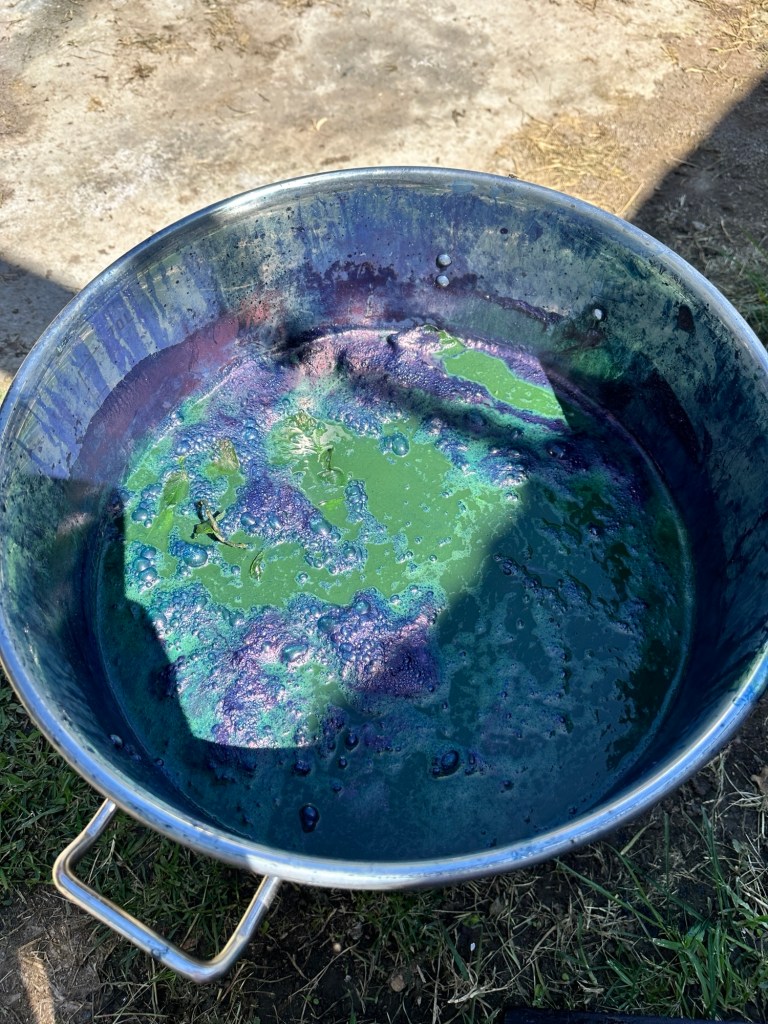
The first was a gorgeous large Indigo vat with leaves floating on the surface that produced vibrant blues like those from the Sukumo vats I used in Japan.
I was told this was an historic fermentation vat (based on bacteria fermentation in opposition to reduction of the sugar vats I normally use) It was made according to a traditional recipe using the local Mexican Indigo pigment and the Muicle plant, that the plant could produce blue too in its leaves and when “boiling it”.
I became quite confused to what this plant really was. Between my nearly-non existant Spanish language and Roman timid English some of the nuances of the dyeing process became fuzzy.
I meant to look it up when back to my studio but at first I could not find any detailed references on it, neither online nor in my trusted books such as Dominique Cardon… and my research using the name “Muicle” remained stagnant for a few weeks until I realised that most dye information could be obtained when searching using “Sacatinta”
Sacatinta is listed in Dominique Cardon “Natural dyes” … it helped me greatly to understand better what Muicle is. Dyers in Guetamala offer experiences with Sacatinta to tourist and products online dyed with it.
So is Muicle a type of Indigo or a dye plant producing blue ?
When looking for sources of information, I am keen to only report serious papers written by researchers, masterdyers and to leave alone the “hear say” knowledge vastly available on youtube and other casual platforms. For that reason I first searched my copy of Dominique Cardon “Natural Dyes” but nothing was listed for Muicle. However, Sacatinta was there with a very detailed and interesting description.
It is listed as a shrub cultivated in Guatemala and other regions of Central America such as Mexico, Honduras, El Salvador and Costa Rica. But I do know that it is also cultivated in California. It has large flat leaves and trumpet orange flowers. It is sensitive to freeze but can live in the cold. So it has the potential to live in Europe as being able to handle temperature down to – 3 C
It has been traditionally used for dyeing (leaves only) a variety of shades of purple and blue on fabric treated in an alkaline environment. With Alum it gives yellow. It has an active part in the making of the Pre-hispanic Indigo vat using Mexican Indigo pigment and fermentation, in it it seems to have a role in helping reducing the pigment into dye. Indeed some recent research show that despite not baring Indigo pigment precursors and therefore not being on its own able to generated a vat, it contains enzymes that can generate reduction. A very interesting academic (see below) written by Japanese researchers carried very precise tests on the leaves that give us clues to how best use it.
It is a fact that traditional community dyers usually have a excellent method in place that is passed down generations but often they can not explain the chemistry behind their process…. It just works… one of the issues with relying on heritage only is that if the intergeneration link is broken the knowledge is lost.
In Mexico I have seen the Muicle plant used in very large fermented Indigo vats but I believe in other close by countries it is used as a dye by small communities such as the dyers/weavers of San Juan La Laguna illustrated in this talk by Rosalinda Tay for the Scottish Rockfield center
Although almost always cultivated where it will be used, in Roman’s garden it had a prime place, in Guatemala for example in some areas where the land is claimed for food growing or other more income generating crops it can be brought to local markets by growers from further afield and sold to the dyeing community.
Dominique Cardon lists it in the 2007 version of her book in the “Indigo, chapter 8” part. Yet she does not characterise it as Indigo because no presence of Indirubin nor Indigotin could be found. So we can say it is not a form Indigo but when is it useful to the vats building?
A group of Japanese researchers at the same period did an in depth study how the leaves behave in the dyeing process. It seems to show signs of “reduction/oxidisation” when the dye is used in an alkaline environment to produce blue just like the Indigo vat. The dyers describe the process as “the fabric comes out green and then in front of my eyes turns blue” … That is very similar to the Indigo oxidisation after dyeing.
The colour blue can vanish when the fibre is placed in an acidic environment yet comes back when the alkaline is introduced again. To most readers this will sound geeky but for me it is highly exciting details that sends me on a journey to Indigo.
For those of you who want to discover the serie of test done by the group of Japanese Academics please see the article below. You can google translate it by positioning your phone opened on the google translate app and taking a photo of each page.
It seems that the plant enhance the vat reduction process because of the enzymes contained in the structure of the leaves. It has the same effect than Woad leaves had in the 19th Century Indigo vat.
The Muicle leaves have a clear reducing agent that speeds up the fermentation/reduction of the Indigo vat and in the traditional recipe dating pre-hispanic time the leaves are very present.
After this research the comments made by Roman during my visit about “I can dye blue but only after boiling the leaves” suddenly make more sense.
How is Muicle used in the Indigo vat process:
Indigo is one of the most ancient dyes used in MesoAmerica and it would be great to develop her but I would just be copying what others have already explained much better and it is not my field. If you are interested to read about the ancient dyes used in Mexico you can read HERE an excellent paper by Mary Elizabeth Haude about early colorants used.
For me I am interested by the fact that there is a clear difference between the Indigo vats used before Mexico was colonised and after. The traditional vat is most definitively called “The Pre-hispanic vat” it is a fermented vat very similar to those used in Europe incorporating Woad even at the stage Indigo pigment from India was present. To those knowledgeable enough about the vat making process, Woad is used as a reducing agent because of the enzymes in its leaves.
The Muicle plant is the reducing agent in the Pre-historic vat and today is still cultivated and used by traditional dyers to fire up their vats. Independently to being a dye plant used for specific colour, the Muitle plant has this very important role of initiating and fixing Indigo vats. It is a seasonal plant and I have been explained that out of the season, traditional vats were not made so frequently.
How is the pre-hispanic vat made :
The traditional vats are made using local resources and the main colour ingredient is the Indigo pigment Anil extracted locally from the Indigofera Suffruticosa in the area of Santiago Niletepec. It is a back breaking process but the pigment is extracted using organic agents and the pigment produced generated vibrant blues. As it contains no lime it never looks muddy when dyed. The pigment which is available in hard pieces is ground using the traditional grinding granit stone.
I was told a Clay pot should be used for the fermentation and it could be as quick as one week if the temperature reaches around 30 degree C. If the weather is cooler then a longer timing will be necessary. It is not an exact science.
For your vat you will need:
Alkaline water + Anil/Indigo pigment + Mezcal + Muicle leaves all in a clay pot and good warm weather.
The vat is fermented and the bacteria keeps it alive. It needs alkaline water to be generated and the fermented plant of Muicle. This in turns allows the pigment to reduce and generates a dye vat. It is a slow process and although it rests on chemistry only the skilled dyer can make this happen. The vat can stay alive for as long as there is Indigo colour in it. The Muicle has to be replaces regularly. The blue generated is vibrant and the colour leaching from the plant leaves helps in securing a unique tone. –
The alkaline agent is lye (ash water) and lime water (strain the water through the lime but do not add the lime to the vat, a most unusual concept for the westerners).
Some local Metzcal (Agave local spirit) is used to help “wetting” the Indigo pigment.
Muicle leaves are added to the vat
A 60 litre vat is quite common.
The sequence is to the Alkaline water add the ground pigment, the mezcal and the leaves in the pot, close the lid and leave to rest for a week. Don’t open regularly or you loose the temperature. You could if you are using a stainless steel pot use some outside heat.
The vat is one of the most beautiful dye pot I have used, It is also fragile and should only be used for around one hour at a time unless you dye wool as is frequently done in Mexico. Because of the absence of lime there is no deposit/sludge at the base of the vat and the dyers tend to leave wool for a very long time in … sometimes as long as an overnight. The dye bath is quite alkaline and the wool has to get an immediate rinse when coming out and a acid rinse to neutralise the extra akaline environment.
How to dye purple and blue :
When using this plant for dyeing (with the leaves) if you place the leaves in water the liquid turns blue but shortly after (10 mn or so) in bright purple. You can dye cotton blue with it yet it is not an Indigo yielding plant. If using Alum you obtain yellow probably from the flavanoid of the plant.
When you rub the leaves on a piece of silk in a similar manner to the “Salt rubbing” method of the Japanese Indigo you can achieve very pale blue. The picked leaves that are allowed to dry very fast turn black so there is pigment there but not Indigo. You can also achieve this effect on cotton, this is not possible from Indigo leaves… this is most definitively a different pigment.
There has been a lot of discussion on wether or not it is pigment generating. The pigment is kept in colourless leaves but it generates colour in an alkaline environment and the Mexican dyers use Alkaline dye bath to capture the purple colour. If the piece dyed was rinsed in vinegar water this will affect the colour in a negative manner.
In order to dye a vivid blue the dye bath has to be brought up to 80 degree CC to extract but then to be brought back to room temperature. The colour is highly ph sensitive and bringing and taking away an alkaline agent in the process can dilute it or take it away together. Some of the researchers involved in its analysis have mentioned anthocyanins.
From my experience the purple is the more stable colour for this plant and its best usage is in the fermentation of the historic vat.
Unfortunately I was not in Mexico for long enough to experiment further with it. As I dont have photos of the beautiful blue you can obtain from it I have added here the blog post from a UK dyer Babs Behan who visited Mexico in 2021 and did some dyeing with it. Unfortunately she has slightly older information and confirms the presence of Indigo in her blog post. We know now it is not do… enjoy the photos HERE the colour is pretty incredable.
And finally if you want to discover a bit more fun facts about the Muicle… below a link covering how it is used today:
A very fun and light content about making healthy tea from the Muicle leaves and modifying its original colour with lemon Make tea here
If you visit Oaxaca, make sure to make your way to visit Roman Gutierrez, his studio is pretty incredable and he will share I am sure his fermented vat.
If you want the exact recipe for that vat email me bettysbeautifullife@gmail.com
THIS RETREAT IS FULLY BOOKED IF YOU WANT TO EXPRESS INTEREST FOR THE 2026 RETREAT (DATES TO BE CONFIRMED BUT SIMILAR PERIOD) PLEASE EMAIL ELISABETH AT bettysbeautifullife@gmail.com using the subject matter “Colours of Thailand retreat 2026.
TO BOOK A SPACE DOWNLOAD THE REQUEST FORM BELOW AND EMAIL IT TO ME bettysbeautifullife@gmail.com IF YOU HAVE ANY QUESTIONS PLEASE EMAIL ME DIRECTLY ON bettysbeautifullife@gmail.com
If you still have questions please contact me on bettysbeautifullife@bettysbeautifullife
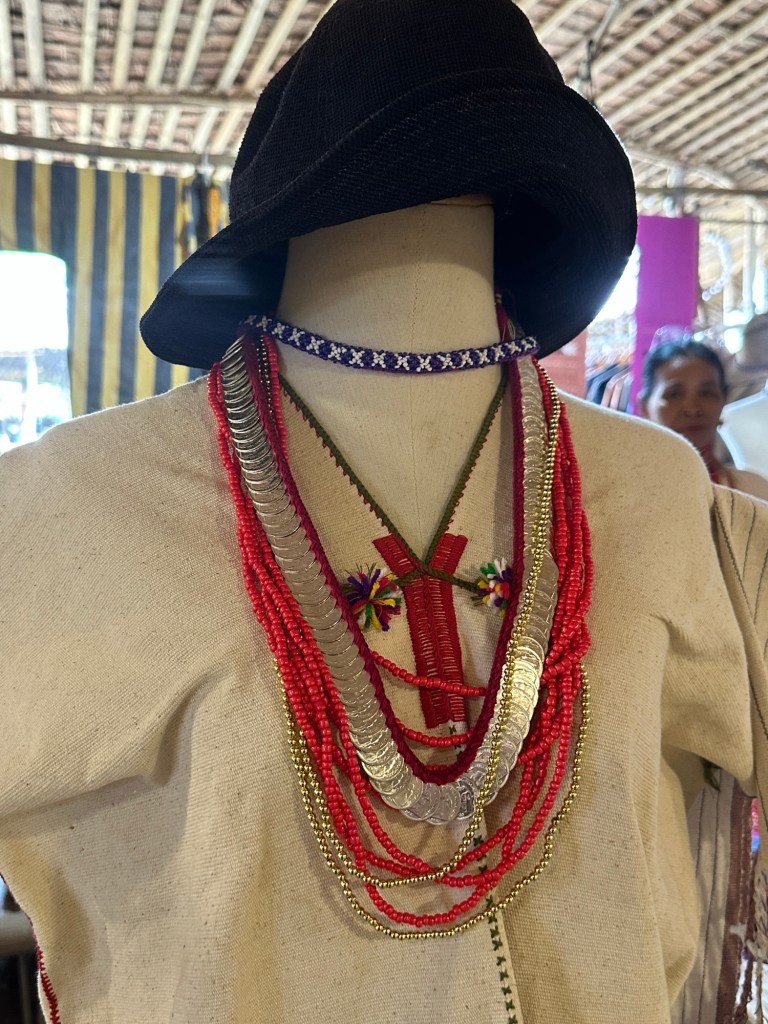
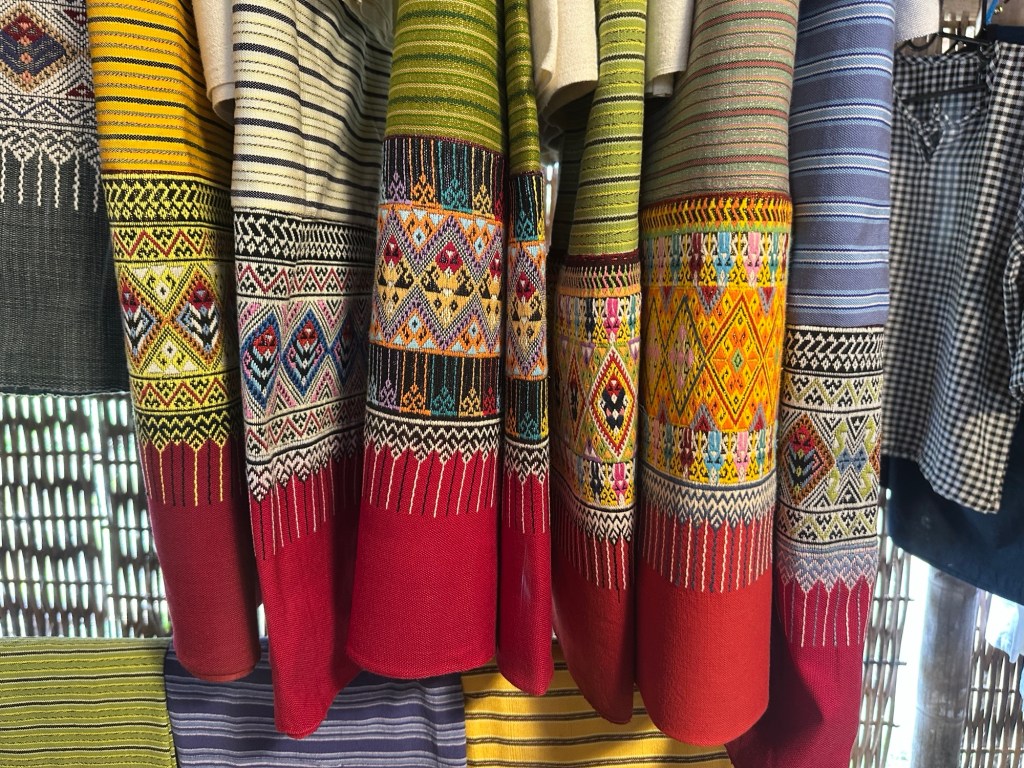
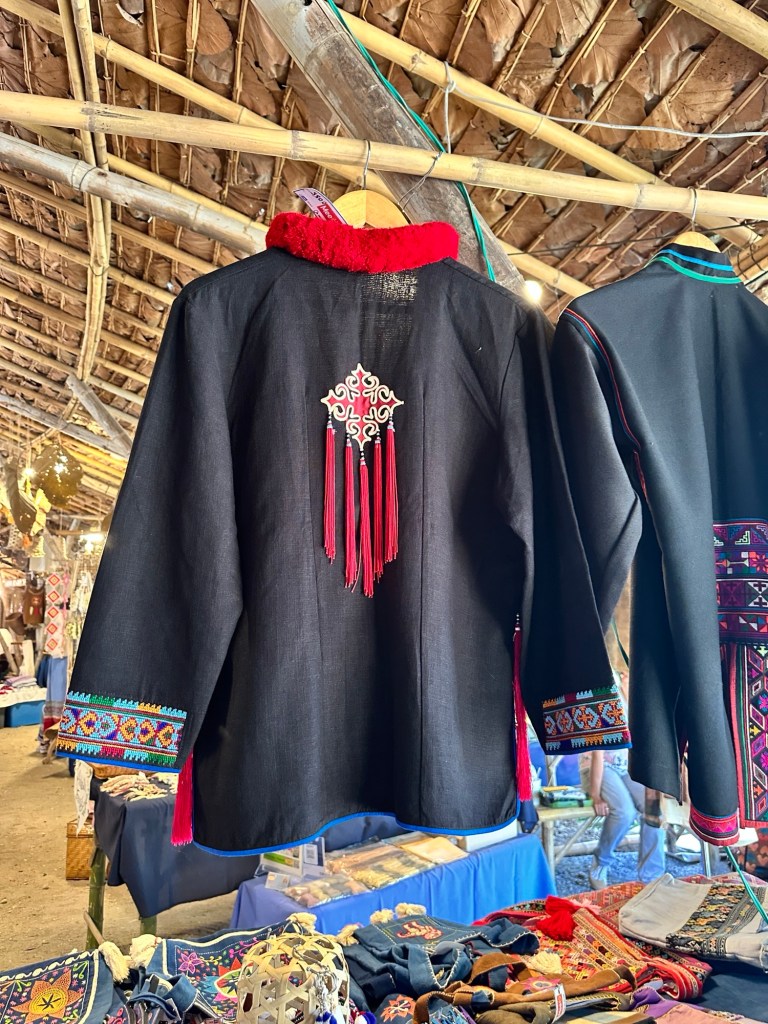
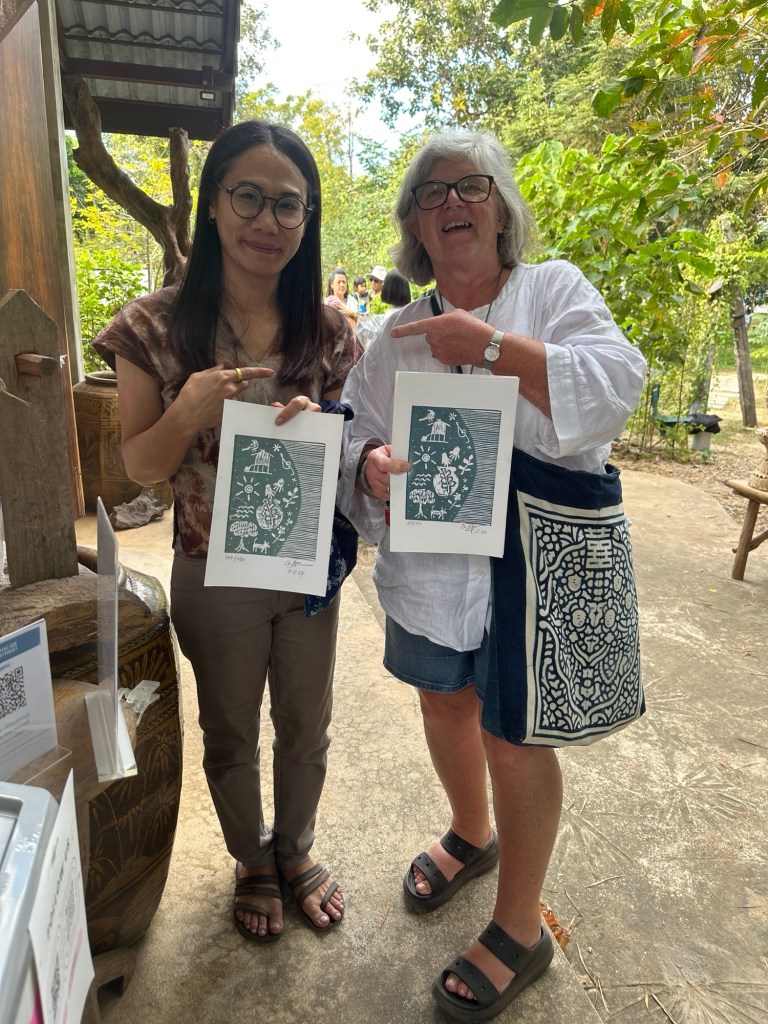
“The Colours of Thailand” is a 13 days, 12 nights private tour in Thailand for 6 participants only visiting 3 locations to interact with contemporary artists, dyers, markets, and dye gardens all related to textile art. It is a trip far away from the touristic routes, a dedicated tour organised with my contacts only. A magical time to understand the real “Colours of Thailand”.
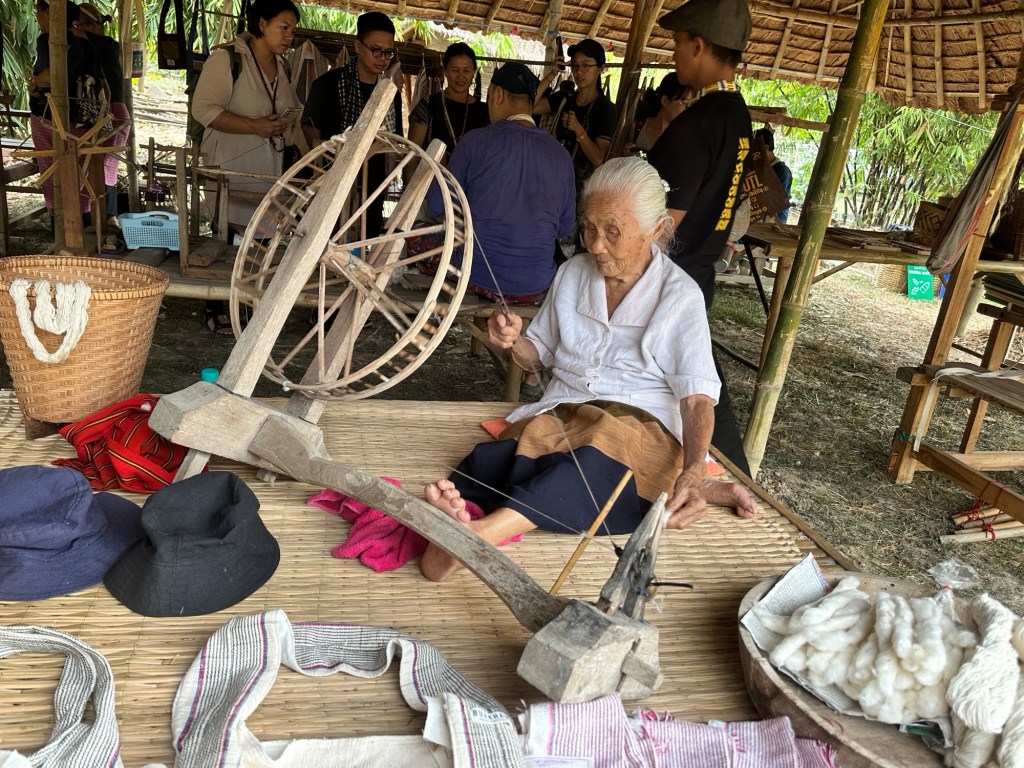
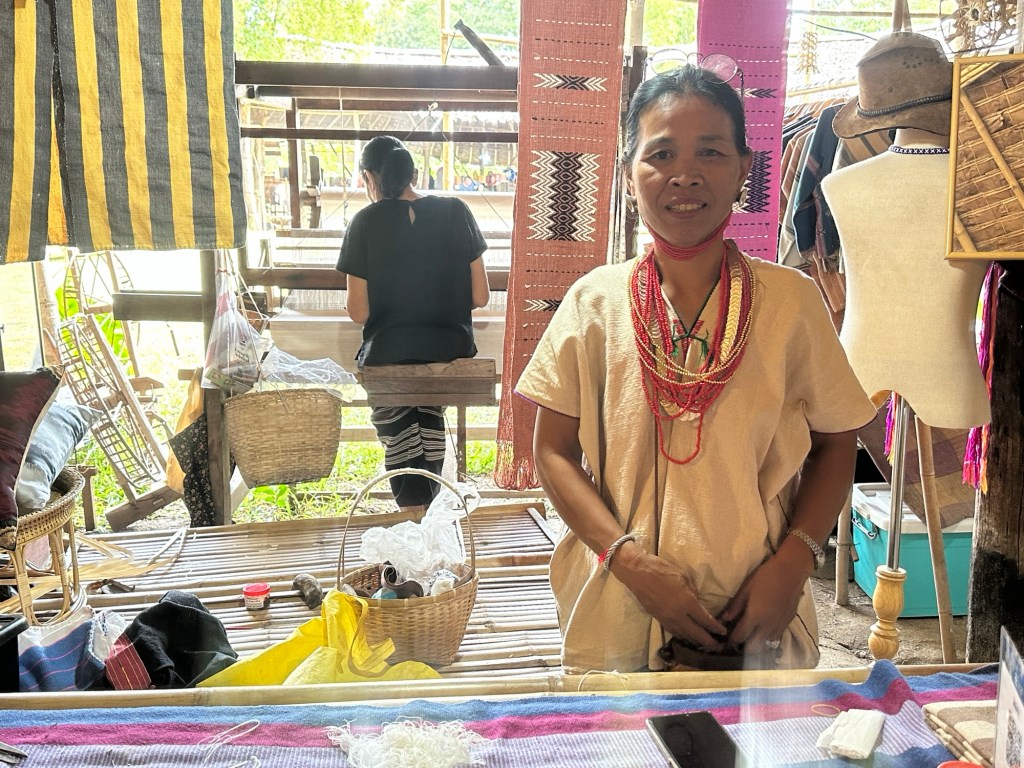
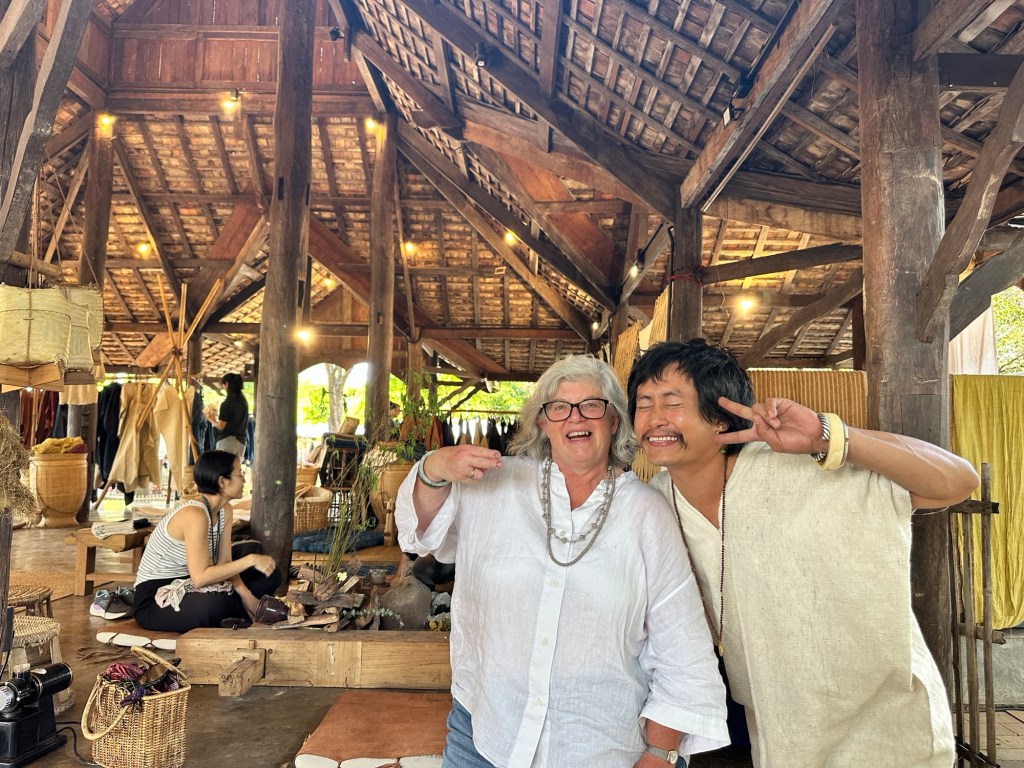
I started travelling in South East Asia many years ago and over time Thailand has become my favorite “home from home”. With its glorious climate, food and delighteful Thai people it attracted me at the beginning of my journey but over time I forged relationships with local residents who specialise in dyeing, spinning, weaving and all textile activities.
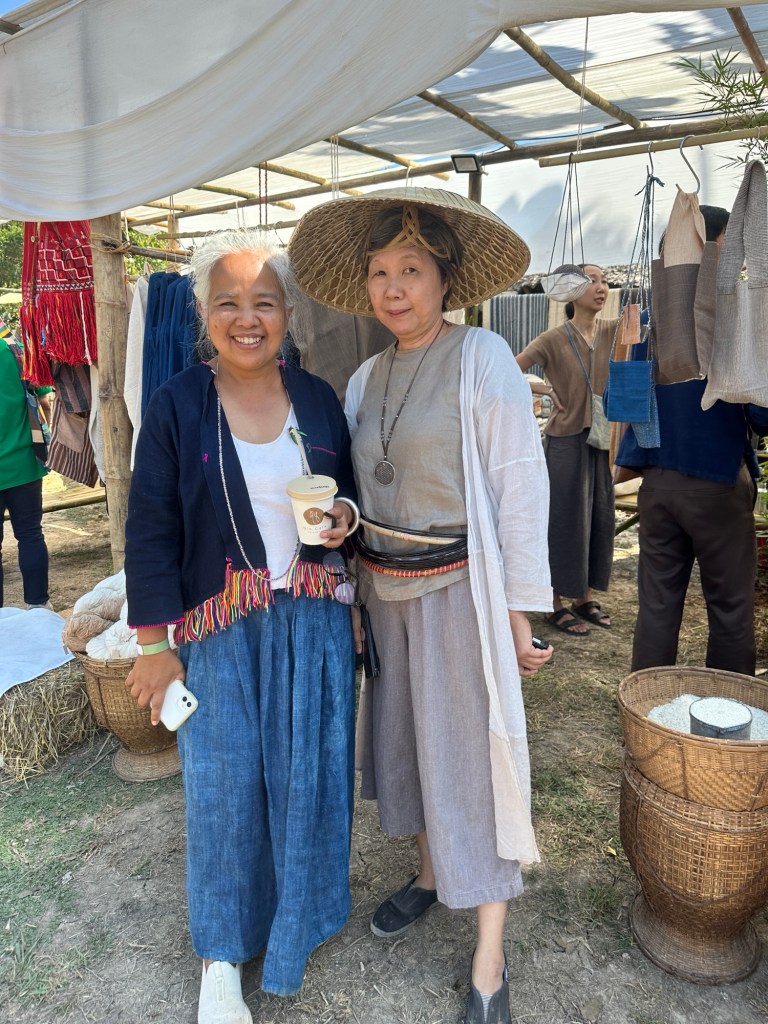
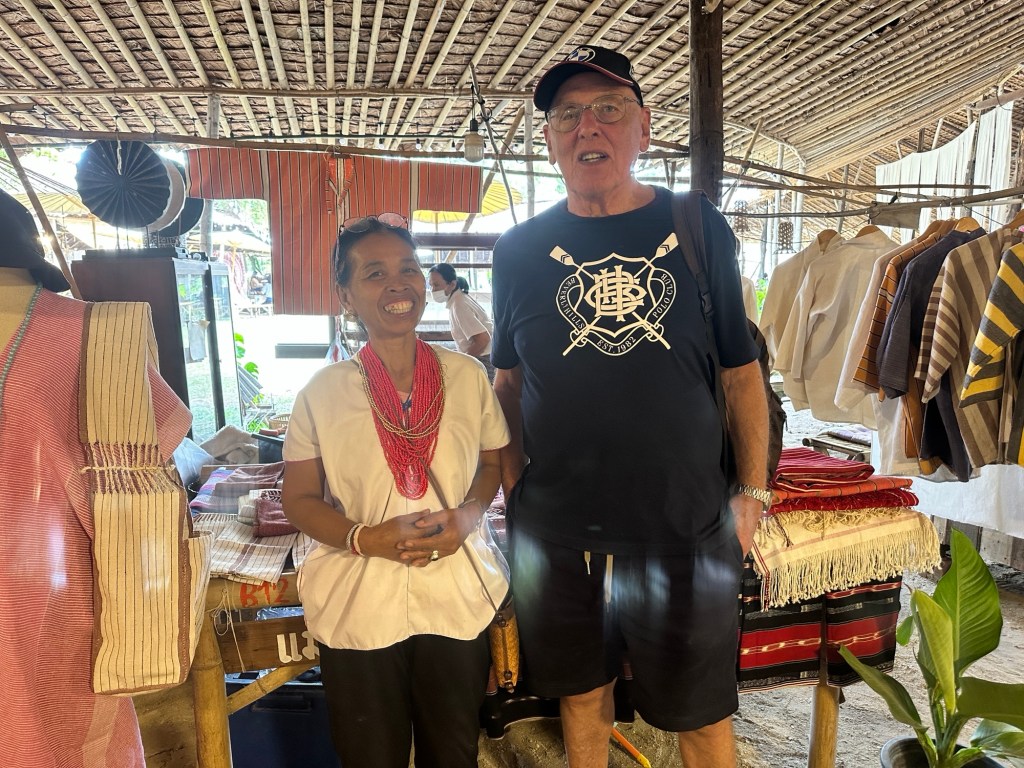
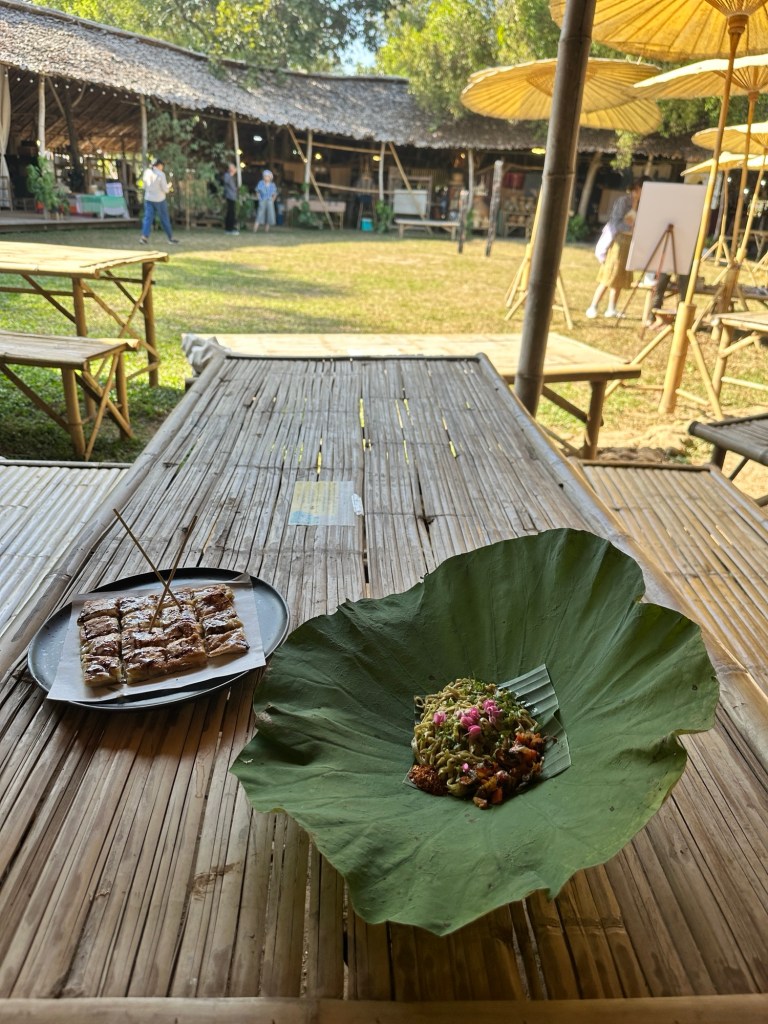
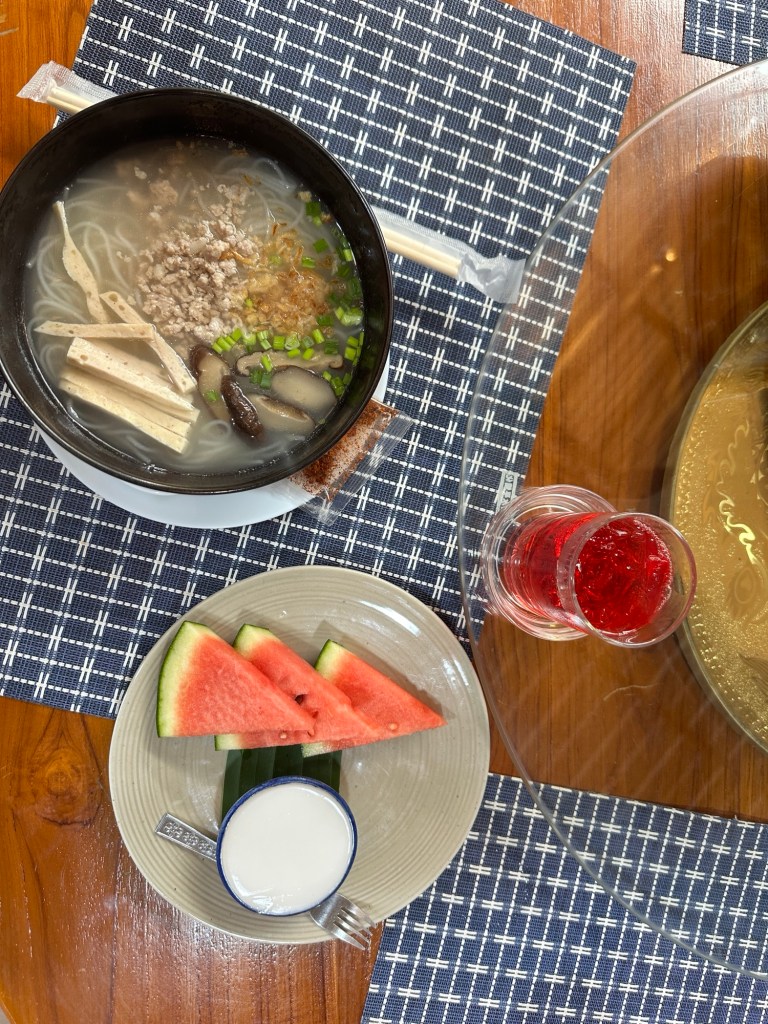
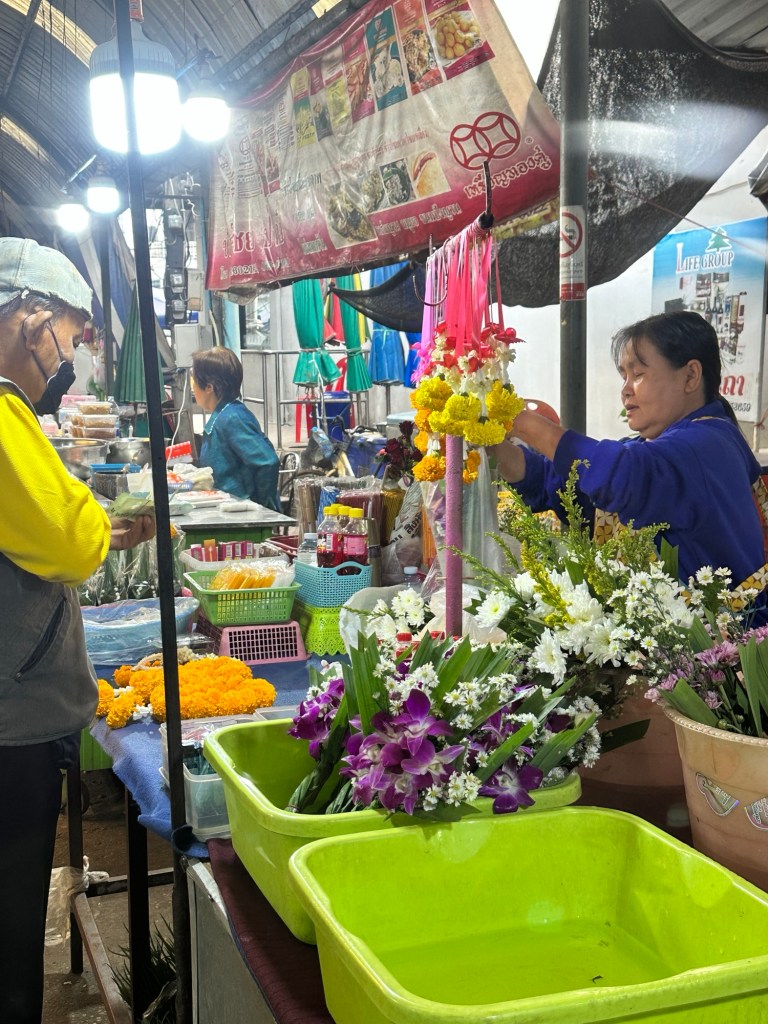
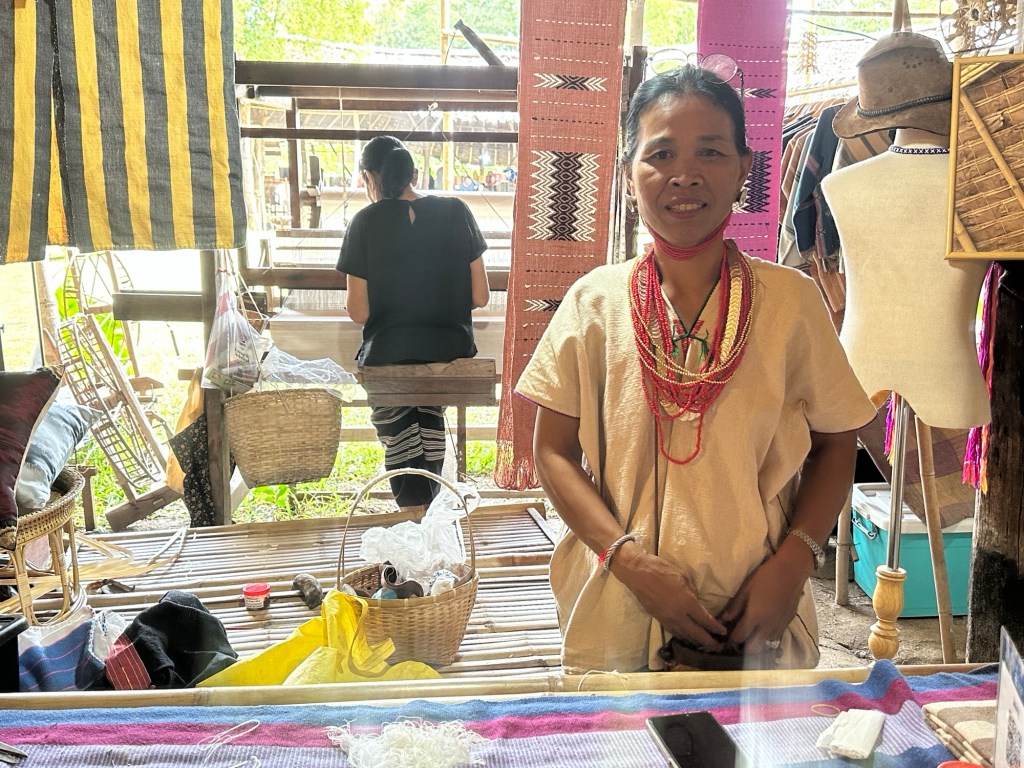
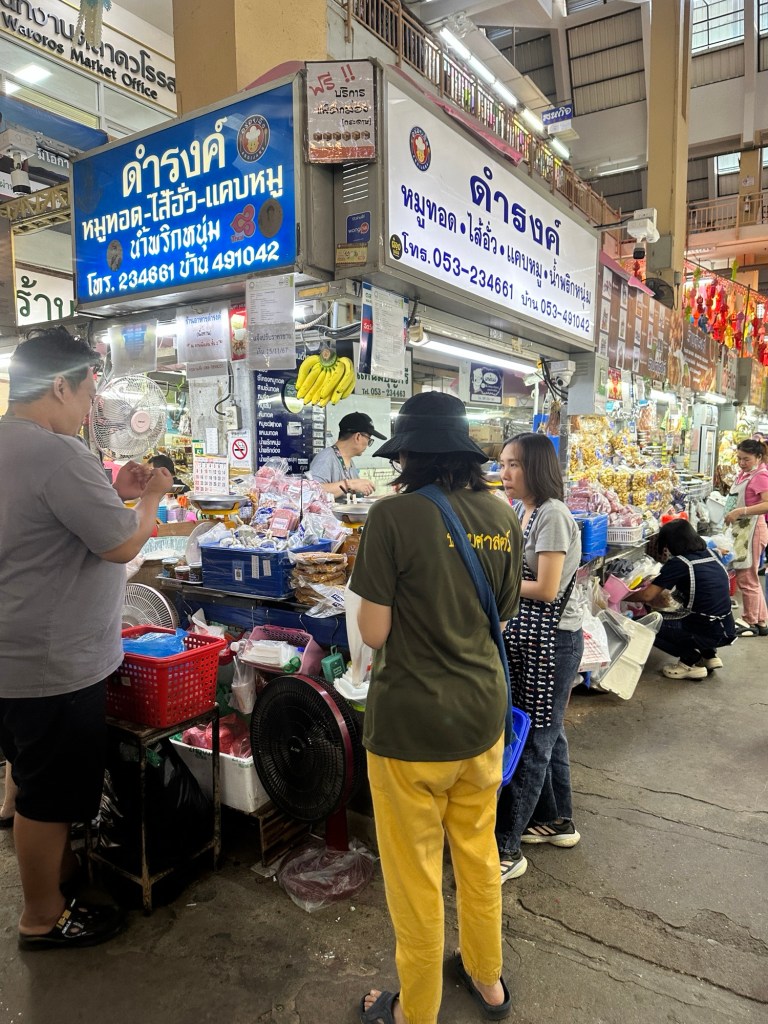
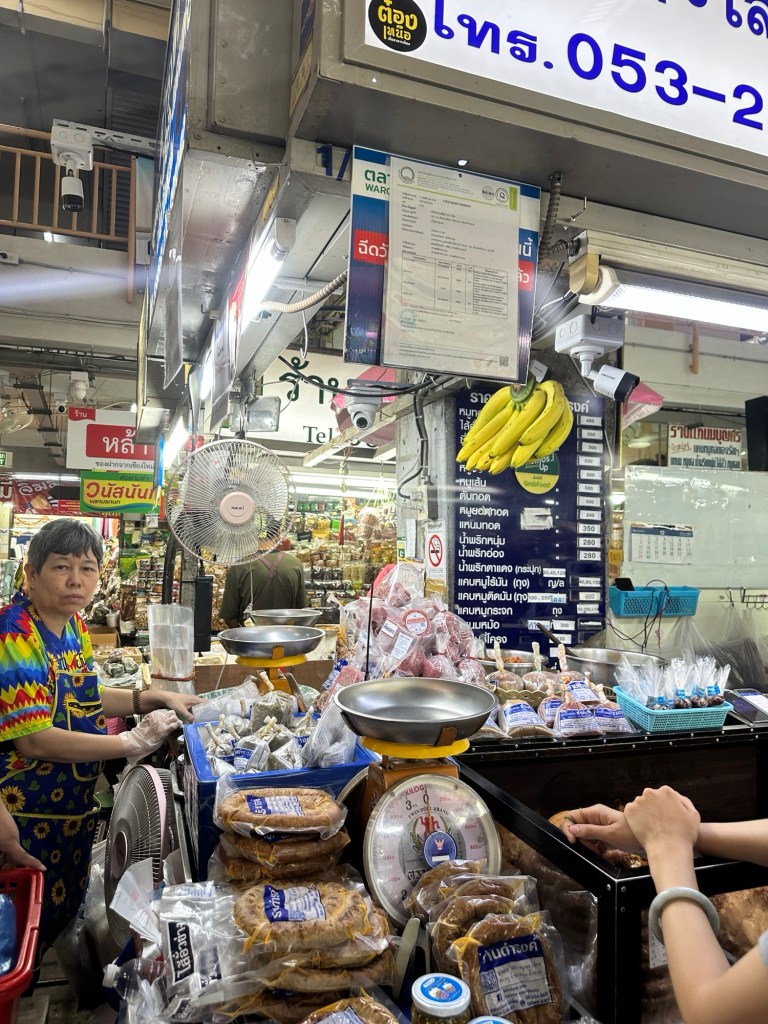
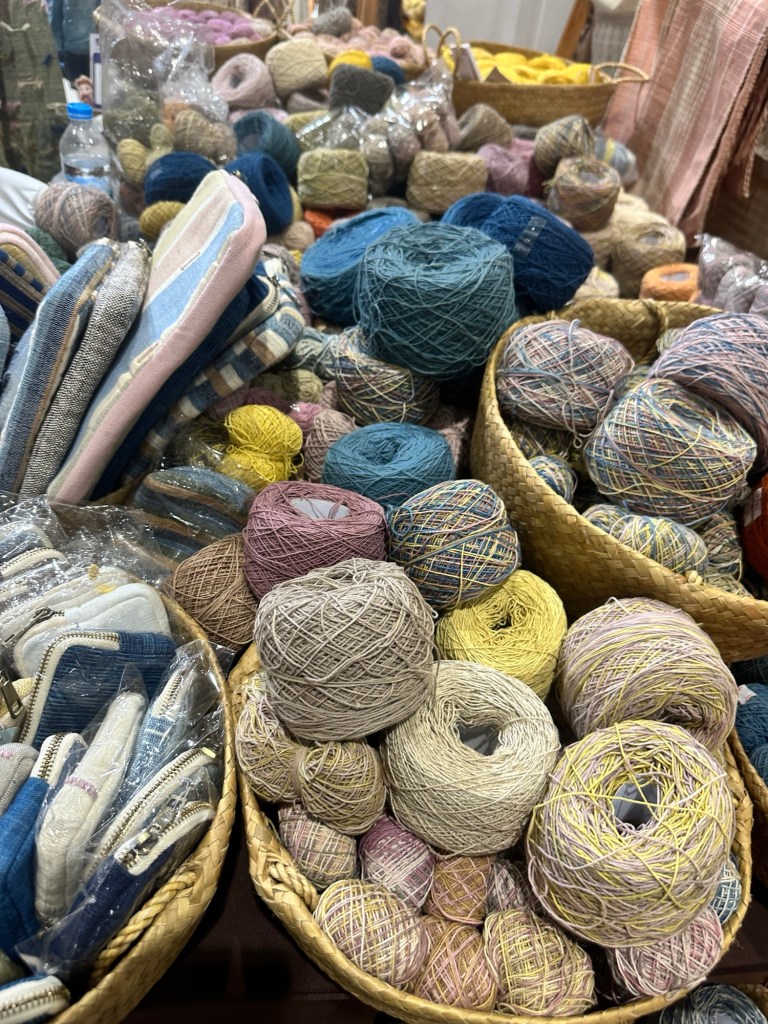
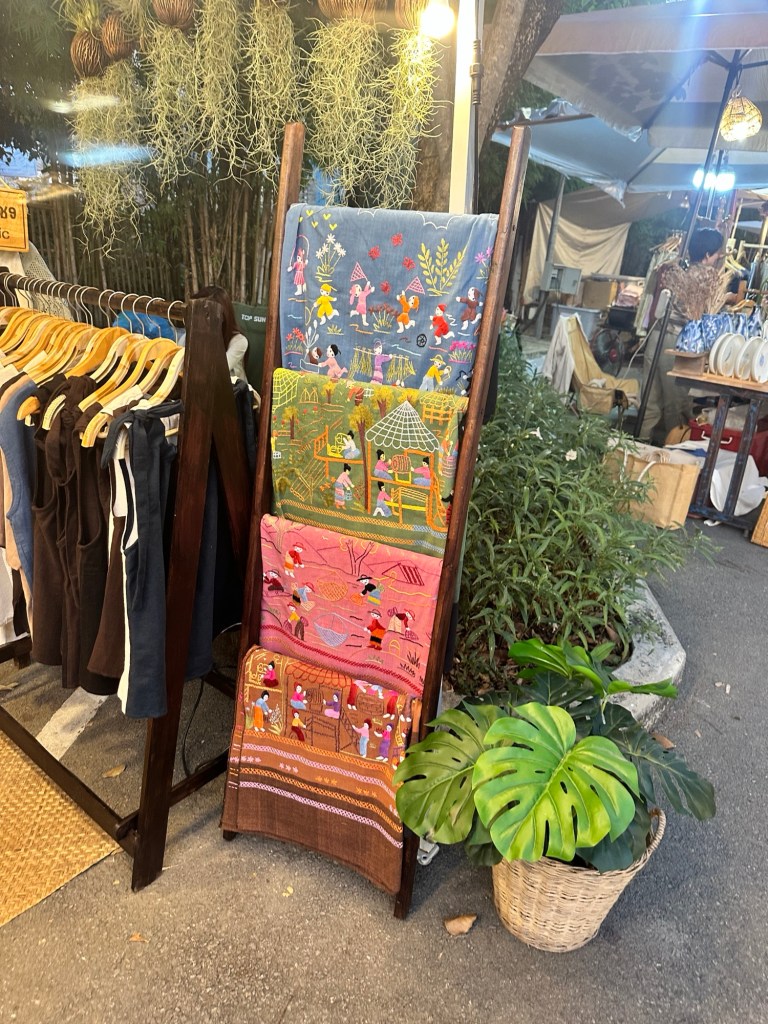
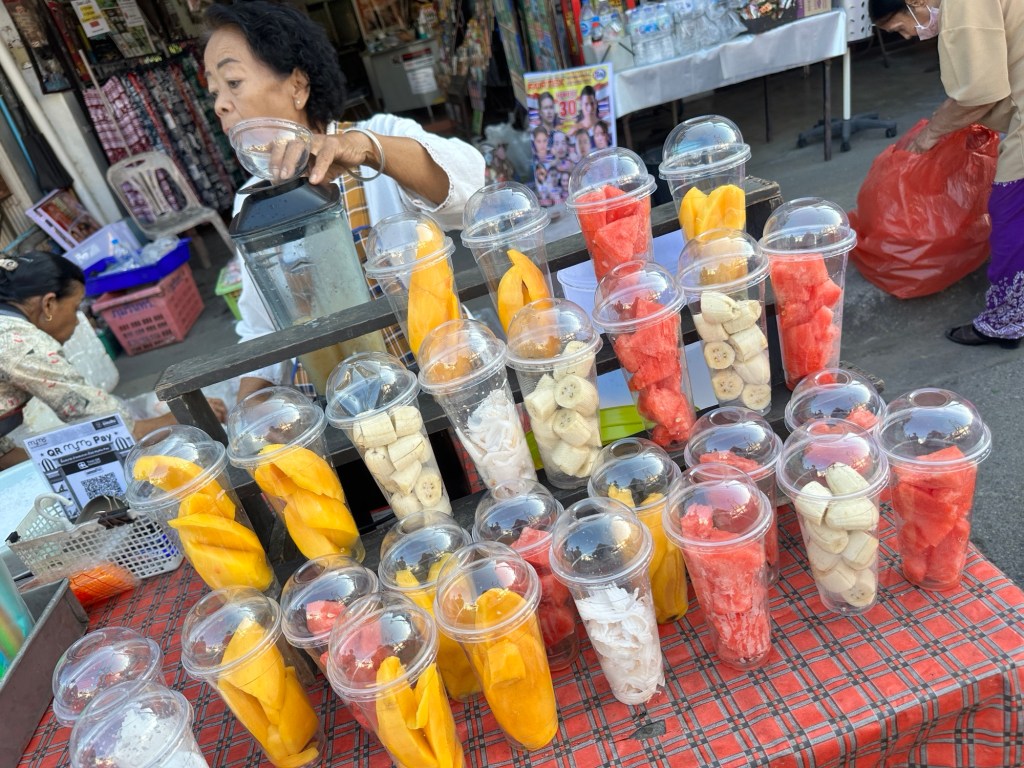
In the last 5 years my trips I have been more engaged in collaborations … taking part in a Festival, sharing Botanical Printing, spending time in someone’s dye studio testing their local plants. I have visited more local markets like the community “Bamboo market” in Chiangmai, I have eaten more and more very local and delicious food, I have learned more and more about today’s Thai Natural fiber and colour artists.
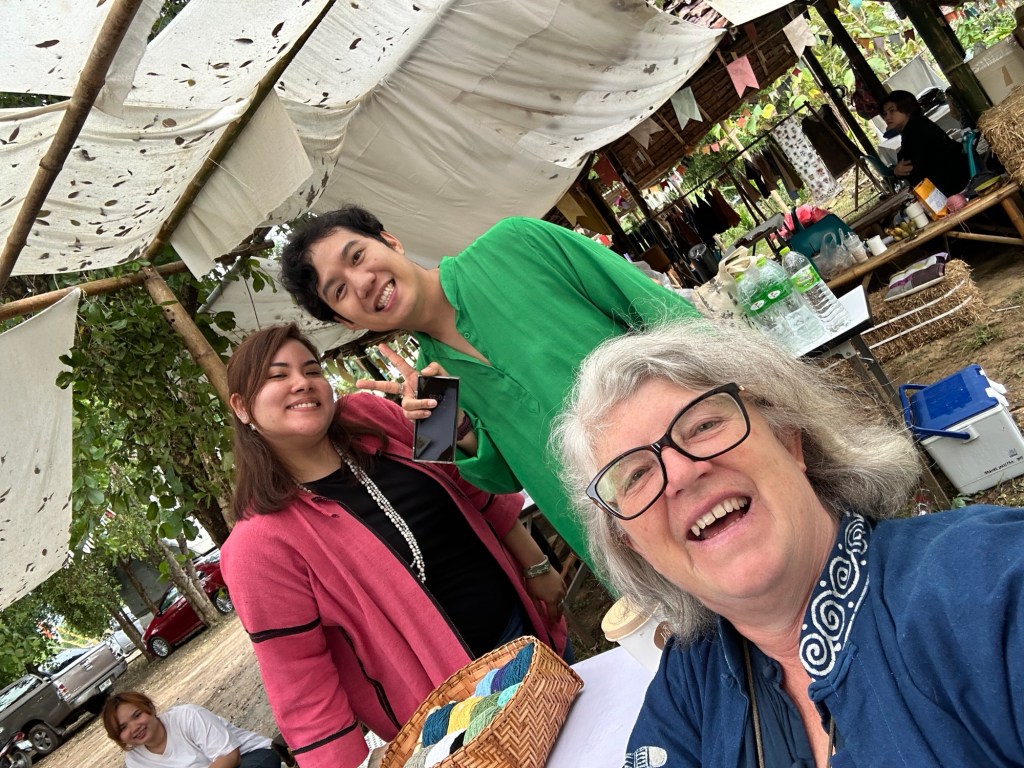
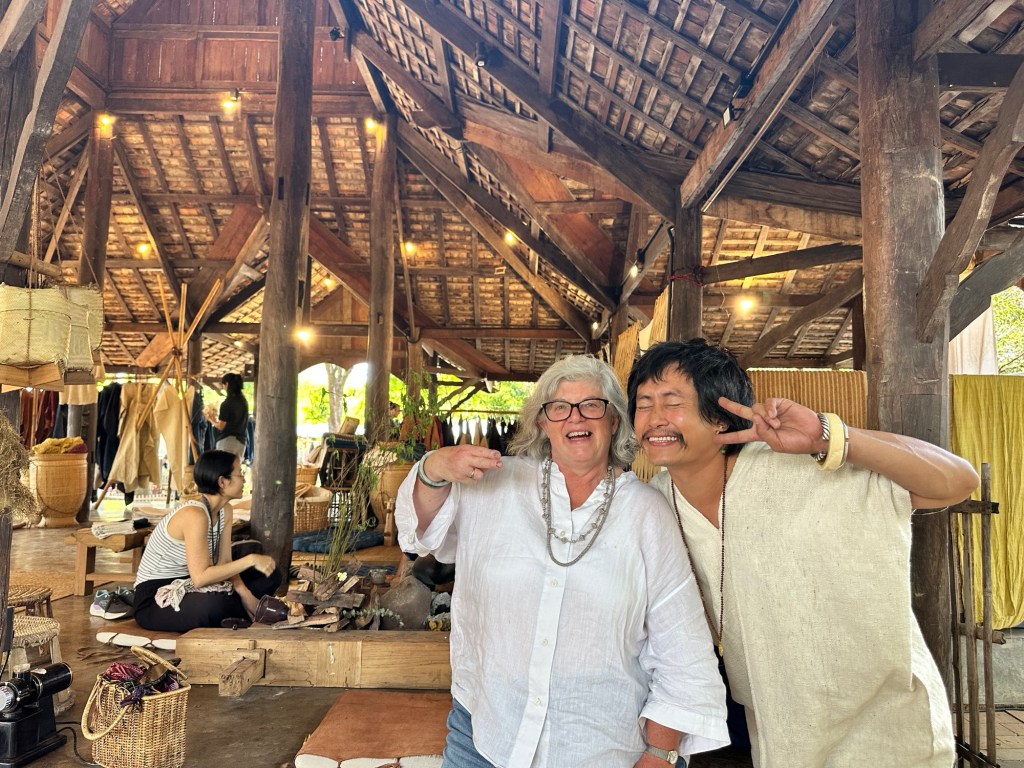
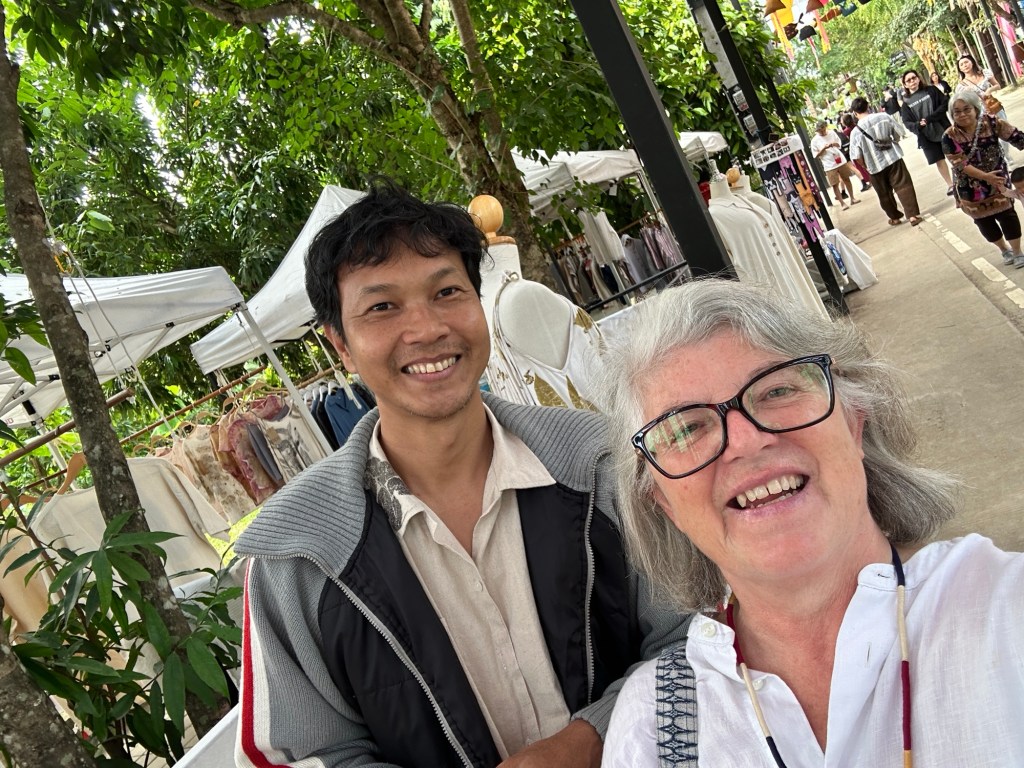
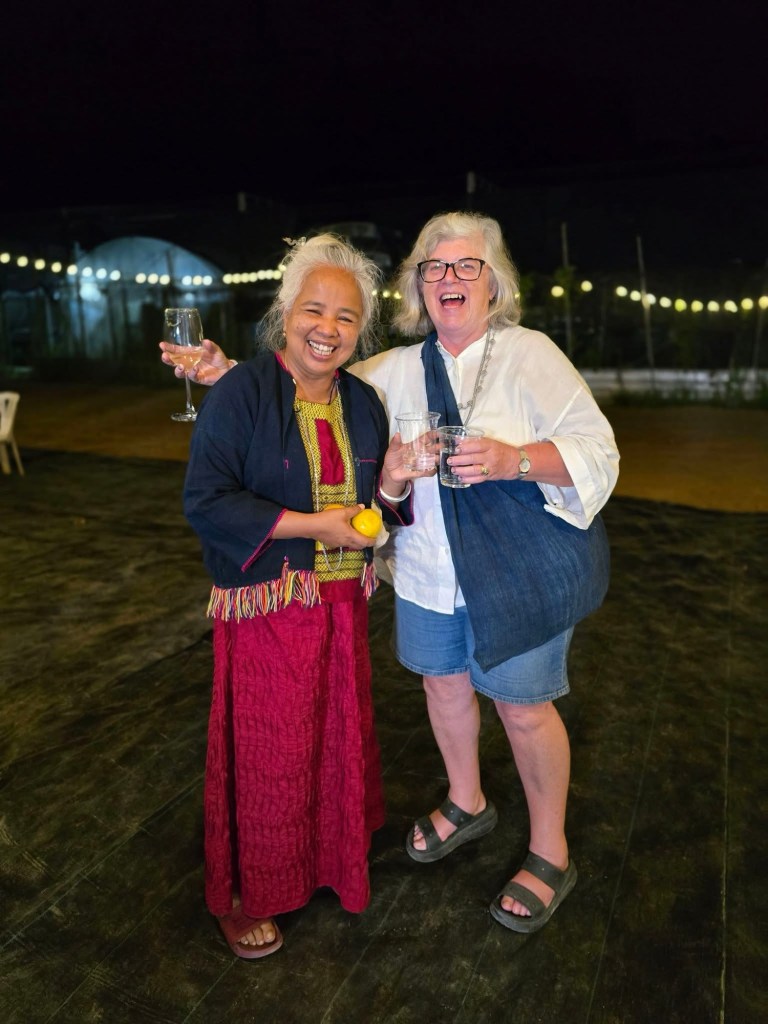
My Thailand is not the Thailand of the ancient Hill tribes and remote places… my Thailand is the Thailand of today’s people who aim at earning a living in sharing between themselves and the rest of the World their knowledge and ressources. They are today’s dyers, market owners, community leaders… they are people that I respect immensely for working hard and always smiling. They are my family and I want to share them with you…
I have been asked for many years to take a group there and I will this year almost accept… I say almost because I dont want to “lead a tour” in a touristic way and I am not interested by a large party… I will be offering to between 6 to 8 people (a family group size) to come along with me to a visit to discover my “Colours of Thailand”.
We will have a little look at Bangkok to get accustomed at Thai time and climate
What we will do:
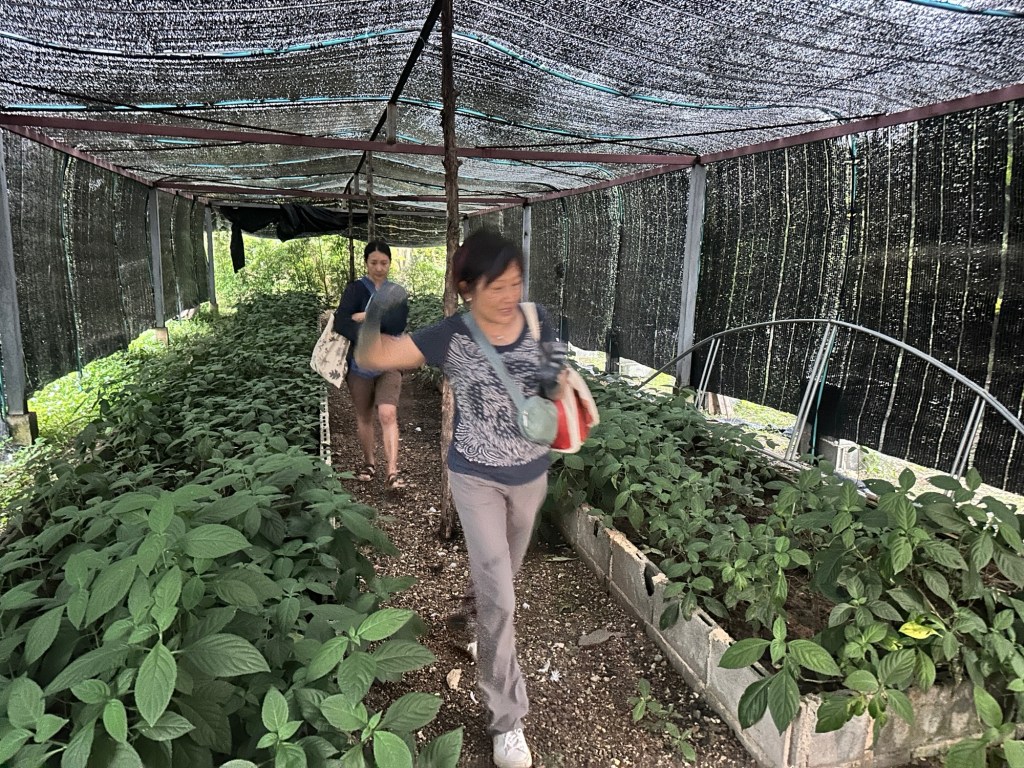
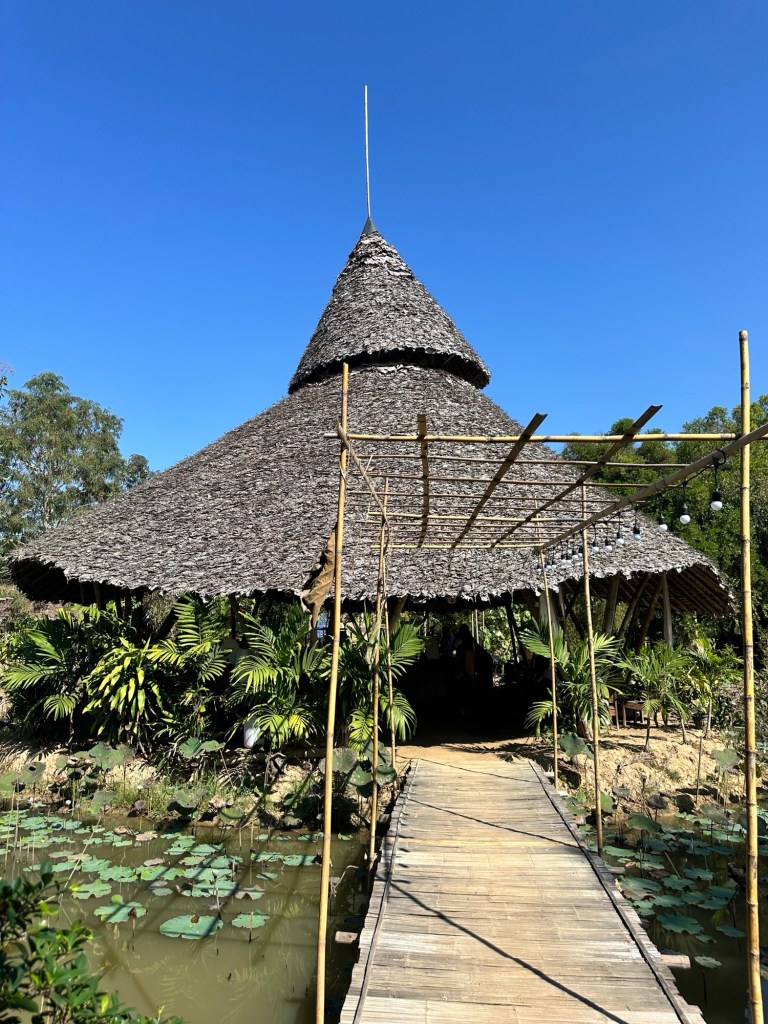
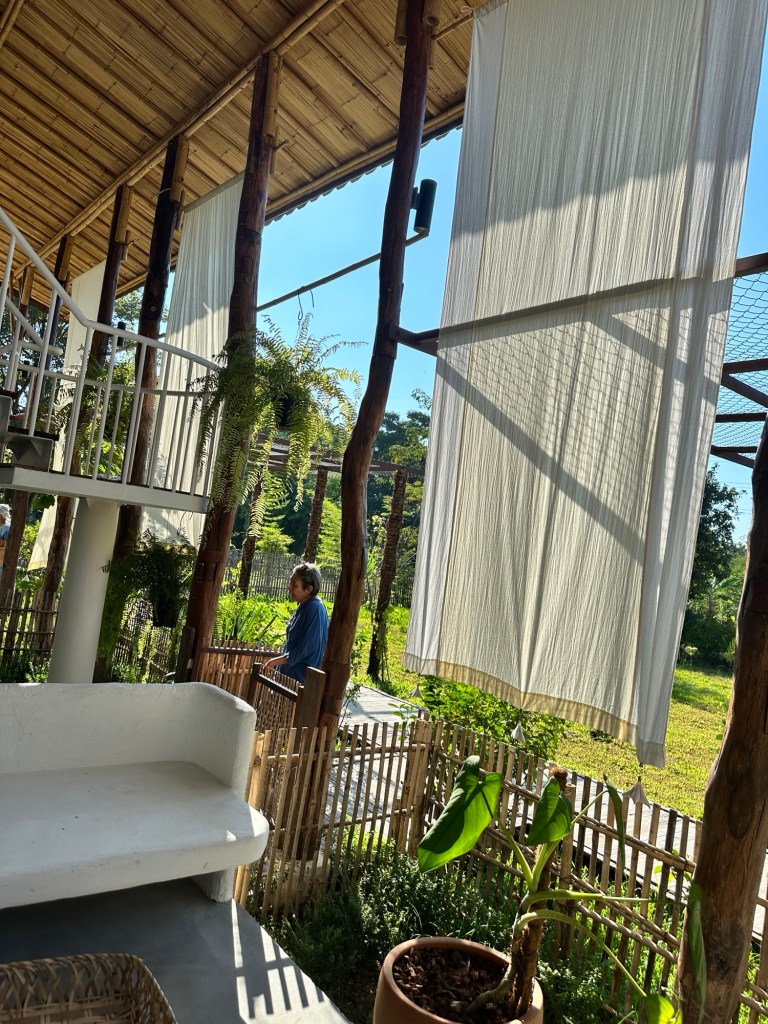
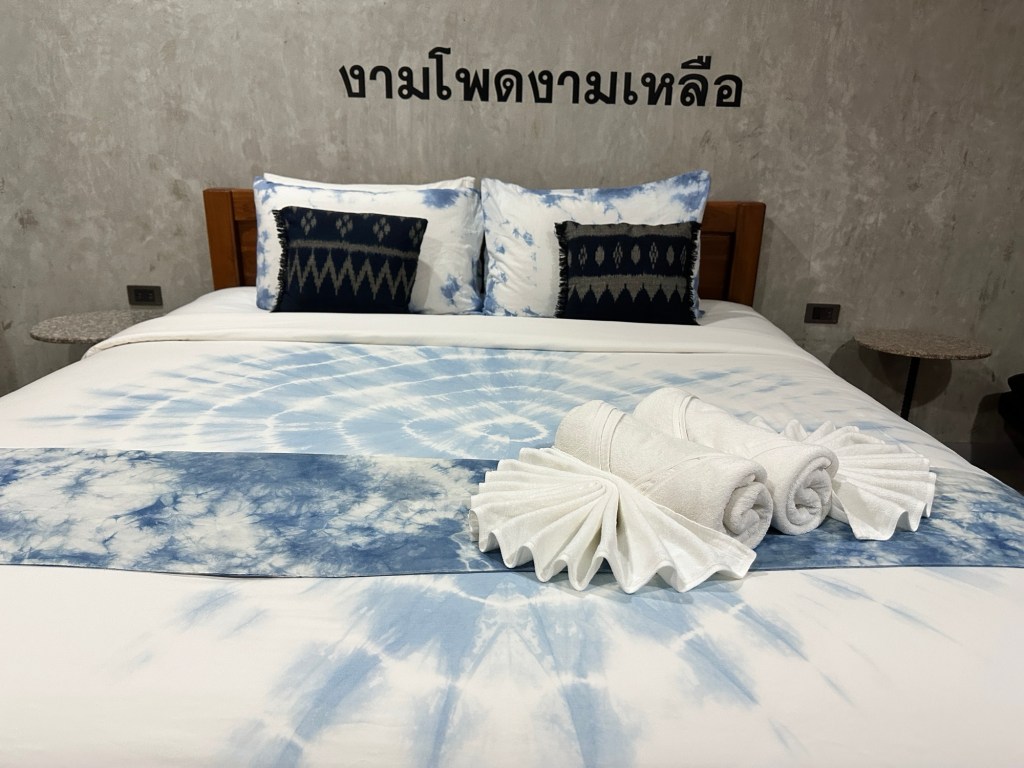
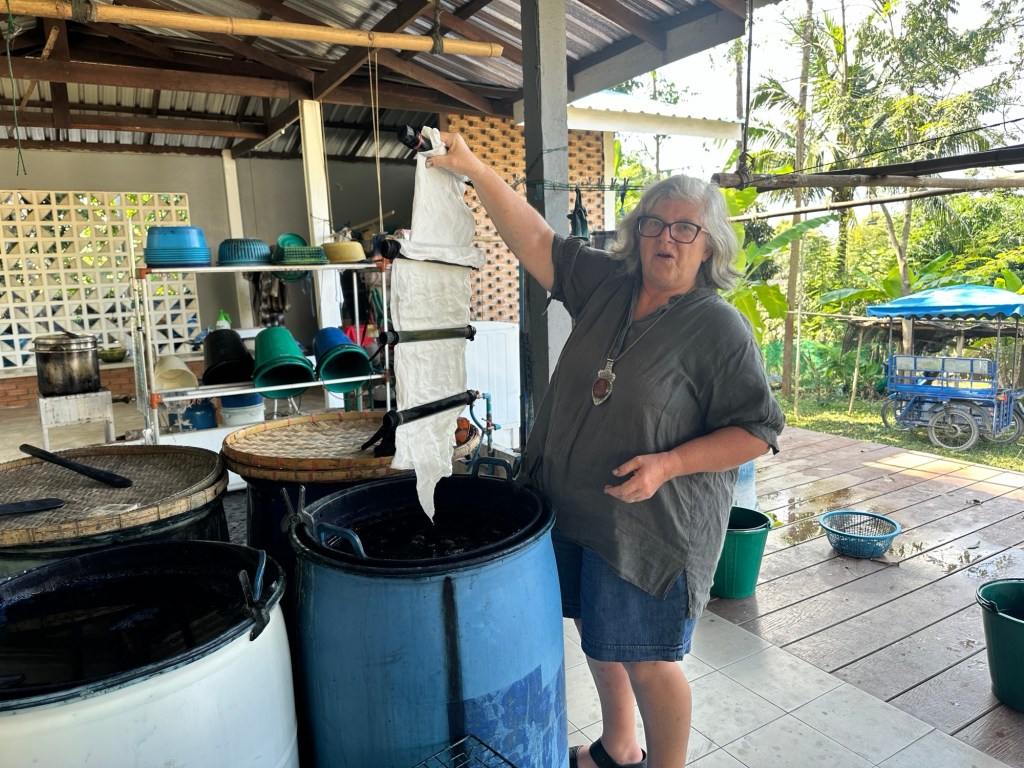
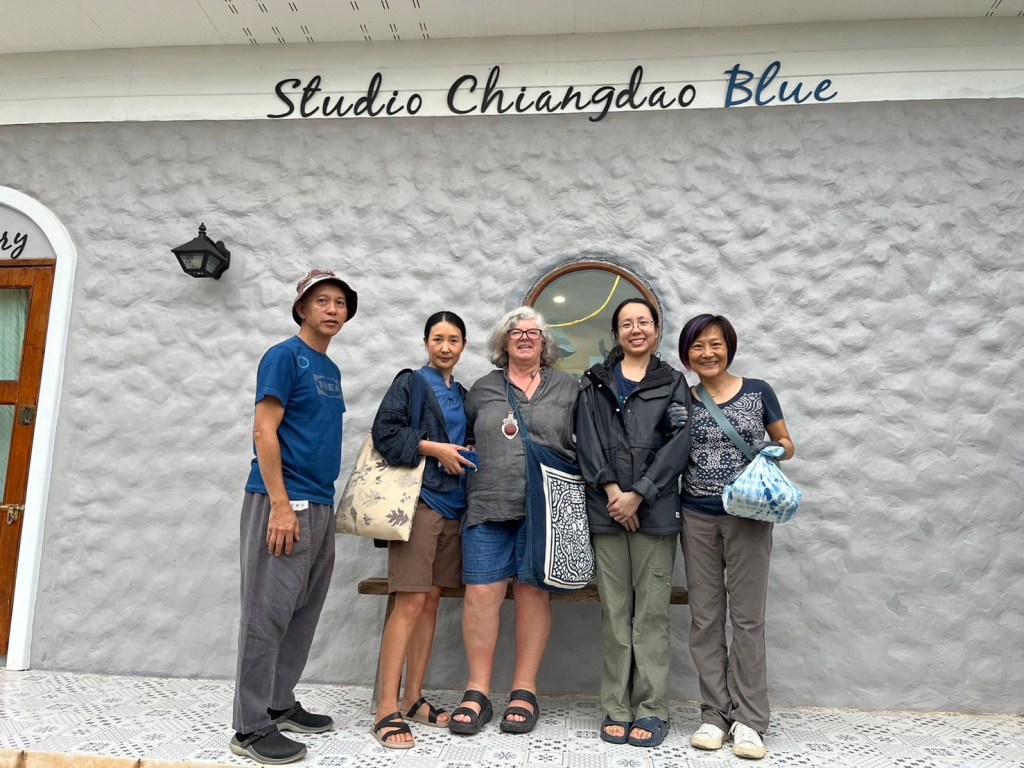
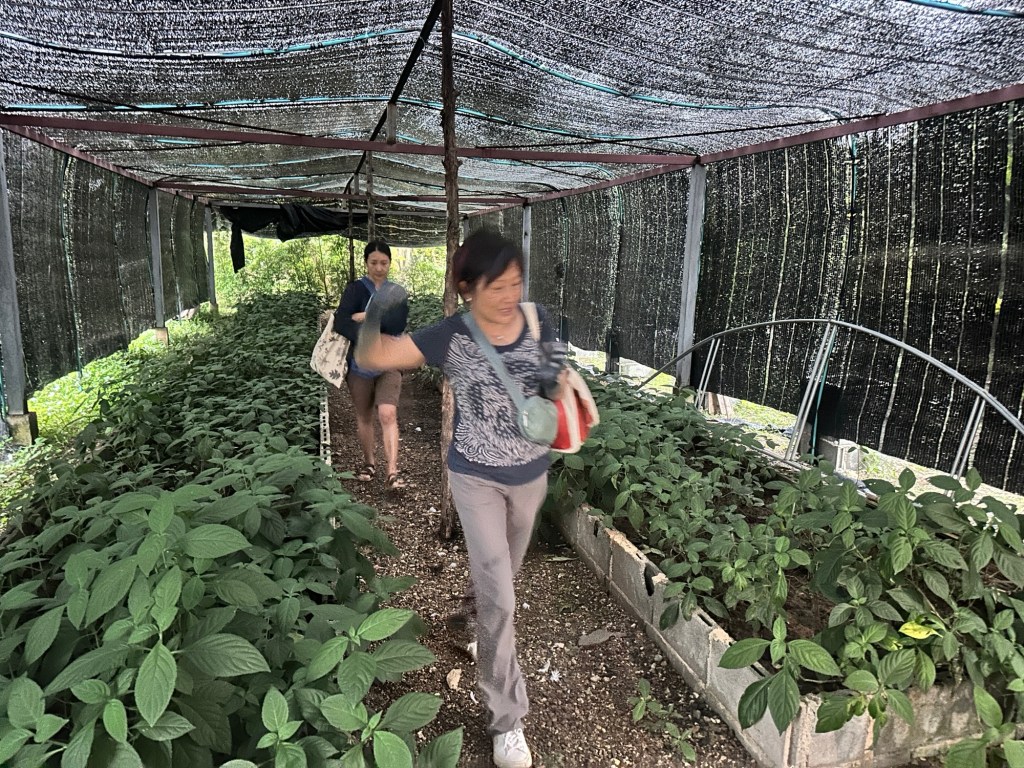
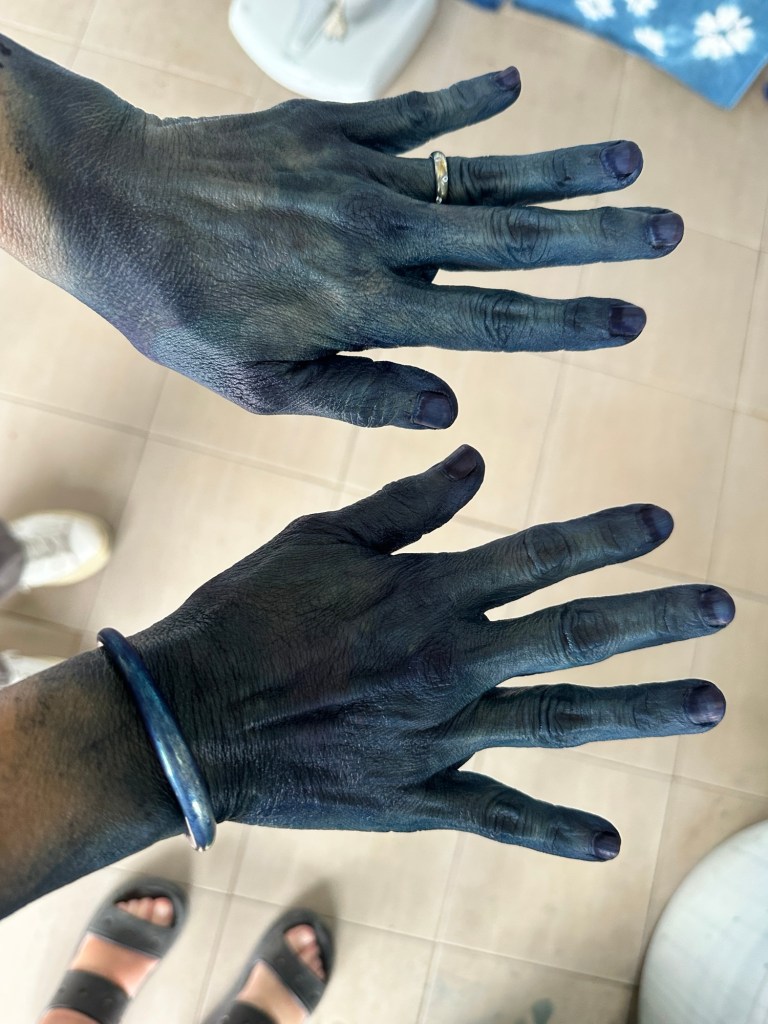
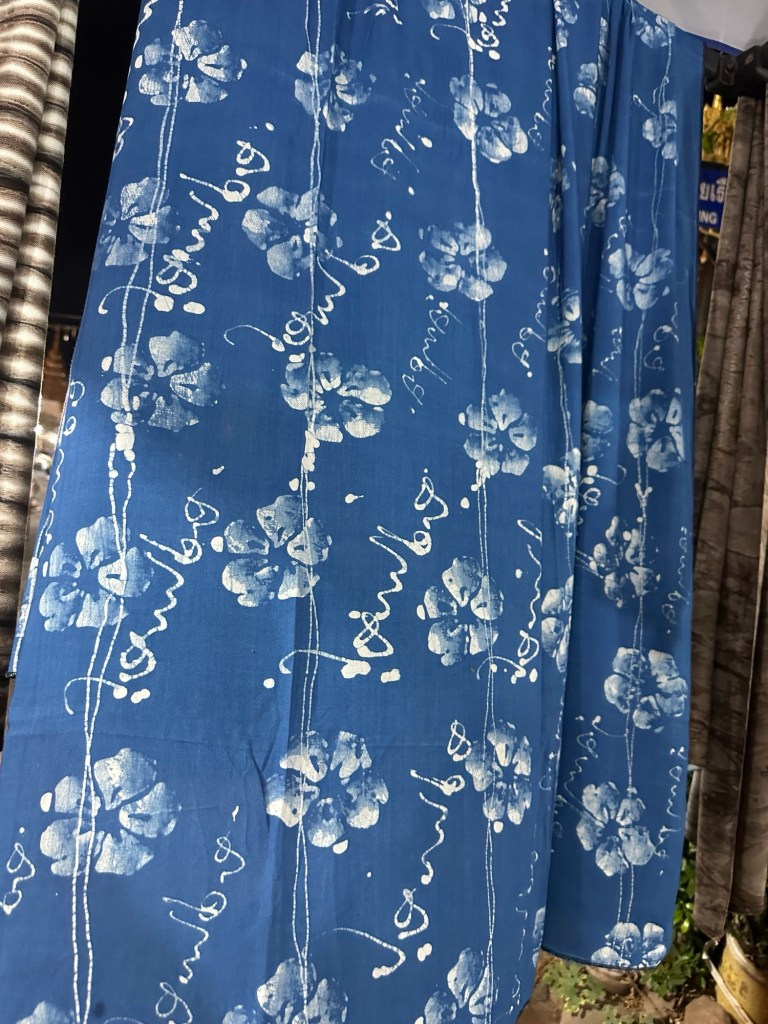
Together we will meet in Bangkok were we will spend a couple of days discover while we recover from the long journey. We will acclimatise to the hot weather, learn to greet in Thai, visit one or two temples and start discover before moving to Sakhon Nakon were we will visit a wonderful dye garden. There we will mingle with the dyers and growers of Cotton and Indigo. We will meet some, work with some and eat good Isan food with the locals, we will visit “Indigo Street” the week end market. In the dye garden we will discover local dye plants and over two days set out to create colours on fabric and embroidery yarn to take home. We will travel to our final destination Chiangmai. In the northern town we will discover local textile and food markets, we will discover the Lanna culture from history to every day life, We will learn about manuscript woven covers and perhaps learn to weave one and many other local customs. Our last day will be spent in Chiangdao dyeing with Indigo some pieces to take home before visiting an Indigo plantation.
I have arranged this trip making sure that not only I share with you the best of my knowledge but my very own friends… Your financial contribution will benefits to local communities and individuals whom I personally know and work with on a regular basis. This trip is very personal to me. This is my way to introduce a very small group to my own network but also giving back to my network to compensate for the beautiful “taking care” they are providing for me year after year.
My family will become your family for the 13 days and 12 nights. Together we will discover the textile and natural colours of Thailand. We will visit museums and galleries, meet contemporary dyers and communities, visit dye gardens, visit Markets and specialised studios. We will taste delicious local food and mix up with local artists.
During our retreat of 13 days and 12 nights we will become a creative community, a family and make unique memories. In 13 days we cant see everything but I hope this will give you an appetite for coming back.
I have calculated the cost of this trip trying to be fair to everyone, that is making it as affordable as I can but making sure that everyone we visit can benefit from our passing by. The prices quoted should cover most of your time with me from the moment we meet in Bangkok until we part in Chiangmai. It will cover your accommodation as described in the itinerary, Most of your food, our local transports, the workshops and entries into the museums we visit. I am making sure to cover sensible fees for all helpers and tipping will be at your discretion. Off course I will be getting a fee for preparing and for leading this tour because a lot of time is going into it.
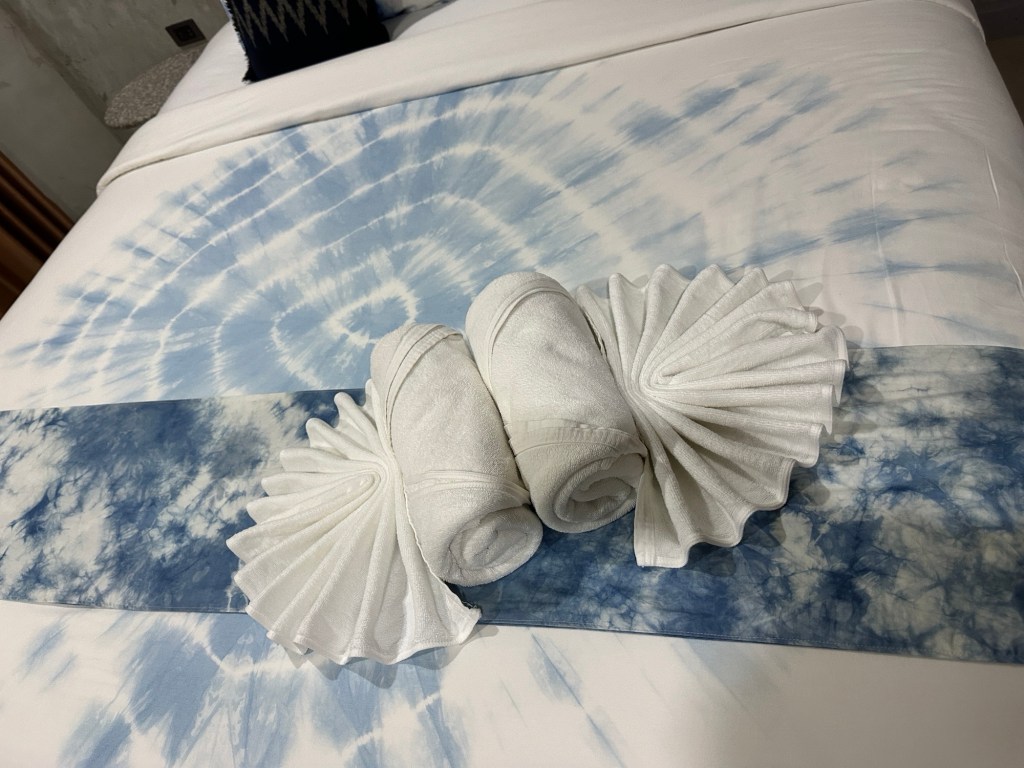
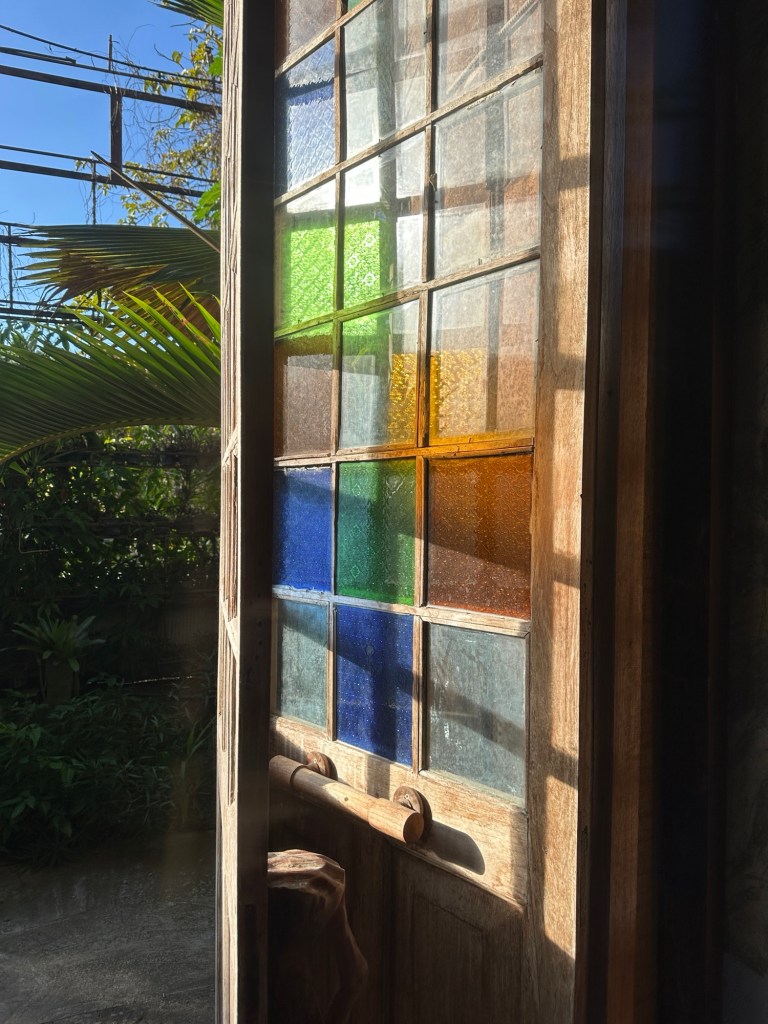
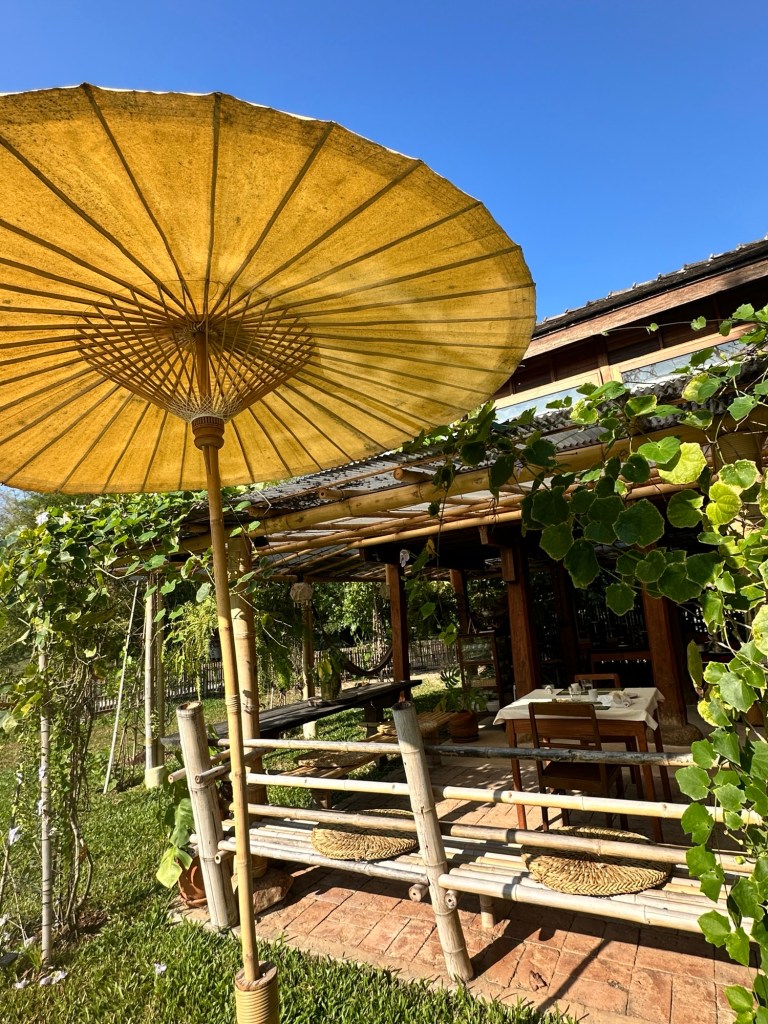
We will stay in lovely local hotels and eat delicious and healthy Thai food. I have personally tested all location. Most of them are my favorite
What about cost of food:
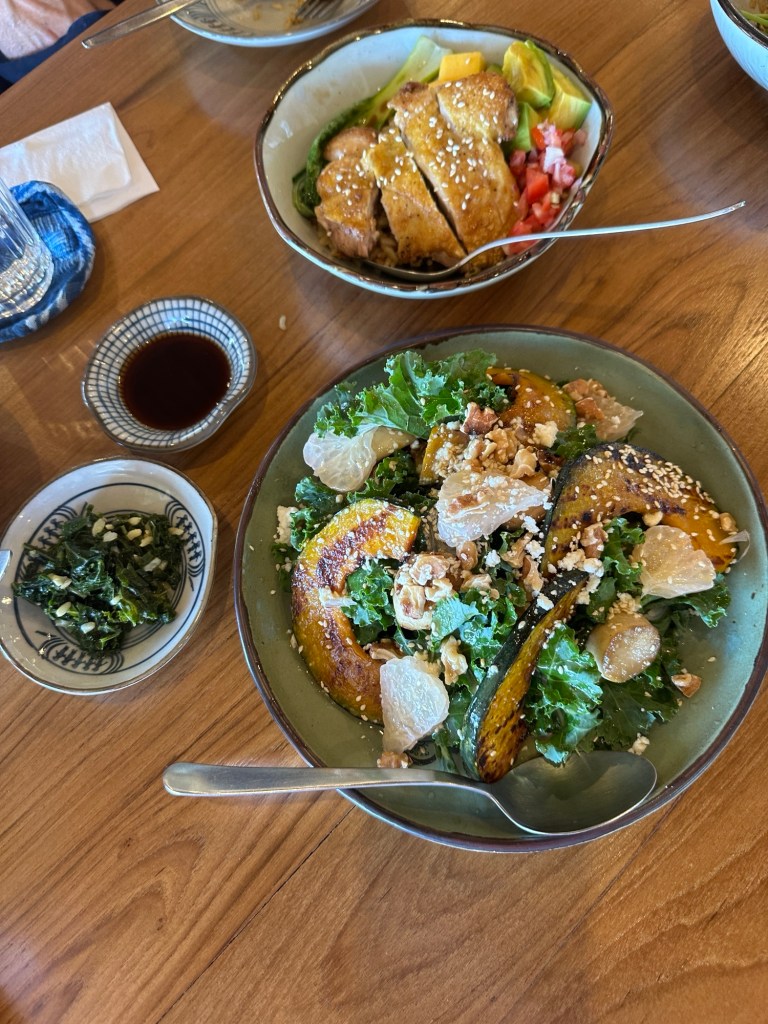
Most of the meals are covered because some of the locations we will be travelling in might make it difficult to find an alternative. When in Chiangmai you decide to take time off, it will be possible but I will not be able to operate any refund for meals you would not take with the group. I will operate on the same basis for the workshops I have planned. However when we visit markets I have planned a free lunch to allow you to explore. If you decide you still want to eat with the group we will grab a few dishes and eat together for little money.
About your time before and after the retreat:
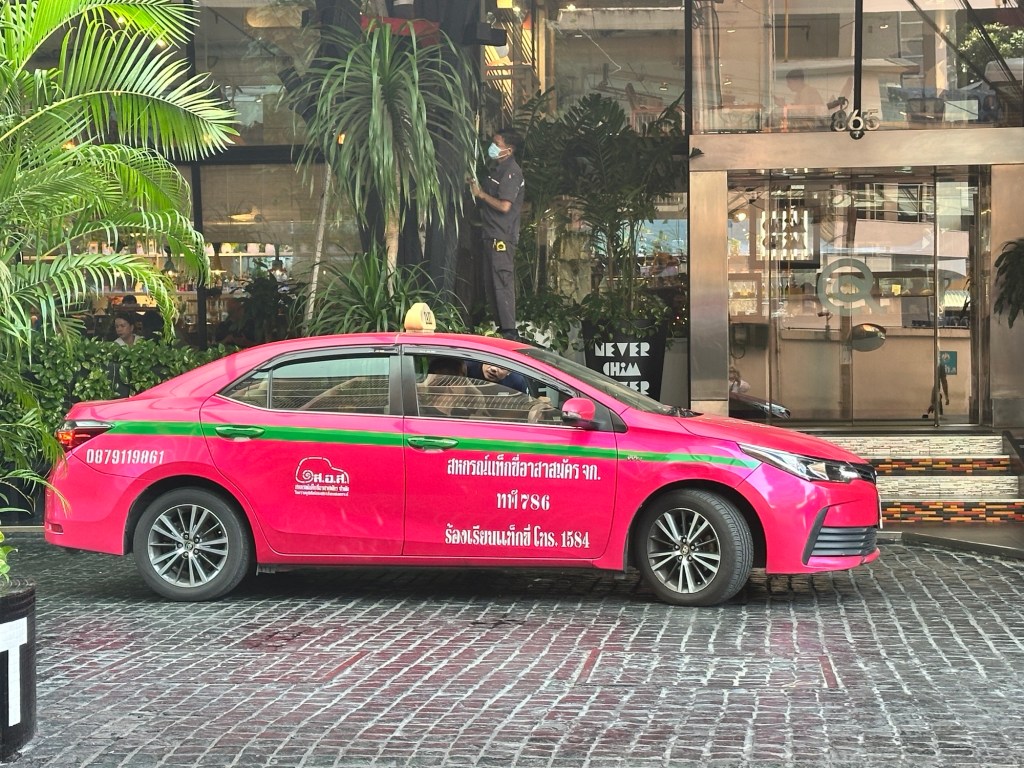
We will start in Bangkok because it will be most travellers’ port of entry in Thailand and our hotel is only a short taxi journey from the main airport. I will share advice on possible ways to commute to our hotel but I will not take responsibility for your arrival in Thailand nor your transfer, our hotel has however to organise a transfer if you do not want to brave the local taxis, it will be up to you to approach me to request it. Our retreat will start on the 20th November at 6pm at our hotel (Central Bangkok), you will be able to check into your hotel from 2pm and leave your luggage there before if you arrive very early.
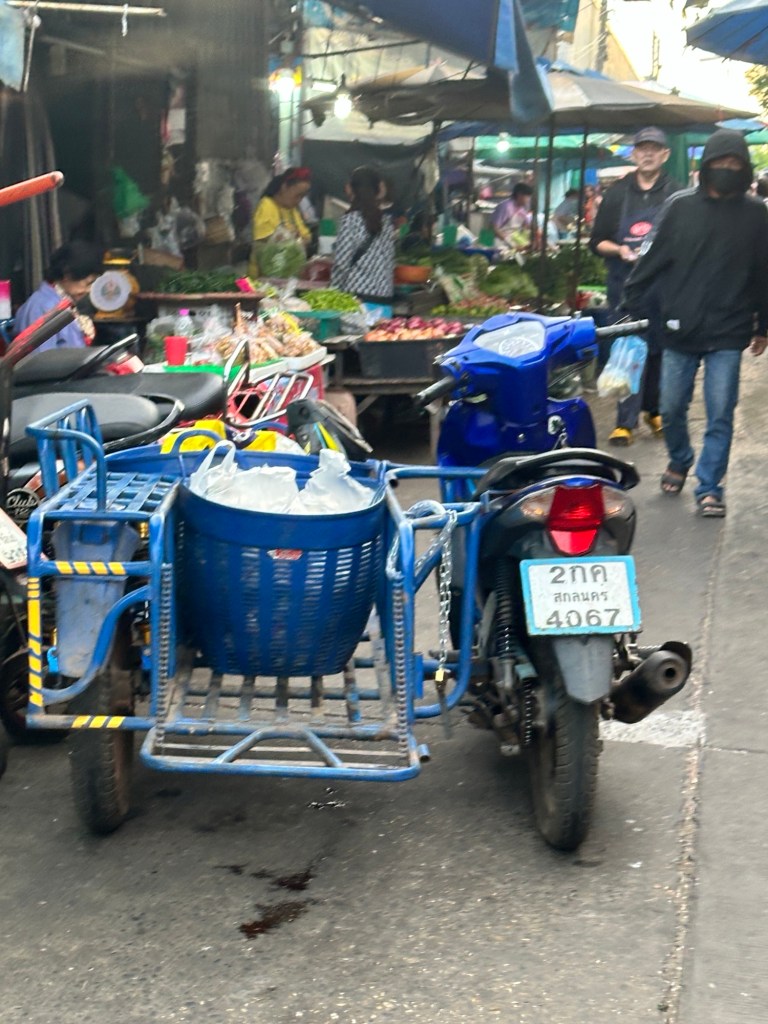
We will visit local markets and crafts markets which will connect you with very interesting aspect of Thai life. I can take you out of the beaten touristic track
Please check the time difference with your own country and assess if you need an extra time to get over jet lag. Although we will start slow some people need an extra day or so to recover from long haul. It will be possible for you to arrange additional days accommodation directly with our hotel. I will not be able to do this for you but you could request contact details.
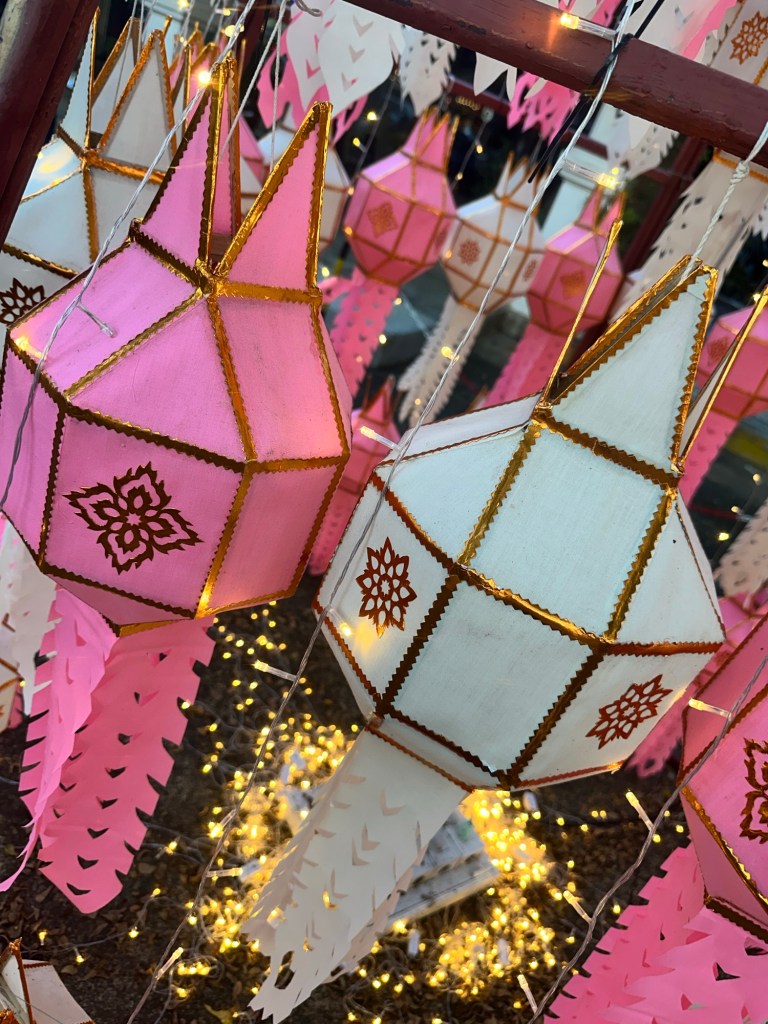
We will part company in Chiangmai because it is just possible you decide to extend your trip once there and the North offers many option for more travelling further (visiting temples, going into Laos, visiting the Golden Triangle). The SEN festival and Chiangmai Design Week this year kick in a few days after we part. I will not be able to organise further accommodation but I can point you to the relevant websites and I will communicate dates of relevant events to those who booked on the retreat.
We will take part in dye classes through our trip to find the colours of Thailand, in dyeing with plants, Indigo dyeing, watercolour making, banana tannin printing. We will meet contemporary Thai dye artists
INSURANCE:
This is always a very important subject for me when travelling in South East Asia.
This retreat does not include any cover for well being or attendance for the participants, nor for any accident you might have if you tripped or crossed the road without looking… I will only be able to accept participants who have contracted a travel insurance that will cover them for any health issues, and for your own benefit you should seek cover in case you have to cancel your attendance before the trip. I will request the detail from you before I welcome you in Bangkok.
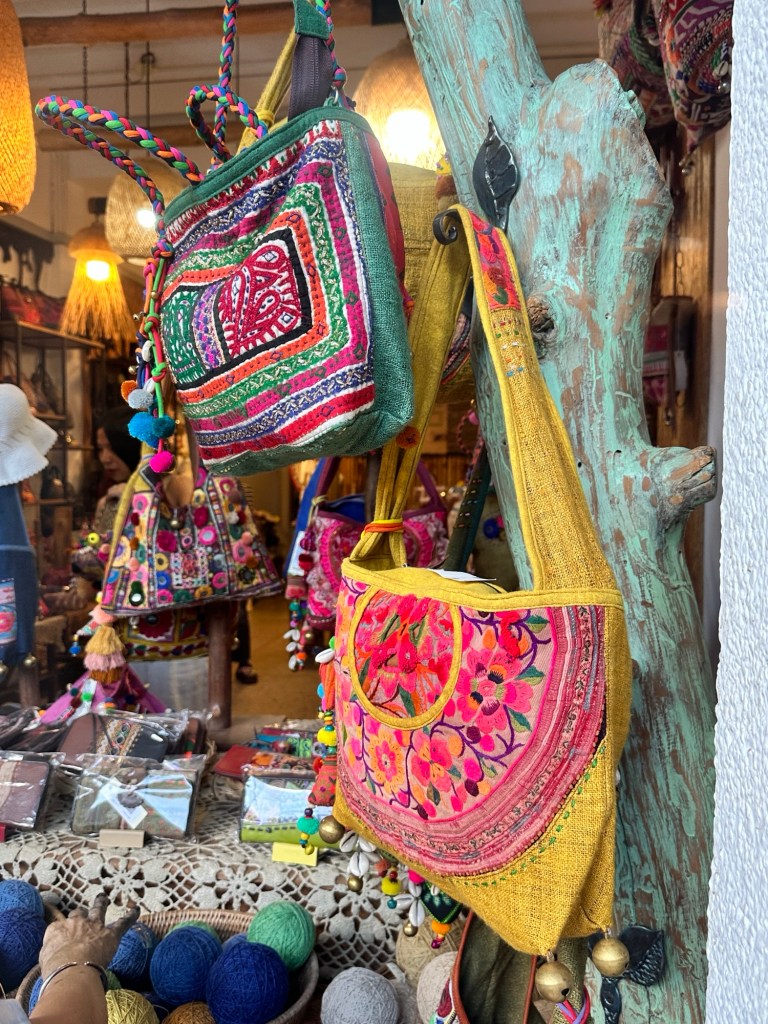
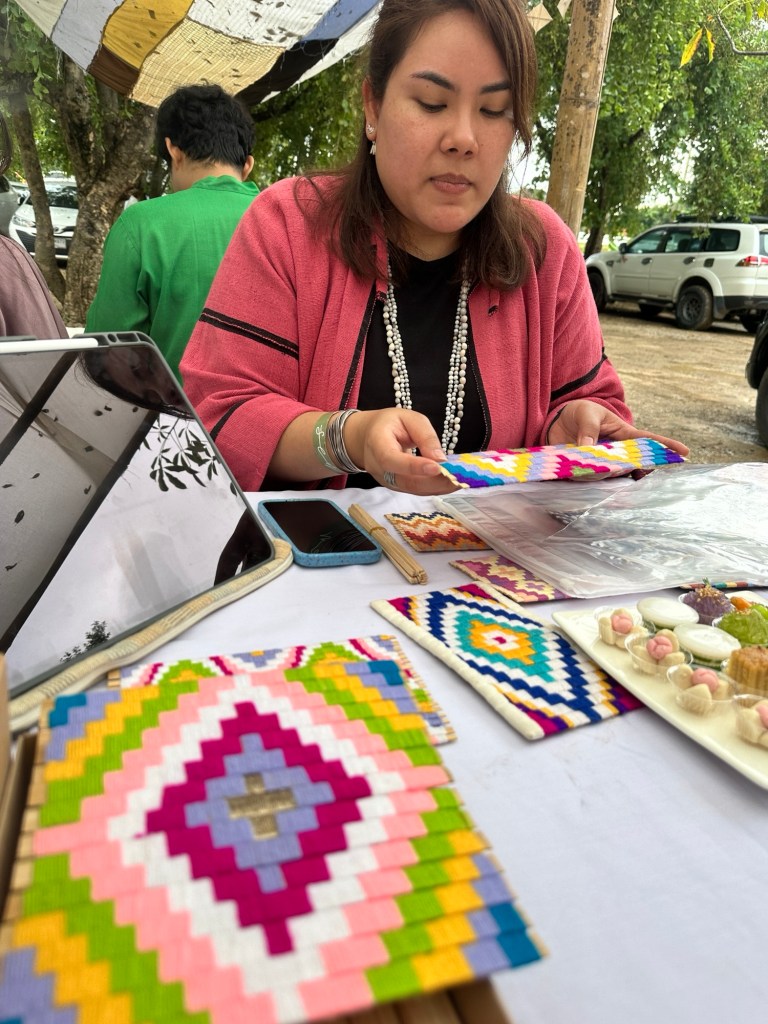
We will discover some traditional and contemporary craft
BOOKINGS and CANCELLATION:
In order to secure a space after your booking request has been accepted you will be asked for an initial deposit of £1000 that is non refundable, you will have 48 hours to make the payment (by bank transfer or by credit card) . The final payment will be due 12 weeks before the trip starts. A request will be issued on the due date and you will have 48 hours to make the payment. Both Credit cards and transfers will be available.
Refund conditions are:
From time of booking to 12 weeks before trip date = Loss of initial deposit but balance due will be cancelled.
From 12 weeks before trip date, cancellations will be accepted, the cost of the cancellation will be of 100% of the cost of the trip unless you can substitute a new participant in which case the cost will be of £500 for administrative and the amount refunded will be what was invoiced to you less £500.
Substitution will be accepted only after the payment has been made by the alternative participant or your balance transferred to them if that is a better option to you. Please note the refund would be make in £ British which might result in a slight loss/gain due to exchange rate with your own currency.
INFORMATION:
Please find below the relevant information and details to allow you to register interest.
Please note that bookings will be taken from the 10th February at 10am GMT, until the trip is filled. There are only 6 spaces and I need them filled for us to go ahead. All bookings are final please make sure to contract a travel insurance in case you need to cancel.
You will be able to secure a space with a deposit of £1000. Below you will find all relevant information concerning price and payment conditions for single and shared rooms.
You will find here:
Please note the following information:
The tour price and conditions are available on the Booking form page.
A deposit of £1000 (UK pound sterling) is necessary to secure a booking together with a fully filled booking form. On reception of your booking form and when request has been accepted I will send you information for payment. You will have a week to make payment of the deposit. The balance will be due 12 weeks before the retreat. Delay in final payment will be followed by cancellation of your booking.
We need 6 bookings for the trip to go ahead and you will be advised when that is secured so that you can make your travel arrangements. The final deadline will be on the 1st October 2025.
Please make sure you only apply for a space if you have a good level of fitness and mobility as in our trip we will be using local transport, use buildings that don’t have lifts or escalators and some days walk little distance etc… If you are vegetarian please note that fish and fish sauce are used in most Thai cuisine.
If I dont need the minimum number of bookings I will have to cancel the trip and you will be advised before the 12th of August. In that case you will receive a full refund of the amount you were invoiced in £ sterling.
Places will be allocated according to available single/twin room allocations and your request.
A final itinerary including hotels and stopping points will be sent to the booked participants after full payment.
Please read the notes and if you decide to apply for a place in the retreat use the Booking Application here. Email it to bettysbeautifullife@gmail.com using the subject “Colours of Thailand” after the 10th February.
You will meet some incredible people who will make your trip a memory to keep … they will become family
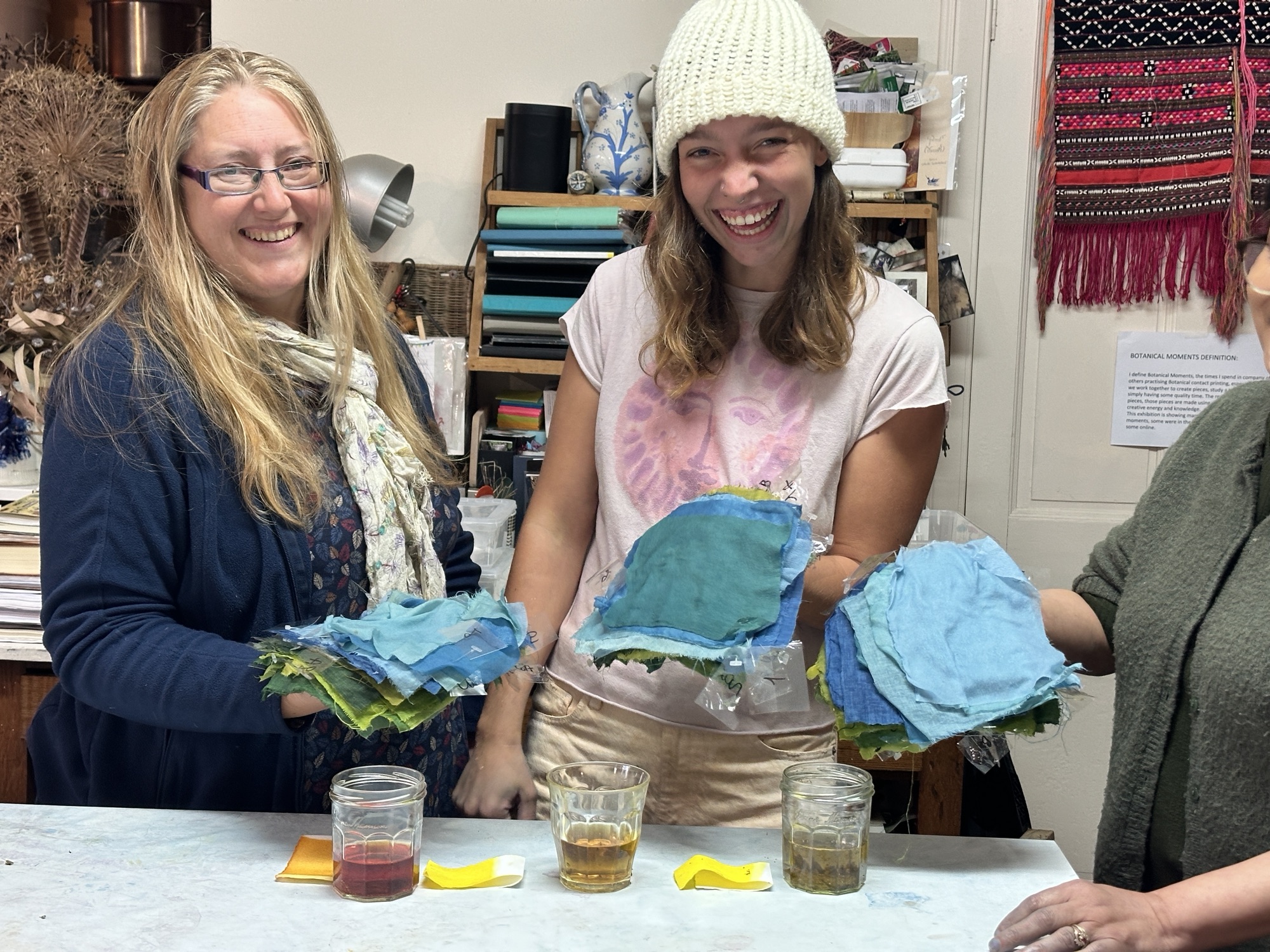
One of my most joyful moment is to share my skills as a natural dyers with less experienced artisans or artists who want to understand and learn to use nature to create colour.
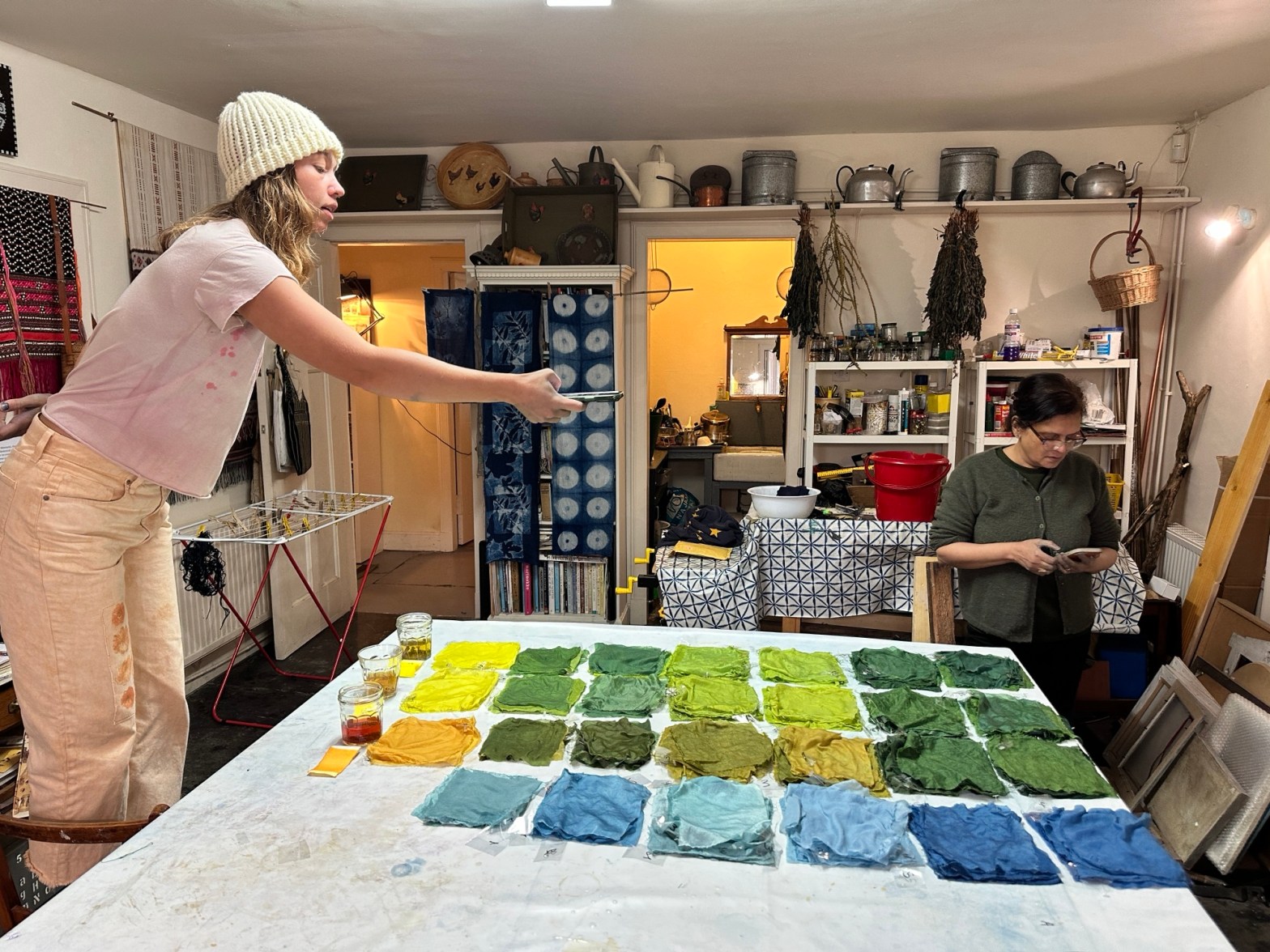
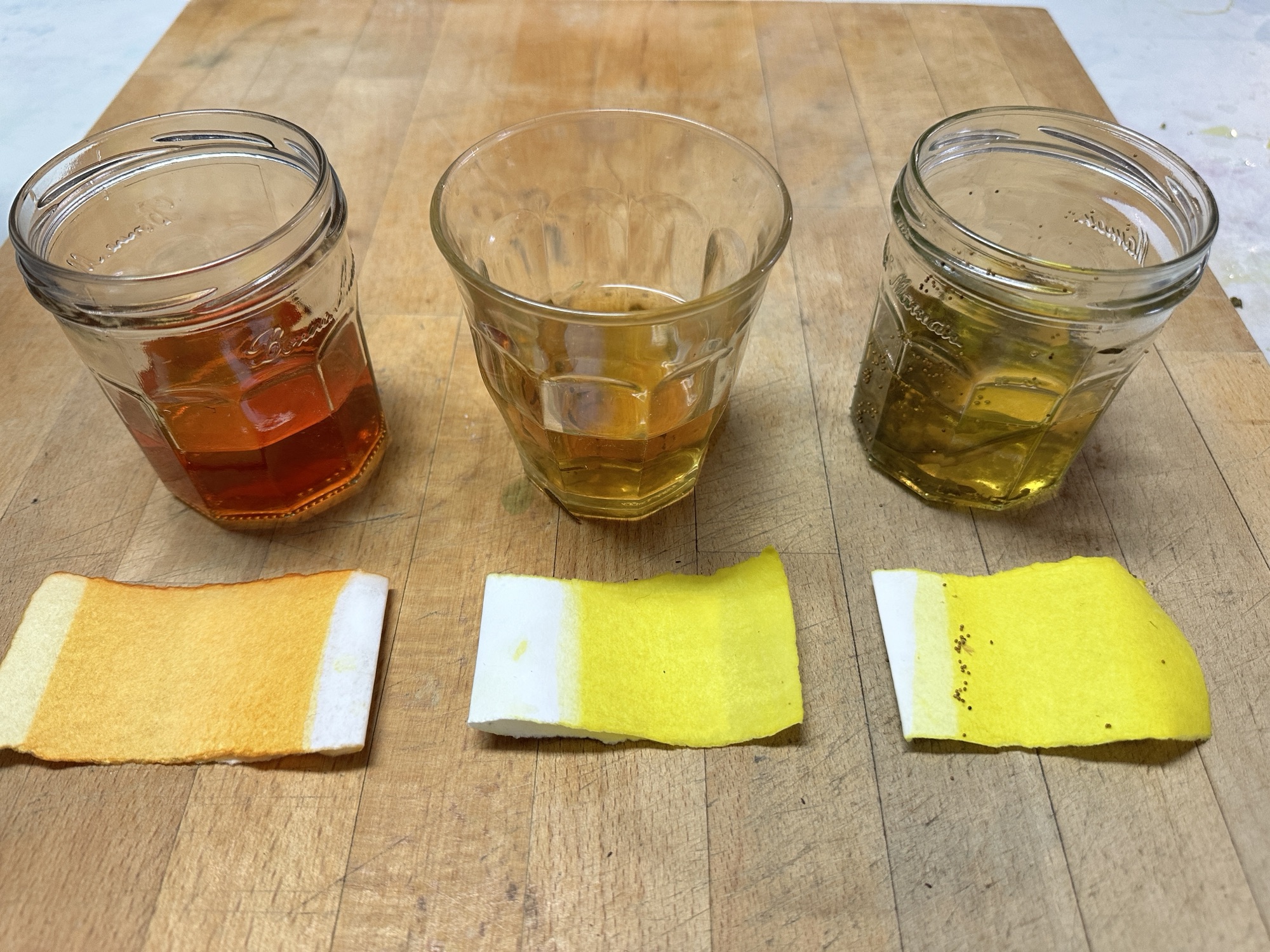
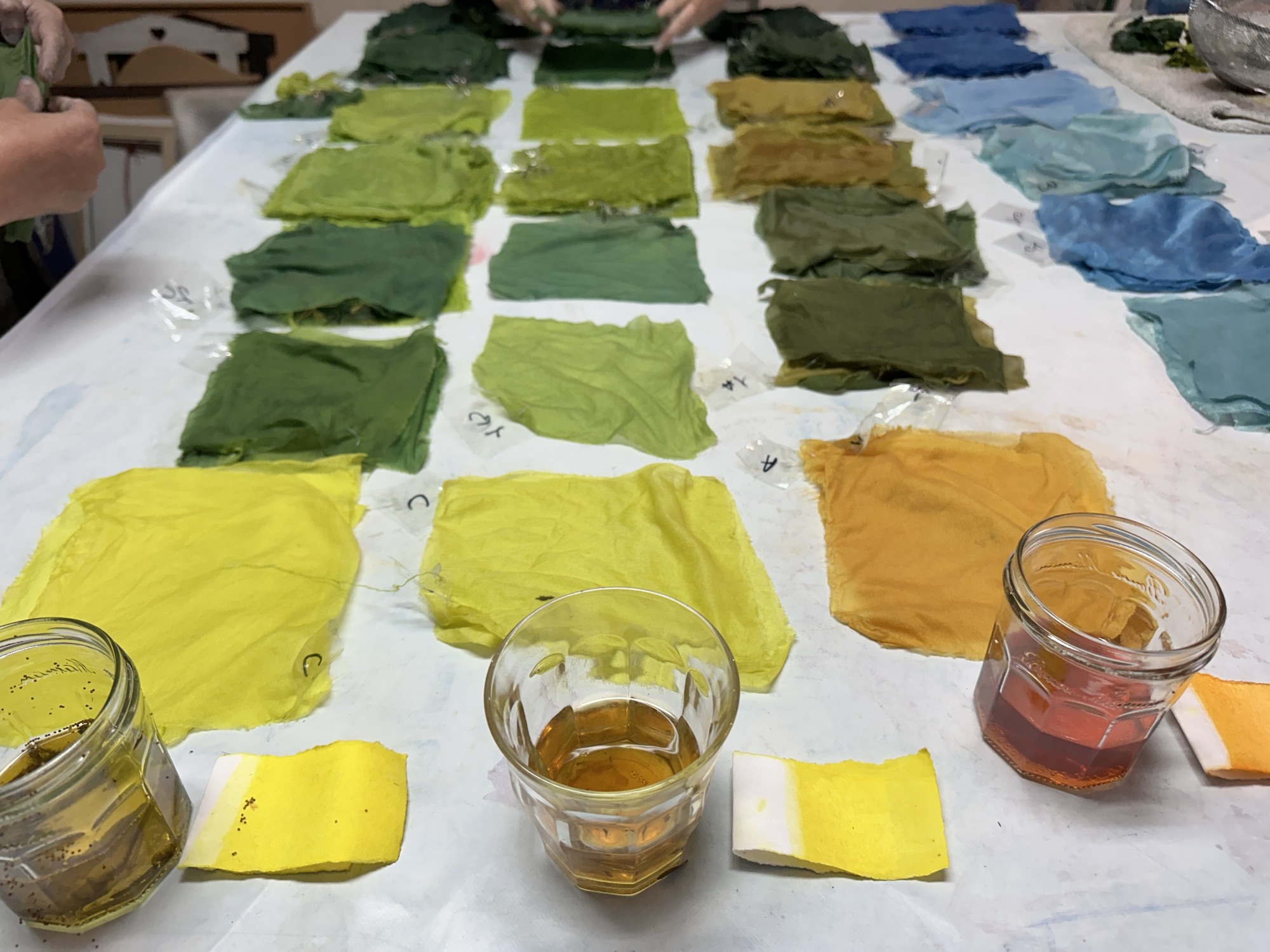
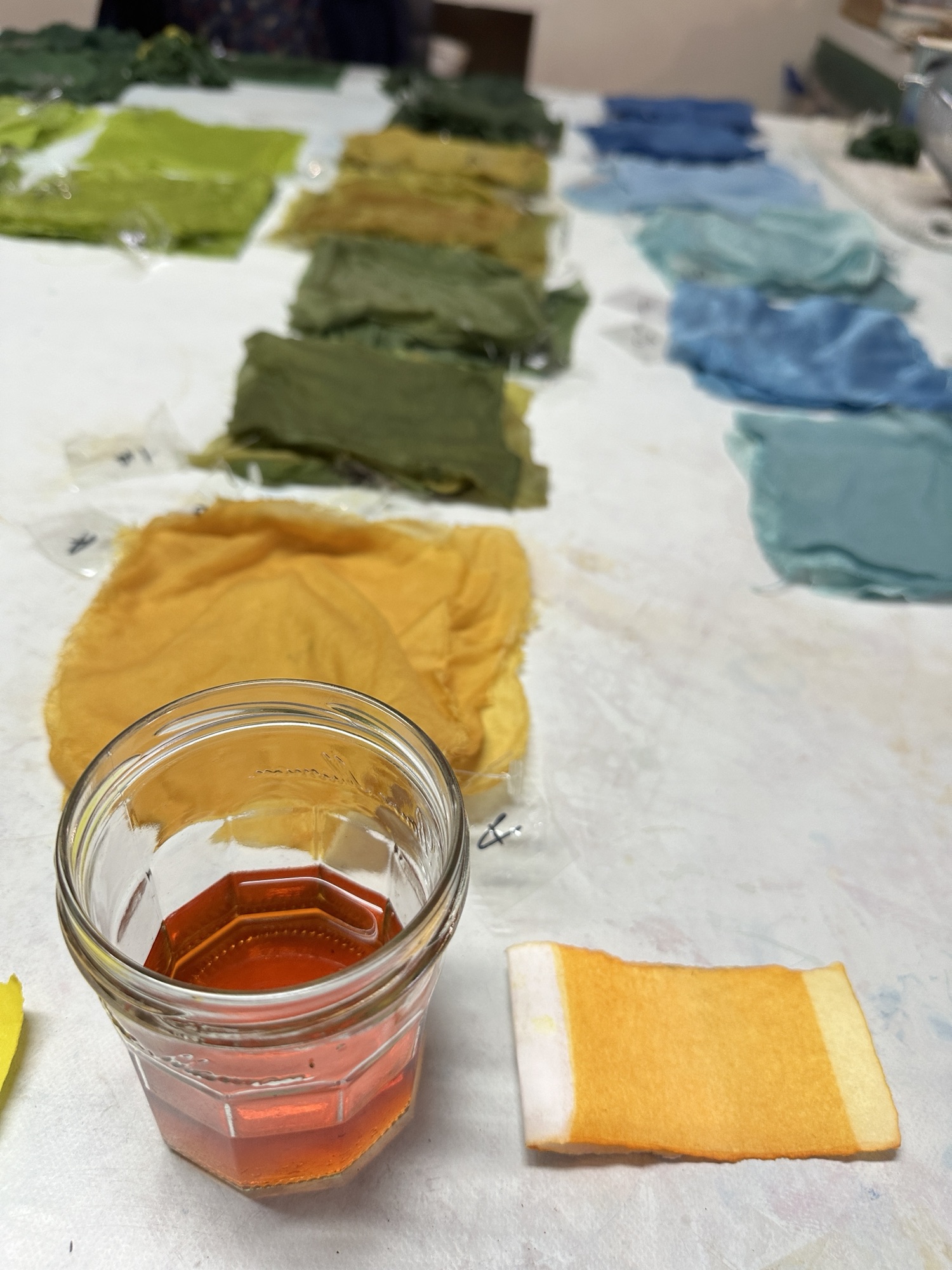
I work from first principal cultivating dye plants, forageing them and swapping them with other dyers to be able to create a full colour pallet. Over the past 10 years I have been learning from masters and from practitioners to be able to create the perfect colour green. That involves understanding mordants and fibers and working out the balance between the blues (woad or indigo) and the yellows (some of which are the wrong yellow for a nice green if that can exist) .
It is my pleasure to offer this year the opportunity to book yourself in a two (or more) days of mini residency at our mutually agreed time to create a shade card of yellows, blues and greens from my local plants. We can add off course some reds from added roots or bugs and go for a full rainbow but it might take longer than two days for this.
Over two days you will:
Learn about fibres
Learn about cleaning and mordanting
Understand dyes and tannins
Select plants and learn to extract for best cover, if the weather allows we will take a local walk to point out local plants that can be used.
Dye both cellulose and silk samples.
Neutralise and finish your fabric.
learn to record your results
Finally go away with a selection of colours and robust knowledge about natural sustainable dyeing in your own location.
If you would like more information about price and dates please email me at bettysbeautifullife@gmail.com mentioning “A colourful walk mini residency”
Please note… the residency takes place in my studio at an agreed date/time and runs from 10am to 5pm unless otherwise agreed. We take a break for lunch, I supply tea and coffee but not lunch.
Please note… Unfortunately my studio access involves unfriendly stairs it is not suitable if you have access issues. If you do so I can help finding an alternative venue.
Please note… Natural dyes is a dirty business and involves a lot of standing up make sure you have confortable shoes and a little old jumper with you, dyes can stain your clothes.
Please note… I only work with the material I supply but if you want to test your own write in before so we can arrange it.
Please note… I do not offer residential spaces but I can suggest local small hotels and bnb that are very friendly. My studio is based in the West end of Glasgow and is very accessible by public transport. There is parking available (pay and display or free on week end days).
Please note… I can accomodate two or three dyers at the same time.
I look forward to hear from you.
Betty
THE LANSDOWNE HOUSE
The workshop and your tuition was inspiring. I went home created an art space and began designing






















































 THE LANSDOWNE HOUSE