
Protected: From Seeds to Blue 2024 growing program page
Growing and Using dyes with The League of Artisans

Calling everyone near Leek (UK) in the Starffordshire Moorlands who is interested in growing Natural dye plants, whether you have a garden or just a few pots !
I am so very delighted to join forces with The League of Artisans https://www.instagram.com/leagueofartisans/ this summer as they have decided to join in my “From seeds to Blue” home growing program for Japanese Indigo and Woad and together we will be learning a lot about dye plants and natural colours.
The organisation is based in Leek an area in England that has an amazing heritage in natural dyes and textile and their newly formed group is keen to gather a community of dye lovers. I am so excited to hear that they have organised for the coming September A textile week during witch we will use the dye plants grown locally to create shades of yellow, blue and green.
This is a call out for wannabe growers/dyers and I hope we will find a good few to help.
You must be based in the Leek area in the Moorland and have a minimum of growing space which can be pots… and a great desire for the colour blue…
But better read what they say
🪴We are excited to announce our involvement in the community of Japanese indigo and woad-growing natural dye plants. As the organisers behind Leek Textile Week, we invite you to join us in growing, harvesting, and dyeing with these plants leading up to and throughout the week of 23-29 September!
🌱We will provide the woad and indigo seeds for those interested in growing dye plants and cover the participation fee for online workshops.
🌍By joining this programme, you will be part of a community growing blue sustainably, gaining valuable insights into the growth and chemistry of plants and colour, along with producing your very own dyed fibres and cloth!
The amazing Elisabeth (@bettysbeautifullife) will be hosting the online course, as well as workshops during Leek Textile Week.
⏱️Here’s what to expect:
April → Germinate seeds
End of April/May → Repot
June → Plant in ground
July → online demonstration of how to use fresh leaf indigo and woad, as well as step-by- step instructions
End of August → second online workshop showing how to extract pigment and make a woad vat and dye process.
27-29 September Leek Textile Week → 2 days of in-person workshops delivered by Elisabeth Viguie-Culshaw and Kate Turnbull (@thesecretdyer)
🧡A special thank you to Elisabeth for her generous support and for hosting this amazing workshop! If you are interested in participating in growing woad or indigo, please DM for more information with an indication of area/seeds required. Participation only open to those who live in the vicinity of Leek.
I hope you will all join in forces and I look forward to meet you in Leek in September.
Love Betty xx
WHICH VAT, UNDERSTANDING AND CHOOSING YOUR INDIGO VAT, FREE ONLINE EVENT !
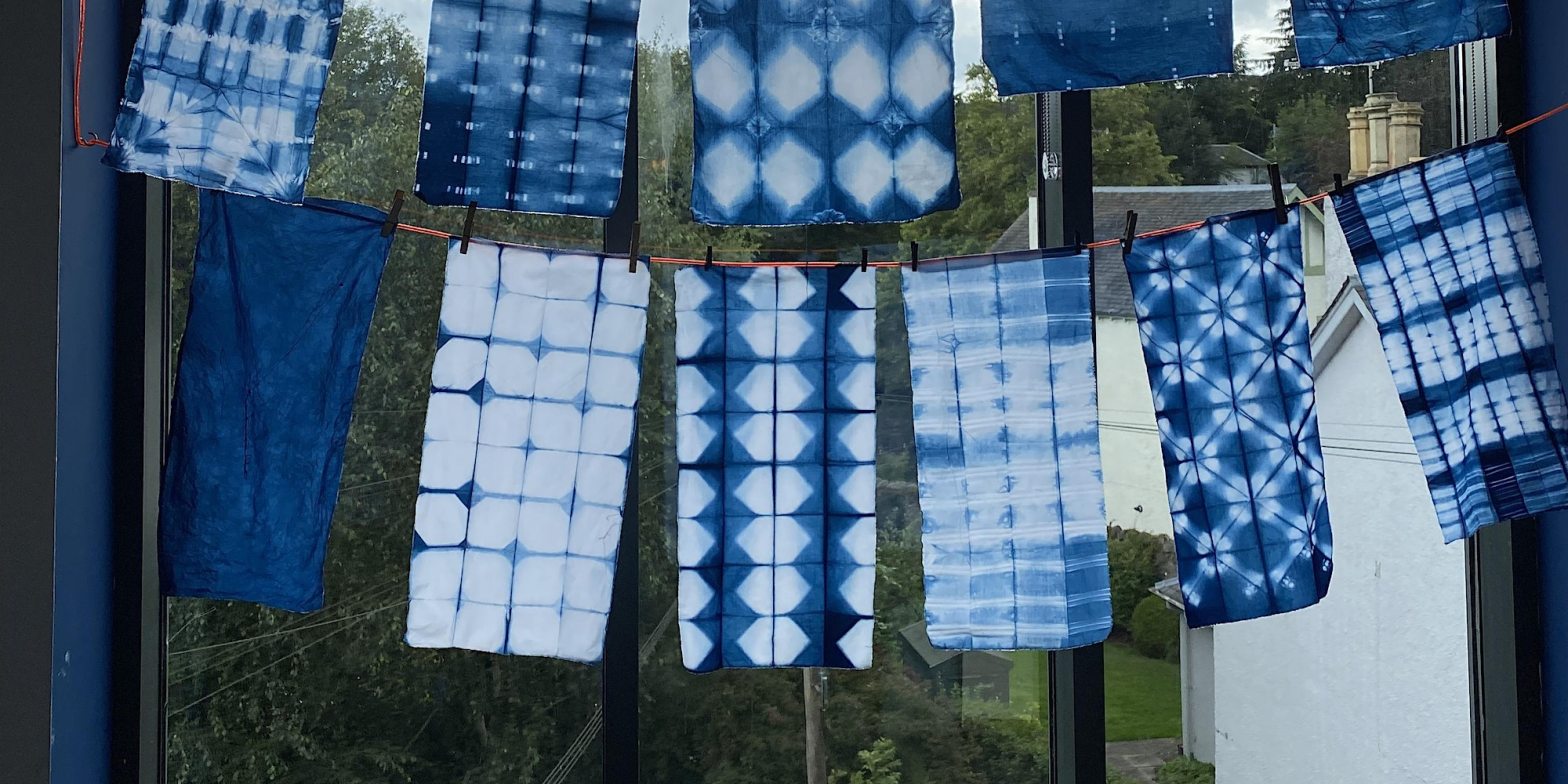
THIS EVENT IS NOW CLOSED FOR BOOKING BUT I MIGHT RUN THIS AGAIN IN THE FUTURE KEEP AN EYE OPENED.
Elisabeth Viguie Culshaw is a Natural dyes and Indigo practitioner based in Glasgow (Scotland) She grows there a natural dye/Indigo garden in the grounds of the Glasgow Botanical Garden and runs a “home grower program” of Indigo dyers every summer.
She travels far to learn from Indigo dyers around the world and keeps a large ferrous vat in her studio in Glasgow where she teaches workshops as well as online.
In this one hour Webinar she will be describing the most common vats used in the West and discuss with you the pros and cons. There will be a time for questions and answers.
The talk will happen on Zoom live and is recorded to allow recorded partcipants to view if not available at this time. It will be available for 1 week only.
BOOK A DONATION TICKET (Donation is to cover platform costs)
To carry on your exploration with Indigo please check her other events related to Indigo growing and dyeing this year.
- Indigo dyeing in Glasgow in March : https://www.eventbrite.co.uk/e/indigo-dyeing-studio-workshop-tickets-797247939047
- Growing an Indigo dye garden at home with Elisabeth, online on zoom (starts April) : https://www.eventbrite.co.uk/e/the-indigo-plot-grow-indigo-and-woad-and-make-colour-2024-tickets-716586388177
- Making a ferrous vat and learning to use resist paste for pattern making, April : https://www.eventbrite.co.uk/e/pattern-making-with-indigo-online-live-workshop-tickets-825067417857
- Indigo dyeing in Glasgow in June: https://www.eventbrite.co.uk/e/indigo-dyeing-studio-workshop-tickets-797250667207
- Indigo dye residency in Glasgow 2 days in August: https://www.eventbrite.co.uk/e/from-blue-to-green-indigo-dye-residence-at-the-indigo-plot-tickets-797258831627
- Indigo dye residency in Glasgow 2 days in Septembre: https://www.eventbrite.co.uk/e/from-blue-to-green-indigo-dye-residence-at-the-indigo-plot-tickets-797271940837
Eco Print sur paper atelier virtuel sur zoom (en francais)

L’Ecoprint (ou Impression Botanique) sur paper est une forme d’impression monoprint qui vous permets de travailler creativement sur papier en utilisant simplement la nature autours de vous.
L’atelier virtuel sera enregistre et les enregistrements vous serons partages pour utiliser plus tard ou si vous n’etes pas en mesure de prendre part en live. Vous les garderez pendant un an.
J’enseigne l’Ecoprint sur papier depuis 2015 et cette annee j’ouvre mes cours en Francais. Des ateliers virtuels et un atelier residentiel cet ete du cote de Toulouse. Pour l’information sur l’atelier residentiel voir ci dessous… pour les ateliers virtuels voyez ici et pour toute questions merci de m’ecrire a bettysbeautifullife@gmail.com
INCRIPTION AUX ATELIERS VIRTUELS EN FRANCAIS : (pour tout probleme contactez moi par email).
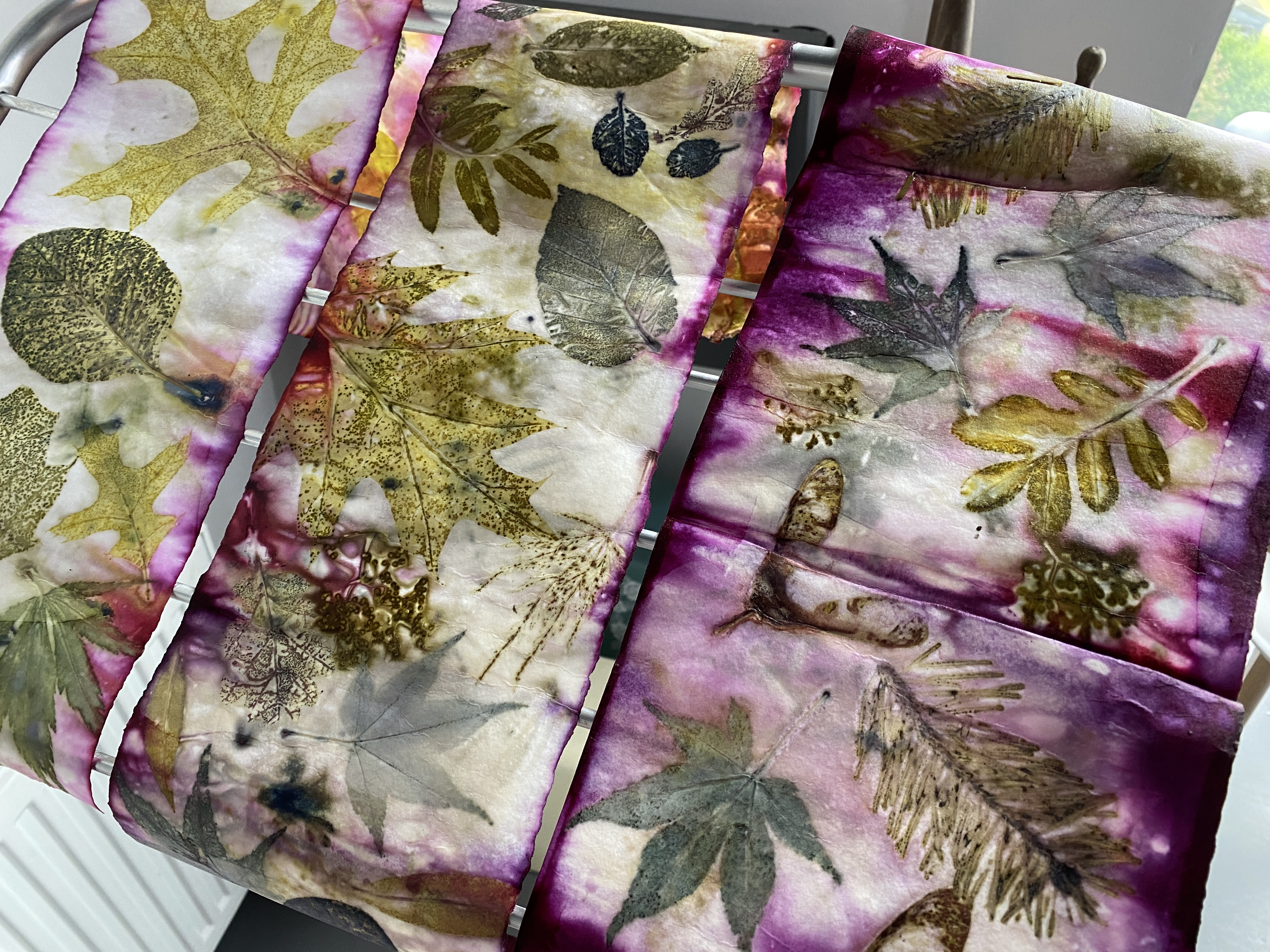
INTRODUCTION A L’ECOPRINT SUR PAPER – ATELIER VIRTUEL SUR ZOOM 22 JUIN 4 PM (PARIS)
Cet atelier est en Francais, Il est enregistre et vous recevrez une copie de la video avec des instructions que vous pouvez garder pour le futur. Cet atelier est parfait pour les novices. Participez a mon atelier virtuel Introduction sur l’Ecoprint sur paper sur zoom, passez 2 heures a apprendre les bases de selection et preparation des papiers, teintures et botanics (feuilles et fleurs). Pendant ce cours je couvrirai les bases dont vous avez besoin pour creer votre espace de travail. Je vous montrerai comment debuter et travailler sur des impressions petit format (pour faire des cartes, petits livres etc…) nous utiliserons la methode d’impression par immersion. Vous recevrez une liste de kit une semaine avant l’atelier et nous nous retrouverons sur une page Facebook pour partager nos resultats. Pendant la session Live nous aurons le temps de repondre aux questions
€40.00

ATELIER D’ECOPRINT SUR PAPIER A L’ETUVEE 9 JUIN A 14 HEURES
Cet atelier aura lieu le 9 Juin at 14 heures (PARIS) sur zoom et durera 2 PM. Il est enregistre. Dans cet atelier specialise je vous devoile mon mordant combine qui vous ouvrez des portes plus colorees et vous permets de travailler par impression a l’etuvee. Je ne couvrerai pas les bases dont je vous demande de bien vouloir passer par le stage de debutant en premier. Nous aborderons le mordant combine, les blankets, le travail plus grand format. L’atelier sera en Francais, enregistre et partage avec des instructions pour usage futur. Je partagerai des fournisseurs et des tips pour votre “atelier a la maison”
€45.00
Protected: Indigo vat building and Printing with Indigo – online course
ABOUT THE INDIGO FAMILY AND TRAVELLING SOLO IN NORTHERN THAILAND ON NEW YEAR’S EVE

And it is the New Year already, 2024 already, time passes so fast when you are having fun learning and sharing as I have been doing for years now.
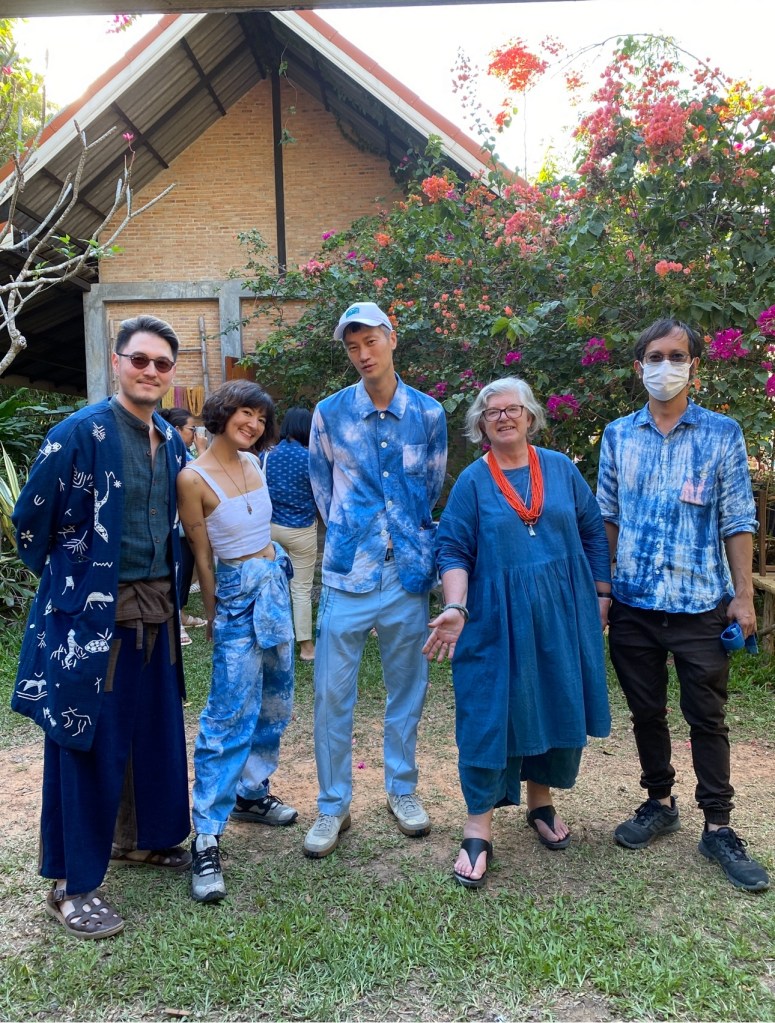
I have always had a wide group of friends which I like to call family, friends from home, friends from learning, friends from moving to Scotland, friends from travelling elsewhere, during the Covid crisis, friends discovered via online networks, and now I have been reminded that I have a special family linked with my love for the Indigo dye.
My family in Bali via The Threads of Life is forever in my mind and my brother Mann Crafts from Sakon Nakhon with whom I share regularly, Philip Hung my Bangkok designer friend who tries to Chanel the Indigo learning to the rich and famous, my Scottish friends who grow small scale but that does not mean they love less… did I have any space for more friends?

In the New Year of 2023/24 I was due to spend my time in Chiangmai Northern Thailand in a small location but on my own. Not really a problem as this place is so lovely and busing with so much activity, many places to visit, to have coffee, to eat…


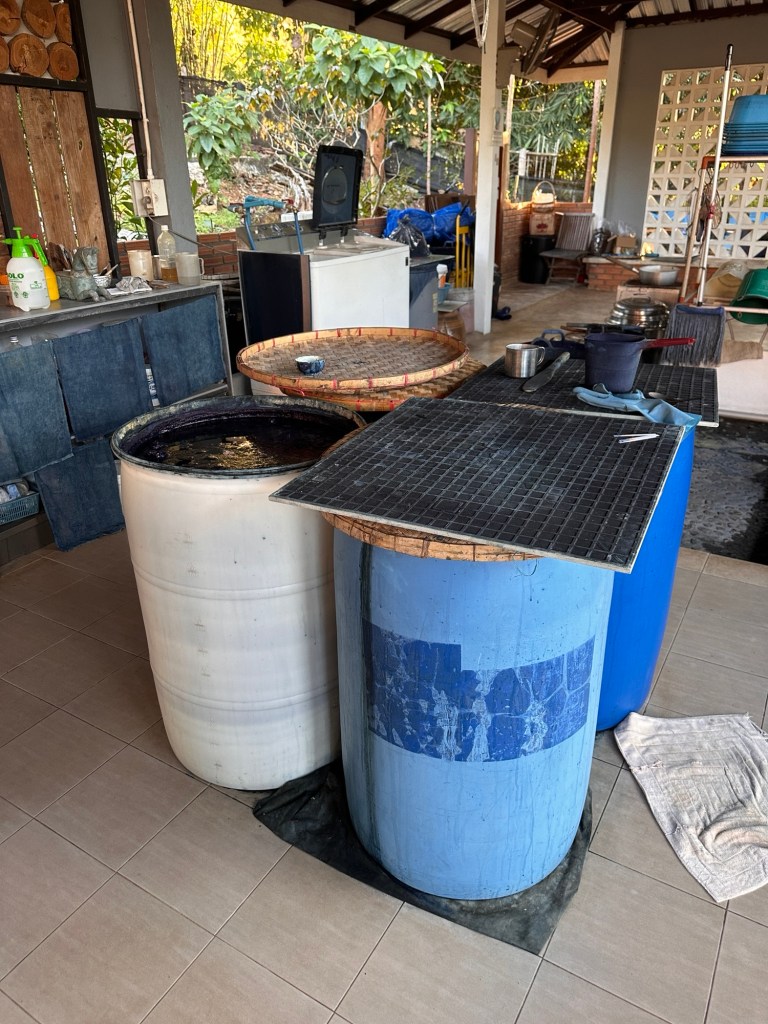
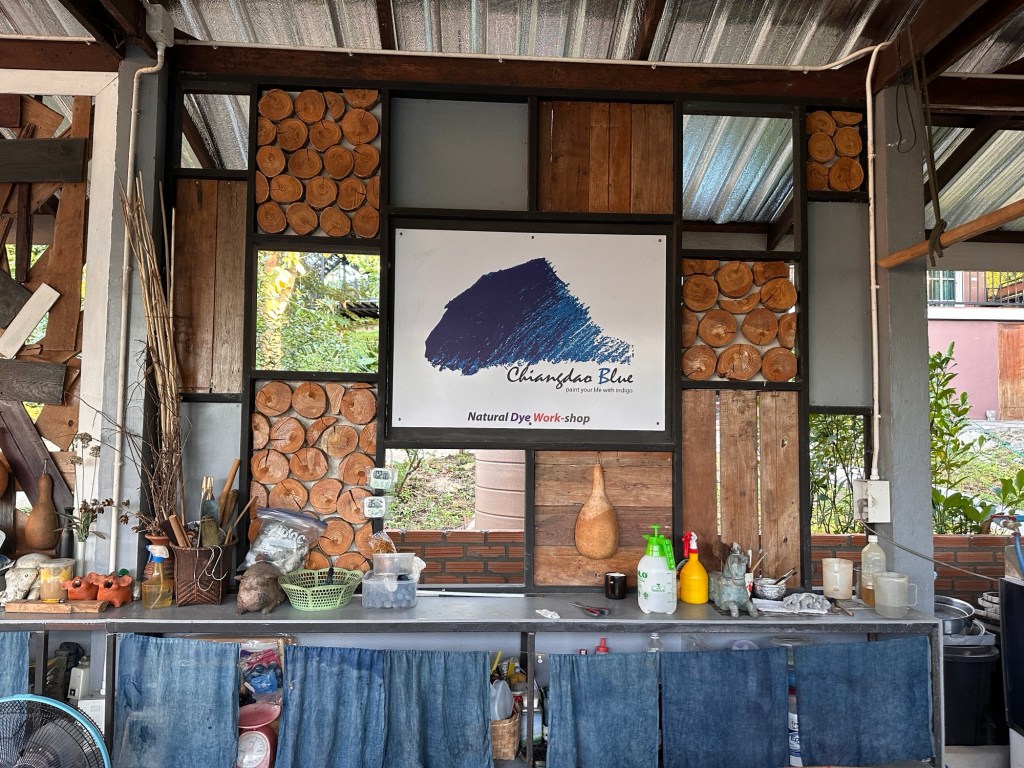


But two days before New Year, I received this invitation from Kun Siripohn from Chiang Dao Blues, a lovely dye studio at the foot of the large mountain in Chiang Dao. We had been communicating in a digital Indigo Pigment Extraction online about working with Japanese Indigo. I asked if I could visit for one day (having to find a driver to take me the 90 minutes drive to find her), I received the answer … are you free for New Years Eve? And off course I was. When everyone else was busy partying and counting down I was very free indeed. So the Invitation came as “My friend is driving here he will take you on 31st and bring you back on the 1s” a very business arrangement… And on the 31st I was ready for pick up.
Kun Sak and Kun Songkran arrived in the golden car on the spot at 11am as planned and after the usual formal presentation it took about 3 minutes for us to realise we were so related… from the same craft bag we were wearing, to our very deep love for Indigo, Food and People it took us only a few minutes to become brother and sister and start the conversation … About growing Indigo, about making Vats, about Colour and about Farming Indigo… OMG such a geeky two days for anyone else that might have joined in but for me it was so perfect….. I can’t remember having so much geeky fun for ages.


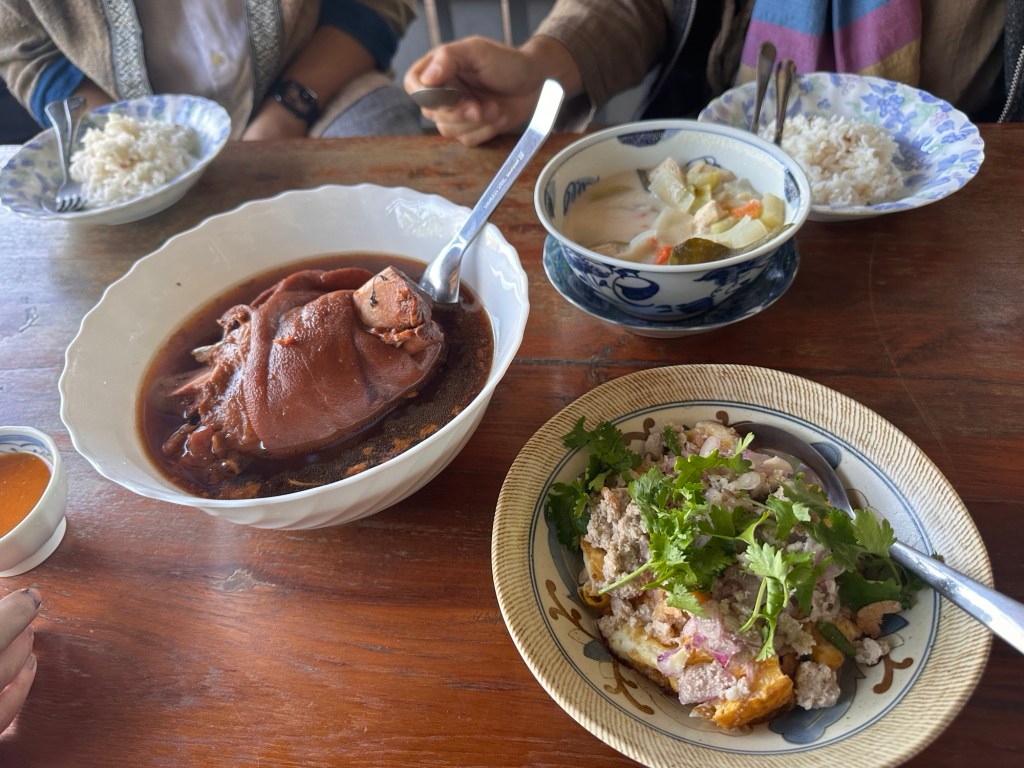


I have this tendency to hate the New Year moment with passion. It is when real values are never present and so much money and nonsense is around for a lot of people and for me a reminder of the little family I have around. It always makes me feel to depressed… but this year the 4 of us had such a good time exchanging, eating soooo much food (all organic and cooked by Kun Sak) so much hospitality in the wonderful home stay and studio of Kun Siripohn, I enjoyed the driving and thoughtful help from Kun Songkran and even Mr B did manage to phone me several times despite the poor network so we could exchange real wishes between long time lovebirds.
It made me realise that different things connect us in life but one of them is very strong and it is the desire to learn and share. On New Year day morning, We had a very dense session about sharing information on traditional fermented vats. It was so useful in information sharing but also it was such a good moment to each want to make sure the other understood well what we all knew together and I am so grateful for the information I gained on this day but also the way it arrived to me. On how we made sure we each gave each other such wonderful memory for that moment shared.
I have all hope that we will be with each other again at some point and hopefully soon but if we don’t we have this exceptional moment of sharing to cherish. I have gained two brothers and one sister…. I am also a lot more clue up about fermentation vat…
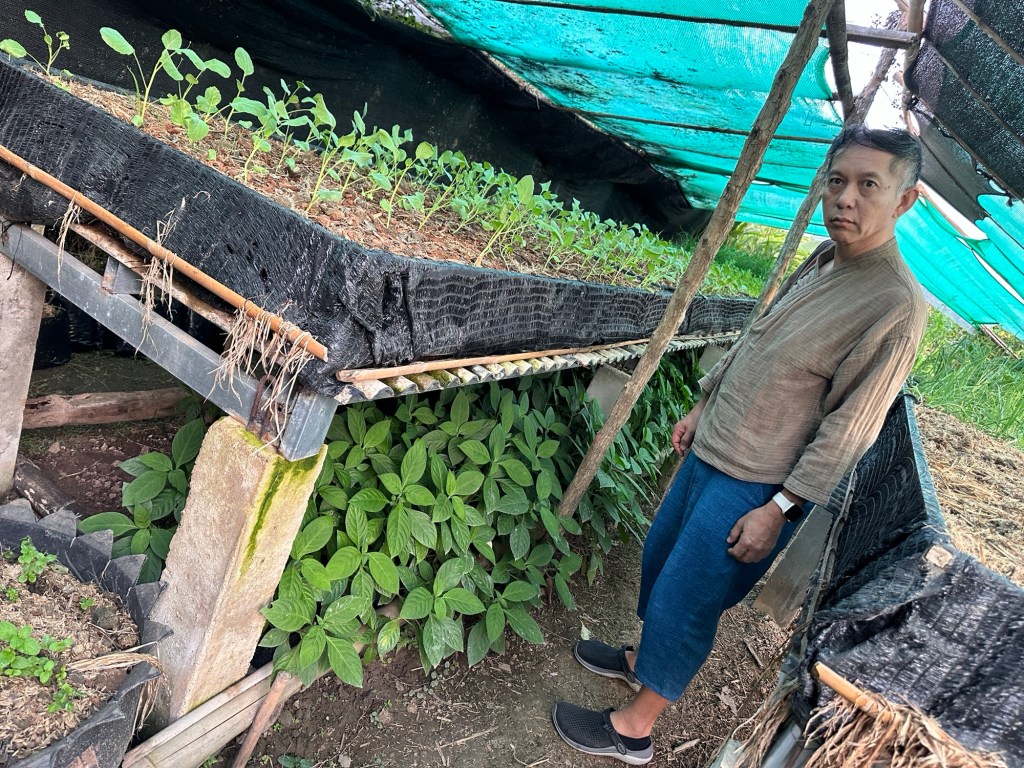


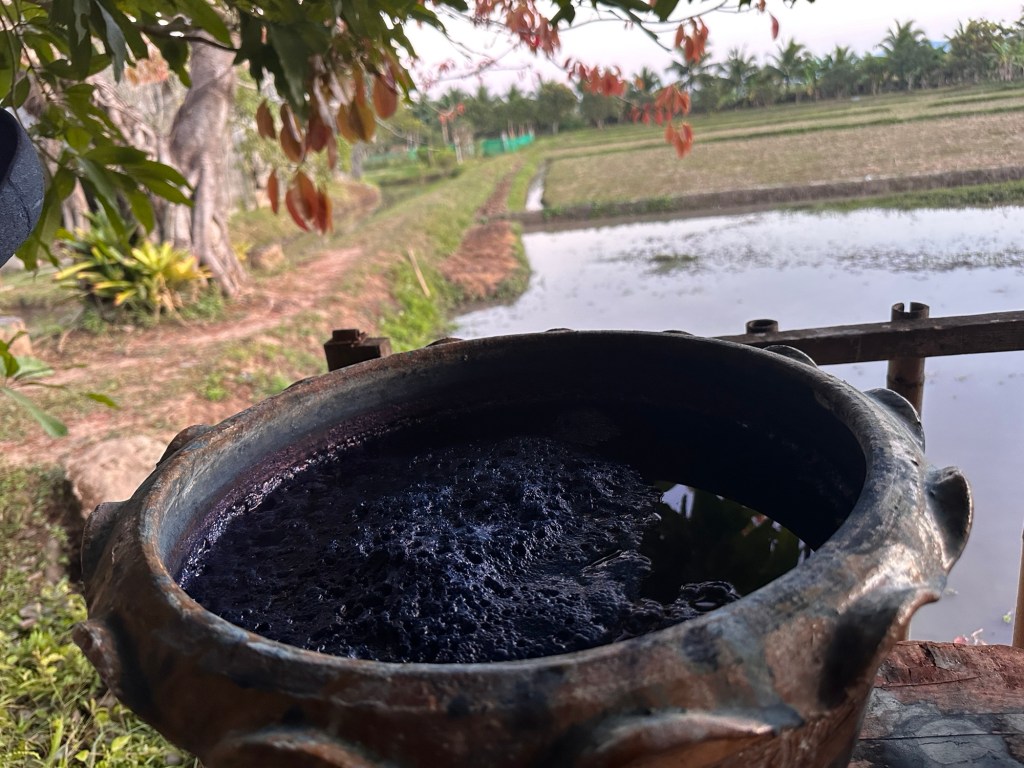


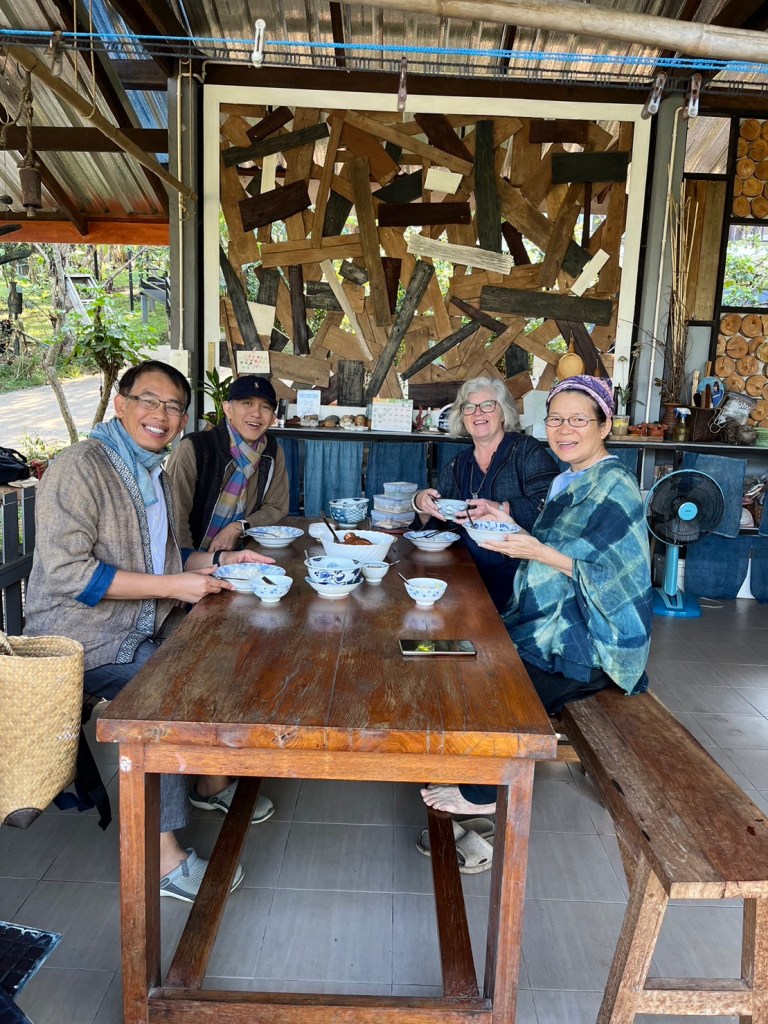
Oh and did I say that we had the most wonderful coffee in the cutest coffee shop in Chiang Dao? We had great meals, We visited the Organic Indigo farm in the making Kun Sak is setting up, We visited a coffee grower … and all this happened because we all love the Indigo dye…
Don’t underestimate the power of Natural dyeing. It is a sustainable way to colour the world but it also connects people together in a very strong and sustainable way.
Happy New Year to all, for now I am just back home and the jet lag is kicking in as I am writing this at 4am 🙂 but soon my learning and sharing will burst out towards my own community.
Best wishes to all of you reading, wishing you a lot of colourful connections this year.
Love Betty xx
The True Colours of Natural Indigo, or what can you do with your Japanese Indigo (Persicaria Tinctoria) fresh leaves extraction

My name is Elisabeth Viguie Culshaw, I am a natural dyer and a dye plant grower (small scale) from Glasgow (Scotland).
I took to grow Japanese Indigo (Persicaria Tinctoria) and Woad (Isatis Tinctoria) a number of years ago and last year in the grounds of the Glasgow Botanical garden. It is purely educational, I like to help people around me to make the connection between botanical and colour.
I am a gentle activist, I hate the idea of bombarding the simple person in the street with statistics on how many million tons of unwanted garments are produced every year I prefer to show them what else can be done. I like to share with all age groups and I have been engaging with schools the past few years. My thinking is if you can just educate at an early age you have won a battle. It would be my dream to learn later than some of the kids I ran sessions with have become a natural dyer themselves or are questioning the way things are done and thinking for themselves on how to do things better.
This year was a little challenged for me this year having caught a bad virus in Indonesia in the Spring I have been left with little energy to run many workshops over the summer, my focus has been on making sure the dye garden grew well and doing a lot of experiments solo.
Japanese Indigo grows well in Scotland, the climate is perfect but somehow this year we have had so little sun that the pigment has not built as much as the previous years… it is the same pigment though.. so great colour but not so concentrated.
Last season I spent a lot of time extracting pigment for paste or powder but this year I though I would push the fresh leaves dyeing techniques to see how far I could dye with it using a different range of fibre. I also wanted to make sure to use up everything single pigment I extracted by not only using the Indoxyl dye but also reducing what was left in the pot and … it worked.
So below are the experiments I ran and in the header is the colour range I obtained. It is mind blowing and I could do so much more but then the winter is now upon us soon and I will take a break…
1 – SALT RUBBING METHOD – TURQUOISE BLUE


With very many groups I used the Salt Rubbing method with a small piece of silk. This consist in crushing Indigo leaves with the help of salt to extract the Indoxyl and by rubbing the leaves and juice extracted the Indoxyl becomes Indican the Indigo precursor which turns into Indigo when oxygen kicks in. Just like which Indigo dyeing you can over dye with another load of leaves and get darker colours … the turquoise blue obtained will never get as dark as dyeing in a vat because of the quantity of pigment involved. When washed out the colour gradually turns from turquoise to bluer and gradually the chlorophyl present on the fabric will fade giving the piece a more blue.
All children I taught this technique enjoyed the fast technique and the immediate result they could obtain.
2 – ICED METHOD – TURQUOISE BLUE


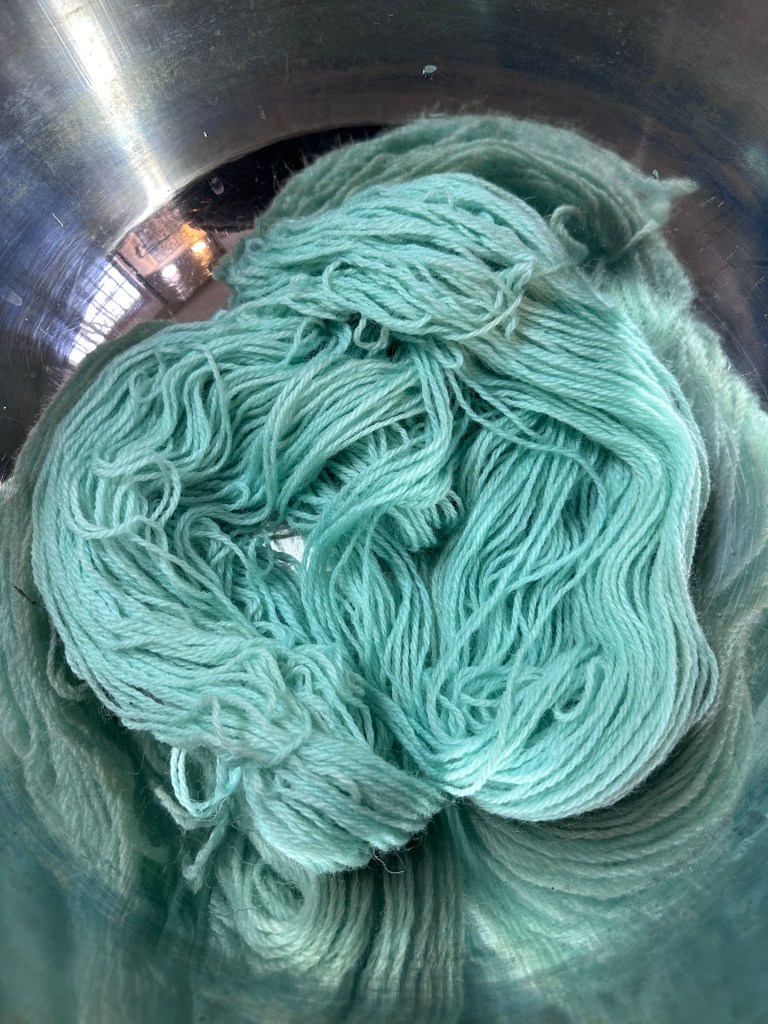

With some groups in the studio and very much on my own I performed a lot of iced method extraction. It needs access to water and electricity so it had to be done indoors but was a lot of fun and learning.
You only use leaves and some very cold water which will help the enzyme you need from the leaves to stay alive. I believe this is sometimes performed in Japan although I have not yet found evidence but I believe it was introduced by Rowland Ricket from the USA and I love working with it. I have seen many shares online of this method but very often by dyers who don’t fully understand the way Indigo works and omit the importance to work cold and fast. Very often there is a lot of pigment oxydised left in the water that is disgarded … but because I grow my small amoung of plants I am very determined to use up my pigment… see below what I have done to do so.
So peel off leaves from stem and blitz with cold water in some kind of smoothie (or Matcha tea like), you have to extract the leaf matter to use the green mix as a cold dye. It works perfectly with silk and wool. The dyed fabric comes out green but oxidises well into turquoise blue. You have to work fast but you can over dye several times for a great result. I tried with up to 6 dips with silk/cotton/wool/linen… the strongest was on chiffon silk.
I was quite disapointed to think that a great deal of pigment was left in the mix and decided to reduce it into a vat see below.
3 – REDUCED VAT USING HYDROSULPHATE – BLUE NOT SO TURQUOISE
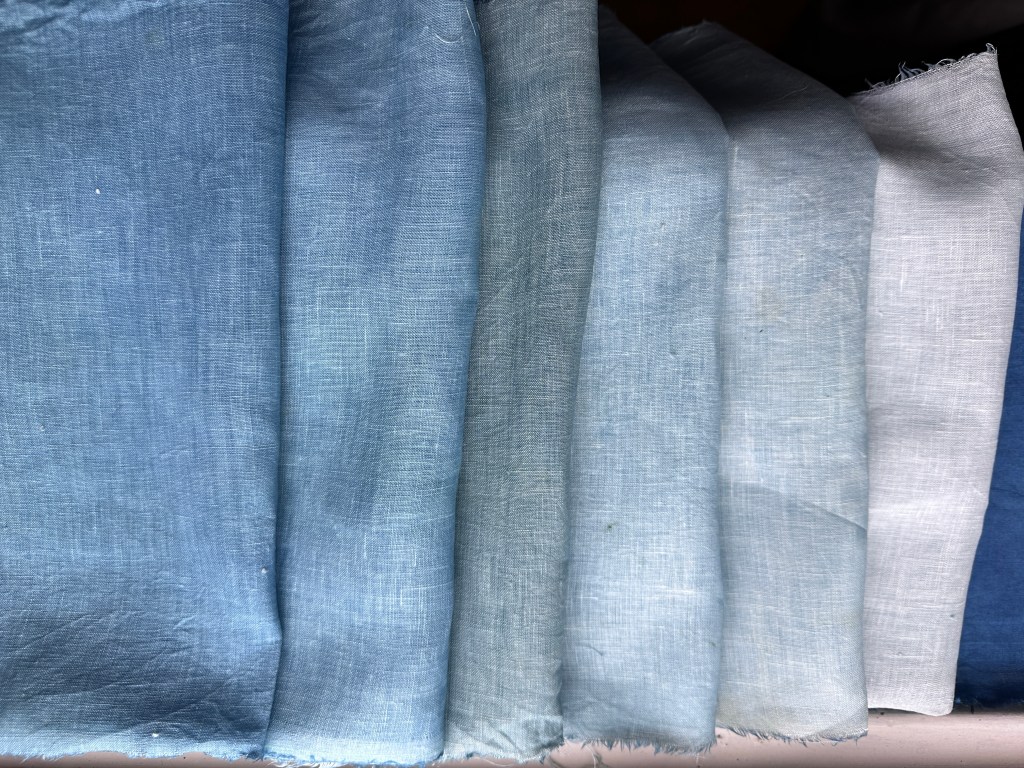
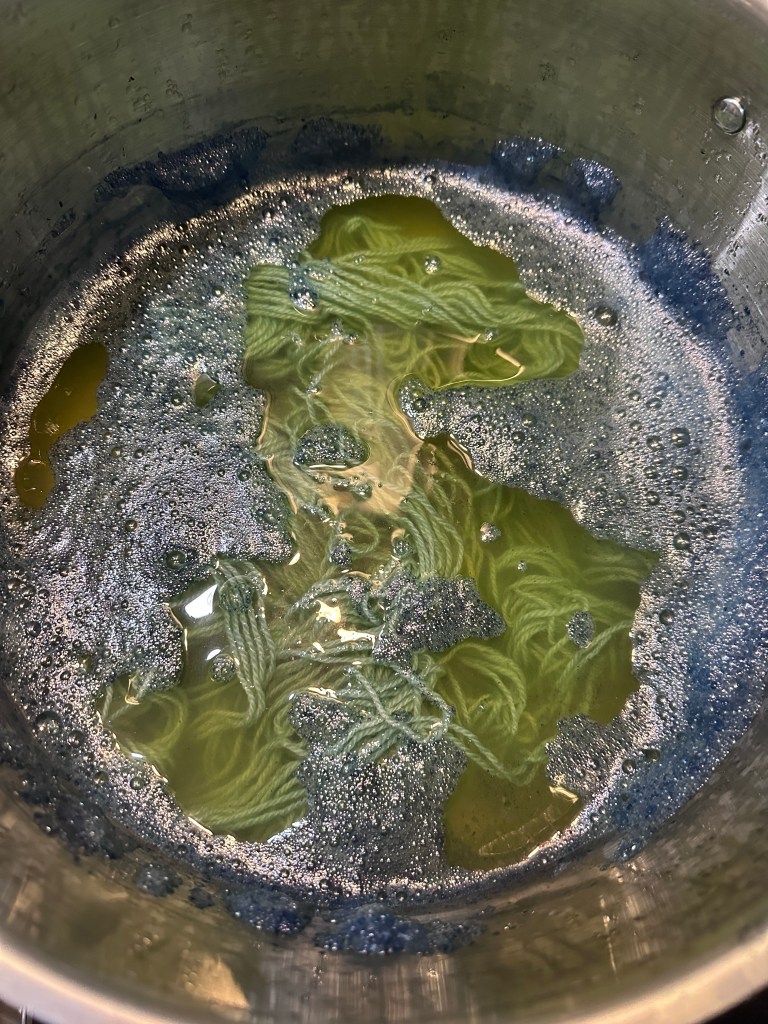

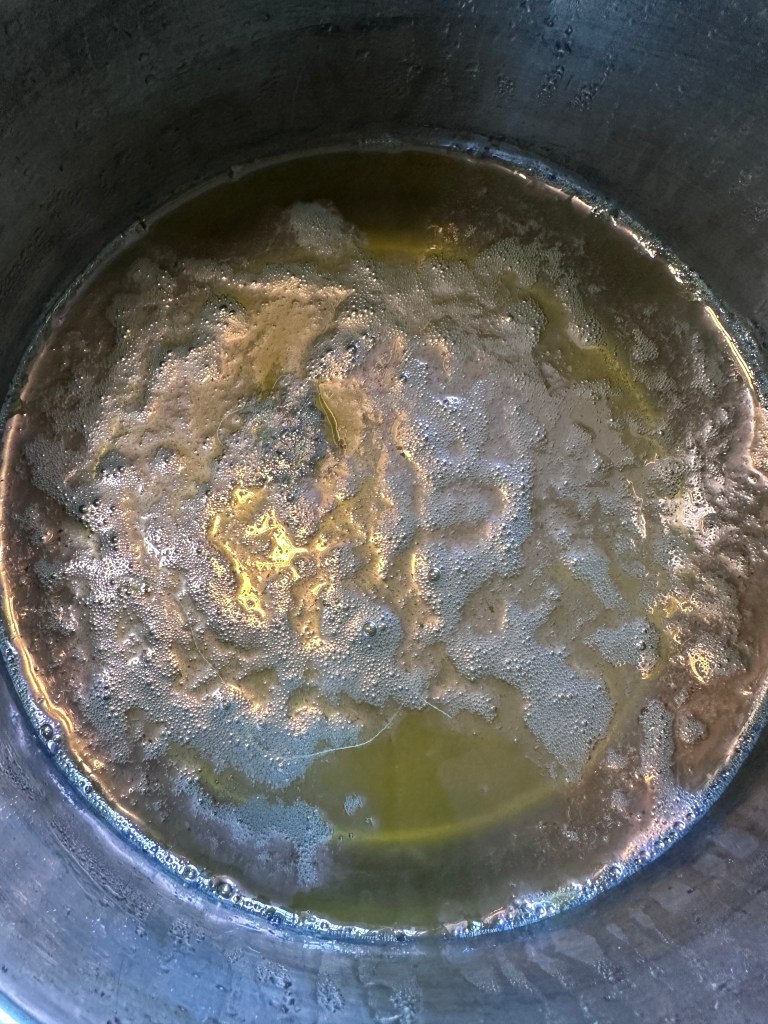
I decided to run this experiment on my own several times to see what happened…
I brought up to a higher temperature the dye bath and used the Thiox vat recipe for it, I had see this process at the AGWSD a few years ago. I choose Thiox in opposition to a natural recipe because Thiox is a fast and strong reducing agent and only a little pigment was available. Surprisingly it worked very well every time I used it. It produced a very weird looking vat (very green) as it is leaf matter in that dye bath.
The vat took only a short moment to work and the help of a blanket surrounding the dye pot helped a lot. It looked well reduced but so green 🙂 I was surprised it worked but I obtained some great blues from it and it gave on and on and on in many dips.
With this vat I was able to create blue dyed cellulose material which I could not make work with the iced extraction… yet it was the same dye pot… How interesting that this pigment needed a reducing agent for it.
Health and safety… When using a Thiox Vat make sure you are working outdoors on in a ventilated environment and don’t work bare hands. It is very alkaline and will damage your skin.
I dyed wool, silk of several kind and linen, cotton snippets a great number of them This vat could dye for a couple of days . I am so happy about the range of blue (not so turquoise) heating the dye pot seems to have killed any yellow left in that dye extraction.
I will for sure repeat this next season this time with more natural vats to compare.
4 – HOT EXTRACTION – PURPLE INDIRUBIN
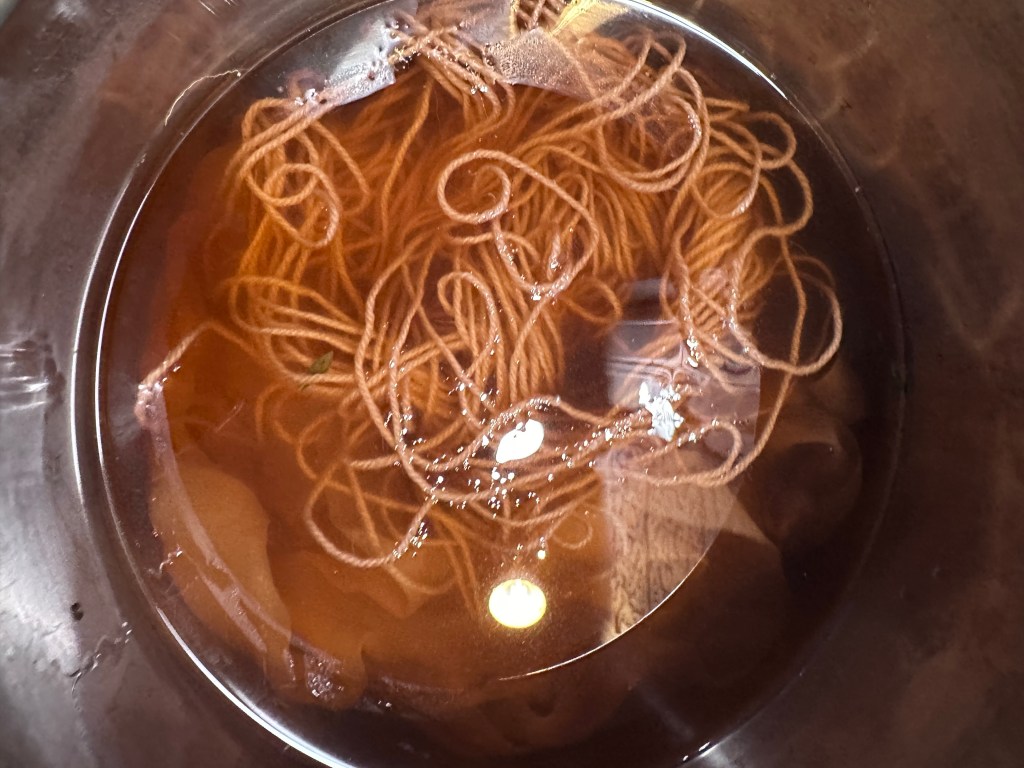

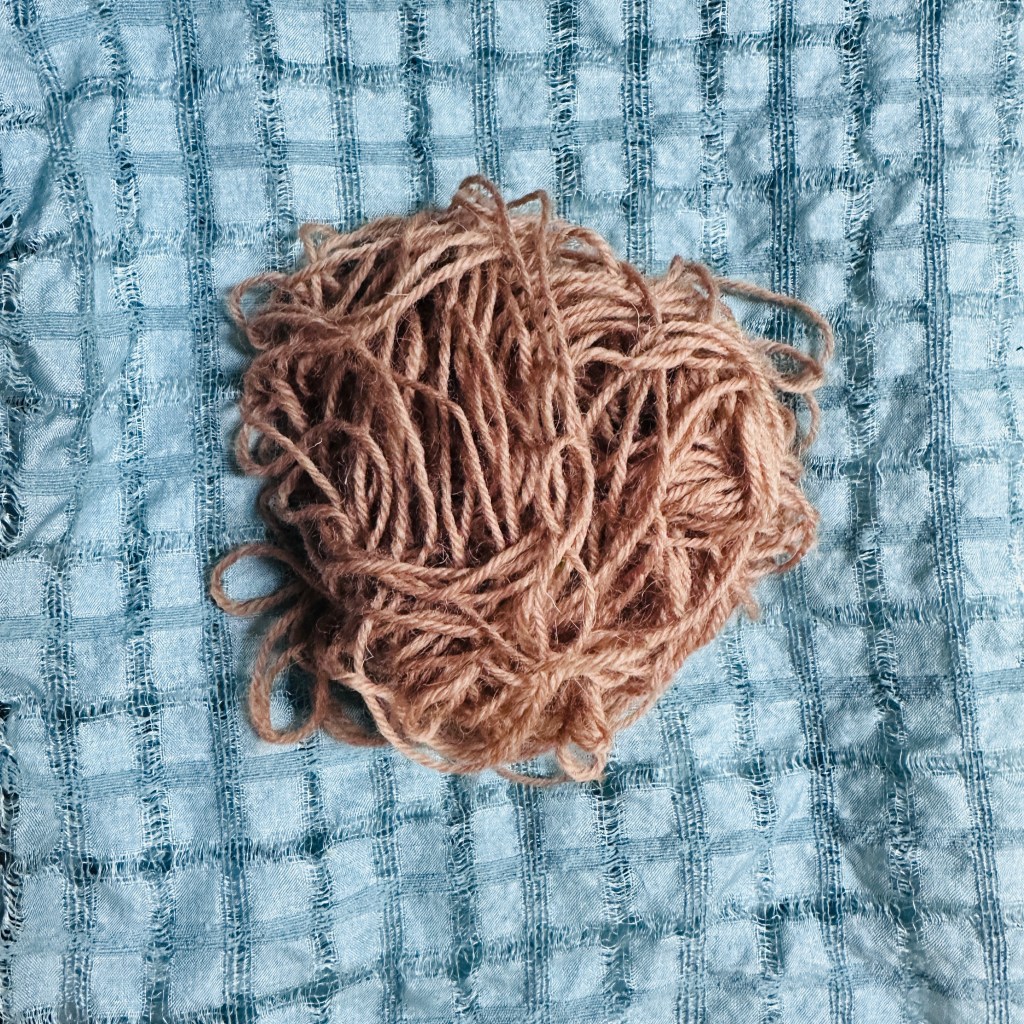
The poor weather was not very conducive of trying cold extraction for fear of looking colour so I had a few tries of making hot extraction. This involves using leaves only starting them into hot water. There are a few different methods and I tried two. I found the low heat overnight worked better for me that the heavy heat which works well with Woad leaves. Indigo leaves are much softer and when heated to much they then start fermenting… I had the task of finding a way to keep the dye bath to a “ouch” temperature and that was a mix of bain marie and warm blankets as I did not want to use electricity for such a long time.
I describe this method in details in my online method shared with my “Home growing participants” and if you would like to be part of this you could join in 2024.
I had read about Indirubin from John Marshall and more recently by Luisa Ulrike who runs an Indigo dye garden in London but had not quite worked out the mechanism.
After this several tests I now can work out what happens in the process, by extracting some of this extraction liquid and dyeing directly with it without modifying it you can secure wonderful shades of pink to purple on silk and wool. As I have little pigment in my leaves I failed to get a bigger variety of shades but my guess is that with a stronger extraction I would get a variety of shades. That is something I will experiment more with next season.
I found it very interesting that with the same extraction I could use part of it for Indirubin pink to purple and part of it for blue.
5 – HOT EXTRACTION AND VATS – BLUE, GREEN, GREY, BROWN
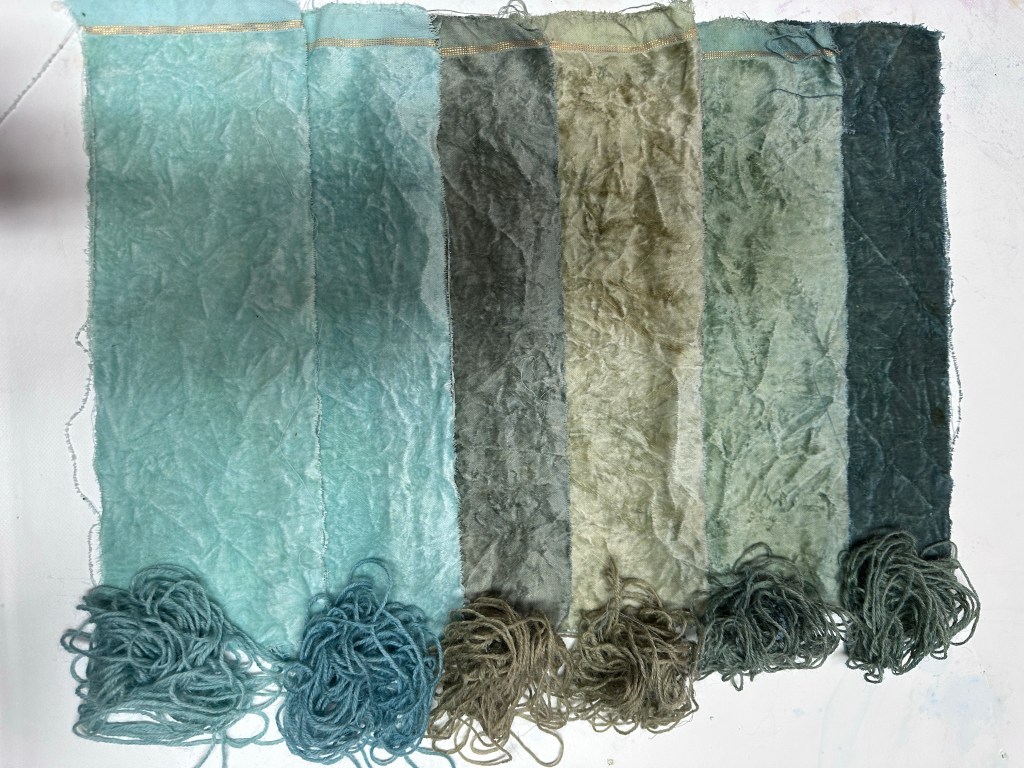

A lot of my time was taken making vats from the hot extraction, small vats of just a few litres using natural methods such as ferrous vat and fructose vat but also thiox.
My pigment is very precious as only growing it in small quantity and I always want to make sure that i dont waste any as it will take me another year to get to the next load.
I made Thiox vats… many have grown into disliking Thiox as a process but when working with fresh leaves extractions in small quantities it is a good way to see how far your pigment works. You just have to be mindful that you need a little ventilation when you are working with it.
The Thiox vat from fresh extraction work really well and give great blue, just like with a powder pigment vat you can over dye many times and it is a good way to dye cellulose. Cellulose is always tricky when working with with fresh leaves.
I was surprised to see i could get good blues and over dye over a period of several dyes on wool, silk, linen and cotton. If pushing this technique too far I would eventually switch the blue for a purple and very pretty. At this stage I can not explain why but I will research this.
I split some extraction to make a ferrous and a fructose vats. This is a tricky one as many use Michel Garcia recipes 123 for making natural vats and off course as you don’t know how much pigment you have in the extraction it is most difficult to calculate. I have recently seen so many questions going past about failed natural vats because of this… My answer to those who got stuck is that just as for cooking from scratch you have to detach yourself from the recipe and understanding what happens in the dye pot. If you understand that the whole reduction process happens because your dye bath is at the right alkaline level then you can look back and calculate the reducing agent quantity.
From my ferrous vat I managed some blues but also some really nice brown green and beige on cellulose fibre as well as silk (I used a lovely silk velvet).
From my fructose vat I managed some softer blues than with the Thiox for the same quantity. It was a very interesting process but really not the best use of my pigment.
SO WHAT NOW:
I believe learning from a dye plant can be a long process if you use quite an empiric method and I am looking forward to experiment further with this next summer.
I now have the large task of labelling and documenting properly the samples I made and these methods fully detailed will be added on my online “Home growing” class for 2024. If you are interested in growing with me Japanese Indigo and Woad in small quantity for learning about it… please join my class in the spring.
If you want details about this email me on bettysbeautifullife@gmail.com
Loads of blue love to you.
Betty x
The challenges of growing colour in an Urban garden #theindigoplot


My name is Elisabeth (with an S) and I live in the West end of Glasgow, not in a small holding or a croft (I am in Scotland) and not in a large farm building in the South of France. That has a lot of advantages but just sometimes my activities as a natural dyer and grower of colour can push the boundaries of urban living.
I am a Botanical Printer and a Natural dyer. I don’t have a dye house, I don’t “Make things” I am interested in the process and forever learning and passing on this knowledge via workshops and classes. You can find a list of my current online workshops HERE
In 2020 the Covid crisis put a hold on my extensive travelling to find the colour blue and I started growing Japanese Indigo and Woad in my urban garden. I felt that I was ready to take my learning as far as processing the plants from scratch.
In 2021 I wanted to share this with the public and The Glasgow Botanical Garden gave me the loan of a small plot which with a group of volunteers I prepared and planted with some “Grand Teint” dyes I started with Persicaria Tinctoria (Japanese Indigo 4 varieties) Isatis Tinctoria (Woad two varieties) Weld, Dyers Greenweed, Madder and coaxed by friend artist Christine Borland some Flax. The first year was very challenging as the plot was unprepared and a lot of digging and soil enriching had to be done by hand in a short period of time but the harvest was so rewarding.
I was surprised that any moments I spent at the plot which is located in the old physics garden location at the Botanics I was approached by the public eager to know what we were doing there and loved seeing the dye plants. I loved seeing young students taking a break to seat in the sun reading their course book and eating their lunch two feet from the plot. I loved watering the garden in the evening in the peace of the garden… and not to forget the resident robin who came to join me everything we were digging… looking for a feed.
My aim is always to educate at grass roots level. Just like I want small children to understand where their potatoes and meat come from, I like adults and children alike to fully understand where natural colour comes from and how long it takes to grow and process them. I LOVE Indigo, the dye, the pigment, the plant… there is so much to learn about it and it gives amazing results… If you want to learn how to grow Indigo with me and process it in 2024 you could join my online group… together we germinate, plant, grow and extract colour in many ways using Japanese Indigo. There is a link to register for my 2024 class that will start in March/April. HERE
Growing dye plants can be done in pots in your yard or in beds in your garden. If you have an allotment the plants will do well if you keep the slugs at bay. I grow in my Urban garden in the West end of Glasgow in a raised bed Japanese Indigo and around the garden Woad, Weld and a lot of Madder. In the Botanics this year 1800 Indigo plants were planted and the growth was amazing. We had so much fun with visitors, workshops and our exhibition in September…
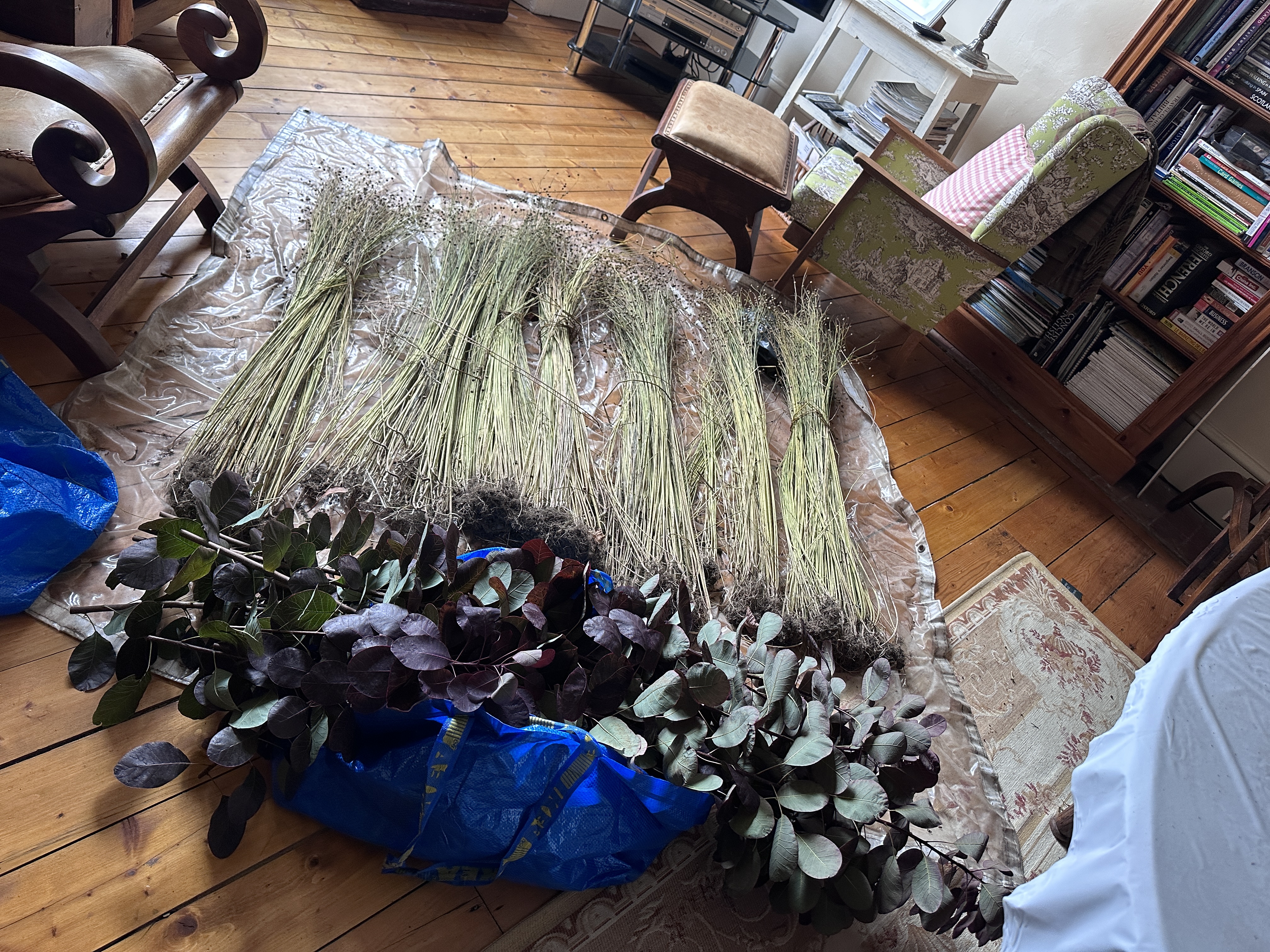
October as usual came as a surprise. The weather in Glasgow turned to very cold rain and there is the restriction about growing in and Urban location without loads of outbuildings to give a home to your plants when they need harvested. My dining room (which we hardly use as a dining room I may say) is currently the home to two large tubs of stemps of Japanese Indigo waiting to be processed. Every single vase I own is full of Indigo flowes on their stems waiting for the seeds to pop out. I had Flax on a large tarpaulin drying as the weather was so wet, and a huge harvest of Cotinus leaves waiting to be printed next week.
It is not for everyone but I love my dye plants and I remember being a child visiting a farm in Britanny where the farmers at harvest time litterally became one with their farm. We lived, slept, drank and ate grain… for a while when the harvest called, real life disapeared and the plant was the new master calling the shots.
This is how seasons work you are not supposed to eat strawberries in December and your week end away may have to wait if the frost arrives and you need to cut the Indigo plants for fear of loosing them.
I would not have it another way and although it is hard work at times I feel in total connection with my dye plants and in return they give me their best dyes…
There are big talks just now about global warming and sustainability but few of the specialist who hold forum and exchange in geeky words about the new fashion revolution fully understand about growing and seasons about the world would be so much better if we slowed down a bit and accepted that we do not call all the shots. If you want Indigo in Scotland, you have to germinate inside, you have to plant in June and you have to make provision for watering… if you want seeds you have to take the plants inside… whatever your inside is. I have decided not to set up some green house space because this project is for me temporary and I am not one to create more waste by building something I don’t need long term. Actually my kitchen love having the pink flowers in for a bit and it works just as well.
When you next buy a packet of dye from the dye merchant think again about the effort someone had to put in to produce and don’t you dare wasting any. It takes real energy to produce colour, and love and all. If you want to be part of my 2024 journey into Indigo… use the link HERE to book yourself on my course. It is so very interesting and promised you wont have to bring your leaves indoors… I will make sure you only grow a small amount of plants…
Have a great blue day…
Betty x
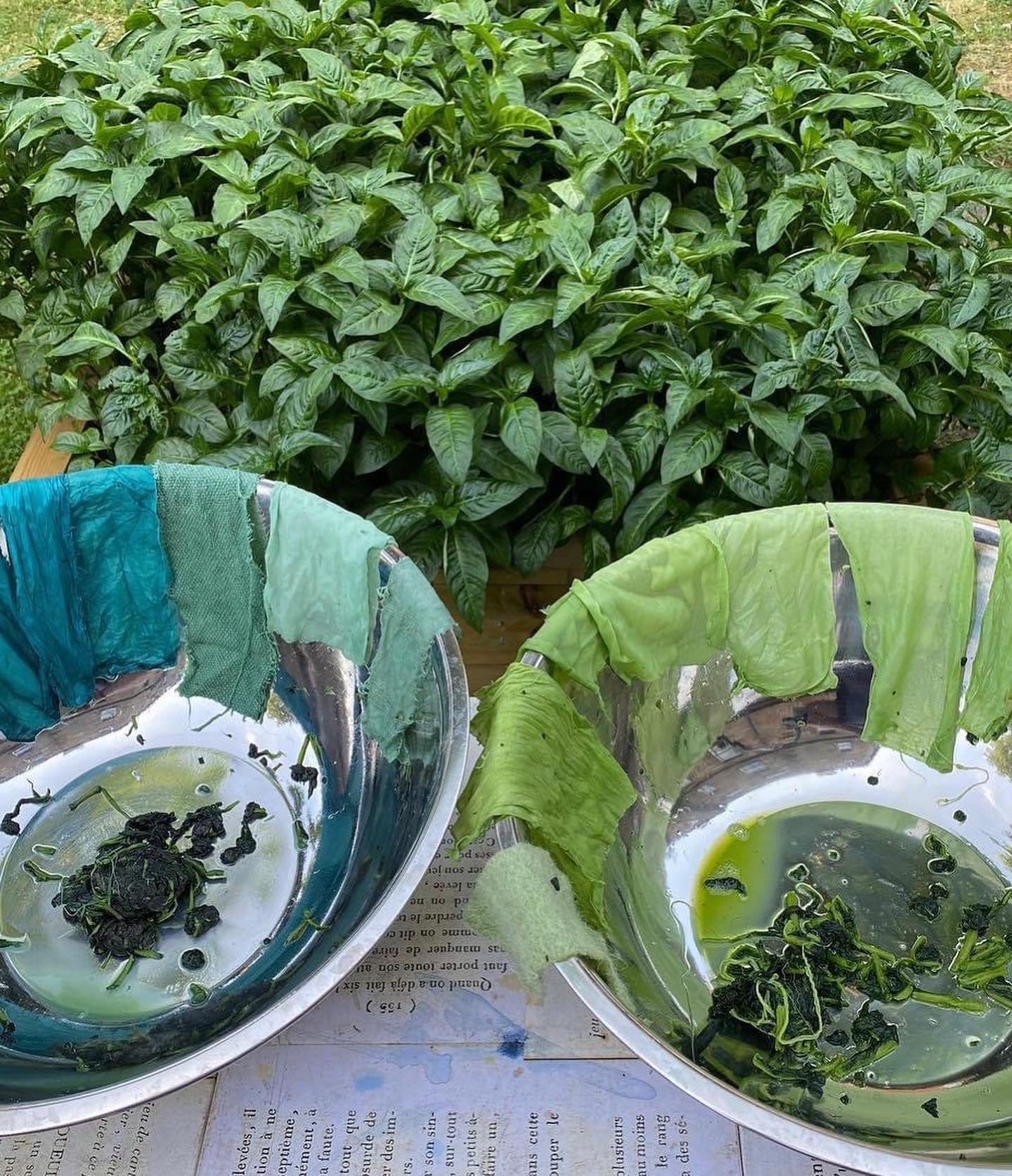
INDIGO AND WOAD GROWING AND PROCESSING ONLINE COURSE 2024
Join my groupe of home growers and grow Japanese Indigo and Woad in 2024 and learn to process it for colour. This program is aimed at Scottish and North of England growers because of geographical seasonality but anyone can join in. You will get 50 seeds of JI and some of Woad and information about planting. We will have several catch up on zoom during the season and comes harvesting time we will be able to experiment with pigment extraction as well as using the colour on yarn and fibre. Perfect for beginners.
£110.00
 THE LANSDOWNE HOUSE